





Related: Fleets Are Chasing Drivers with Better Pay and Quality of Life
ATA: Truck Driver Shortage Threatens Supply Chain
ATA sees the truck driver shortage as a problem for the entire supply chain as 71.4% of all freight tonnage is moved by truck.
July 24, 2019

Per ATA, over-the-road fleets could be short just over 100,000 drivers in five years and 160,000 drivers in 2028.
Credit:
File image
4 min to read
The driver shortage that’s been plaguing over-the-road, for-hire truckload carriers since at least 2004 reached a new high last year, according to Bob Costello, chief economist for the American Trucking Associations.
By the end of 2018, 60,800 more drivers than available were needed to meet the demand to haul freight, Costello stated in a press release issued on the July 24 rollout of ATA’s latest report on the shortage, which he co-authored.
In the report, Costello explains that the shortage rose higher last year (it stood at roughly 50,700 by 2017) thanks largely to robust freight volumes. “Over the past 15 years, we’ve watched the shortage rise and fall with economic trends, but it ballooned last year to the highest level we’ve seen to date
He said the combination of a “surging freight economy” and carriers’ need for qualified drivers could “severely disrupt the supply chain” going forward.
“The [2018] increase in the driver shortage should be a warning to carriers, shippers and policymakers,” Costello stated, “because if conditions don’t change substantively, our industry could be short just over 100,000 drivers in five years and 160,000 drivers in 2028.”
In a conference call with reporters, Costello explained that ATA’s analysis of the shortage is based on a trend-line forecast. “That means it’s based on where thing stand now not changing” in the next several years. “The forecast is made assuming there will be the same demographics and it also assume there will be no changes in regulations for drivers.”
He noted that, yes, industry efforts such as raising driver pay, are helping combat the shortage. “The industry is growing drivers, but not fast enough.”
Running through some key demographics, Costello pointed out that the median age of over-the-road truck drivers is 46 and that some trucking segments have an even higher median age—it’s 57 for private fleet drivers.
Costello said that while women make up nearly 47% of all U.S. workers, they only comprise 6.6% of all truck drivers, according to the Department of Labor. He said the share of female drivers has remained “fairly stagnant,” between 4.5% and 6.6% since 2000. “This is a large, untapped portion of the population… Some trucking companies have put an emphasis on female drivers, but the highest percentage of female drivers we have seen is around 20% for those fleets.”
Asked by HDT if trucking could be doing more to recruit minorities to the ranks of truck drivers, Costello said “the minority percentage of truck drivers has gone up and we hear stories of [driver-training] schools going into inner cities. I think the industry is doing a fairly good job at this [recruiting minorities], but of course we can keep improving.”
Costello also mentioned some points of clarification about the shortage covered in the report. “The shortage probably seems much worse to carriers because we’re only talking about the quantity of drivers and they [fleets] also have to be concerned with the quality of the drivers they hire. He also stressed that “the driver shortage and driver turnover rates are not the same thing and turnover is not addressed in this report…. [turnover] is calculated completely differently.”
Turning to what can be done about the ongoing shortage, Costello pointed out that “just as there are many causes for the shortage, there is no one solution for it.”
In the report, he outlines a range of solutions, most of which are already being deployed by various fleets, including
Driver pay increases
More at-home time
Improved driver image
Better treatment and reduced wait times (at shippers)
Transitioning military personnel to truck driving
Lowering the age for interstate operation
“Over the next decade,” the report states, “the trucking industry will need to hire roughly 1.1 million new drivers, or an average of nearly 110,000 per year. Replacing retiring truck drivers will be by far the largest factor, accounting for over half of new driver hires (54%). The second largest factor will be industry growth, accounting for 25% of new driver hires.”
The report also delivers this blunt assessment: “The driver shortage is really a problem for the entire supply chain as 71.4% of all freight tonnage is moved on the nation’s highways.”
More Drivers
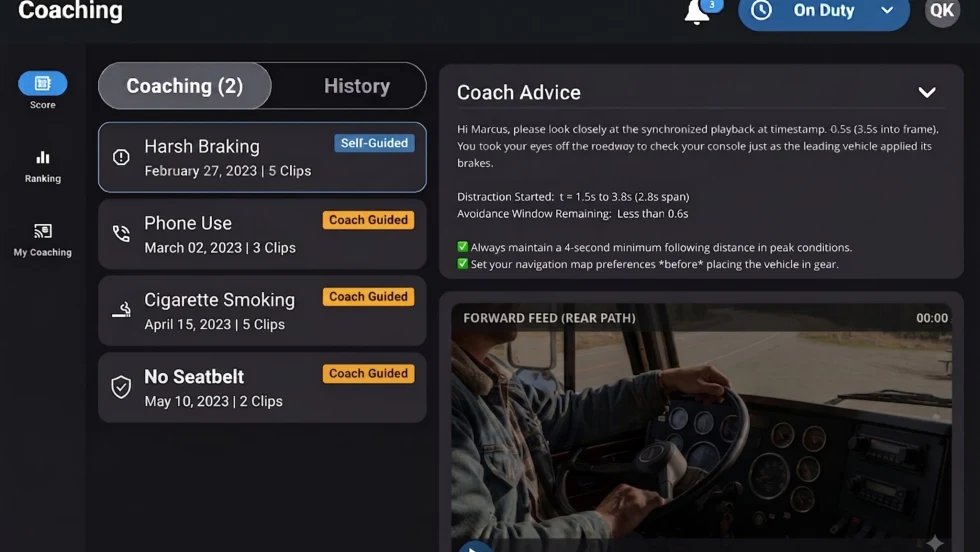
Platform Science Adds Dispatch and Safety Tools
Four additions to PS Fleet help fleets monitor loads, manage driver coaching, share truck locations and adjust video system settings.
Read More →
When Language Stops the Truck: The Return of ELP Out-of-Service Orders
English language proficiency rules for commercial drivers aren’t new, but renewed out-of-service enforcement has raised the stakes. Here’s what carriers need to know before a driver reaches a roadside inspection.
Read More →
Samsara Launches Custom AI Agent Builder
Agent Studio lets fleets create AI tools for hours-of-service monitoring, reporting and driver support, including agents that communicate by phone.
Read More →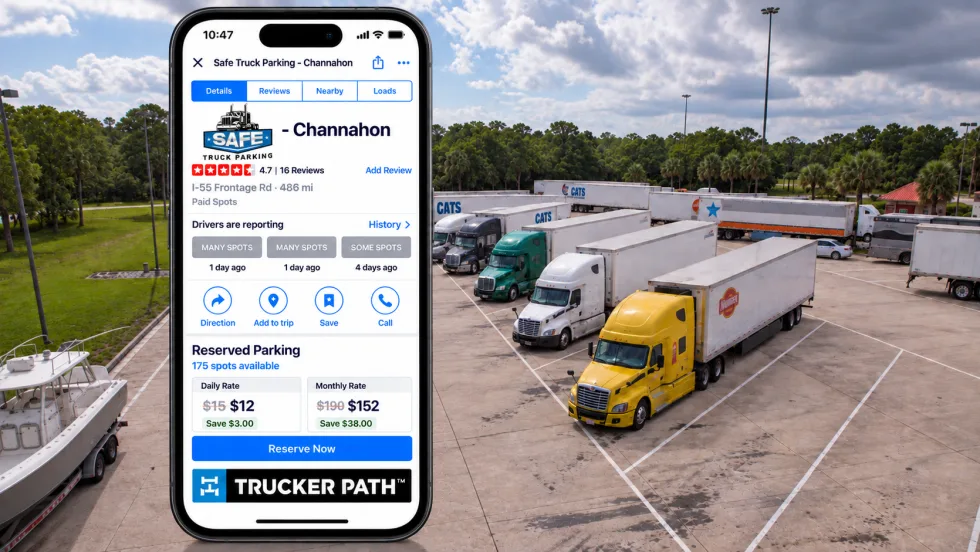
Trucker Path Expands Reserved Parking Network
Trucker Path has added close to 6,000 more truck parking spaces to its Trucker Path Reserved Parking Network with the addition of Safe Truck Parking.
Read More →
EEOC Sues Texas Trucking Company Over Driver Age Limits
The agency says Trancasa USA rejected applicants over 65 and applied tougher driving-record standards to those over 60.
Read More →
Nussbaum, Roehl Announce Second Driver Pay Increase This Year
This year has seen a swath of major truck driver pay increases as freight capacity has tightened.
Read More →
From One Generation to the Next: How Mentorship Builds Safer Truck Drivers
After three decades in trucking, Harold Perry shares what he's learned about driver safety, mentorship, and helping the next generation build confidence behind the wheel.
Read More →
Truck Drivers Need More Than Another Alert
Fleets have more visibility into truck health, safety events, and driver activity than ever. The next challenge is turning all that information into useful guidance for the person who has to decide what to do next.
Read More →
FMCSA Removes 110 Truck Driver Training Schools from Certified ELDT List
Federal regulators also are targeting more than 160 additional training providers and launching a nationwide audit of third-party CDL skills testers as part of a broader crackdown on trucking fraud.
Read More →
Hours of Service Pilot Programs: FMCSA Readies for 2027 Rollout
Two pilot programs could eventually reshape hours-of-service rules, giving truck drivers options to pause their 14-hour clock or use longer split sleeper rest periods.
Read More →