





Related: Used Class 8 Market Still Experiencing Summer Slowdown
Arrow CEO: Used Truck Supplies Growing, Will Demand Absorb Them?
The 2012-model trucks sold in 2011, a good year, should push down prices as freight tonnage and demand now seems to be softening slightly.
November 13, 2015
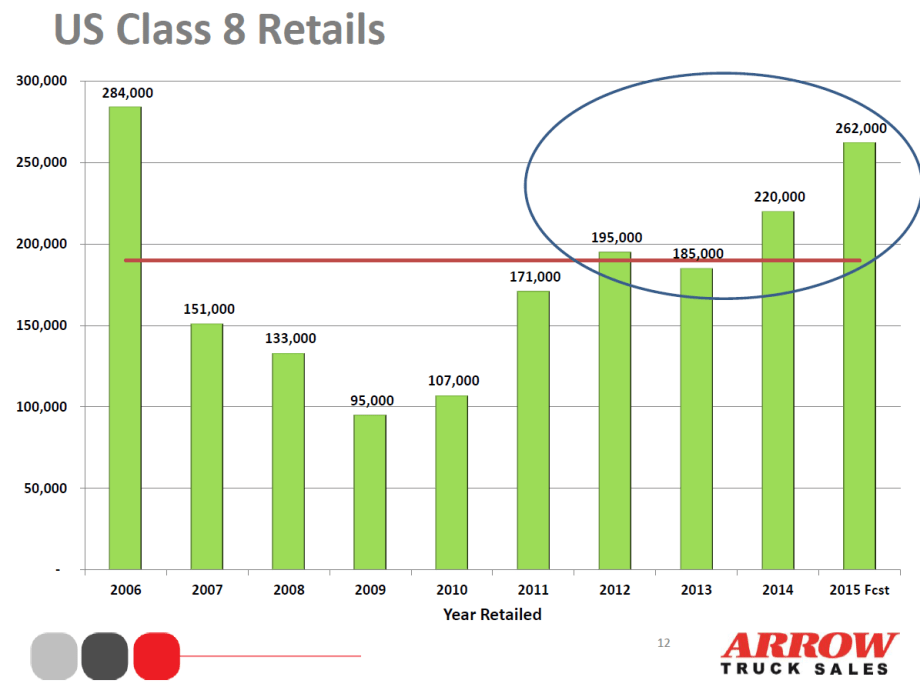
Used trucks come on the market three to five years after they’re sold new. Many 2012-model trucks were sold in 2011, and they’ve begun hitting used-truck lots, strengthening supply. Chart: Arrow Truck Sales
4 min to read

Used trucks come on the market three to five years after they’re sold new. Many 2012-model trucks were sold in 2011, and they’ve begun hitting used-truck lots, strengthening supply. Chart: Arrow Truck Sales
Prices for Class 8 used trucks should begin declining as large numbers of vehicles begin coming in on trade next year, said Steve Clough, president of Arrow Truck Sales, during a Nov. 12 webinar. The trade-ins were bought new in 2011, a fairly healthy production year for new trucks, and are due for replacement by fleets using a five-year cycle.
Those model-year 2012 trucks sold in ‘11 on three-year trade cycles are already in and others are following. Sales of the ‘12s represented a revival following the sales slump during the Great Recession. The question now is, will demand be high enough to absorb the greater supply?
Healthy demand now for used trucks is driven by high freight tonnage being tendered to fleets, and comparatively low sales in 2007 through ’10 restricted the supply more recently, he said. Tonnage is down slightly from last year and fleets report having a bit more difficulty finding loads.
Supply, demand, condition and specifications determine prices, Clough reminded the webinar audience, with the actual price of any particular truck determined by “what someone is willing to pay for it.” The reputation of a fleet for maintenance will cause prices for its trucks to be higher than those from fleets which aren’t so good on maintenance.
He said premium trucks like “the Paccar brands” still command premium prices in the used-truck market, and the higher price usually reflects what’s paid when the trucks were purchased new. But condition and proper specifications for given hauling jobs are important to buyers, too.
Freightliners with Detroit DD15 diesels tend to command a premium because they’ve built good reputations, and will cost more than those with Cummins engines, Clough said. “No premium value is put on a Cummins engine,” he added.
Automated manual transmissions were initially slow sellers and lost their upfront price premium. But they now return some of their price premium as second buyers understand their advantages in fuel economy, driver retention and quick new-driver training due to the AMTs’ ease of operation.
Exhaust emissions equipment had a big effect on the used truck business in the last 10 years, he noted. 2006 was the strongest year as 284,000 trucks were sold during the “pre-buy” by customers avoiding the then-upcoming diesel particulate filters, which were expensive and suspected of being troublesome. The sales declined steeply, then slumped further as the recession took hold.
Values of early DPF-equipped trucks were low. However, California’s regulations requiring DPFs created “an artificial demand” for DPF trucks, he said, and that created a shortage elsewhere in the country. This pushed up prices for them.
Although the recession had ended by 2010, the economy was recovering only slowly and freight movement showed no surge, and meanwhile buyers stayed away for fear of selective catalytic reduction equipment that was being added to exhaust systems.
SCR offered better fuel economy, but boosted new-truck prices and caused concern; buyers generally didn’t want the first production year of SCR engines, but now accept it, Clough said.
Troubles with various diesels in recent years have been addressed, mostly with software changes, by the time they’re traded in, he said. However, Clough said that Internationals with Navistar MaxxForce diesels are difficult to sell due to their history of problems, and Arrow generally doesn’t handle them.
Natural gas-powered trucks raise questions about reliability, engine life and residual values. They’ve not been run long enough to provide solid answers, but as well-run fleets gain more experience with natural gas equipment, their values will become more clear.
“We haven’t seen any liquified or compressed natural gas-powered trucks or sold any,” Clough said. For now, they seem to be most successful in “close-loop” operations in which they return home regularly where mechanics know how to fix items peculiar to them.
Although glider kits have become popular among some buyers, “We avoid glider-kit trucks because there are too many open issues,” he said. “They seem to be bought by those who want to avoid emissions regulations. I prefer to avoid a business that seeks to avoid making the environment better.”
An industry forecast of 262,000 North American Class 8 sales this year will be the strongest since the recession, Clough noted. And those trucks will begin coming in three to five years from now. That will create more supply and again the question is, will there be enough demand to absorb them?
More Fleet Management

What the U.S.-Canada Trade War Means for Trucking
Escalating U.S.-Canada tariffs could disrupt cross-border freight, reduce truck volumes, raise costs, and create new uncertainty for carriers on both sides of the border.
Read More →
What Are Trucking’s Top Concerns for 2026?
The American Transportation Research Institute wants to know what's worrying trucking fleet managers, drivers, and other stakeholders in its annual Industry Issues survey.
Read More →
American Trucking Associations Looks for a New Leader
ATA President and CEO Chris Spear abruptly left his job at the association on August 21, at a pivotal time for the trucking industry.
Read More →
Public Wi-Fi Cybersecurity Risks: How Truck Drivers and Fleets Can Protect Their Data
Public Wi-Fi can expose truck drivers and fleets to credential theft, malware, and other cyber threats. Here’s how to reduce the risk on the road.
Read More →
For Nicky Cupp, Fleet Innovation Starts With Frustration
HDT Truck Fleet Innovator Nicky Cupp turns everyday pain points at Fraley & Schilling into opportunities for better technology and smarter processes.
Read More →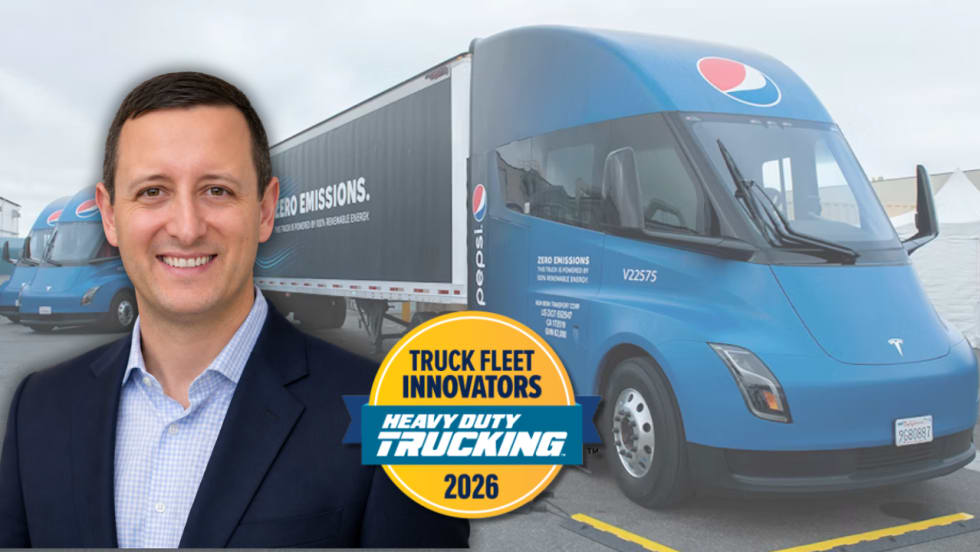
Adam Buttgenbach’s Approach to Electric Trucks: Start With Where They Fit
HDT Truck Fleet Innovator Adam Buttgenbach helped PepsiCo build one of North America’s largest EV fleets by focusing on where electric trucks make operational sense.
Read More →
Deen Albert: Let Automation Do the Math, People Make the Decisions
HDT Truck Fleet Innovator Deen Albert makes sure people are still at the heart of operations at Grand Island Express, even while adopting artificial intelligence tools. AI-assisted dispatch helped boost revenue 25% with the same number of trucks.
Read More →
Trimble’s New AI Agent Takes Aim at Fleet Back-Office Busywork
Arc Agent works across Trimble TMS products to automate repetitive tasks such as freight orders, maintenance, invoices, fuel costs and more.
Read More →
How HDT’s 2026 Truck Fleet Innovators Are Rethinking Fleet Operations
Meet five trucking leaders who are challenging assumptions, solving operational problems, and putting innovative ideas to work.
Read More →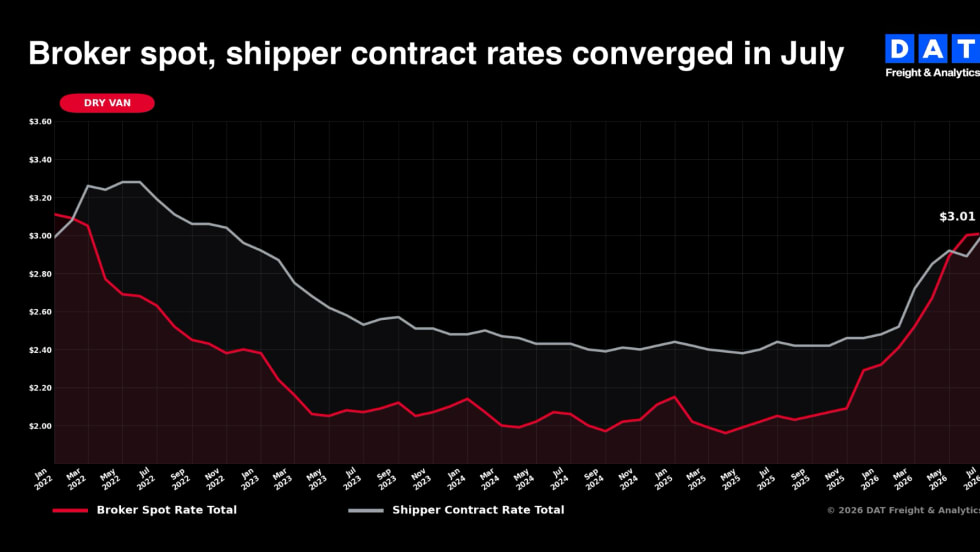
Tight Trucking Capacity Pushes Rates Higher Even as Freight Volumes Fall
“Spot rates moving ahead of contract rates have historically signaled a tightening market, but we haven’t seen a capacity-driven market quite like this one,” said DAT's Dean Croke.
Read More →