




Arbitration Action Filed Against U.S. Over Mexican Trucking
Mexico’s biggest trucking association has filed a $30 billion dollar arbitration claim against the United States for refusing to fully open the country to trucks from south of the border, as called for in the North American Free Trade Agreement.

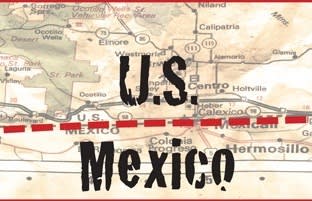
Mexico’s biggest trucking association has filed a $30 billion dollar arbitration claim against the United States for refusing to fully open the country to trucks from south of the border, as called for in the North American Free Trade Agreement.
Canacar director Jose Refugio Muñoz Lopez, told one Mexico-based newspaper that the current program allowing Mexican trucks into the U.S. “in no way has it served as a mechanism for U.S. compliance with its requirements under NAFTA,” which went into effect 20 years ago.
Muñoz Lopez also claimed because the U.S. has failed to fully open its border to Mexican trucks, this has resulted in Mexican trucking companies being forced to make investments in the U.S. and create cargo-transfer zones along the border.
Some 30,000 Mexican truckers have reportedly signed on to the arbitration action. An unnamed U.S. law firm is representing Canacar.
President Obama is reportedly going to address the issue when he travels to Mexico on Feb. 19 in a meting with Mexico’s president Enrique Peña Nieto, that also includes Canadian Prime Minister Stephen Harper, as part of the North American leaders summit.
They are expected to discuss "a range of issues important to the daily lives of all of North America's people, including economic competitiveness, entrepreneurship, trade and investment, and citizen security," according to the White House.
Nearly three years ago the Federal Motor Carrier Safety Administration announced the beginning of its long-haul cross-border program with Mexico, following a previous one that was started by the agency and later stopped by Congress and President Obama. Mexican trucks that do not participate in the current program, are restricted to a narrow-area just inside the U.S., except for the few carriers that still have authority to run long-haul in the country (outside of the current long-haul cross-border trucking program), which were grandfathered in prior to NAFTA.
Since the implementation of NAFTA, several groups, including the Owner Operator Independent Drivers Association, the Teamsters Union, along with public advocacy groups, have pushed to keep long-haul Mexican trucks out of the U.S. over alleged safety concerns. Eventually, such efforts came up short with the U.S. Supreme Court earlier this year saying it would not consider an OOIDA challenge to current long-haul, cross-border program with Mexico, allowing a lower court ruling allowing it to stand.
More Drivers

Truck Drivers Need More Than Another Alert
Fleets have more visibility into truck health, safety events, and driver activity than ever. The next challenge is turning all that information into useful guidance for the person who has to decide what to do next.
Read More →
FMCSA Removes 110 Truck Driver Training Schools from Certified ELDT List
Federal regulators also are targeting more than 160 additional training providers and launching a nationwide audit of third-party CDL skills testers as part of a broader crackdown on trucking fraud.
Read More →
Hours of Service Pilot Programs: FMCSA Readies for 2027 Rollout
Two pilot programs could eventually reshape hours-of-service rules, giving truck drivers options to pause their 14-hour clock or use longer split sleeper rest periods.
Read More →
Medical Cards, English Proficiency Reshape Roadcheck Violations
Medical-card violations jumped to the top of the driver out-of-service list during CVSA’s 2026 International Roadcheck, while English-language proficiency violations appeared among the leading violations for the first time.
Read More →
Driver Trust Can Make or Break the Success of Fleet Safety Technology
New Teletrac Navman research suggests that onboarding, transparency about driver data, and positive feedback can play a significant role in how commercial drivers respond to safety and coaching technology.
Read More →
EEOC Sues KLLM Over Alleged Sex Discrimination in Driver Training
KLLM is facing a federal sex-discrimination lawsuit over policies the EEOC alleges put female truck driver trainees at a disadvantage.
Read More →
FMCSA Moves to Codify English Language Requirements for Commercial Drivers
By changing regulations on English-language proficiency requirements for commercial drivers, rather than relying on a guidance memo, the FMCSA said future administrations won't be able to walk back the Trump administration's stricter enforcement with just a memo.
Read More →
Drivers Put Western Star Trucks to the Test at Star Nation Experience
Watch to get an inside look at the Western Star trucks, technology, and community behind the Star Nation Experience 2026!
Read More →
Trump Administration Looks to Put More Veterans Behind the Wheel
The Freedom Haulers program pulls together existing and expanded programs at several federal agencies to recruit veterans to drive commercial heavy-duty trucks and cut the red tape for them to get a CDL, training, and employment.
Read More →
Putting Mack’s Command Steer to the Test
A test drive of Mack’s Command Steer active steering system evaluates how it can make truck driving easier and less tiring.
Read More →