




ACT Research: Tough Times Ahead for Class 8
Citing a brutal October and November, ACT Research warns that 2020 will be much tougher for both medium- and heavy-duty truck sales.

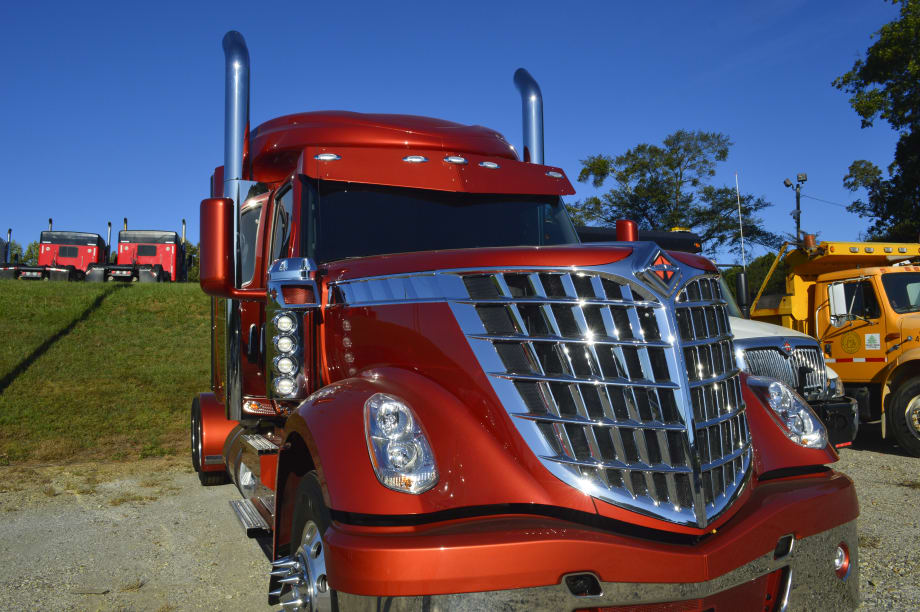
After peak sales and build in 2019, significant declines are ahead in 2020, according to ACT Research.
Photo: Jack Roberts
Carrier profitability and by extension Class 8 demand are heading toward tougher business conditions in 2020, according to ACT Research’s recently released Transportation Digest.
The picture was also tough for medium-duty. Succumbing to the slowing economy, the Class 5-7 markets were awash in a sea of red ink in October, although moderate growth persists in build expectations, according to ACT.
The report, which combines ACT’s proprietary data analysis from a wide variety of industry sources, paints a comprehensive picture of trends impacting transportation and commercial vehicle markets.
“After peak sales and build in 2019, significant declines are ahead in 2020, as heavy-duty sales and build follow the net orders trend down," said Kenny Vieth, ACT’s president and senior analyst, in a news release. "But if our forecast of ongoing (but slower) economic expansion holds in 2020, the drop will be a correction (along the lines of 2015 and 2016), not a devasting recession (as in 2008 and 2009)."
Regarding the medium-duty market, Vieth said, “Given its traditional status as the strongest medium-duty order month of the year, October’s disappointment suggests further softening of customer demand. Following September’s bow shot, the downward trajectory of the seasonally adjusted annual rates in the past two months suggests the slowing of build rates the past two months are looking more like a new paradigm, rather than a pause that refreshes.”
ACT Research noted that three factors are at work in the weak outlook for heavy commercial vehicles in the coming two years: demand, supply, and timing. While some, like the oversupply of equipment, have been on the radar for a long time, others, like the growing weakness in manufacturing and the broader economy, have come on slowly over several months.
“The speed at which the economy is progressing – or not [progressing], in the case of the manufacturing sector – is insufficient to absorb the capacity overhang that was built in 2019," Vieth said. "If railroad and port activity are any indication, the freight slowdown is accelerating into year’s end and is as broad-based as it is disconcerting." ACT projects that because carriers bought more equipment than was actually needed for capacity in 2019, 2020 will see "the industry awash in excess equipment, most of which was added by private fleets.”
Vieth also noted that timing will play a significant role in how the truck markets will perform in 2020. “Add to the existing supply and demand imbalance the lack of a visible spark that will propel the U.S. economy to higher growth levels," he said. "This has to occur in time to drive heavy-duty market improvement into 2021. The process for this goes something like: Rising freight absorbs capacity, spot rates improve, contract rates recover, orders accelerate and backlog growth ensues, and then with comfort in new demand levels, supply chain are ramped. That connect-the-dots process will unlikely be finished in time to materially improve activity into 2021.”
More Equipment

How Volvo Updated Its D13 for EPA 2027 [Watch]
Volvo’s updated D13 promises lower emissions without sacrificing performance or fuel economy. Take a closer look at what changed inside the engine in this HDT Spotlight video.
Read More →
Michelin Tire Improves Efficiency and Durability for Regional Fleets
The Michelin X Multi Energy D2 is a regional haul drive tire engineered to help fleets improve fuel efficiency, durability and traction in demanding stop-and-go operations.
Read More →
ZF Expands Commercial Vehicle Push in North America
ZF is expanding its North American commercial-vehicle presence with new transmission applications, electrification, trailer technology and autonomous-driving systems.
Read More →
Tesla Wants a Self-Driving Semi. Are Cameras Enough?
Could Tesla’s camera-only autonomous driving technology work on an 80,000-pound Semi? In this commentary, HDT's Deborah Lockridge takes a look at Tesla, Cybercab, and how autonomous trucks see the road.
Read More →
Kodiak: Driverless Long-Haul Truck Launch on Track for 2026
Kodiak AI says its driverless long-haul safety case is 93% complete and it remains on track to begin commercial operations by year-end 2026.
Read More →
What DOT’s Automated Vehicle Strategy Means for Trucking
The U.S. Department of Transportation issued a new automated-vehicle strategy that outlines plans for driverless-truck regulations, cross-state freight corridors, and federal safety standards.
Read More →
East Coast Port Launches $45M Electric Truck Push
The Port Authority of New York and New Jersey announced millions in incentives for zero-emission drayage trucks, yard tractors, and new charging hubs near the port.
Read More →
PlusAI Going Public to Fund Autonomous Truck Launch
A SPAC deal could provide PlusAI with up to $300 million as it works toward a 2027 commercial launch of factory-built autonomous trucks.
Read More →
NHTSA Moves to Rewrite Truck Fuel-Economy Rules
The National Highway Traffic Safety Administration says it lacks authority to regulate medium- and heavy-duty truck engines separately from complete vehicles, but the existing standards have not yet been eliminated.
Read More →
Detroit Opens Orders for EPA 2027 Engines
Detroit isn’t starting from scratch to meet EPA 2027 diesel emissions standards. Its Gen 6 DD13 and DD15 engines keep much of today’s platform while updating the fuel and aftertreatment systems.
Read More →