




6x2 Fuel Savings Average 2.5% in Track and Fleet Tests, NACFE Study Finds
The "tag-tandem" tests well and does even better in actual service, says the North American Council for Freight Efficiency. One negative: Drive-tire wear is worse than most people believe.

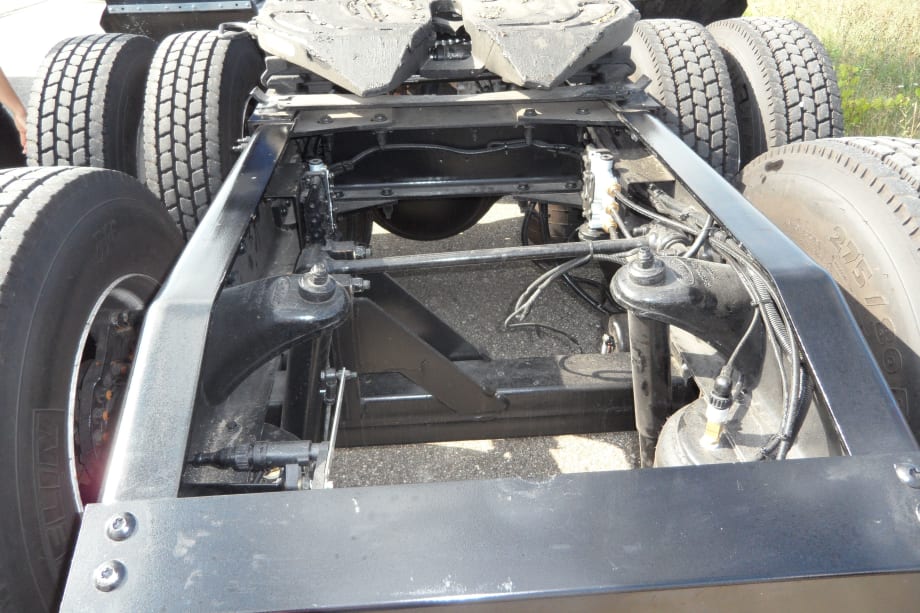
The 6x2 configuration with a single drive axle in its rear tandem is likely to save highway truck operators an average of 2.5% in fuel compared to the dual-drive 6x4 that currently dominates the market, says a report of a study released Tuesday by the North American Council for Freight Efficiency.
The study, which involved axle and truck manufacturers and five large fleets, also found that fuel savings would pay back the costs involved with acquiring 6x2 systems in about 20 months.
Current upcharges of $1,000 to $2,000 per vehicle are likely to disappear with volume production if many fleets switch to 6x2 truck-tractors, and residual values would probably increase as their monetary benefits became better known.

Lack of traction with two drive wheels instead of four – a common fear among drivers and owners - can be managed with controls that shift weight from the 6x2 tandem’s “dead” axle to its “live” drive axle, says the report, “Confidence Findings on the Potential of 6x2 Axles.” Weight-shifting mechanisms should “automatically” be chosen with any 6x2 purchases, NACFE recommends.
One negative finding involves tire life.
“Some in the industry assume that the driven tires of a 6x2 will wear twice as fast as the tires on a 6x4, since only half as many tires are providing thrust,” the study states.
“But data from tire manufacturers and several fleets indicates that the useable tire life on a 6x2 drive axle is actually about one third that of the 6x4 drive tires.”
Loss of 6x2 drive-tire life can be offset by using less costly trailer tires on the dead axle, the report says. Trailer tires usually offer lower rolling resistance than drive tires, which will save a bit more fuel.
Dana Holdings Corp. and Meritor Inc., which build truck axles and offer 6x2 as well as 6x4 drive tandems, sponsored the study and supplied much data for it, said NACFE's executive director, Mike Roeth. But they did not bias the study's findings for or against 6x2s.
Further support came from Bridgestone Corp., Michelin North America Inc., and Performance Innovation Transport-FP Innovations.
The report says an NACFE contractor ran track tests using two Kenworth tractors with Dana axles and a Volvo with Meritor axles, which with 6x2 axles together saved 2.3% in fuel after being modified from a 6x4 configuration.
It cites findings in tests by Daimler Trucks using a Freightliner Cascadia tractor and Volvo Trucks using Volvo VN that together got 1.9% better economy when converted to 6x2s from 6x4s.
Results of in-service, on-highway testing by five fleets yielded better results – an aggregate economy gain of 3.5% -- the study found.
Those tests, which also pitted 6x2s against 6x4s, included Kenworths operated by Con-way Truckload, Macks run by United Parcel Service, Volvos run by Nussbaum Transportation, and Freightliners and Internationals run by two fleets that wished to remain anonymous.
Duration of each fleet test ranged from one to 12 months.
Averaging the economy gains of the three test groups – NACFE contractor, truck manufacturers and fleets – yielded the 2.5% stated in the study’s conclusions. Readers should consider the operations of the participating fleets, which are described within the report, in deciding which results might be closest to what they might see, NACFE says.
“Given all the data in this report, Trucking Efficiency [NACFE] predicts a rather aggressive adoption of 6x2 axles on new truck production over the next few years, possibly doubling every year: 2% in 2013, 4% in 2014, 8% in 2015 and 16% in 2016,” the report states.
Greater popularity in coming years will gradually raise resale values of 6x2 tractors, so fleets wanting to convert to them should consider lengthening their trade cycles to capture some of that dollar increase.
The report also recommends that drivers be trained to properly operate the equipment, and that fleets should go all-out in a conversion so drivers, mechanics and other employees get accustomed to the new fleet spec.
The complete report can be downloaded at www.nacfe.org/projects.
More Drivers

EEOC Sues KLLM Over Alleged Sex Discrimination in Driver Training
KLLM is facing a federal sex-discrimination lawsuit over policies the EEOC alleges put female truck driver trainees at a disadvantage.
Read More →
FMCSA Moves to Codify English Language Requirements for Commercial Drivers
By changing regulations on English-language proficiency requirements for commercial drivers, rather than relying on a guidance memo, the FMCSA said future administrations won't be able to walk back the Trump administration's stricter enforcement with just a memo.
Read More →
Drivers Put Western Star Trucks to the Test at Star Nation Experience
Watch to get an inside look at the Western Star trucks, technology, and community behind the Star Nation Experience 2026!
Read More →
Trump Administration Looks to Put More Veterans Behind the Wheel
The Freedom Haulers program pulls together existing and expanded programs at several federal agencies to recruit veterans to drive commercial heavy-duty trucks and cut the red tape for them to get a CDL, training, and employment.
Read More →
Putting Mack’s Command Steer to the Test
A test drive of Mack’s Command Steer active steering system evaluates how it can make truck driving easier and less tiring.
Read More →
Competition Heating Up for Truck Drivers
New report reveals rising driver hiring costs, the return of sign-on bonuses, growing AI advantages, and the operational factors shaping driver retention.
Read More →
How Fraley & Schilling Improved Logbook Compliance by Over 50%
Fraley & Schilling needed a way to close a compliance workflow gap in its ELD system without adding more work from driver training, reminders, and back-office follow-ups. It found the answer in a custom driver app.
Read More →
Volvo Goes Gaming
Volvo has roared into American Truck Simulator with two new flagship trucks.
Read More →
What the Best Fleets to Drive For Teach About Driver Retention
Survey fatigue, AI-powered routing, owner-operator expectations, and the decline of social media all emerged as themes from this year's Best Fleets to Drive For program.
Read More →
Driver Retention Lessons From the Best Fleets to Drive For
What separates trucking's best workplaces from the rest? Jane Jazrawy shares the biggest lessons from this year's Best Fleets to Drive For program on driver retention, communication, AI, and workforce trends on the HDT Talks Trucking podcast.
Read More →