




Why is the DOT Taking so Long to Move on Hair Testing for Drugs?
The American Trucking Associations used the National Transportation Safety Board's stricter impaired-driving regulations as an opportunity to again push for the DOT to move forward on a process to allow motor carriers to collect hair samples for DOT-required drug testing in lieu of the currently mandated urine testing process.

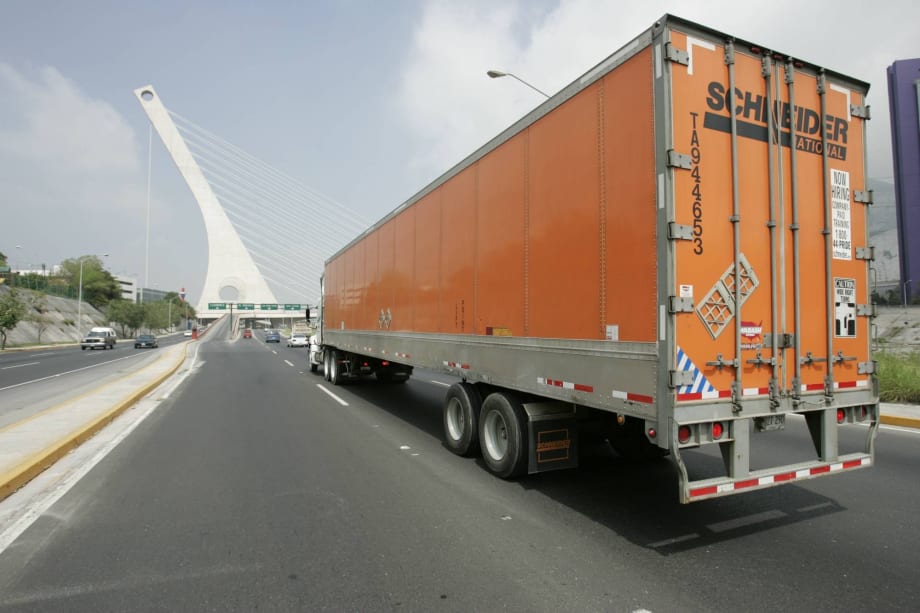
Schneider National is one of a number of major fleets who have discovered many drug users are not caught by DOT-mandated urine testing.
Schneider National is one of a number of major fleets who have discovered many drug users are not caught by DOT-mandated urine testing.
The American Trucking Associations used the National Transportation Safety Board's stricter impaired-driving regulations as an opportunity to again push for the DOT to move forward on a process to allow motor carriers to collect hair samples for DOT-required drug testing in lieu of the currently mandated urine testing process.
The NTSB recommended reducing the legal limit for drunk driving to a BAC of 0.05 from 0.08, increasing the use of interlock devices, strengthening penalties for repeat offenders and increasing high-visibility enforcement.
ATA said it supports all of these steps. But in addition to strengthening these measures, ATA President and CEO Bill Graves also again called on DOT to permit hair testing for mandatory pre-employment drug tests of commercial motor vehicle drivers.
“ATA knows for a fact that thousands of truck drivers who have failed hair tests . . . have obtained driving positions with other carriers because they were able to pass DOT-authorized urine tests,” Graves wrote in a May 13 letter to Transportation Secretary Ray LaHood.
“All we are asking is for DOT to allow this industry to use the best available tools under the DOT-mandated drug and alcohol testing program to make sure our roads are safe for all motorists,” Graves said.
As we reported in a 2011 feature story in HDT, it's much easier for a driver to "cheat" on a urine test than on a hair test for drugs.
"With a urine test, what we are really asking is, 'Does the candidate know how to use the Internet?'" quipped Mark Freemal, sales manager at Omega Laboratories, a provider of hair testing services for the trucking industry. "Our president calls it a stupidity test."

ATA wants the DOT to allow hair testing to meet federal drug-testing requirements.
The practice of defeating and falsifying urine tests is widespread enough in the trucking industry to have prompted a Government Accountability Office investigation in 2007 that uncovered some disturbing problems.
Undercover investigators were able to use bogus commercial driver's licenses at 24 drug-testing sites, proving that a driver could easily send a substitute in with a fake ID. In addition, 22 of the 24 sites did not follow testing protocols, which opened the door to further cheating, GAO found.
Beyond cheating, urine testing is limited even if done properly. Generally, it cannot detect use of heavier drugs longer than two or three days after use. Cocaine, methamphetamine and opiates are in and out of the digestive system very quickly. It's possible to party hard on Friday and pass a test on Tuesday. As a result, companies don't get an accurate idea of what a driver does in his or her free time.
By contrast, telltale remains of most illicit substances reside in the core of hair follicles permanently.
Don Osterberg, senior vice president of safety and security at Schneider National, told us in 2011 that the company caught around 6% of drivers when they first started hair testing, compared to 1% or less with urine tests. Its hair test fail rate has since dropped to just below 4%, similar to J.B. Hunt, which tols us its drivers were still failing hair tests for marijuana three times as often as urine tests.
This seems like a no-brainer. The trucking industry isn't even asking for mandated hair testing, only that companies who want to do hair testing can use it to meet DOT regs instead of the mandated urine testing so they don't have to continue to double-test. Why is it taking so long for the DOT to act on something so simple?
More Blog Posts

Beyond the Central Transport Settlement: Lessons on Hiring and Risk
The $5.5 million discrimination settlement raises broader questions about hiring practices, safety performance, and the hidden risks that can lurk in a fleet's recruiting process.
Read More →
Are Diesel Shortages Something to Worry About Again?
There’s a certain déjà vu when tensions flare in the Middle East and diesel price spikes can give you panic attacks. What parallels are there between the current situation and the 1970s energy crisis?
Read More →
NOx Isn’t Laughing Gas. Let’s Clear That Up.
A recent EPA reference mixed up NOx and nitrous oxide. It’s an easy mistake. Just not one you expect to see in emissions policy. Let’s look at the difference.
Read More →
TMC 2025 Takeaway 2: Buy... or Subscribe?
TaaS. Does that mean trucks as a service, trailers as a service, or tires as a service? HDT's Deborah Lockridge has another takeaway from the Technology & Maintenance Council meeting in her blog.
Read More →
TMC 2025 Takeaway: The Journey Toward Vertical Integration
HDT's Deborah Lockridge on how the trucking industry has moved toward "vertical integration" over the past 25 years.
Read More →
Trucks Are For Girls!
HDT Editor and Associate Publisher Deborah Lockridge is a longtime Girl Scout leader and loves to connect her passion for inspiring girls with her love of the trucking industry.
Read More →
Trucking Advocacy: Impact Beyond the 2024 Elections
No matter who wins the election, trucking continues to work to educate the people who pass the laws and make the rules that affect the industry. HDT's Deborah Lockridge shares insights from two major trucking associations in her All That's Trucking blog.
Read More →
Recharge Your Brain for Better Business
Skimping on vacation may be the worst thing you can do for your business, your career, and your mental health. In her All That's Trucking blog, Deborah Lockridge writes about the importance of giving your brain what it needs to be innovative.
Read More →
Trucker Pre-Trip Leads to Mission 'Im-paw-sible'
See what happened when a truck driver found an unexpected stowaway during his pre-trip inspection.
Read More →
HDT Editor: 2023's Most Important Trucking Topics
Read Deborah Lockridge's picks for the most significant stories we covered at HDT in 2023: freight recession, zero-emission trucks, drivers and marijuana, and more.
Read More →