




Why Are So Many Trailers Just Sitting There?
Managers strive for “productivity” and “equipment utilization,” but how many trailers are moving freight even half the time in their lives? Tom Berg's Trailer Talk blog muses on the number of trailers just sitting around.

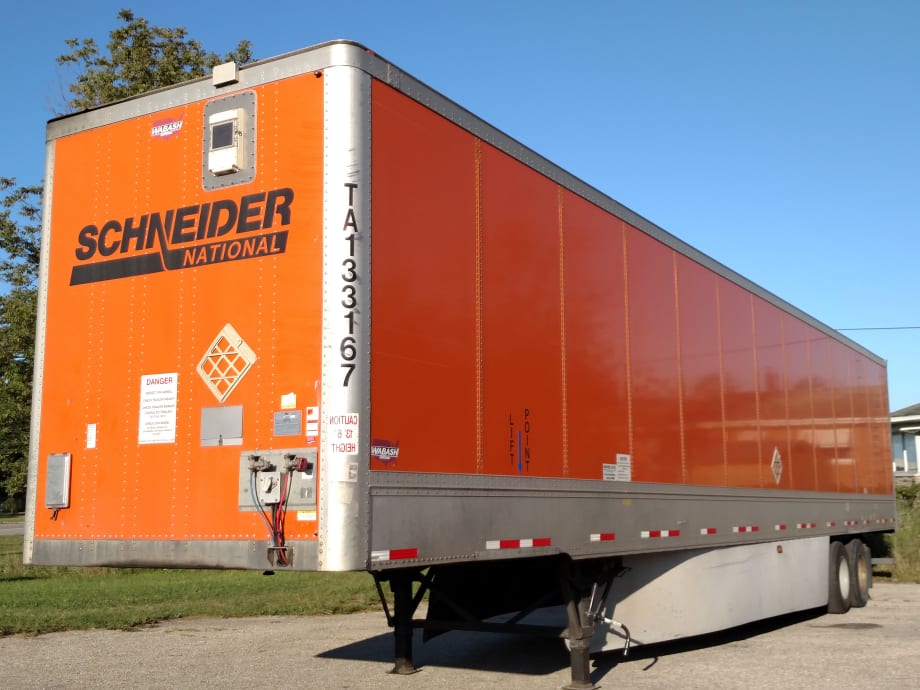
Because of the tracking device on its nose, Schneider dispatchers can find this van any time. Photos: Tom Berg
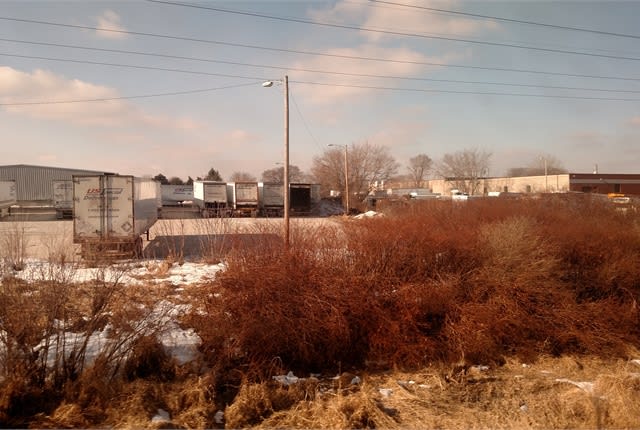
Do they owners of these trailers know where they are? Maybe, maybe not. Photos: Tom Berg
Last weekend I needed to be in my old home state of Wisconsin for a cousin’s funeral, and instead of driving up from Ohio I rode on Amtrak. It takes more time, but the ride is enjoyable because I can doze, watch the passing scenes, read a newspaper, magazine or book, and even do some writing.
I’m starting this item on Sunday. The funeral finished the day before; tears were shed, relatives and friends greeted, and I'm now headed toward home on Amtrak's eastbound Capitol Limited, rolling through the night in northern Indiana. In a few hours, just before midnight, we’ll arrive in Toledo, where I’ll leave the train, climb into my cold car and drive a couple of hours south to Westerville.
Railroad tracks tend to run past America’s back yards. Some of the scenes are gritty, especially in old, big cities, where many things have deteriorated over the years and litter has been strewn and left to rot. Even in small towns and rural areas, there are abandoned and neglected buildings, and all kinds of debris – scraps of old wood and chunks of aged concrete scattered around a property, and sometimes old cars and trucks, seemingly parked one last time by hoarders who probably weren’t aware that their unwillingness to discard anything is a recognized psychiatric disorder.
Then again, while riding out of Milwaukee on the Hiawatha, I spotted a modern terminal, gleaming white in the winter afternoon sun, everything clean and orderly on its acres of clean concrete. Trailers were parked smartly in ranks or backed against docks, with several staged in precise lines nearby, apparently waiting to be grabbed and loaded, then sent on their way.
Trailers! At new places and old, there were semitrailers, lots of them. Often in groups and usually white vans, some lettered and some anonymous, parked on cold pavement or gravel, some with their rear doors open, waiting for work. Very few were at loading docks; most sat in long rows, side by side, looking forlorn and forgotten. “Does anybody know we’re here?” they might cry if they could think.
On the previous Friday morning, after the sun rose and the westbound Capitol rocked and rolled and sometimes glided its way toward Chicago, I must’ve seen thousands of vans parked within sight of the tracks. And it occurred to me that in many cases, no one might know they were there. And if they did know, why were there simply so many sitting idle? Were they all really needed at each of the locations?
Managers strive for “productivity” and “equipment utilization,” but I wonder how many trailers are moving freight even half the time in their lives. In the classic three trailers for each tractor, Trailer 1 is being loaded at Point A, Trailer 2 is being offloaded at Point B, while Trailer 3, with or without cargo, is being pulled between A and B. In that example, even when sitting still, Trailers 1 and 2 are doing something useful. But when they’re sitting by the scores, even hundreds, in yards, what use are they?
Sure, in hook-and-drop operations, some of those trailers are loaded, waiting for a tractor to arrive, hitch up and take it away. But that tractor has probably dropped off another trailer, whether loaded or empty, and now it will sit a while before being attended to -- unless its dispatchers lose track of it, and then it'll sit there until somebody notices it and gets a message to its owner.
I once heard of a trailer that had gone missing for something like seven years until a driver discovered it, its tires flat and sinking into muddy gravel, and alerted “dispatch” of it. “What trailer?” the dispatcher probably said, not aware of its existence until a call to the garage confirmed that, “Oh, yes, we do have a Trailer 605803, it’s in the records here. Boy, we haven't seen it in a while.”
That was maybe 20 years ago. Today there’s hope: Tracking devices attached to trailers can broadcast their whereabouts to anyone who cares. Just “ping” it, and it will note its location by global positioning satellite and silently yell, “Come to these coordinates. I’m here!” Stolen and hijacked trailers, and often their loads, have been recovered because of these devices.
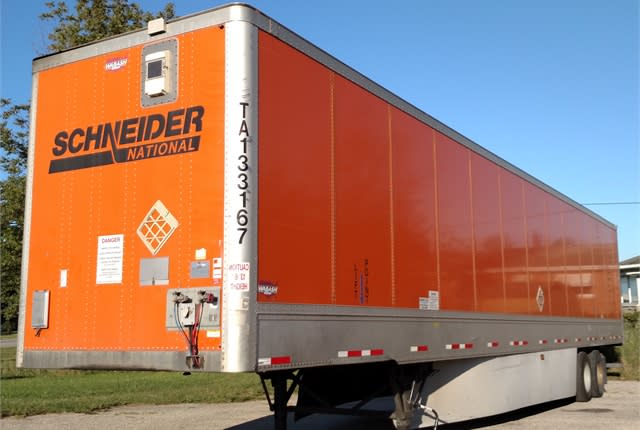
Because of the tracking device on its nose, Schneider dispatchers can find this van any time. Photos: Tom Berg
Tracking is one of the things that make dumb trailers smart (read more about smart trailers in February HDT.) Maybe a lot of those trailers I saw in northern Indiana and southeastern Wisconsin were being tracked, and there were transport plans for them. “Don’t worry, Tom,” they could’ve been saying. “Relax and enjoy the ride on that train.” I did.
More Blog Posts
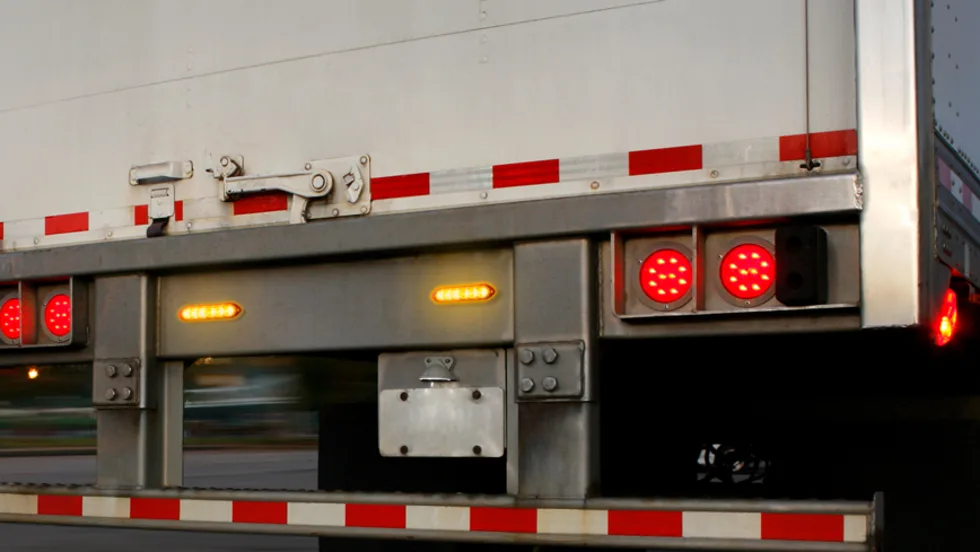
Pulsing Back-of-Trailer Lamps Aim to Prevent Crashes
Can the addition of a pulsing brake lamp on the back of a trailer prevent rear-end collisions? FMCSA seems to think so, if its exemptions are any indication.
Read More →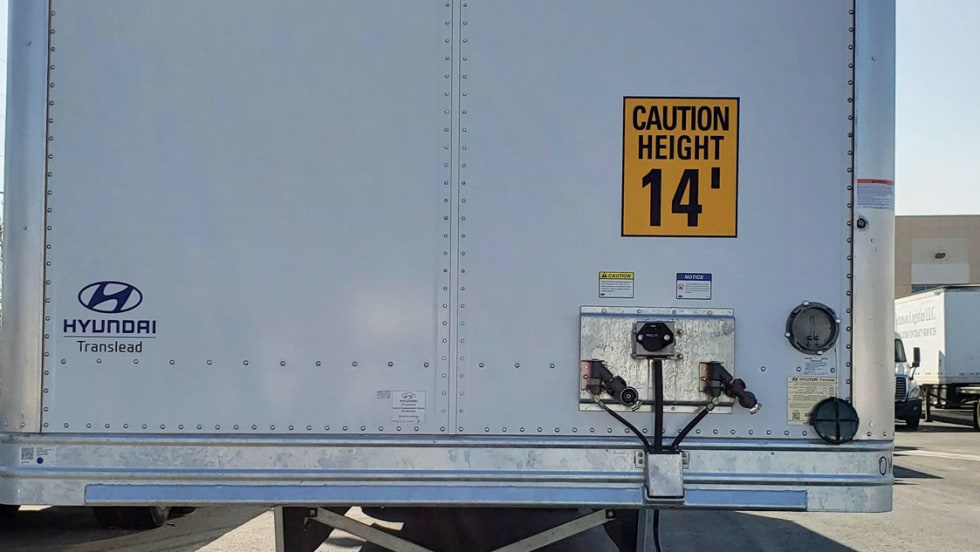
Designing a 14-Foot Trailer
Trailers are 13 feet, 6 inches high, right? Not for Hub Group, which developed a special 14-foot-high trailer spec for a dedicated customer based in California. Learn more in the Trailer Talk blog.
Read More →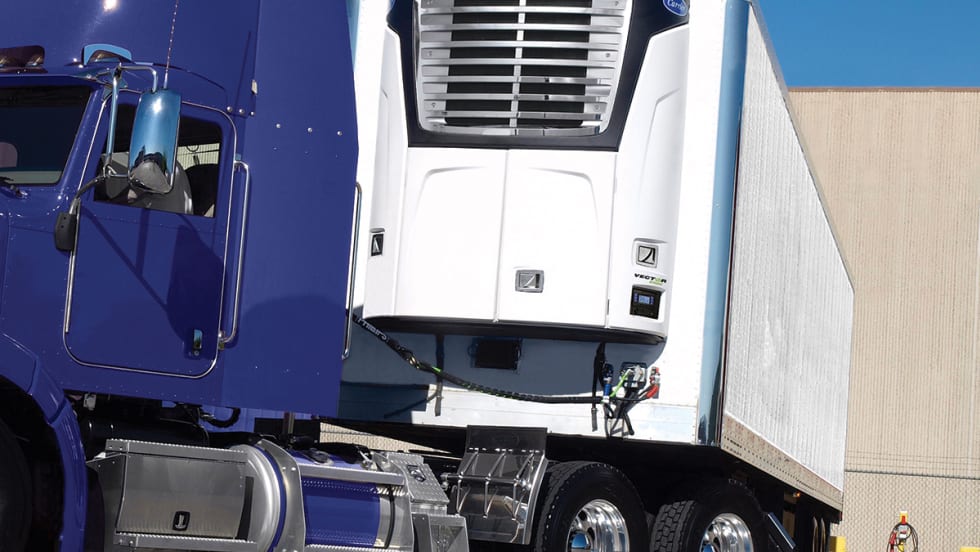
CARB Comes for Reefer Trailers
A new round of emissions control regulations decreed by the California Air Resource Board will begin affecting refrigerated trailer and TRU design and operations next year.
Read More →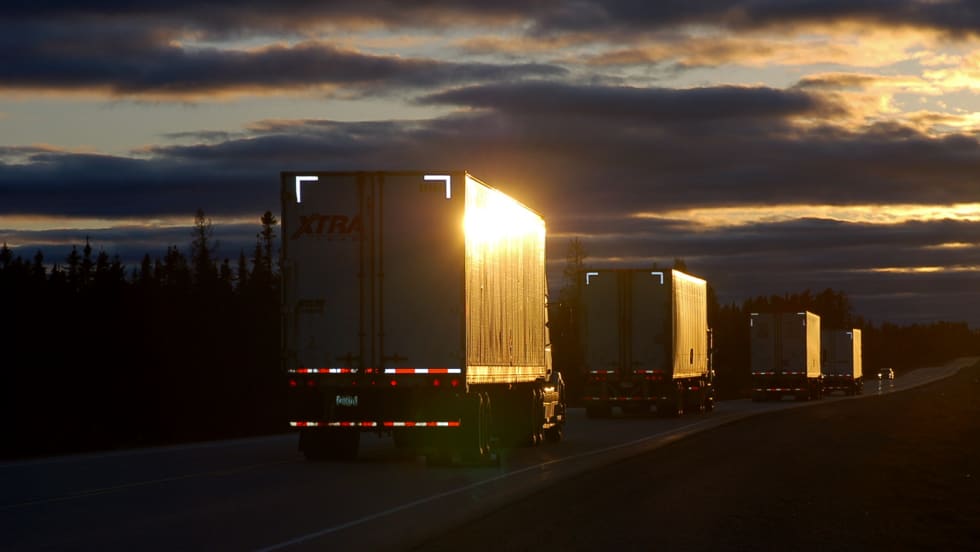
5 Ways Data Analysis Maximizes the Value of Trailer Telematics
Are you getting the most out of your trailer telematics investment?
Read More →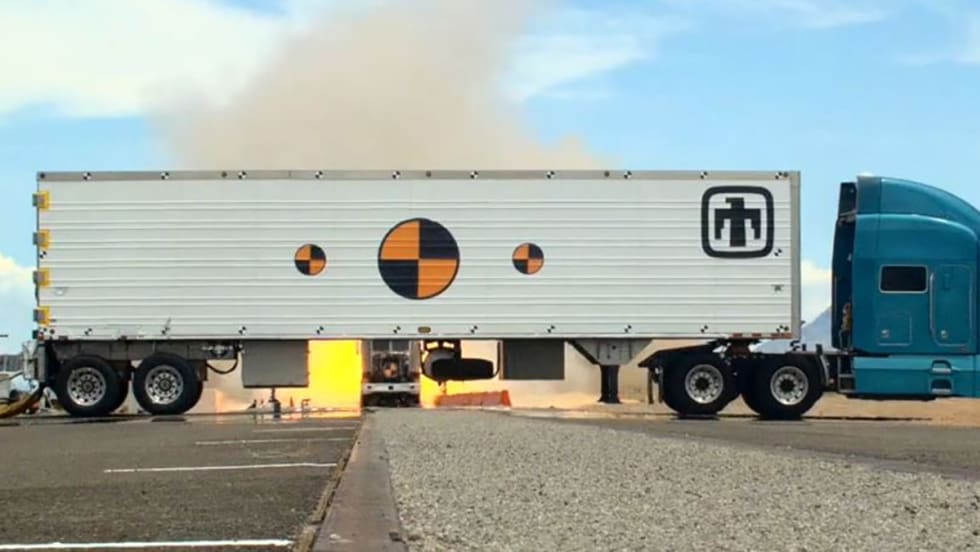
Can You Guess What's in That Trailer?
You don’t always know what’s in the trailers that pass you on the road. But some of those trailers are carrying something a little more dangerous that frozen food or new bedding…like, maybe, a nuclear weapon. But this isn’t an ordinary trailer; this is a trailer specifically made to not only carry this type of payload, but protect it at all costs.
Read More →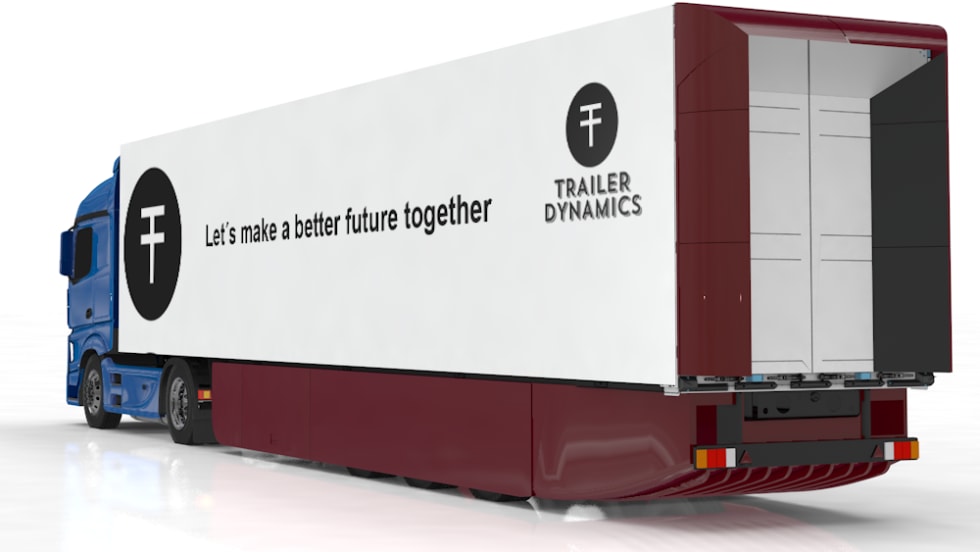
How Trailers Are Harnessing 'Free' Energy
Can trailers play a more active role in sustainable transport beyond aerodynamic add-ons or low-rolling-resistance tires? Some companies think so.
Read More →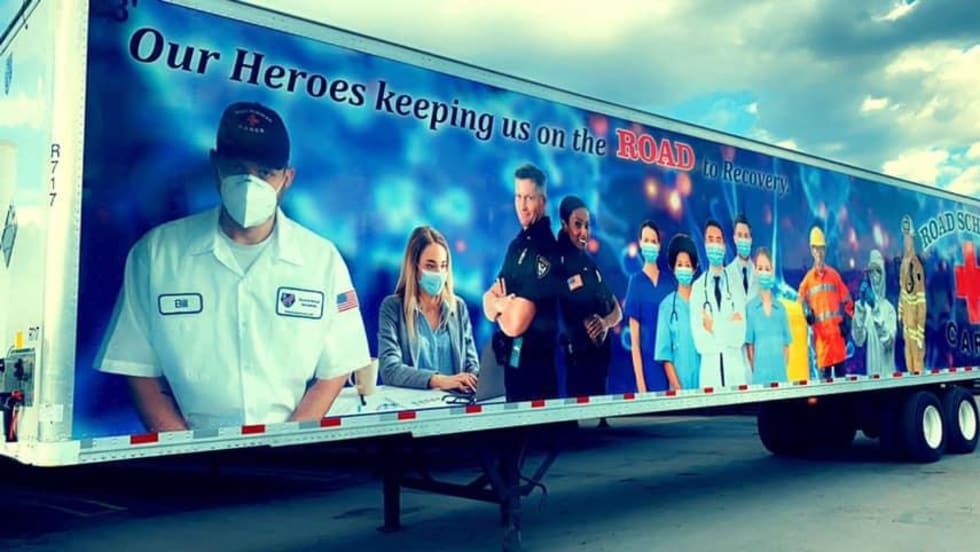
Wrapping a Trailer for COVID’s Everyday Heroes
“We don’t only deliver freight. We deliver awareness.” That’s what Jim Barrett, president and CEO of Road Scholar Transport, likes to say about the Dunmore, Pennsylvania-based carrier’s “awareness fleet.” Its latest trailer wrap honors the everyday heroes of the pandemic.
Read More →
How a Tanker Fleet is Using Unorthodox Trailer Lighting to Fight Rear-End Collisions
Groendyke Transport watched the number of rear-end collisions with its trailers rise steadily until it tried an unorthodox and then unapproved method of alerting following drivers that its trucks were applying brakes and slowing down.
Read More →
The Role Trailers are Playing in COVID-19 Funerals
In places such as New York City and Detroit, overwhelmed hospitals and mortuaries are using refrigerated trailers to store the bodies of people killed by COVID-19.
Read More →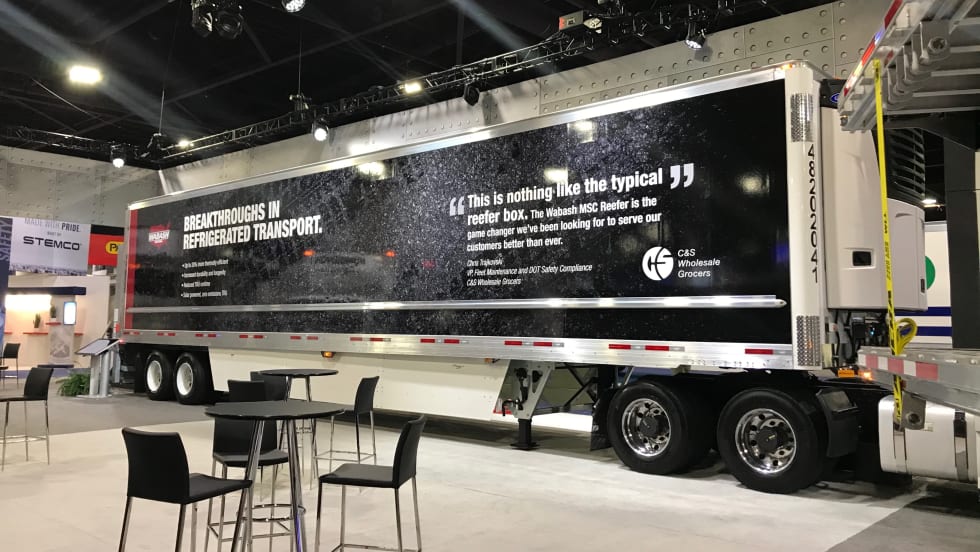
Reefer Trailer Aims to Help Reach Zero Emissions
Wabash National is partnering with C&S Wholesale Grocers to test a new type of zero-emissions refrigerated trailer.
Read More →