





Related: Trucks Block Possible Terrorism in D.C., New York City
Who's to Blame in This RR Crossing Wreck?
Newscasters focused on the non-working crossing lights and gates. But shouldn't the truck driver have looked for a train? Tom Berg has more in Trailer Talk.
January 26, 2017
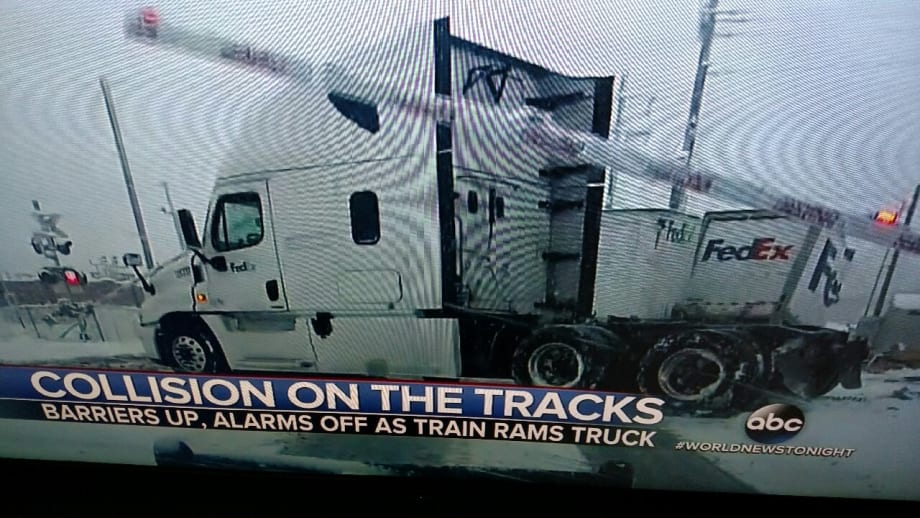
The gates came down after the wreck. And what a mess! Note that the impact yanked the fifth wheel off the tractor's frame. That means the fifth wheel's jaws hung onto the lead trailer's kingpin.
2 min to read
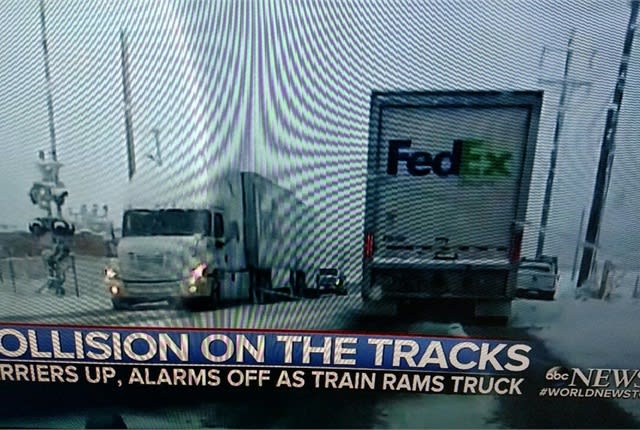
As seen from a police cruiser's dash camera, the crossing lights are dark and gates are up, and two FedEx rigs proceed across the tracks.One makes it, the other doesn't. Photos: Tom Berg
Maybe you saw it on a newscast the other day – a commuter train slamming through a set of FedEx doubles at a railroad crossing in North Salt Lake, Utah. Probably every TV newscast in America carried the police dash-cam footage of the event on Jan. 24. It was spectacular, showing that a couple of trailers are really soft targets when hit by massive train equipment – in this case passenger coaches being pushed by a locomotive, a common operation among commuter railways.
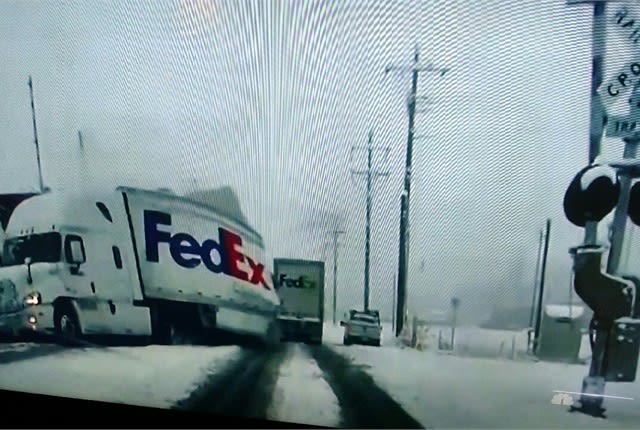
Whoops! The oncoming train slams into the pup trailers and the tractor begins a short spin.
It was amazing that no one was killed or even injured. But there was plenty of embarrassment:
to the Utah Transit Authority, whose warning lights and gates for the crossing didn’t work;
to UTA workers sent to check on them after someone reported that they weren’t working, but the workers didn’t fix ‘em;
to the truck driver, who failed to see the train coming;
and to FedEx, which even now is probably explaining to a lot of shippers why their packages aren’t going to be delivered real soon, if at all.
As for blame, the stories on the ABC and NBC ‘casts focused on the non-working lights and gates, and reported the railroad’s preliminary finding that snow probably interfered with their operation. That’s possible, though they’re supposed to work in any weather.
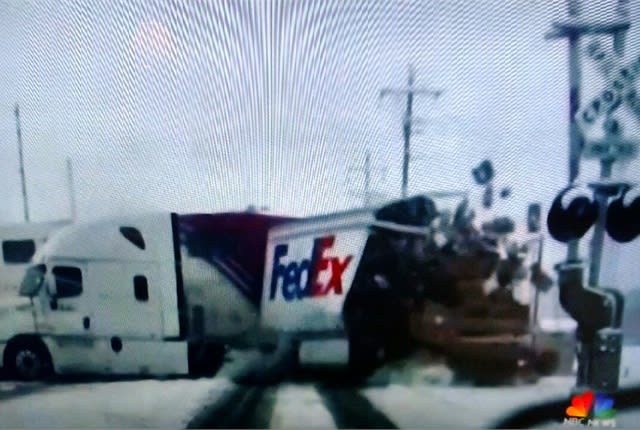
Packages fly as the trailers bust open and the tractor spins free. Crossing lights and gates still aren't functioning.
Not to be harsh, but I blame the truck driver, who drove across the tracks into the train’s path. Remember, “Stop, look and listen”? When I approach a crossing, I always at least slow down, look up and down the tracks, and crack open a window so I can hear a rumble or a locomotive’s horn. I do this no matter what warning lights and gates are or aren’t doing. It just makes sense, as we saw from this accident.
Anyway, you can watch the event as shown on ABC World News Tonight and NBC Nightly News, from where I shot these pics.
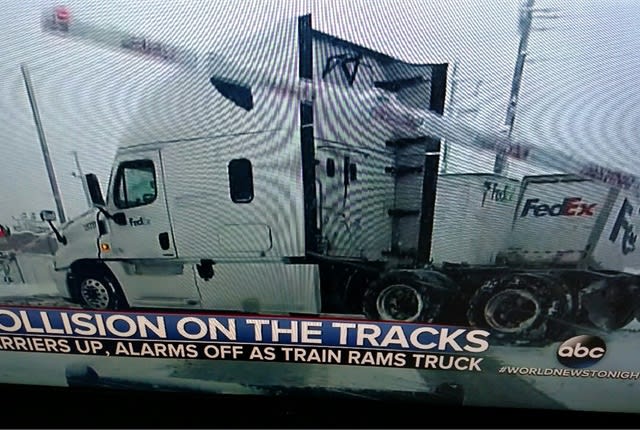
The gates came down after the wreck. And what a mess! Note that the impact yanked the fifth wheel off the tractor's frame. That means the fifth wheel's jaws hung onto the lead trailer's kingpin.
Subscribe to Our Newsletter
More Blog Posts
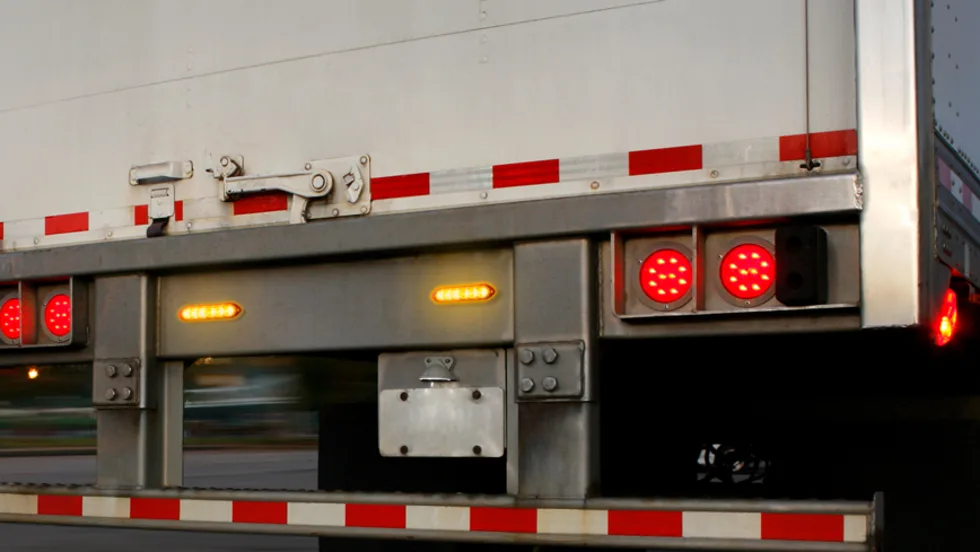
Pulsing Back-of-Trailer Lamps Aim to Prevent Crashes
Can the addition of a pulsing brake lamp on the back of a trailer prevent rear-end collisions? FMCSA seems to think so, if its exemptions are any indication.
Read More →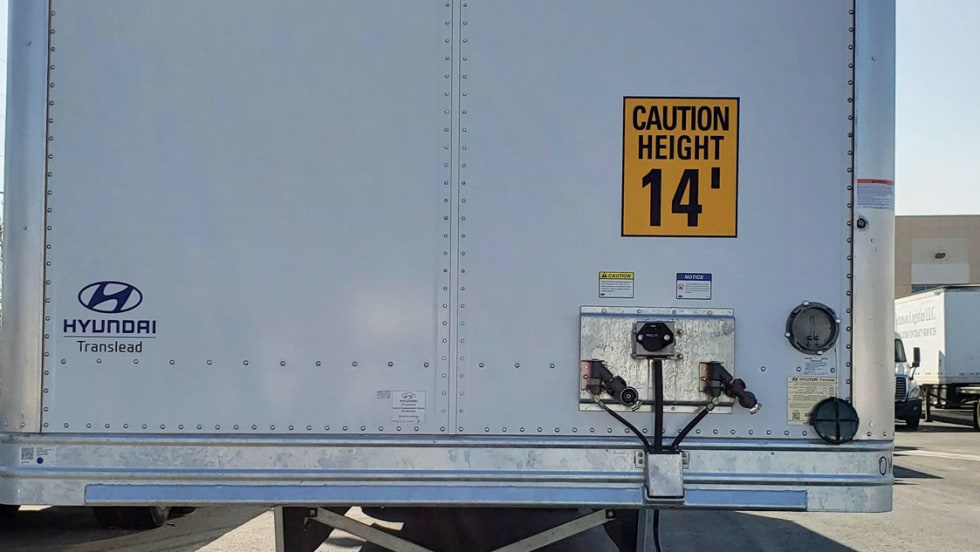
Designing a 14-Foot Trailer
Trailers are 13 feet, 6 inches high, right? Not for Hub Group, which developed a special 14-foot-high trailer spec for a dedicated customer based in California. Learn more in the Trailer Talk blog.
Read More →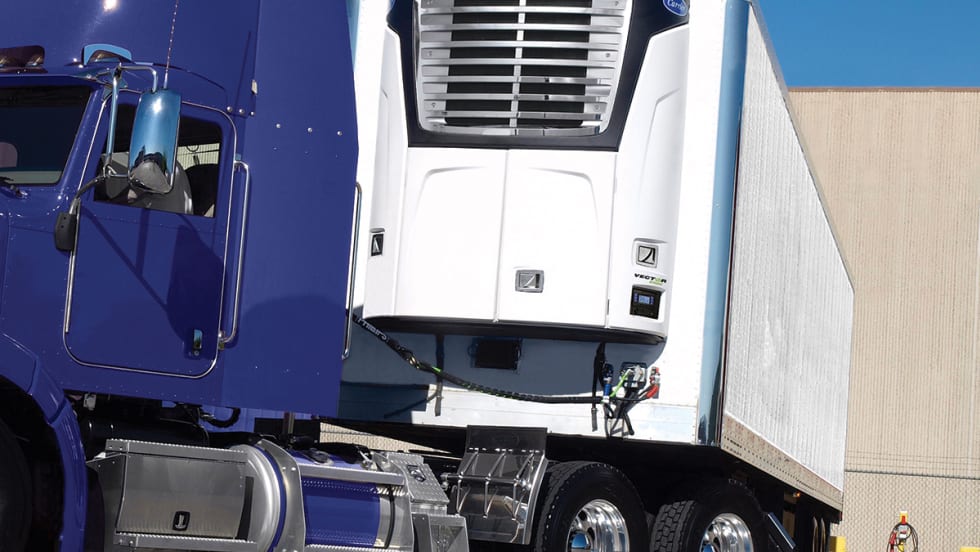
CARB Comes for Reefer Trailers
A new round of emissions control regulations decreed by the California Air Resource Board will begin affecting refrigerated trailer and TRU design and operations next year.
Read More →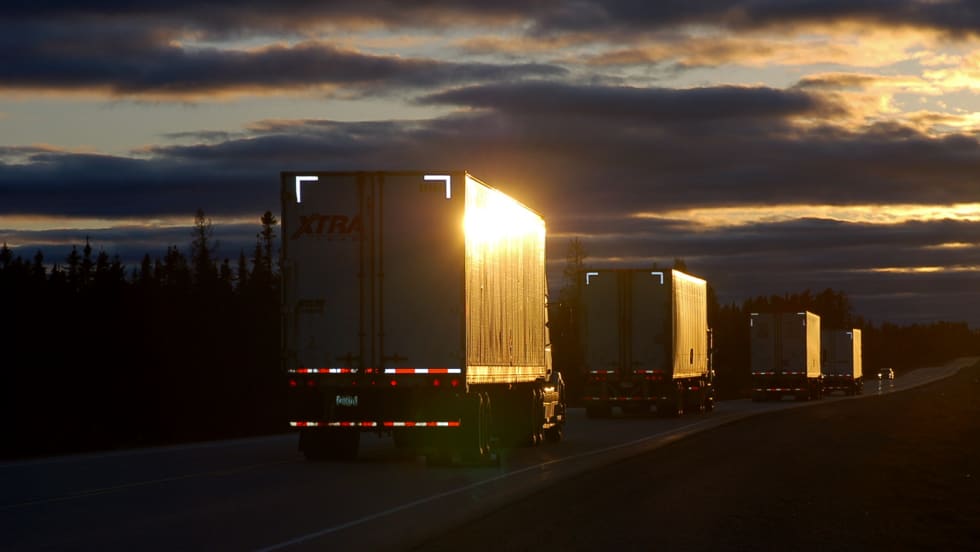
5 Ways Data Analysis Maximizes the Value of Trailer Telematics
Are you getting the most out of your trailer telematics investment?
Read More →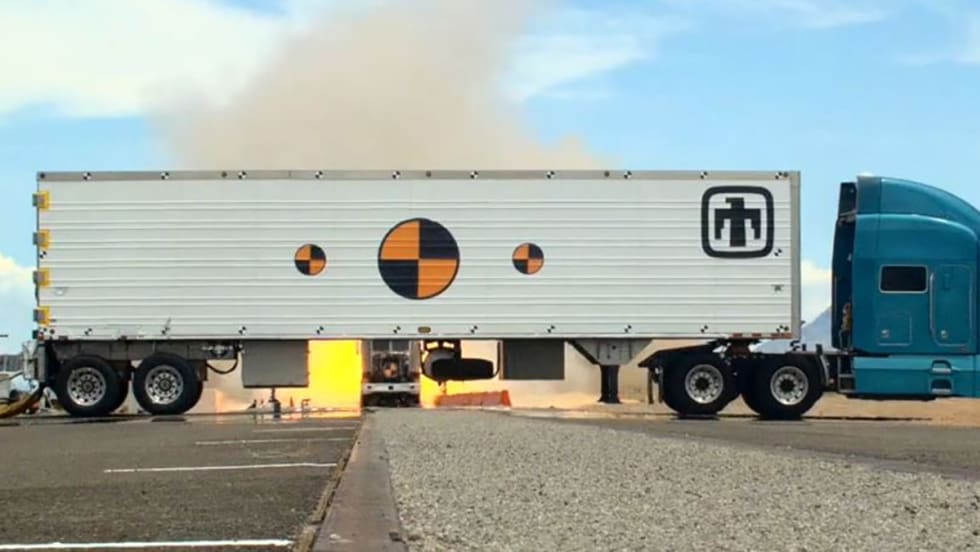
Can You Guess What's in That Trailer?
You don’t always know what’s in the trailers that pass you on the road. But some of those trailers are carrying something a little more dangerous that frozen food or new bedding…like, maybe, a nuclear weapon. But this isn’t an ordinary trailer; this is a trailer specifically made to not only carry this type of payload, but protect it at all costs.
Read More →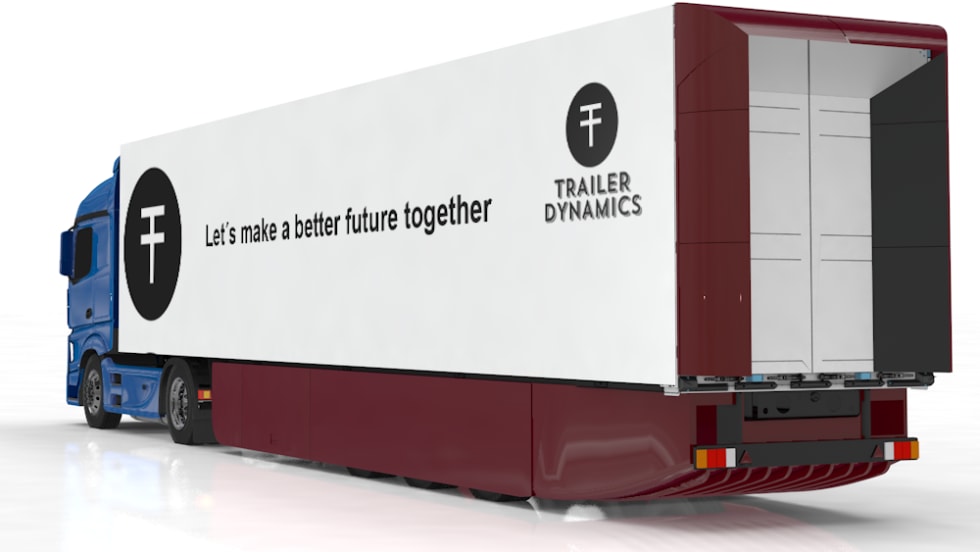
How Trailers Are Harnessing 'Free' Energy
Can trailers play a more active role in sustainable transport beyond aerodynamic add-ons or low-rolling-resistance tires? Some companies think so.
Read More →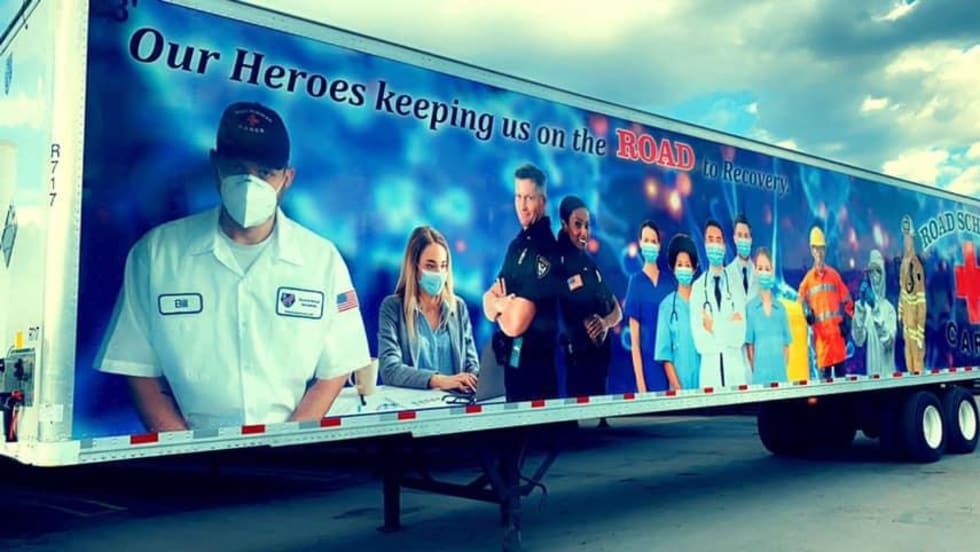
Wrapping a Trailer for COVID’s Everyday Heroes
“We don’t only deliver freight. We deliver awareness.” That’s what Jim Barrett, president and CEO of Road Scholar Transport, likes to say about the Dunmore, Pennsylvania-based carrier’s “awareness fleet.” Its latest trailer wrap honors the everyday heroes of the pandemic.
Read More →
How a Tanker Fleet is Using Unorthodox Trailer Lighting to Fight Rear-End Collisions
Groendyke Transport watched the number of rear-end collisions with its trailers rise steadily until it tried an unorthodox and then unapproved method of alerting following drivers that its trucks were applying brakes and slowing down.
Read More →
The Role Trailers are Playing in COVID-19 Funerals
In places such as New York City and Detroit, overwhelmed hospitals and mortuaries are using refrigerated trailers to store the bodies of people killed by COVID-19.
Read More →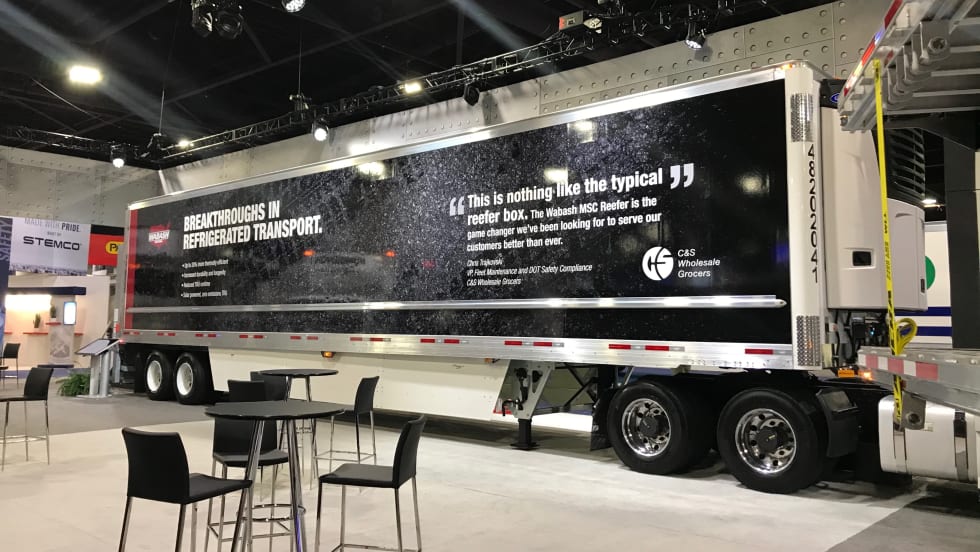
Reefer Trailer Aims to Help Reach Zero Emissions
Wabash National is partnering with C&S Wholesale Grocers to test a new type of zero-emissions refrigerated trailer.
Read More →