




Watching old-fashioned intermodalism at North Milwaukee's 'plastic tracks'
First, a confession: Before I was a truck nut I was a train buff
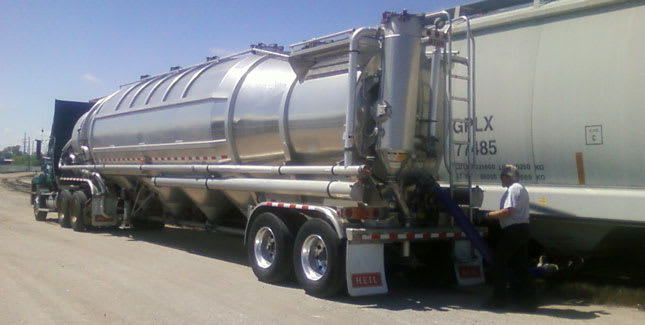
Don Hackl, a driver for Tom Donahue Trucking, monitors the pneumatic transfer of plastic pellets from the railcar to his Heil tanker. The pellets will be molded into squeezable food containers.
First, a confession: Before I was a truck nut I was a train buff.
When I was a boy I often pedaled my old Schwinn to a small rail yard on Milwaukee's north side operated by the Chicago Milwaukee St. Paul & Pacific, better known as The Milwaukee Road. I'd spend hours there, watching locomotives switch cars and hoping for a real train to come by. Once in a while, one would.
Canadian Pacific now owns that property, and it's used somewhat differently. Where mixed freight cars once waited to be moved, there are now strings of large, heavy, covered hopper cars. I didn't know what was in them until I happened by the old haunt on a recent trip to the old hometown.
There was a tractor-trailer parked next to a hopper car, taking on some of its product. I walked over to the scene and the driver turned, smiled and immediately started talking: "This is a 1600-cubic-foot tanker, and we use it to haul plastic pellets that are offloaded pneumatically from the rail car." He continued like a professor lecturing a transportation studies class.
I introduced myself and explained that I write about trucks for Heavy Duty Trucking and TruckingInfo.com, and we began chatting.
The 'plastic tracks'
He was Don Hackl, 56, who drives for Tom Donahue Trucking. He regularly hauls pellets from this yard, which he called "the plastic tracks." Rail cars are spotted here after traveling hundreds of miles from manufacturers of the raw products.
The pellets Hackl handled were produced in Texas and were destined for a plant run by Gateway Plastics in Mequon, a suburb farther north. Gateway melts the pellets and molds the liquid into a variety of food jars, maybe the very ones you squeeze ketchup, mustard and mayonnaise from.
Hackl had connected a large hose to one of the bottom hopper doors on the railcar to the rear of his Heil aluminum tank trailer. The engine in the Mack CH-613 tractor fast-idled to spin an air pump that created a vacuum to pull the pellets into the trailer. He said these pellets were slightly oblong and coated with a light oil, and that made them slide easily. Dry pellets can jam in the hose and he has to work them free.
Hackl, who lives in Muskego, on the opposite side of the Milwaukee metro area, makes two to four runs a day from the plastic tracks to the Gateway plant. It's a huge facility, he said, "and you wouldn't believe the security. You don't walk anywhere in the plant without an escort." I guessed that was perhaps because the company wanted to keep competitors from seeing its modern processing equipment; he said he's noticed more industrial security since the 9-11 attack 10 years before.
I didn't have my camera with me but knew my cell phone could snap pictures. I had never used it that way, though, and fumbled with it. "Here," Hackl said, and showed me how to set it up and shoot. "Oh, thanks," I said sheepishly. Back home in Ohio, my stepson helped me transfer the pics to my laptop computer. That's where the accompanying photo of Hackl's rig came from.
I told him about the many hours I had spent in this yard as a kid, how the wooden North Milwaukee depot had once stood on a now vacant space. In a railroad history book I had read that back in the 1910s and '20s, that depot was staffed around the clock by clerks who tallied the many rail shipments from nearby industries, most of them now shut down and their ancient brick buildings deteriorating. How transportation and industry in America have changed!
Old-fashioned intermodalism
Anyway, what Hackl and his rig were engaged in is a form of intermodal transportation. The long hauling of the bulk commodity is by rail and the short haul, getting the product the "final mile" to the customer, is done by truck. In this case the finished plastic jars and bottles almost certainly go out by truck to food processors.
In the heyday of the railroads, most manufactured merchandise went in boxcars. These were sometimes spotted on "team tracks," where men with horse-drawn wagons, and later motor trucks with van or stake-side bodies moved alongside. They transferred crates, boxes and barrels from railcars to road vehicles and delivered them. Those days are pretty much gone, as fast, flexible and secure trucks now do most if not all the hauling.
"Intermodal" today usually means containers crammed with merchandise from China or some other far-off place moving by ship, special rail cars and then trailer chassis to distribution centers, then by more trucks to stores, where we buy the stuff. Domestic containers carry goods in a truck-rail-truck routing. But it was nice to see Don Hackl and his Mack-Heil rig intermodaling in a more old-fashioned way.
More Blog Posts
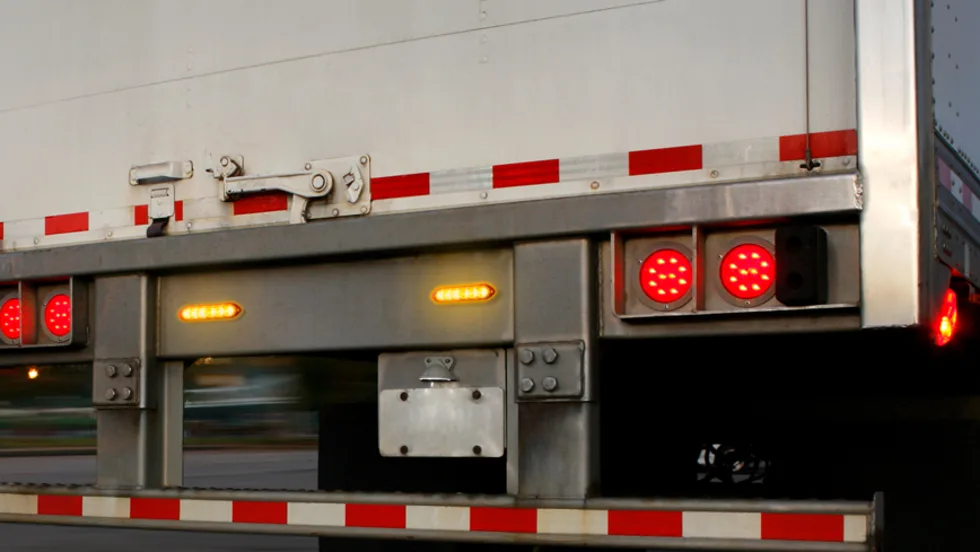
Pulsing Back-of-Trailer Lamps Aim to Prevent Crashes
Can the addition of a pulsing brake lamp on the back of a trailer prevent rear-end collisions? FMCSA seems to think so, if its exemptions are any indication.
Read More →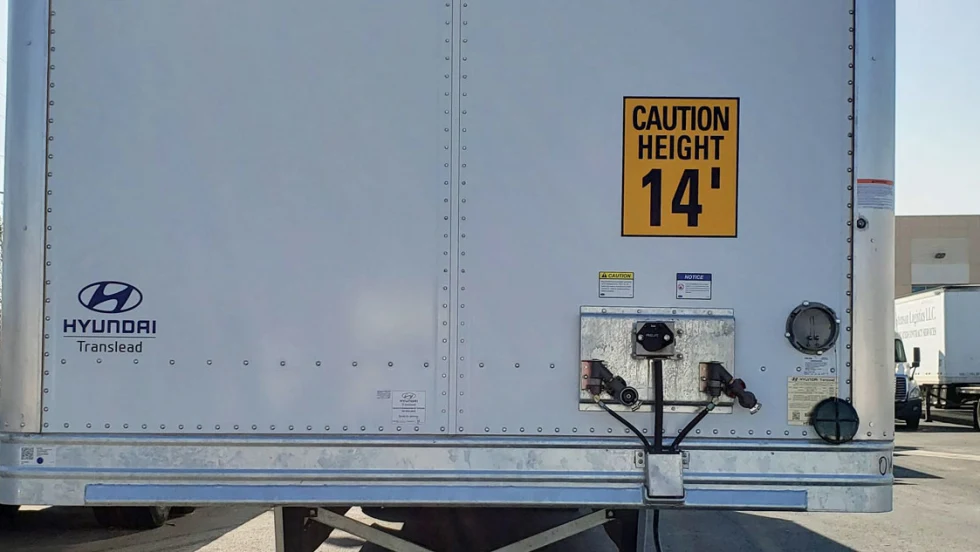
Designing a 14-Foot Trailer
Trailers are 13 feet, 6 inches high, right? Not for Hub Group, which developed a special 14-foot-high trailer spec for a dedicated customer based in California. Learn more in the Trailer Talk blog.
Read More →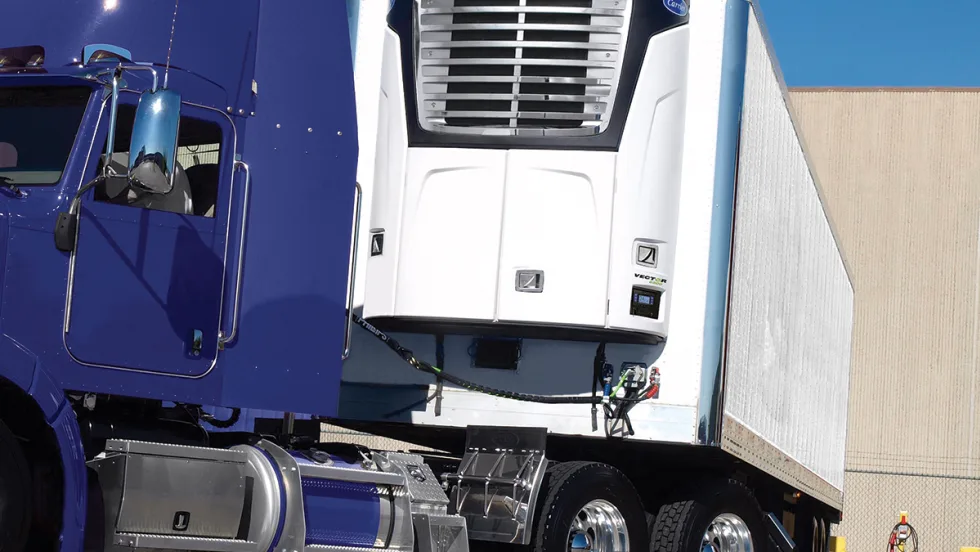
CARB Comes for Reefer Trailers
A new round of emissions control regulations decreed by the California Air Resource Board will begin affecting refrigerated trailer and TRU design and operations next year.
Read More →
5 Ways Data Analysis Maximizes the Value of Trailer Telematics
Are you getting the most out of your trailer telematics investment?
Read More →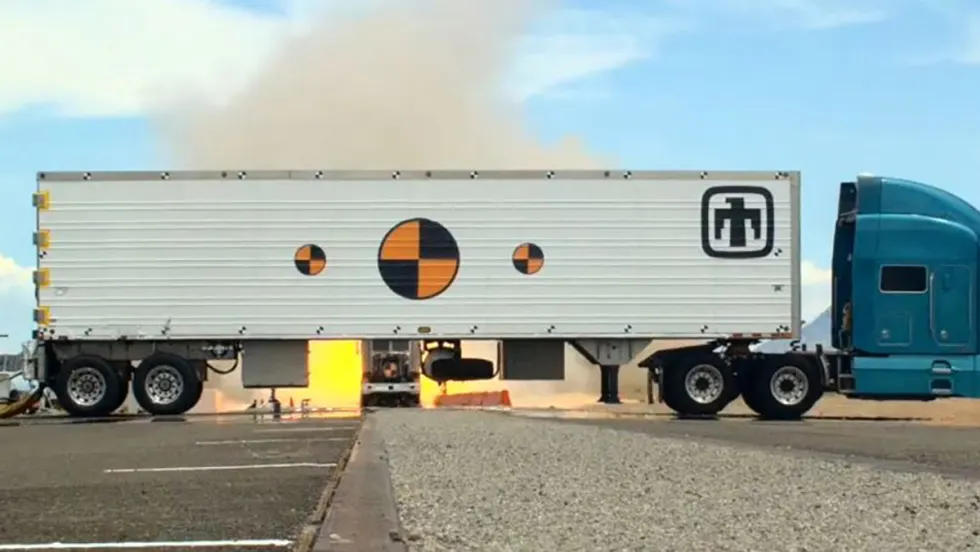
Can You Guess What's in That Trailer?
You don’t always know what’s in the trailers that pass you on the road. But some of those trailers are carrying something a little more dangerous that frozen food or new bedding…like, maybe, a nuclear weapon. But this isn’t an ordinary trailer; this is a trailer specifically made to not only carry this type of payload, but protect it at all costs.
Read More →
How Trailers Are Harnessing 'Free' Energy
Can trailers play a more active role in sustainable transport beyond aerodynamic add-ons or low-rolling-resistance tires? Some companies think so.
Read More →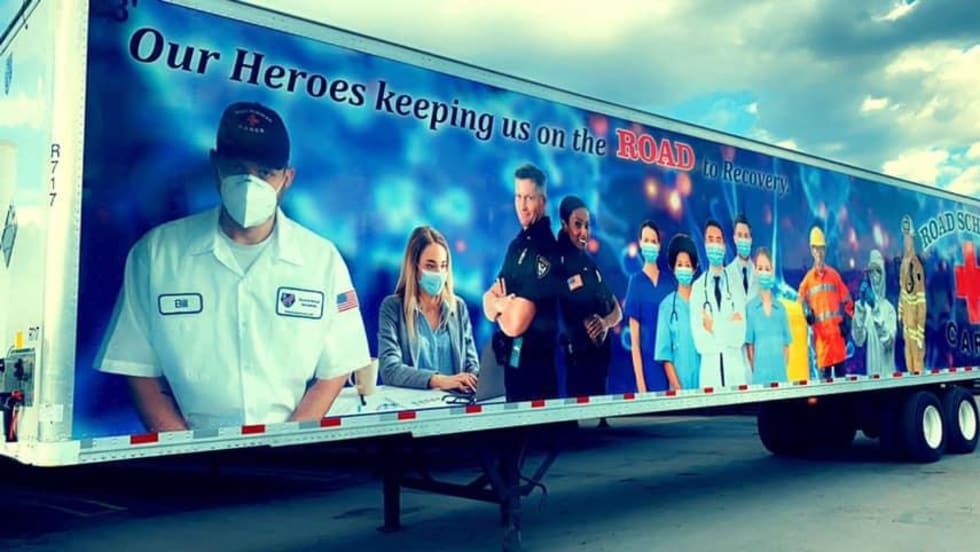
Wrapping a Trailer for COVID’s Everyday Heroes
“We don’t only deliver freight. We deliver awareness.” That’s what Jim Barrett, president and CEO of Road Scholar Transport, likes to say about the Dunmore, Pennsylvania-based carrier’s “awareness fleet.” Its latest trailer wrap honors the everyday heroes of the pandemic.
Read More →
How a Tanker Fleet is Using Unorthodox Trailer Lighting to Fight Rear-End Collisions
Groendyke Transport watched the number of rear-end collisions with its trailers rise steadily until it tried an unorthodox and then unapproved method of alerting following drivers that its trucks were applying brakes and slowing down.
Read More →
The Role Trailers are Playing in COVID-19 Funerals
In places such as New York City and Detroit, overwhelmed hospitals and mortuaries are using refrigerated trailers to store the bodies of people killed by COVID-19.
Read More →
Reefer Trailer Aims to Help Reach Zero Emissions
Wabash National is partnering with C&S Wholesale Grocers to test a new type of zero-emissions refrigerated trailer.
Read More →