




Trucks A-Plenty at Milwaukee's Train Fest
Scale model trucks are often part of model railroad layouts, as Senior Contributing Editor recently found in his old hometown.

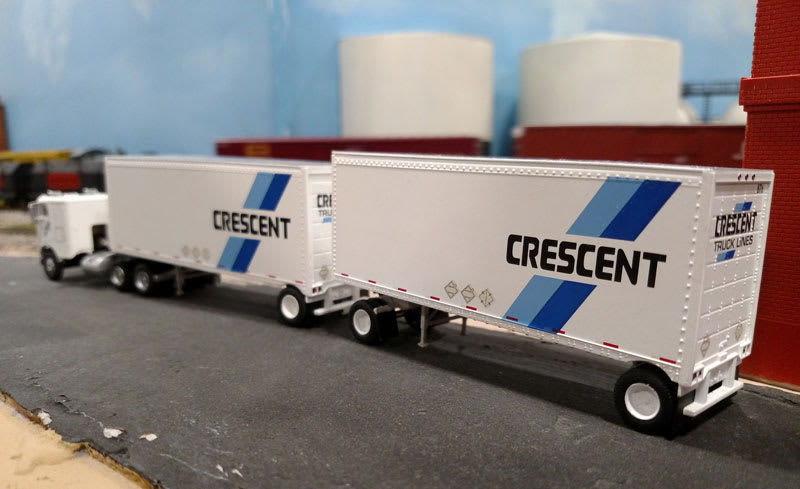
Crescent Truck Lines’ original logo appropriately included a quarter moon, but in the ‘80s it went to the two blue slashes. As I wondered then, what do slashes have to do with “crescent”?
Photo by Tom Berg
Recently I visited relatives and friends in Milwaukee, my old hometown, and stopped by Train Fest, which is supposedly the largest model railroad show in the country. It certainly was the biggest such event that I’ve been to, with the entire Expo building at the Wisconsin State Fair Grounds in suburban West Allis filled with displays of merchandise and, advertisements said, more than 70 operating model railroads.
At such affairs I always look for trucks amid the miniature rail scenes, and there were plenty here. The hobbyists seem to understand that the two transportation modes are not just competitors but sometimes partners. Unlike the trains, the trucks don’t move, but are positioned in realistic proximity to railroad tracks and industries.
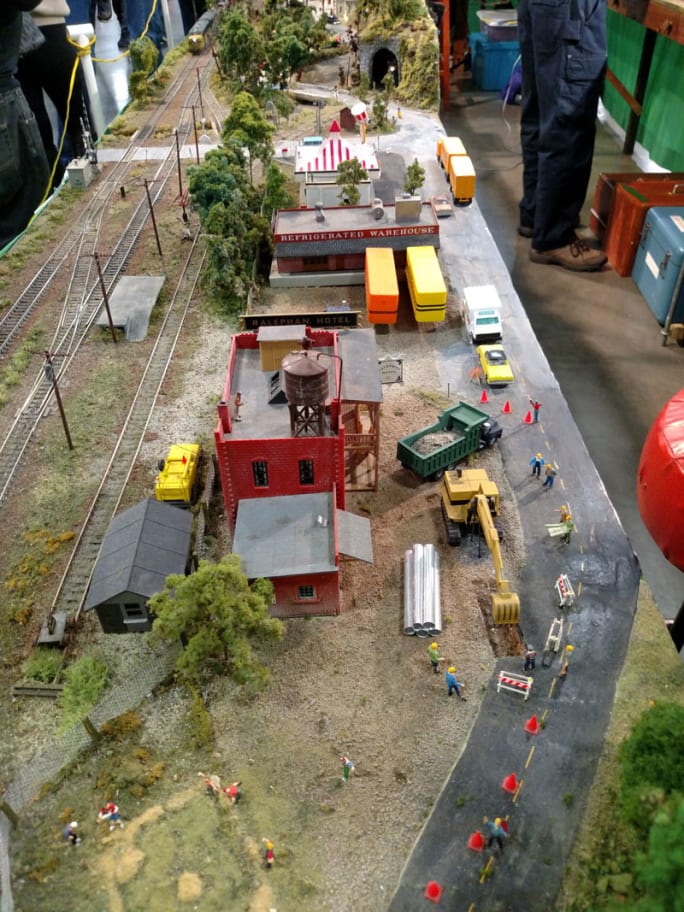
A fairly realistic construction scene includes a dump truck, workers in hard hats, orange traffic cones, and an excavator digging a trench. But, check the dry van trailers backed against the loading dock of the “refrigerated warehouse.” Spoiled goods, anyone?
Photo by Tom Berg
Model trucks are made in the same scales as model trains. There are several popular scales, including O (with a model-to-prototype ratio of 1:48), HO (approximately half O, or 1:87), S (1:64), and N (1:160).
The larger the scale, the greater the size and amount of details that can go into a piece of equipment; the smaller the scale, the more the stuff that can be fit into a given space. HO is the most popular, and that’s what the majority of the layouts and merchandise at the show was.
When I was a kid in the early 1950s, I badgered my folks to give me an American Flyer train set for Christmas. To this day I remember that the set cost $37.50, and I loved it. Like the larger Lionel O-size equipment, S-size American Flyer equipment was rugged and nice looking, and ran on two-rail tracks rather than Lionel’s three rails (the center rail for carrying power).
But I soon converted to HO scale because it was more realistic and much more stuff was available. I dabbled in that until I discovered more grownup pastimes.
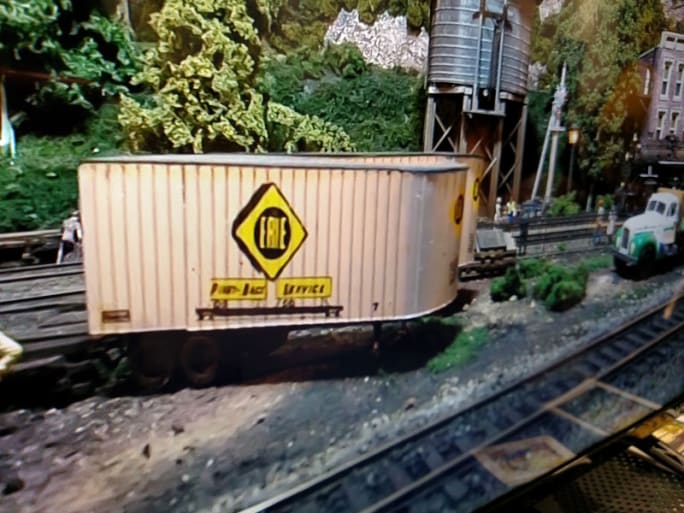
This pup trailer is a “wedge,” with its rear taller than its front – once a popular way to add “cube” to a vehicle’s capacity. The Erie was among many railroads that ran their own piggyback services; some operated complete truck lines until the old Interstate Commerce Commission, concerned about business dominance, decreed that they had to leave trucking.
Photo by Tom Berg
Today, HO and S stick in my mind and they are what I tend to look for on train displays and the trucks they include. And because of what I’ve been exposed to in my many years in truck writing, I am much more critical of the realism shown in trucks and trailers than in railroad rolling stock.
The accompanying photos are a sample of what I saw at Train Fest. Model railroading is a fascinating hobby, especially when both modes are included. Any other model RR freaks out there?
More like this: Model Train Show Includes Trucks that Deliver Memories
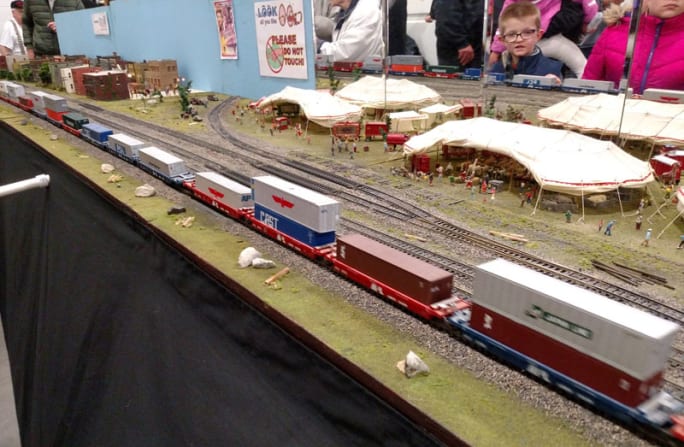
Containers have grabbed a large share of the intermodal freight business, and here’s a miniature trainload of them at the model railroad show. Standardized sizes contribute to their efficiency, but containers visually vary only in color and markings so are aesthetically boring.
Photo by Tom Berg
More Blog Posts
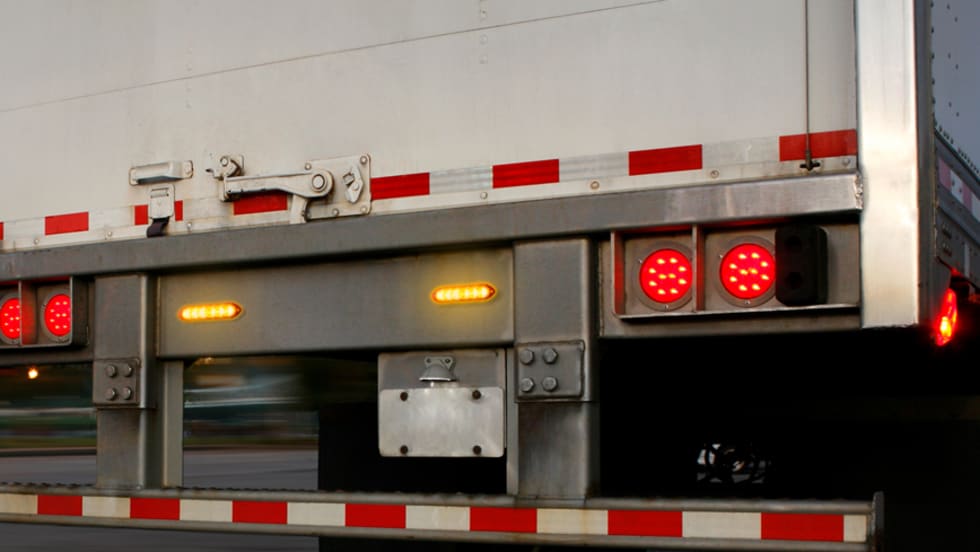
Pulsing Back-of-Trailer Lamps Aim to Prevent Crashes
Can the addition of a pulsing brake lamp on the back of a trailer prevent rear-end collisions? FMCSA seems to think so, if its exemptions are any indication.
Read More →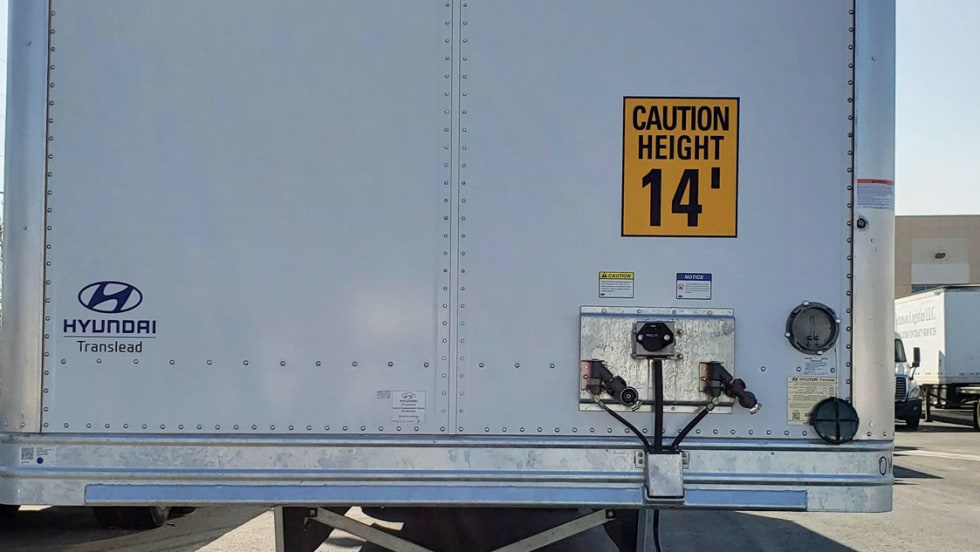
Designing a 14-Foot Trailer
Trailers are 13 feet, 6 inches high, right? Not for Hub Group, which developed a special 14-foot-high trailer spec for a dedicated customer based in California. Learn more in the Trailer Talk blog.
Read More →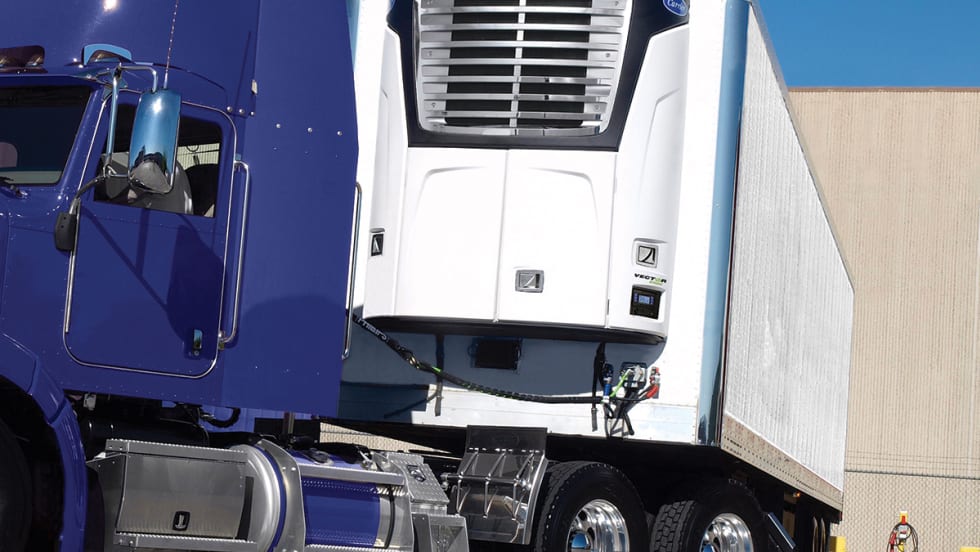
CARB Comes for Reefer Trailers
A new round of emissions control regulations decreed by the California Air Resource Board will begin affecting refrigerated trailer and TRU design and operations next year.
Read More →
5 Ways Data Analysis Maximizes the Value of Trailer Telematics
Are you getting the most out of your trailer telematics investment?
Read More →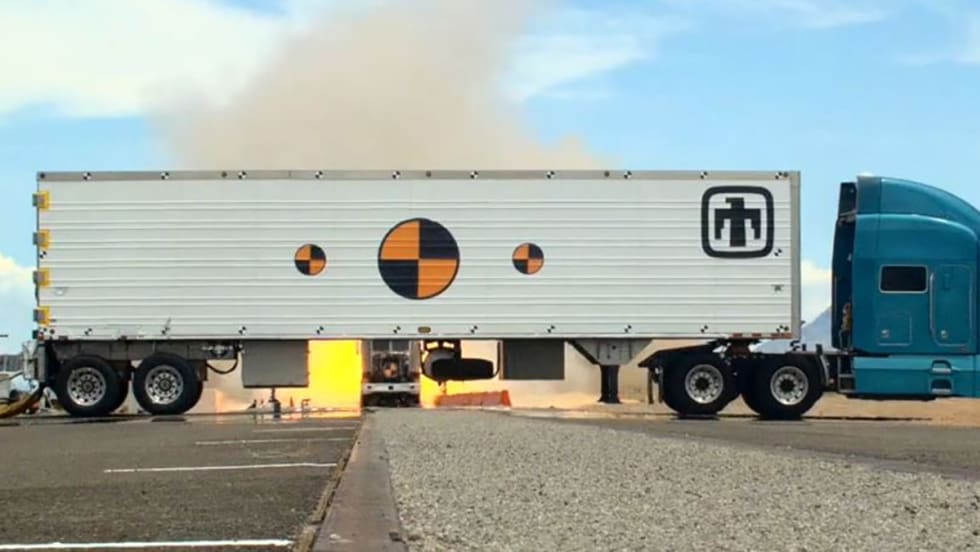
Can You Guess What's in That Trailer?
You don’t always know what’s in the trailers that pass you on the road. But some of those trailers are carrying something a little more dangerous that frozen food or new bedding…like, maybe, a nuclear weapon. But this isn’t an ordinary trailer; this is a trailer specifically made to not only carry this type of payload, but protect it at all costs.
Read More →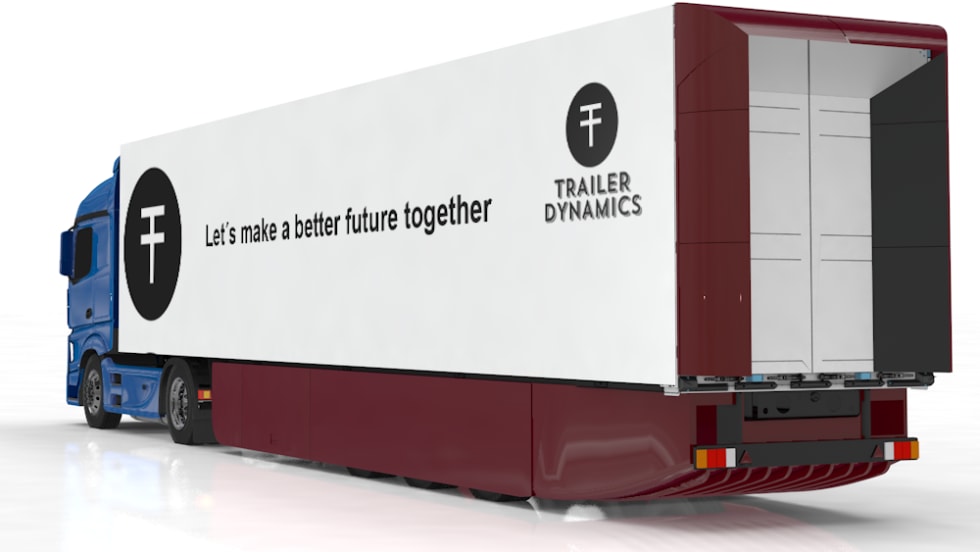
How Trailers Are Harnessing 'Free' Energy
Can trailers play a more active role in sustainable transport beyond aerodynamic add-ons or low-rolling-resistance tires? Some companies think so.
Read More →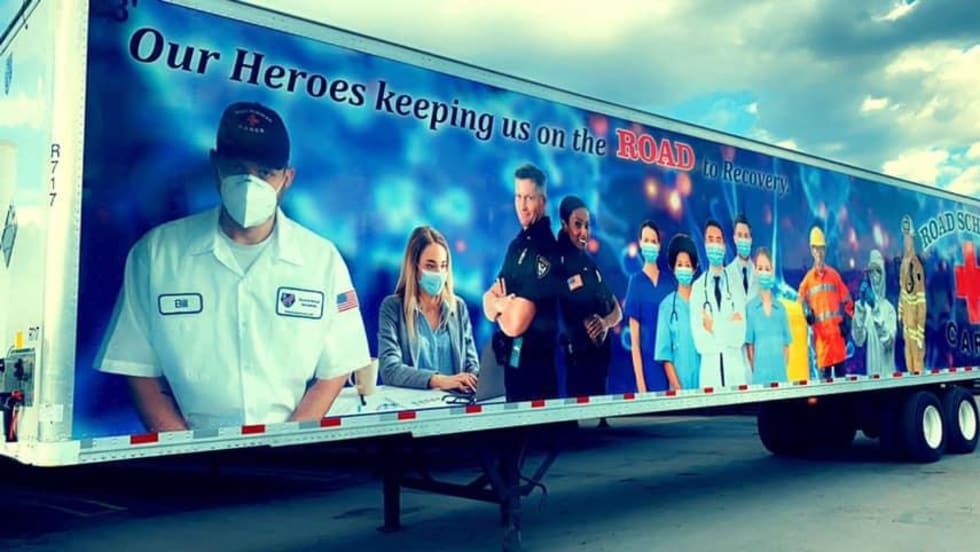
Wrapping a Trailer for COVID’s Everyday Heroes
“We don’t only deliver freight. We deliver awareness.” That’s what Jim Barrett, president and CEO of Road Scholar Transport, likes to say about the Dunmore, Pennsylvania-based carrier’s “awareness fleet.” Its latest trailer wrap honors the everyday heroes of the pandemic.
Read More →
How a Tanker Fleet is Using Unorthodox Trailer Lighting to Fight Rear-End Collisions
Groendyke Transport watched the number of rear-end collisions with its trailers rise steadily until it tried an unorthodox and then unapproved method of alerting following drivers that its trucks were applying brakes and slowing down.
Read More →
The Role Trailers are Playing in COVID-19 Funerals
In places such as New York City and Detroit, overwhelmed hospitals and mortuaries are using refrigerated trailers to store the bodies of people killed by COVID-19.
Read More →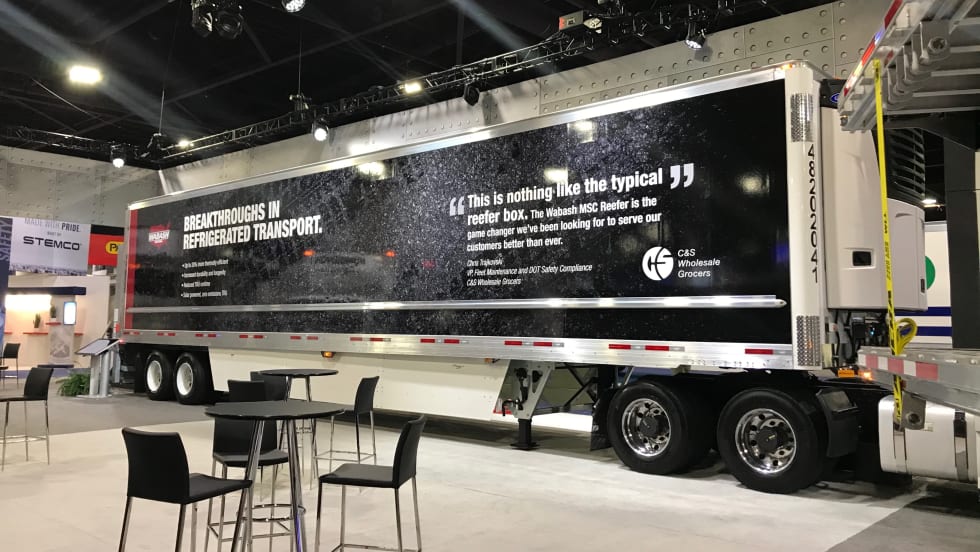
Reefer Trailer Aims to Help Reach Zero Emissions
Wabash National is partnering with C&S Wholesale Grocers to test a new type of zero-emissions refrigerated trailer.
Read More →