




Trailers do their share to meet stopping-distance requirements, now and soon to come
In three weeks' time, new, shorter federal stopping distance limits go into effect for three-axle tractors, most of them over-the-road power units that pull semitrailers
In three weeks' time, new, shorter federal stopping distance limits go into effect for three-axle tractors, most of them over-the-road power units that pull semitrailers.
The new limits cut 30% off the current 355-foot distance from 60 mph, so the tractors have to stop in no more than 250 feet.
There'll be no new requirements for trailers and there aren't now, because they vary so much in weight that the feds long ago decided not to directly regulate them. Trailers tag along and with their brakes contribute to combination performance that meets the limits, experts say.
Changes to Federal Motor Vehicle Safety Standard 121, the air-brake regulations, take effect on August 1. They apply to tractors with a gross vehicle weight rating of up to 59,600 pounds. Heavier three- and four-axle tractors and those with two axles must meet the new limits two years later, on August 1, 2013.
The 60-mph speed has long been used to simulate highway cruising, and the distances mimic a panic stop from that speed. Experts say that with bigger drum brakes scheduled for tractors built starting August 1, far less than maximum air pressure must be used to meet the limits.
Tractors prove their performance on test tracks while pulling short trailers loaded to put the required 59,600 pounds on a tractor's three axles. The test trailer's brakes are disconnected so only the tractor's six sets of brakes (two at on each of its three axles) are applied.
In theory and actuality, a qualified tractor and trailer grossing 80,000 pounds, the federal limit on most Interstate highways, will also stop within today's 355 feet and next month's 250 feet, and probably less. That's because the combination has four more brakes (two on each axle of the trailer's tandem), but carries only another 20,400 pounds of weight.
Put another way, a trailer's brakes add roughly 36% more braking with only 27% more gross weight. That's a lot of braking for not many more pounds.
A similar situation will occur if Congress ever approves the concept of a 97,000-pound gross combination weight for a six-axle rig. The two extra brakes on the trailer's third axle will more than handle the extra 17,000 pounds of extra gross weight, experts say. So stopping performance and safety will be maintained, even if anti-big-and-heavy truck forces claim otherwise.
More Blog Posts

Pulsing Back-of-Trailer Lamps Aim to Prevent Crashes
Can the addition of a pulsing brake lamp on the back of a trailer prevent rear-end collisions? FMCSA seems to think so, if its exemptions are any indication.
Read More →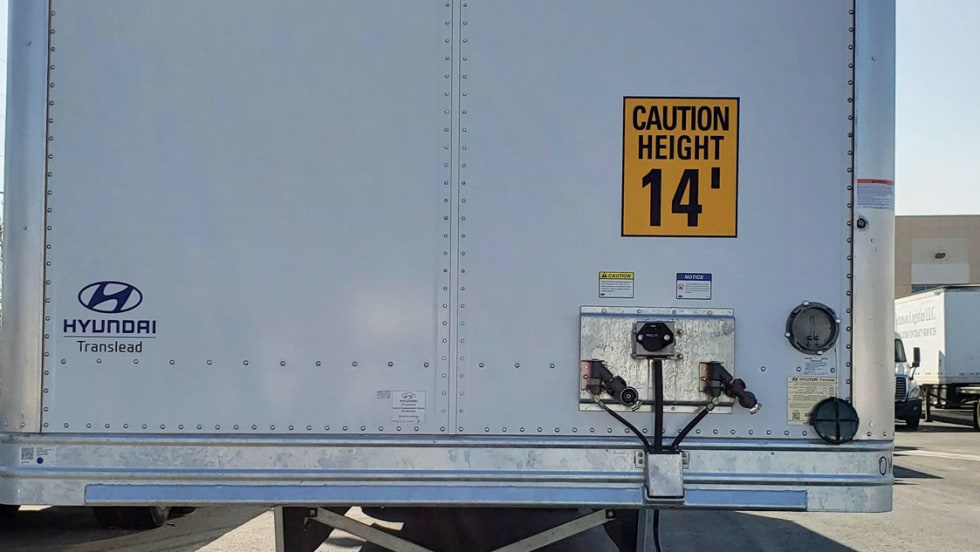
Designing a 14-Foot Trailer
Trailers are 13 feet, 6 inches high, right? Not for Hub Group, which developed a special 14-foot-high trailer spec for a dedicated customer based in California. Learn more in the Trailer Talk blog.
Read More →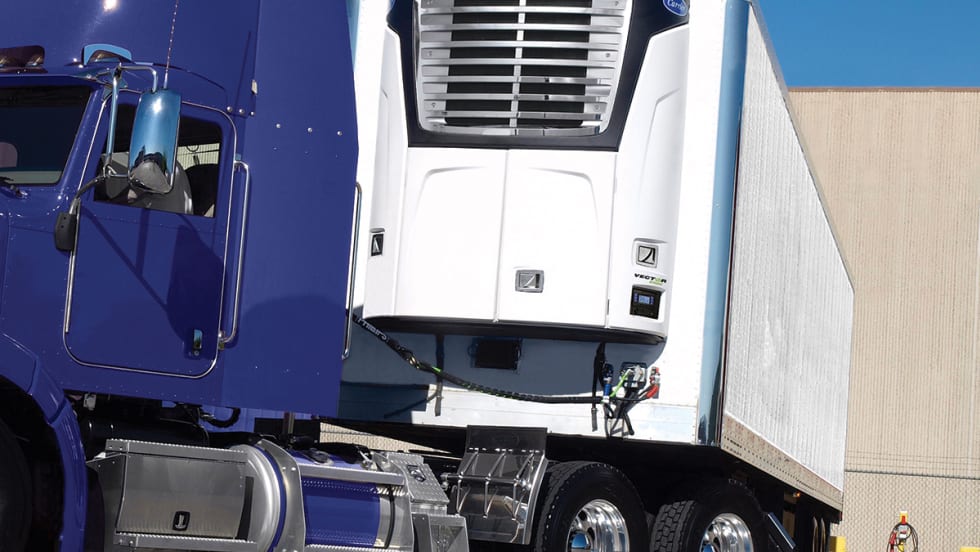
CARB Comes for Reefer Trailers
A new round of emissions control regulations decreed by the California Air Resource Board will begin affecting refrigerated trailer and TRU design and operations next year.
Read More →
5 Ways Data Analysis Maximizes the Value of Trailer Telematics
Are you getting the most out of your trailer telematics investment?
Read More →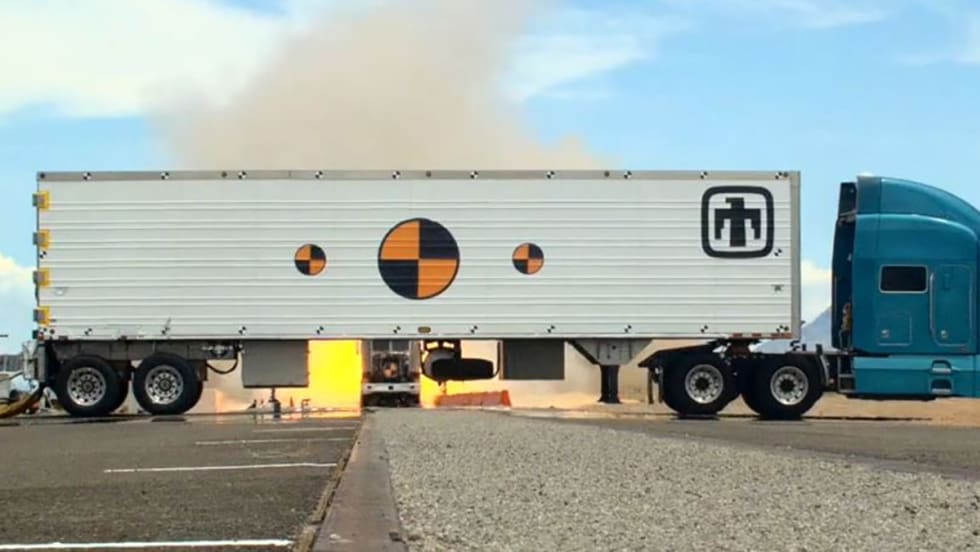
Can You Guess What's in That Trailer?
You don’t always know what’s in the trailers that pass you on the road. But some of those trailers are carrying something a little more dangerous that frozen food or new bedding…like, maybe, a nuclear weapon. But this isn’t an ordinary trailer; this is a trailer specifically made to not only carry this type of payload, but protect it at all costs.
Read More →
How Trailers Are Harnessing 'Free' Energy
Can trailers play a more active role in sustainable transport beyond aerodynamic add-ons or low-rolling-resistance tires? Some companies think so.
Read More →
Wrapping a Trailer for COVID’s Everyday Heroes
“We don’t only deliver freight. We deliver awareness.” That’s what Jim Barrett, president and CEO of Road Scholar Transport, likes to say about the Dunmore, Pennsylvania-based carrier’s “awareness fleet.” Its latest trailer wrap honors the everyday heroes of the pandemic.
Read More →
How a Tanker Fleet is Using Unorthodox Trailer Lighting to Fight Rear-End Collisions
Groendyke Transport watched the number of rear-end collisions with its trailers rise steadily until it tried an unorthodox and then unapproved method of alerting following drivers that its trucks were applying brakes and slowing down.
Read More →
The Role Trailers are Playing in COVID-19 Funerals
In places such as New York City and Detroit, overwhelmed hospitals and mortuaries are using refrigerated trailers to store the bodies of people killed by COVID-19.
Read More →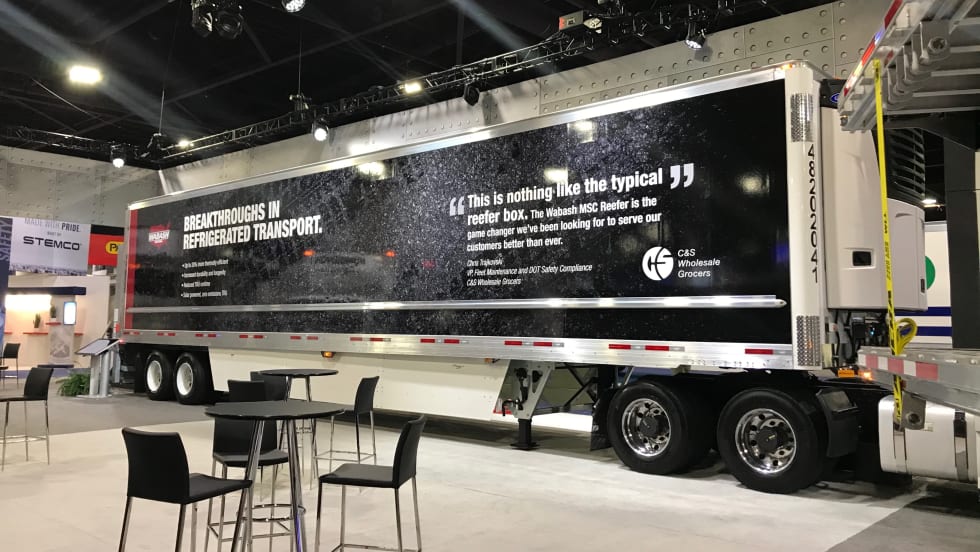
Reefer Trailer Aims to Help Reach Zero Emissions
Wabash National is partnering with C&S Wholesale Grocers to test a new type of zero-emissions refrigerated trailer.
Read More →