





Related: Feds Claim Phase 2 GHG Rules Will Cut Pollution and Save Money
Trailer Weight Cutting Suggestions Total 2,500 Pounds
While poring through more than 1,300 pages of proposed regulations, staffers found themselves immersed in details of trailer design, including weight reduction.
July 22, 2015
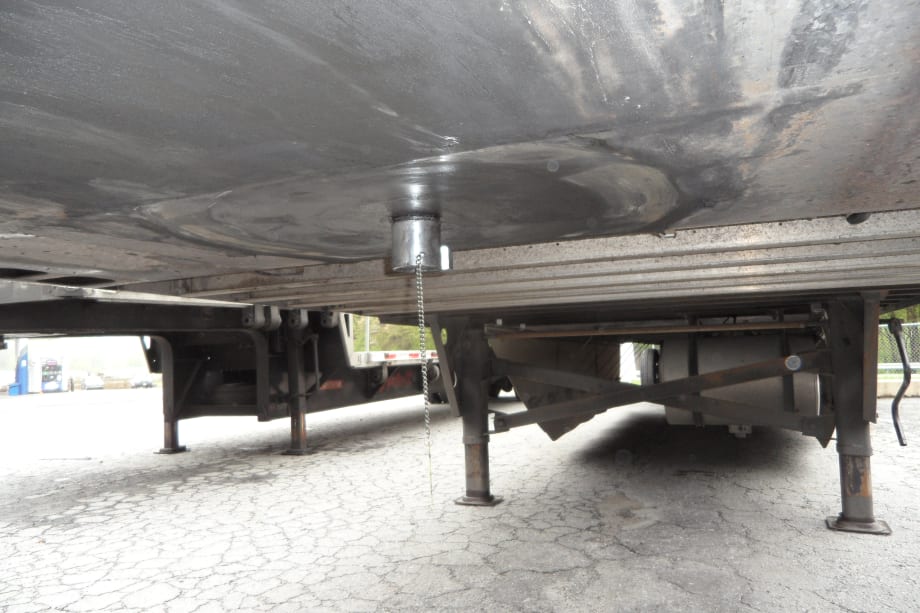
Aluminum crossmembers instead of steel can save 203 pounds in a van or reefer, according to ICCT's list. Another 430 pounds can be slashed by using aluminum in the upper coupler assembly, but the kingpin remains steel. Photo: Tom Berg
2 min to read
Aluminum crossmembers instead of steel can save 203 pounds in a van or reefer, according to ICCT's list. Another 430 pounds can be slashed by using aluminum in the upper coupler assembly, but the kingpin remains steel.Photo: Tom Berg
The International Council for Clean Transportation, a study group based in San Francisco, analyzed the recently announced Phase 2 proposals for reduction of fuel use and greenhouse gas emissions. We are using ICCT’s summaries in our reporting on Phase 2 and what it might mean to manufacturers and users of trucks, tractors and trailers.
While poring through more than 1,300 pages of proposed regulations, staffers found themselves immersed in details of trailer design. Although the EPA-NHTSA proposals for trailers concentrate on aerodynamics and low-rolling-resistance tires, cutting weight also saves fuel and GHGs simply because the trailer is easier to pull around.
There are many ways to reduce trailer weight, as ICCT’s concise list notes:
Hub and drum (per axle) -- Cast iron to aluminum, 30
Floor -- Hardwood to aluminum, 375
Floor -- Hardwood to composite, 245
Floor crossmembers -- Steel to aluminum, 203
Landing gear -- Steel to aluminum, 50
Rear door -- Steel to aluminum, 187
Rear door surround -- Steel to aluminum, 150
Roof bows -- Steel to aluminum, 100
Side posts -- Steel to aluminum, 300
Slider box -- Steel to aluminum, 150
Suspension assembly structure -- Steel to aluminum, 280
Upper coupler assembly -- Steel to aluminum, 430
Do the arithmetic and you’ll find that these suggestions add up to exactly 2,500 pounds saved from a standard sheet-and-post van trailer or reefer. Not included is a common one: Going from steel wheels to aluminum, good for another 160 or so pounds, and from dual wheels and tires to wide-base singles, which cuts about 400 pounds per tandem.
Most of ICCT's suggestions involve trading steel for aluminum, which certainly saves pounds. But aluminum can be expensive, and it’s a comparatively soft material that doesn’t always hold up in some applications and conditions. Like many things in shopping (and spec’ing), you pays yer money and takes yer choice.
Subscribe to Our Newsletter
More Blog Posts

Pulsing Back-of-Trailer Lamps Aim to Prevent Crashes
Can the addition of a pulsing brake lamp on the back of a trailer prevent rear-end collisions? FMCSA seems to think so, if its exemptions are any indication.
Read More →
Designing a 14-Foot Trailer
Trailers are 13 feet, 6 inches high, right? Not for Hub Group, which developed a special 14-foot-high trailer spec for a dedicated customer based in California. Learn more in the Trailer Talk blog.
Read More →
CARB Comes for Reefer Trailers
A new round of emissions control regulations decreed by the California Air Resource Board will begin affecting refrigerated trailer and TRU design and operations next year.
Read More →
5 Ways Data Analysis Maximizes the Value of Trailer Telematics
Are you getting the most out of your trailer telematics investment?
Read More →
Can You Guess What's in That Trailer?
You don’t always know what’s in the trailers that pass you on the road. But some of those trailers are carrying something a little more dangerous that frozen food or new bedding…like, maybe, a nuclear weapon. But this isn’t an ordinary trailer; this is a trailer specifically made to not only carry this type of payload, but protect it at all costs.
Read More →
How Trailers Are Harnessing 'Free' Energy
Can trailers play a more active role in sustainable transport beyond aerodynamic add-ons or low-rolling-resistance tires? Some companies think so.
Read More →
Wrapping a Trailer for COVID’s Everyday Heroes
“We don’t only deliver freight. We deliver awareness.” That’s what Jim Barrett, president and CEO of Road Scholar Transport, likes to say about the Dunmore, Pennsylvania-based carrier’s “awareness fleet.” Its latest trailer wrap honors the everyday heroes of the pandemic.
Read More →
How a Tanker Fleet is Using Unorthodox Trailer Lighting to Fight Rear-End Collisions
Groendyke Transport watched the number of rear-end collisions with its trailers rise steadily until it tried an unorthodox and then unapproved method of alerting following drivers that its trucks were applying brakes and slowing down.
Read More →
The Role Trailers are Playing in COVID-19 Funerals
In places such as New York City and Detroit, overwhelmed hospitals and mortuaries are using refrigerated trailers to store the bodies of people killed by COVID-19.
Read More →
Reefer Trailer Aims to Help Reach Zero Emissions
Wabash National is partnering with C&S Wholesale Grocers to test a new type of zero-emissions refrigerated trailer.
Read More →