




Thin-Walled Fuel Tanks Feed Another Fiery Truck Wreck
One news anchor thought it was a "tanker explosion." But the trailer was a lowboy, and the fire was fed only by the tractor's saddle tanks.

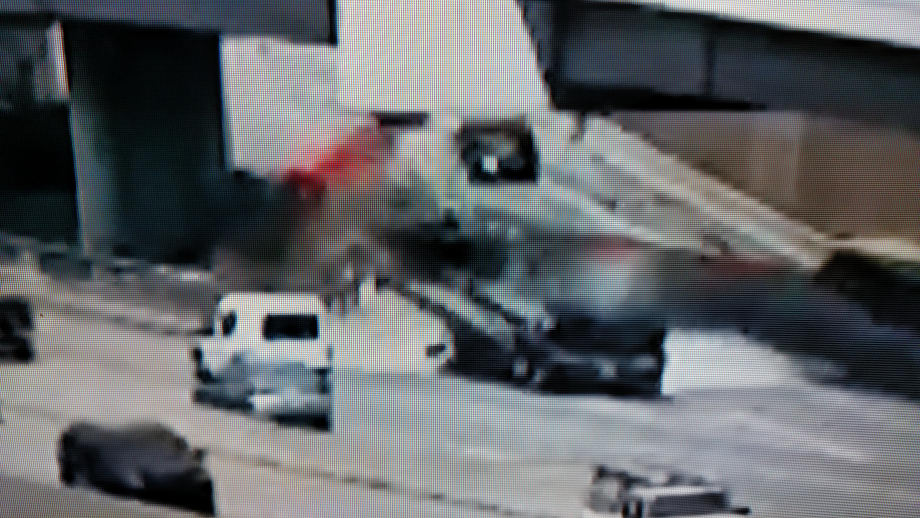
Tractor hits the barrier and begins a violent dismantling. Driver of the small white van really got an eyeful.
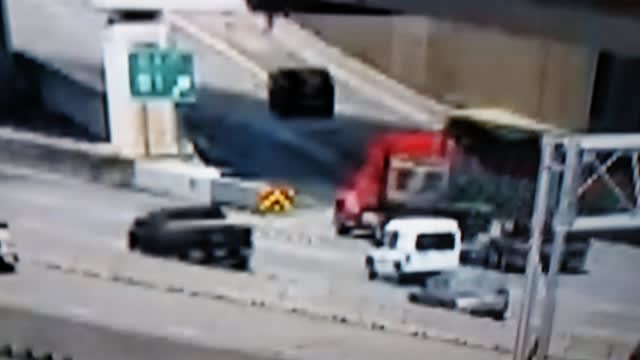
Rig drifts out of its lane and heads toward a concrete barrier. Driver might have passed out from a "medical emergency." Images: Tom Berg, from TV newscasts
It was such a spectacular wreck it made all three of the major networks’ evening newscasts: That semi plowing into a concrete barrier in Kansas City, Kansas, on Wednesday, tearing apart the tractor whose fuel ignited shortly after impact.
Incredibly, the driver suffered only minor injuries. He and his dog were pulled from the wreckage by motorists. Authorities think he may have suffered a “medical emergency” and perhaps passed out, which is why he veered out of the travel lane.
CBS and NBC carried video from a surveillance camera that shows the rig drifting off the outside lane and hitting the massive concrete structure. Footage shot from the ground shows the tractor, twisted nearly 90 degrees and its hood missing, with a stream of fire engulfing much of the tractor’s rear.

Tractor hits the barrier and begins a violent dismantling. Driver of the small white van really got an eyeful.
ABC News’ anchor, David Muir, called it a “tanker explosion” as he read the introduction to the video, but the trailer was an empty lowboy. Why did he, or whoever wrote the script, think it was a tanker? No doubt because of the fire, evidently fed by diesel fuel from one or more of the tractor’s saddle tanks. You can see fuel spewing upward in a yellow cloud as the tractor hits the concrete.
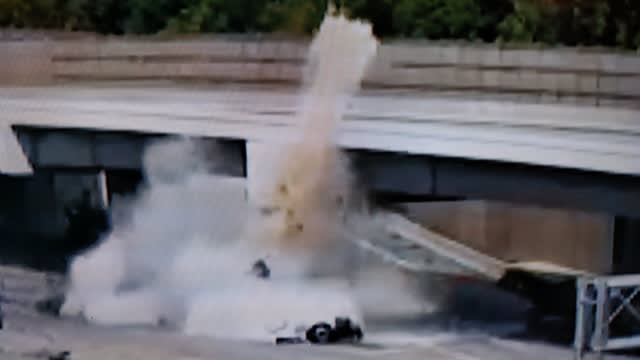
Yellow cloud erupts as fuel spews out of a saddle tank. It ignites an instant later.
Saddle tanks will burst in impacts, and are often torn open if a truck just runs off a road and into a ditch. The result of ditching is an expensive hazmat cleanup, if not a fire.
Why aren’t fuel tanks made to survive at least the ditch accidents? Because they'd be more expensive and weigh more, and this is something rarely discussed at industry meetings. When I ask fleet managers if more poundage and money wouldn’t be worth it, they kind of shrug and shuffle their feet.
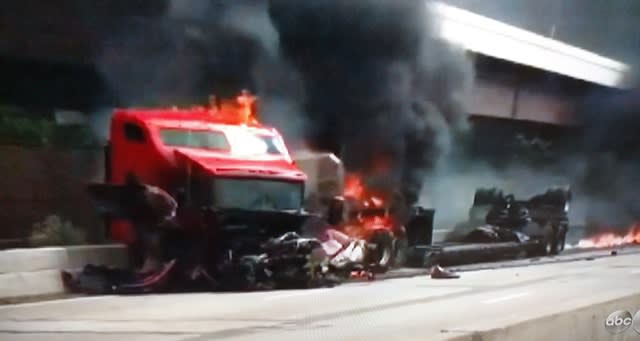
Tractor's frame is twisted and its hood ripped away as flames engulf its rear. But the cab appears intact and motorists were able to pull out the driver and his dog.
Truth is, no one truck line could afford to armor its tanks because it’d be at a competitive disadvantage. Only a federal safety rule requiring everyone to comply would be fair. But even before the anti-regulation Trump administration, the feds didn’t seem inclined to consider one.
Anyway, after this wreck, the westbound lanes of Interstate 435 were shut down for many hours as crews repaired a barrier. So the public was inconvenienced, but that, and the totaled rig, were the worst that came out of this wreck. It could’ve been much worse.
Except this was the latest in a series of accidents involving big rigs in the KC area, and the third one on this stretch of road in a few weeks. And authorities, truckers, safety advocates, and the media are wondering how they can be prevented.
Much worse than a diesel fuel fire is gasoline or ethanol exploding and burning fiercely after a tanker truck crashes. Their thin-walled aluminum bodies don’t hold up to much and, for some reason, authorities and the public seem to accept that it’s just part of life on the road. Should they?
More Blog Posts
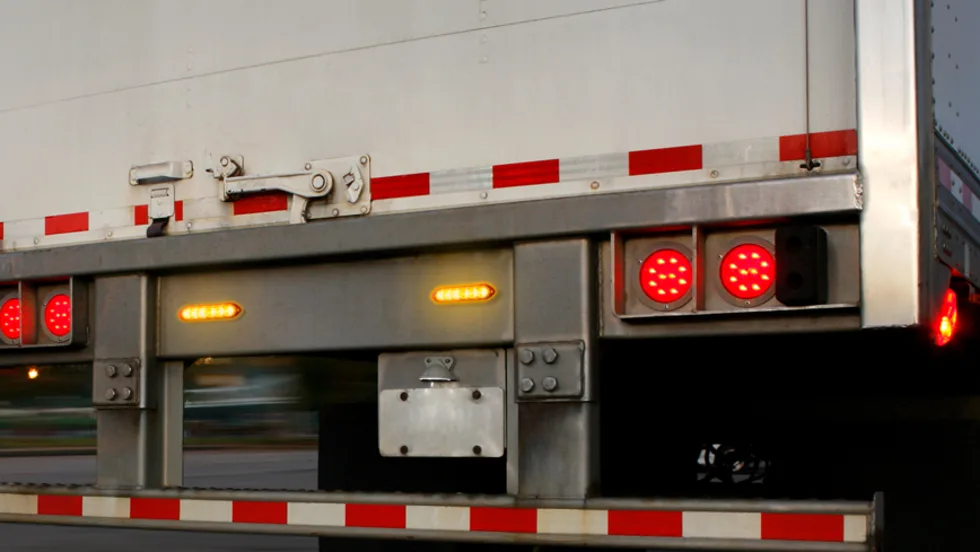
Pulsing Back-of-Trailer Lamps Aim to Prevent Crashes
Can the addition of a pulsing brake lamp on the back of a trailer prevent rear-end collisions? FMCSA seems to think so, if its exemptions are any indication.
Read More →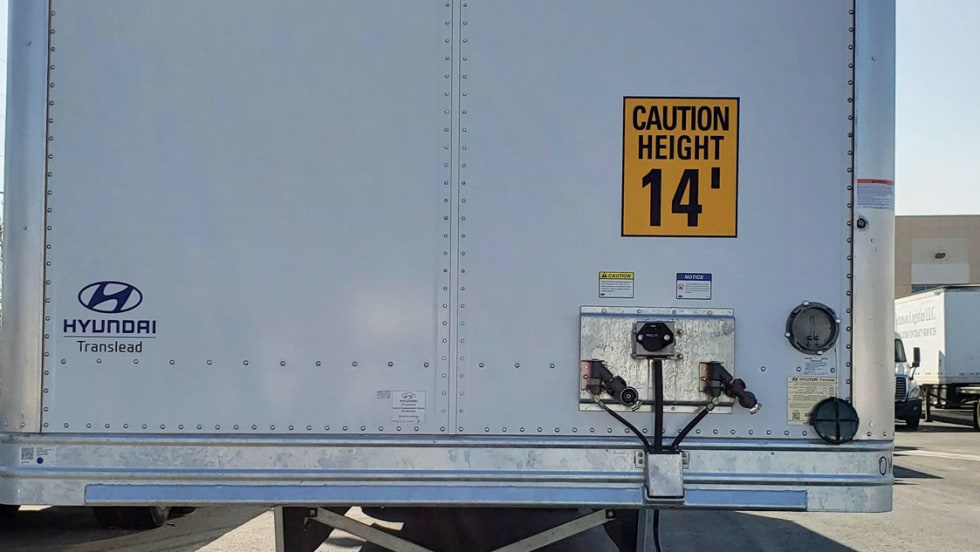
Designing a 14-Foot Trailer
Trailers are 13 feet, 6 inches high, right? Not for Hub Group, which developed a special 14-foot-high trailer spec for a dedicated customer based in California. Learn more in the Trailer Talk blog.
Read More →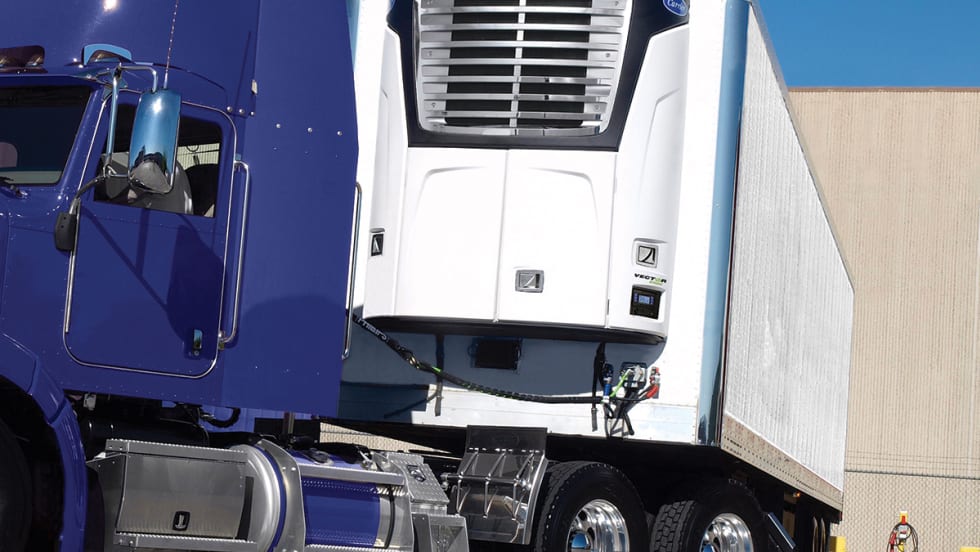
CARB Comes for Reefer Trailers
A new round of emissions control regulations decreed by the California Air Resource Board will begin affecting refrigerated trailer and TRU design and operations next year.
Read More →
5 Ways Data Analysis Maximizes the Value of Trailer Telematics
Are you getting the most out of your trailer telematics investment?
Read More →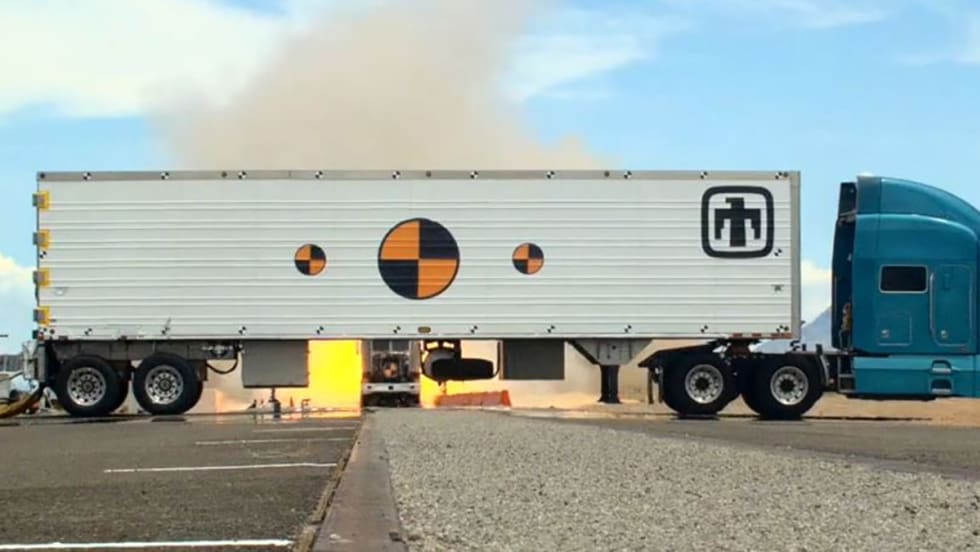
Can You Guess What's in That Trailer?
You don’t always know what’s in the trailers that pass you on the road. But some of those trailers are carrying something a little more dangerous that frozen food or new bedding…like, maybe, a nuclear weapon. But this isn’t an ordinary trailer; this is a trailer specifically made to not only carry this type of payload, but protect it at all costs.
Read More →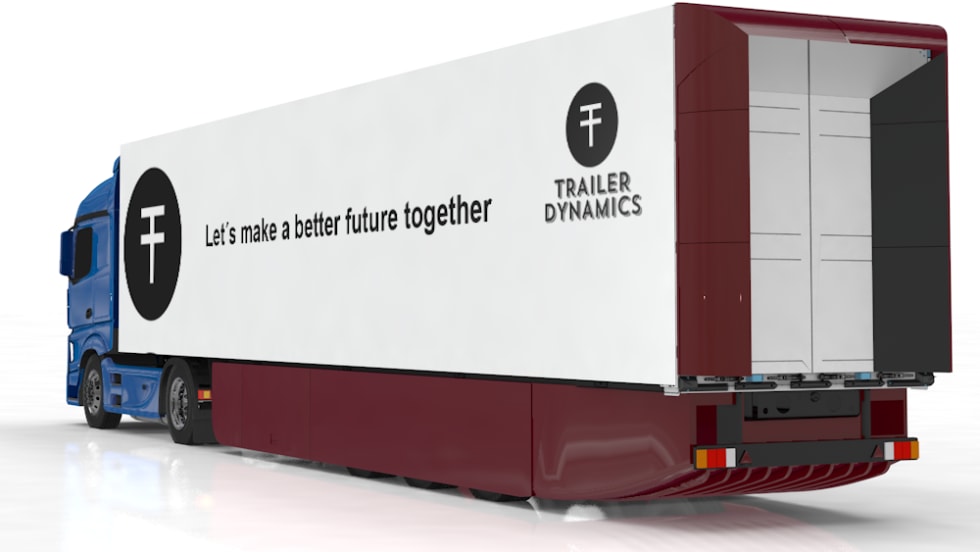
How Trailers Are Harnessing 'Free' Energy
Can trailers play a more active role in sustainable transport beyond aerodynamic add-ons or low-rolling-resistance tires? Some companies think so.
Read More →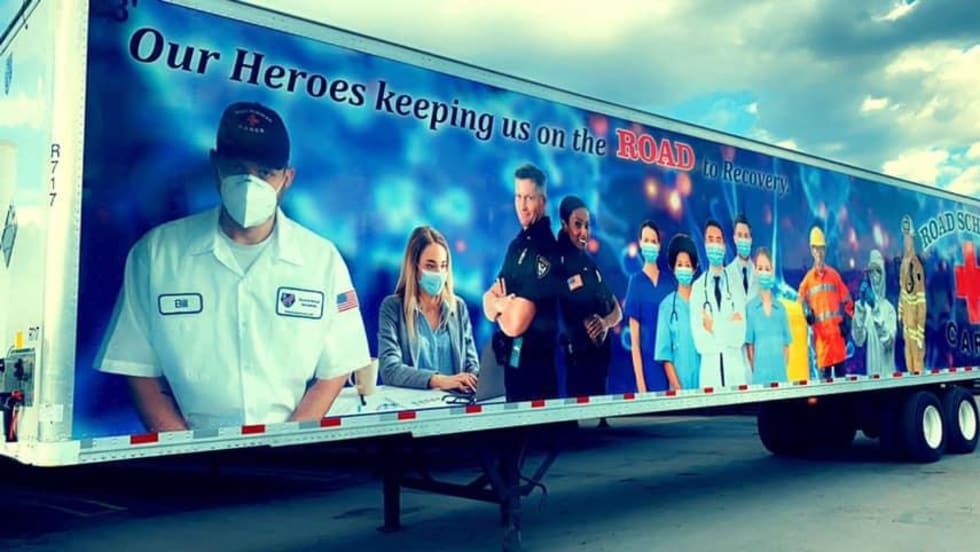
Wrapping a Trailer for COVID’s Everyday Heroes
“We don’t only deliver freight. We deliver awareness.” That’s what Jim Barrett, president and CEO of Road Scholar Transport, likes to say about the Dunmore, Pennsylvania-based carrier’s “awareness fleet.” Its latest trailer wrap honors the everyday heroes of the pandemic.
Read More →
How a Tanker Fleet is Using Unorthodox Trailer Lighting to Fight Rear-End Collisions
Groendyke Transport watched the number of rear-end collisions with its trailers rise steadily until it tried an unorthodox and then unapproved method of alerting following drivers that its trucks were applying brakes and slowing down.
Read More →
The Role Trailers are Playing in COVID-19 Funerals
In places such as New York City and Detroit, overwhelmed hospitals and mortuaries are using refrigerated trailers to store the bodies of people killed by COVID-19.
Read More →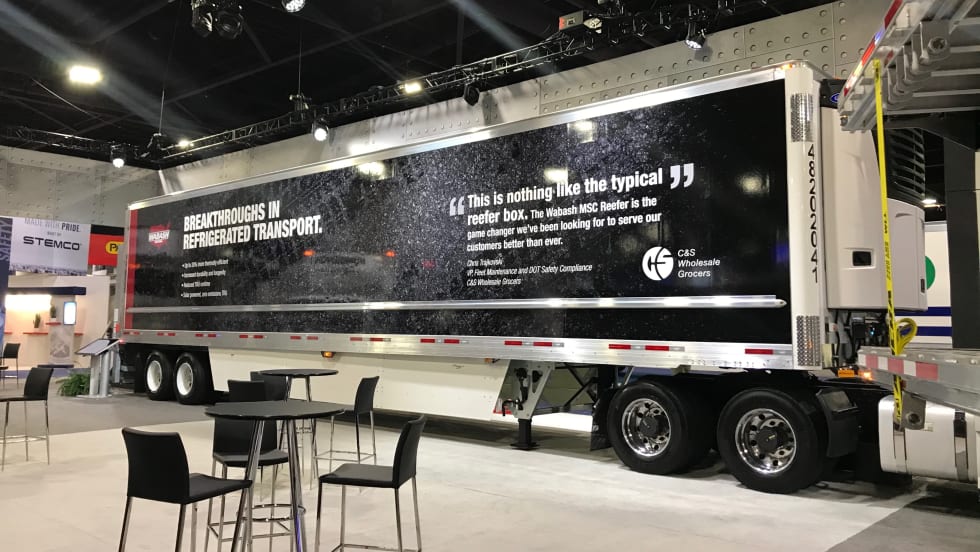
Reefer Trailer Aims to Help Reach Zero Emissions
Wabash National is partnering with C&S Wholesale Grocers to test a new type of zero-emissions refrigerated trailer.
Read More →