




The Infrastructure of Autonomous Vehicles
With all the buzz about the future of connected vehicles and driverless cars and trucks, there's an important component that needs to be addressed, and that's the infrastructure these vehicles need to interact with.

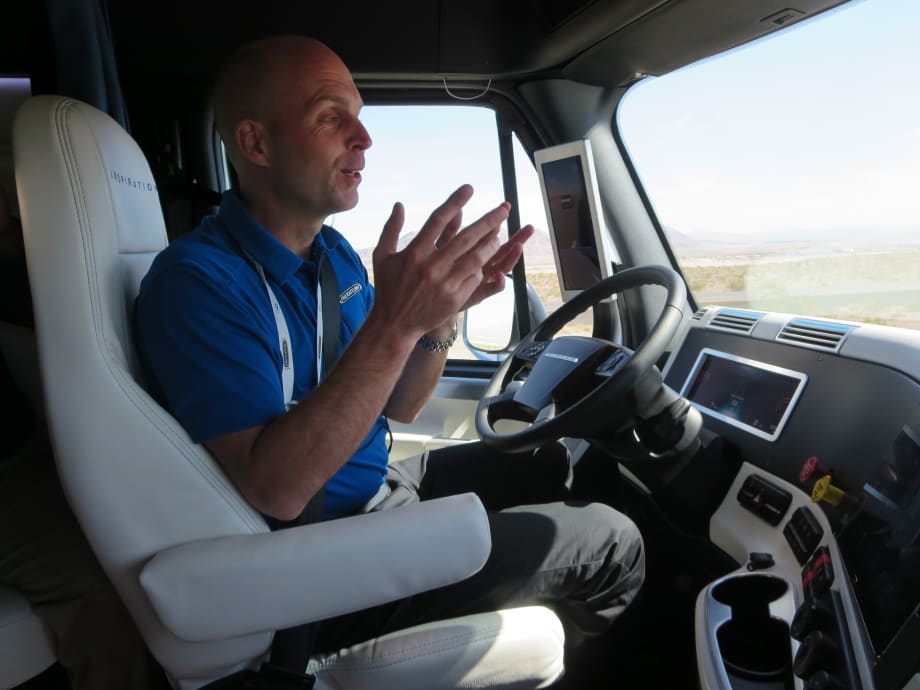
Freightliner's Inspiration Truck uses lane markings to keep the truck in the lane.
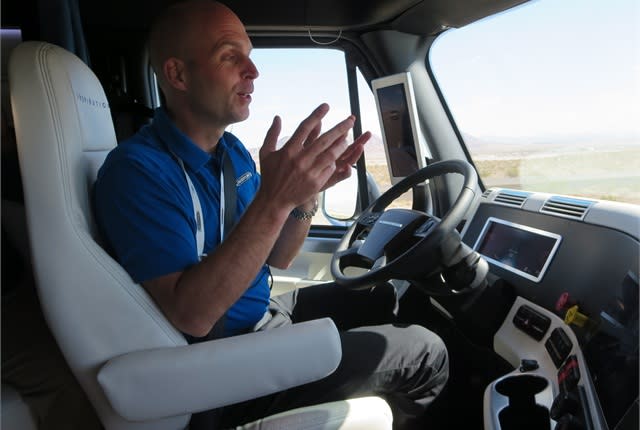
Freightliner's Inspiration Truck uses lane markings to keep the truck in the lane.
With all the buzz about the future of connected vehicles and driverless cars and trucks, there's an important component that needs to be addressed, and that's the infrastructure these vehicles need to interact with.
Some states are already working on some projects in this area, reports Governing. http://www.governing.com/topics/transportation-infrastructure/gov-driverless-cars-states-infrastructure.html
For instance, take something as seemingly simple as lane markings. Freightliner's Inspiration Truck, which it debuted last year to showcase autonomous technologies, has a lane keeping system that builds on the current lane departure warning technology using a stereo camera system to maintain trucks' lane position. The camera recognizes lane markings and communicates through the computer controls with the steering gear – but there have to be lane markings it can recognize.
As Governing reports, Delphi, an auto parts manufacturer, took its driverless vehicle on a cross-country trip last year. Despite what are supposed to be uniform standards across states, the pavement markings were actually all different, officials told Kirk Steudle, the director of the Michigan Department of Transportation (MDOT). As Steudle told Governing, “The hard infrastructure, the pavement and the pavement markings, that’s ours,” he said. “We have to, frankly, just take better care of it, and it has to be prioritized.”
Also in Michigan, the state, the University of Michigan and the city of Ann Arbor have been testing connected vehicles, including heavy-duty trucks, sharing information with the city’s traffic lights and road sensors. Even after the pilot program finished, the city has kept connecting more infrastructure to its network, reports Governing.
Meanwhile, Colorado is launching two efforts related to connected vehicles along the congested stretch of Interstate 70 that connects Denver with ski resorts.
One project, in conjunction with HERE, which provides mapping and location technology, is being billed as the first cellular network-based connected vehicle alert system in North America. For the 2016-2017 winter driving season, the project aims to equip 1,000 vehicles owned by the general public with smartphone apps that will gather information about road and traffic conditions. That data will be used tol notify drivers of problems ahead using voice alerts.
The department will also be outfitting its own fleet with short-range radio transmitters, which will share the same type of information gathered by the smartphone apps, but a few plows will be equipped with friction sensors that can help officials decide when to enforce the state’s tire chain laws.
More Blog Posts

Beyond the Central Transport Settlement: Lessons on Hiring and Risk
The $5.5 million discrimination settlement raises broader questions about hiring practices, safety performance, and the hidden risks that can lurk in a fleet's recruiting process.
Read More →
Are Diesel Shortages Something to Worry About Again?
There’s a certain déjà vu when tensions flare in the Middle East and diesel price spikes can give you panic attacks. What parallels are there between the current situation and the 1970s energy crisis?
Read More →
NOx Isn’t Laughing Gas. Let’s Clear That Up.
A recent EPA reference mixed up NOx and nitrous oxide. It’s an easy mistake. Just not one you expect to see in emissions policy. Let’s look at the difference.
Read More →
TMC 2025 Takeaway 2: Buy... or Subscribe?
TaaS. Does that mean trucks as a service, trailers as a service, or tires as a service? HDT's Deborah Lockridge has another takeaway from the Technology & Maintenance Council meeting in her blog.
Read More →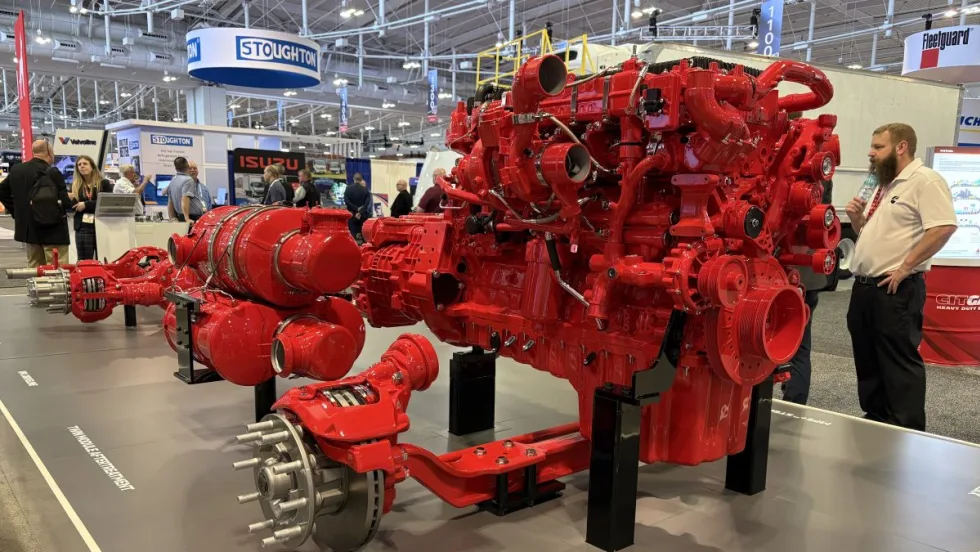
TMC 2025 Takeaway: The Journey Toward Vertical Integration
HDT's Deborah Lockridge on how the trucking industry has moved toward "vertical integration" over the past 25 years.
Read More →
Trucks Are For Girls!
HDT Editor and Associate Publisher Deborah Lockridge is a longtime Girl Scout leader and loves to connect her passion for inspiring girls with her love of the trucking industry.
Read More →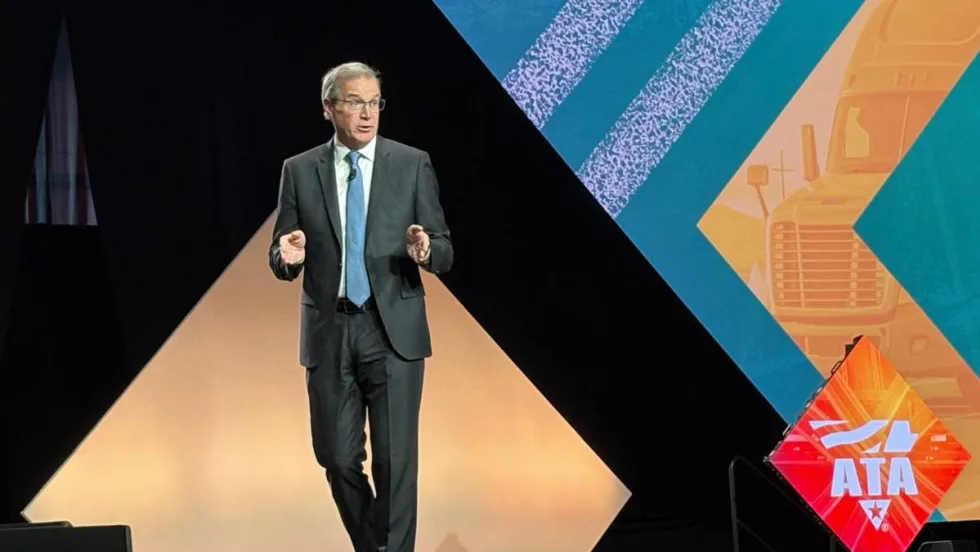
Trucking Advocacy: Impact Beyond the 2024 Elections
No matter who wins the election, trucking continues to work to educate the people who pass the laws and make the rules that affect the industry. HDT's Deborah Lockridge shares insights from two major trucking associations in her All That's Trucking blog.
Read More →
Recharge Your Brain for Better Business
Skimping on vacation may be the worst thing you can do for your business, your career, and your mental health. In her All That's Trucking blog, Deborah Lockridge writes about the importance of giving your brain what it needs to be innovative.
Read More →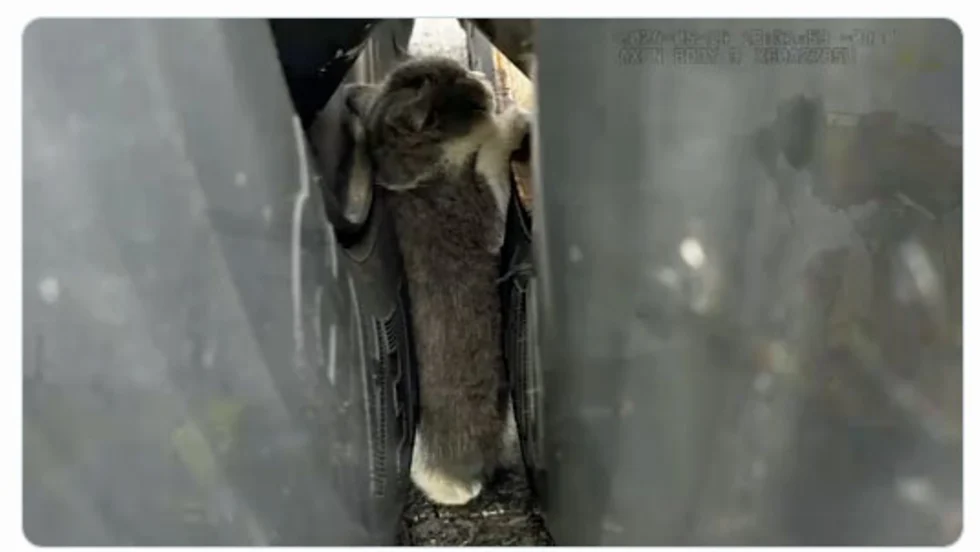
Trucker Pre-Trip Leads to Mission 'Im-paw-sible'
See what happened when a truck driver found an unexpected stowaway during his pre-trip inspection.
Read More →
HDT Editor: 2023's Most Important Trucking Topics
Read Deborah Lockridge's picks for the most significant stories we covered at HDT in 2023: freight recession, zero-emission trucks, drivers and marijuana, and more.
Read More →