





Related: The Tales Trailer Tires Tell
The Farther Trailer Tires Are, The Worse They Fare
Checking and maintaining tie pressure is a pain for drivers, and human nature takes its toll on trailer tires, reports Senior Contributing Editor Tom Berg.
October 19, 2018
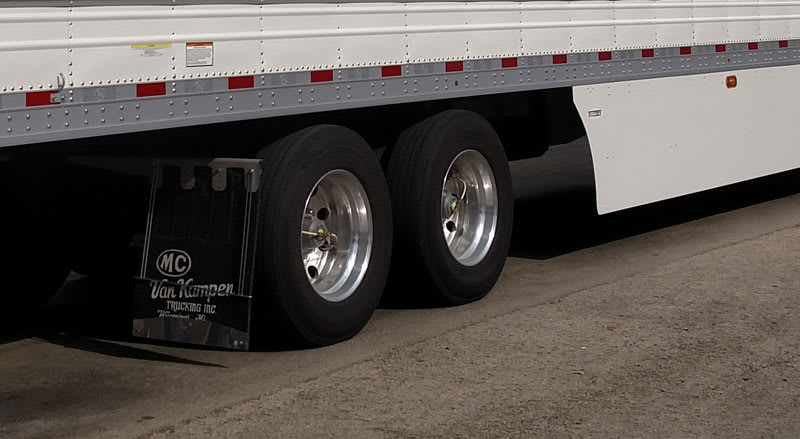
The inner dual on a trailer’s rearmost axle is out of the driver’s sight and farthest from him. So it tends to be lower on air than all the other tires on a tractor-trailer. Tires on this van are equipped with P.S.I. inflation systems.
Photo by Tom Berg
2 min to read
What’s the most neglected tire on a tractor-trailer rig? The one farthest from the driver. That’s what 40 years in the tire industry tells Al Cohn, formerly with Goodyear and for the last 12 years at Pressure Systems International, maker of the Meritor Tire Inflation System by P.S.I., where he’s director, new market development and engineering support.
Cohn was one of the presenters at P.S.I.’s annual Fleet Technology Seminar Oct. 9-10 in San Antonio, Texas. Tires and tire pressure are like a religion to him, and he shared many insights into what makes them live and die. Attendees at the seminar included truck users, equipment dealers and the trade press.
Most truck owners expect drivers to check and pump up tires, he said, but it’s almost too much to ask.
“It just takes too long to check the tire pressure on 18 tires,” Cohn said. It’s a difficult and dirty job, especially if a guy finds a tire that’s low on air and must find an air hose and drag it out to the truck. So drivers may eyeball and kick or thump one or two, but human nature leads them to give less attention to the ones they don’t see.
Cohn showed a drawing of a rig with typical inflation pressures of the nine tires on the driver’s side. The target pressure is 100 psi, and he noted that the tractor’s steer-axle tire is the one that’s most carefully looked at, because a blowout there can be catastrophic. But check how the pressures vary on the drive and trailer tires.
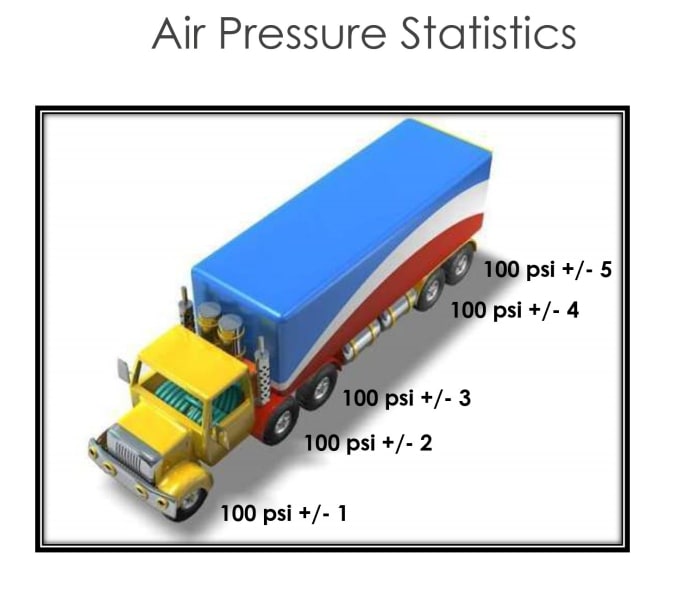
The farther a tire is from the driver, the more it tends to be neglected. Research shows that typical pressures vary by several pounds per square inch, and it’s worse on the right side of a tractor-trailer.
Image: Al Cohn, Pressure Systems International
Here are Cohn’s conclusions:
Air pressures drop the farther you go back on the vehicle. Steers are always best maintained (safety).
Trailer tires are always the lowest.
Driver side tires are better than the passenger side.
Outside duals are better than inside duals.
The right-rear inside trailer dual is typically the lowest.
That's why a tire pressure monitoring and inflation device like the one made by Cohn's company is a good idea.
Subscribe to Our Newsletter
More Blog Posts
Pulsing Back-of-Trailer Lamps Aim to Prevent Crashes
Can the addition of a pulsing brake lamp on the back of a trailer prevent rear-end collisions? FMCSA seems to think so, if its exemptions are any indication.
Read More →
Designing a 14-Foot Trailer
Trailers are 13 feet, 6 inches high, right? Not for Hub Group, which developed a special 14-foot-high trailer spec for a dedicated customer based in California. Learn more in the Trailer Talk blog.
Read More →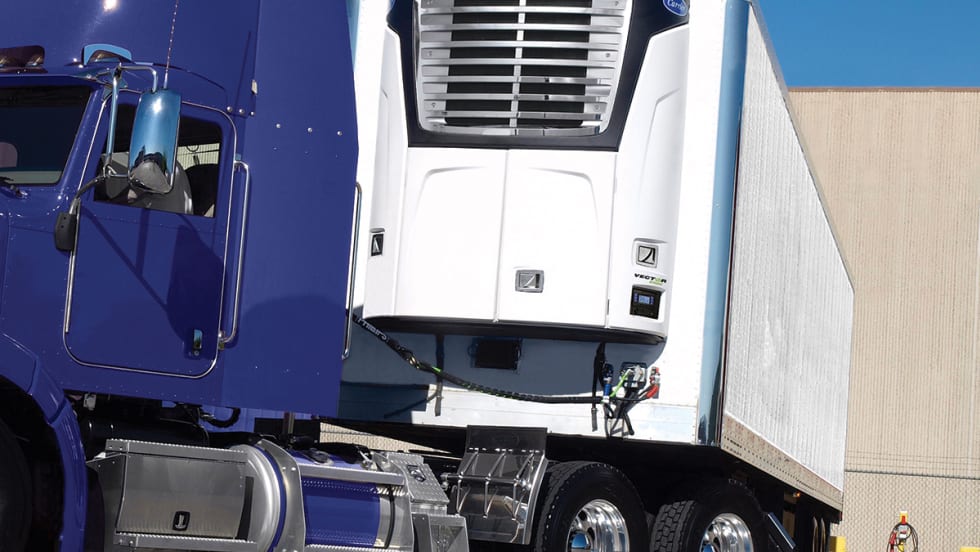
CARB Comes for Reefer Trailers
A new round of emissions control regulations decreed by the California Air Resource Board will begin affecting refrigerated trailer and TRU design and operations next year.
Read More →
5 Ways Data Analysis Maximizes the Value of Trailer Telematics
Are you getting the most out of your trailer telematics investment?
Read More →
Can You Guess What's in That Trailer?
You don’t always know what’s in the trailers that pass you on the road. But some of those trailers are carrying something a little more dangerous that frozen food or new bedding…like, maybe, a nuclear weapon. But this isn’t an ordinary trailer; this is a trailer specifically made to not only carry this type of payload, but protect it at all costs.
Read More →
How Trailers Are Harnessing 'Free' Energy
Can trailers play a more active role in sustainable transport beyond aerodynamic add-ons or low-rolling-resistance tires? Some companies think so.
Read More →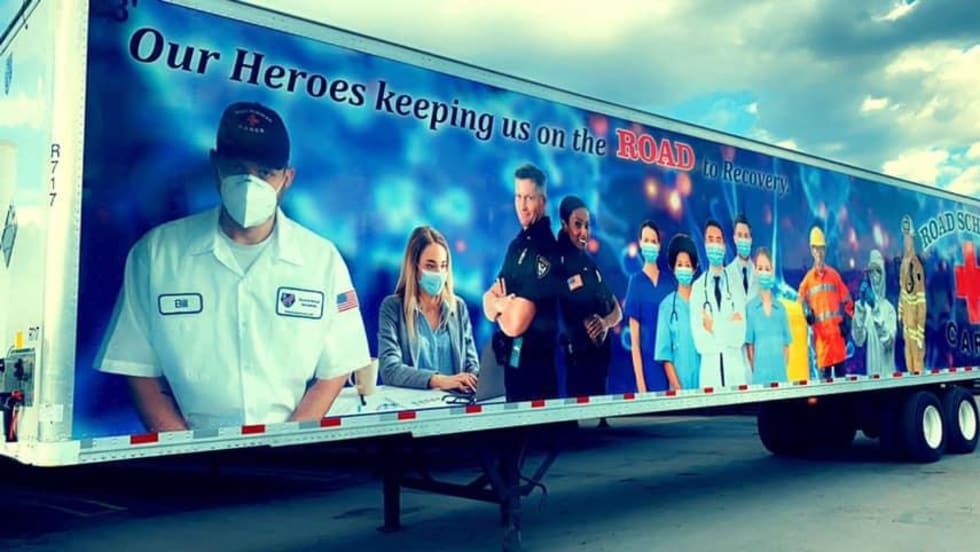
Wrapping a Trailer for COVID’s Everyday Heroes
“We don’t only deliver freight. We deliver awareness.” That’s what Jim Barrett, president and CEO of Road Scholar Transport, likes to say about the Dunmore, Pennsylvania-based carrier’s “awareness fleet.” Its latest trailer wrap honors the everyday heroes of the pandemic.
Read More →
How a Tanker Fleet is Using Unorthodox Trailer Lighting to Fight Rear-End Collisions
Groendyke Transport watched the number of rear-end collisions with its trailers rise steadily until it tried an unorthodox and then unapproved method of alerting following drivers that its trucks were applying brakes and slowing down.
Read More →
The Role Trailers are Playing in COVID-19 Funerals
In places such as New York City and Detroit, overwhelmed hospitals and mortuaries are using refrigerated trailers to store the bodies of people killed by COVID-19.
Read More →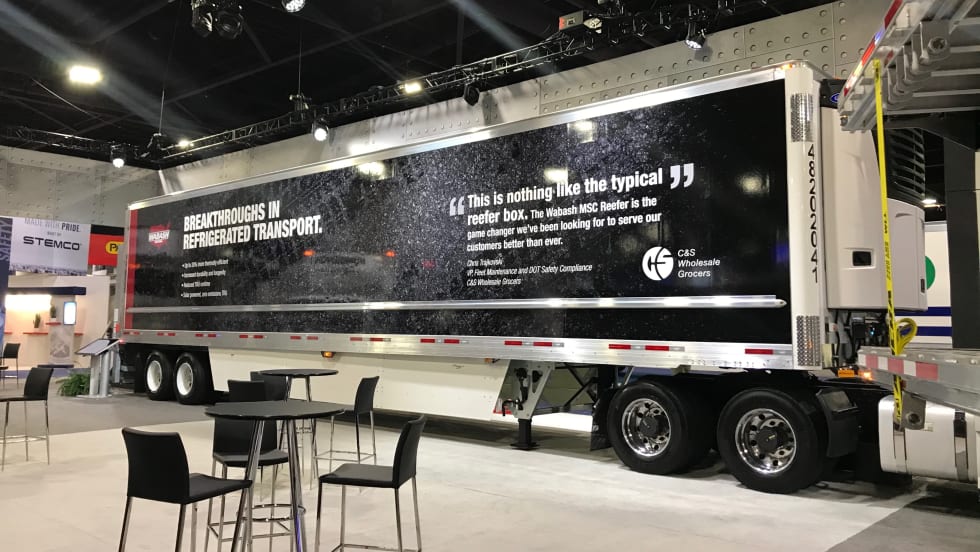
Reefer Trailer Aims to Help Reach Zero Emissions
Wabash National is partnering with C&S Wholesale Grocers to test a new type of zero-emissions refrigerated trailer.
Read More →