





Related: Over 10,000 Veterans Used the CDL Skills Test Waiver
The Army Uses Serious Rigs to Haul Armored Vehicles
The U.S. Army operates some of the more serious tractor-trailer combinations in the world, as Tom Berg explores in his Trailer Talk blog. The M1000 gooseneck trailer, for instance, weighs 50,000 pounds before it's even loaded.
July 9, 2015
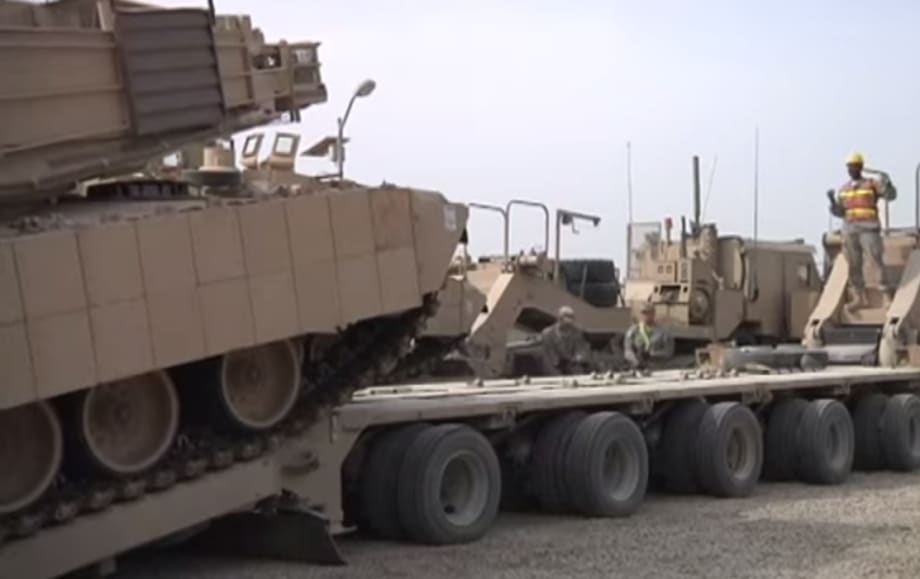
M1000's five axles are mounted along most of its bed length. Loading ramps are part of the trailer's equipment. Photo from U.S. Army via YouTube
2 min to read
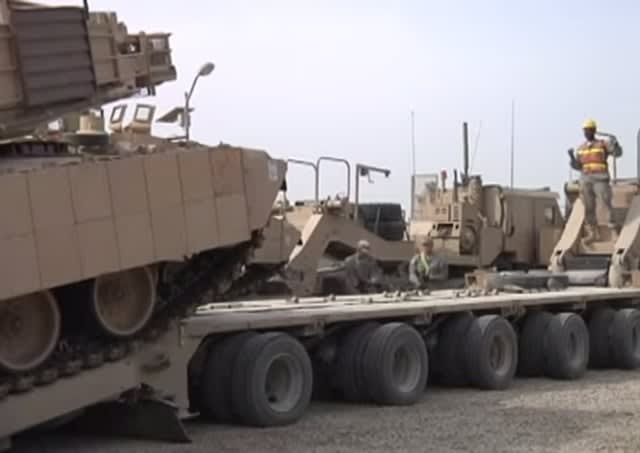
M1000's five axles are mounted along most of its bed length. Loading ramps are part of the trailer's equipment.Photo from U.S. Army via YouTube
The U.S. Army operates some of the more serious tractor-trailer combinations in the world, because soldiers have to deliver some deadly serious and very heavy “weapons systems” to battlefields, then retrieve them. Wheeled and tracked armored vehicles can “road march” there, but suffer high rates of wear and tear when doing so. It’s far better to carry them.
A prime example is the M1A1 battle tank, which became well-known for its effectiveness against enemy armor in the first and second Gulf Wars. It weighs about 70 tons, so an extra-heavy-duty rig was designed to haul it.
This is the M1070 truck-tractor and M1000 semitrailer, which the Army calls a Heavy Equipment Transport, or HET. Both are made by Oshkosh Truck Corp. and sold to the government by its specialty arm, Oshkosh Defense. The Army has acquired more than 2,600 of them, according to a listing on Wikipedia.com.
Several tractor series have been produced since the Army began buying them in 1993, and they were originally powered by 500-hp Detroit Diesel 8V-92s. All are 8x8s with steerable front and rear axles, and have powerful winches to drag loads aboard.
The current M1070A1 tractor has a 700-hp, 18.1-liter Caterpillar C18 diesel, a 7-speed Allison 4700SP full automatic transmission and an Oshkosh single-speed transfer case. It weighs 45,550 pounds and its fifth wheel can support 46,000 pounds.
The M1000 gooseneck trailer sits on five moderately spread axles, is 51 feet, 10 inches long and 12 feet wide. The trailer alone weighs 50,000 pounds, so a rig’s tare weight is 95,500 pounds, and its gross combination weight is about 235,500 pounds when hauling an M1A1 tank.
These HETs and their crews were busy in recent years, hauling tanks and other armored vehicles from various regions of Iraq to ports where they were shipped back home. The other day I came upon YouTube videos of them. Here’s one, showing members of a North Carolina Army National Guard outfit at work.
Most soldiers are young, and young people are the ones driving the HETs. They’re highly trained and well motivated, and make very good employees when they return to the civilian world, say trucking executives who’ve hired them. The industry has formal programs to recruit them.
By the way, you can buy a government-surplus HET and a lot of other equipment, as other YouTube videos show. IronPlanet.com is among the outlets. Maybe I’ll go get me one.
Subscribe to Our Newsletter
More Blog Posts
Pulsing Back-of-Trailer Lamps Aim to Prevent Crashes
Can the addition of a pulsing brake lamp on the back of a trailer prevent rear-end collisions? FMCSA seems to think so, if its exemptions are any indication.
Read More →
Designing a 14-Foot Trailer
Trailers are 13 feet, 6 inches high, right? Not for Hub Group, which developed a special 14-foot-high trailer spec for a dedicated customer based in California. Learn more in the Trailer Talk blog.
Read More →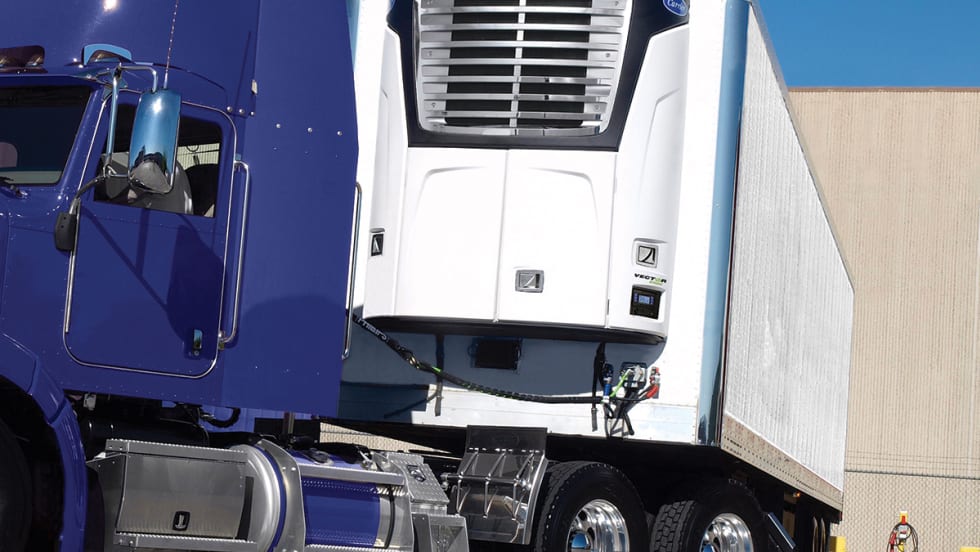
CARB Comes for Reefer Trailers
A new round of emissions control regulations decreed by the California Air Resource Board will begin affecting refrigerated trailer and TRU design and operations next year.
Read More →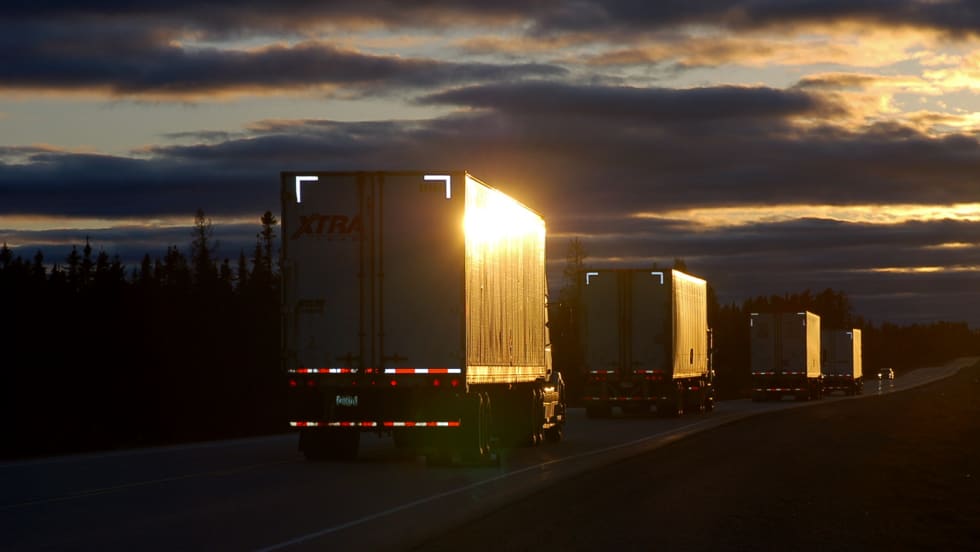
5 Ways Data Analysis Maximizes the Value of Trailer Telematics
Are you getting the most out of your trailer telematics investment?
Read More →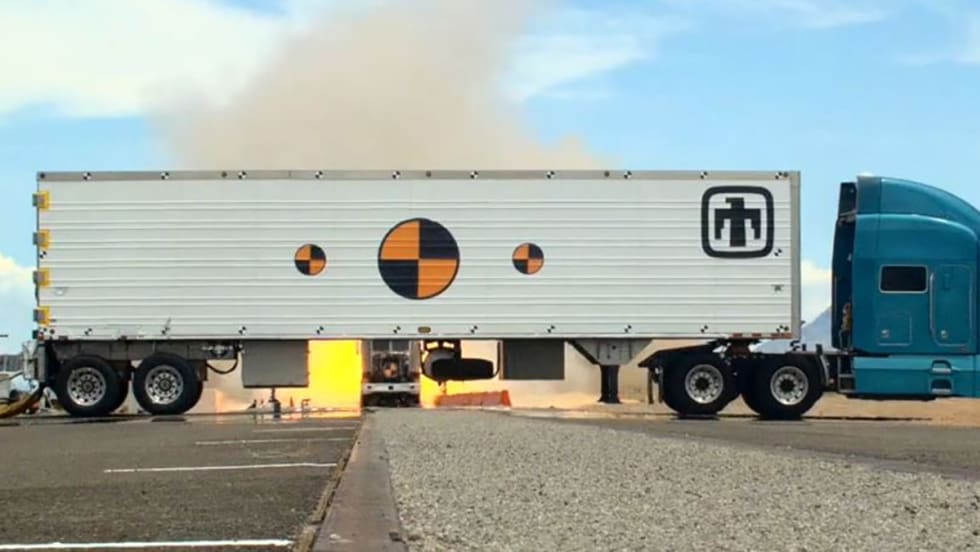
Can You Guess What's in That Trailer?
You don’t always know what’s in the trailers that pass you on the road. But some of those trailers are carrying something a little more dangerous that frozen food or new bedding…like, maybe, a nuclear weapon. But this isn’t an ordinary trailer; this is a trailer specifically made to not only carry this type of payload, but protect it at all costs.
Read More →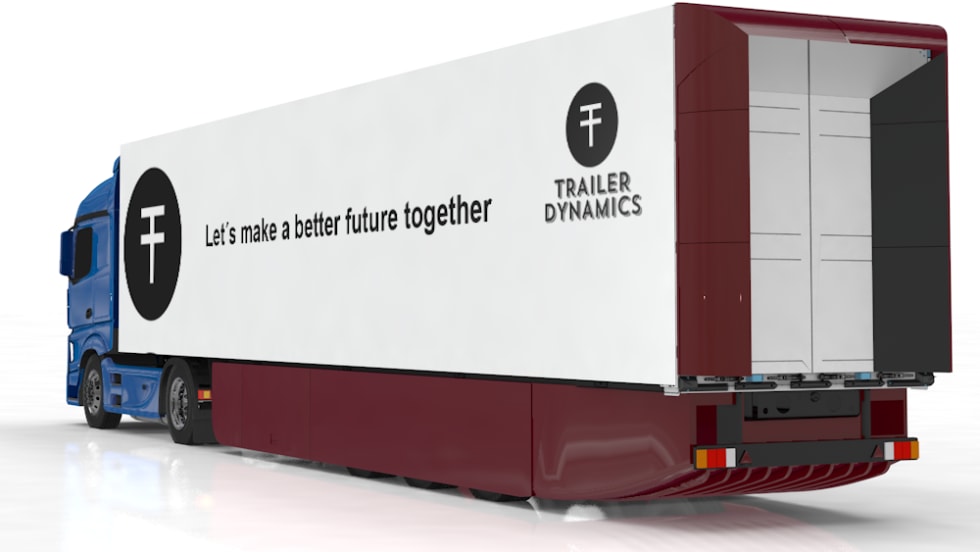
How Trailers Are Harnessing 'Free' Energy
Can trailers play a more active role in sustainable transport beyond aerodynamic add-ons or low-rolling-resistance tires? Some companies think so.
Read More →
Wrapping a Trailer for COVID’s Everyday Heroes
“We don’t only deliver freight. We deliver awareness.” That’s what Jim Barrett, president and CEO of Road Scholar Transport, likes to say about the Dunmore, Pennsylvania-based carrier’s “awareness fleet.” Its latest trailer wrap honors the everyday heroes of the pandemic.
Read More →
How a Tanker Fleet is Using Unorthodox Trailer Lighting to Fight Rear-End Collisions
Groendyke Transport watched the number of rear-end collisions with its trailers rise steadily until it tried an unorthodox and then unapproved method of alerting following drivers that its trucks were applying brakes and slowing down.
Read More →
The Role Trailers are Playing in COVID-19 Funerals
In places such as New York City and Detroit, overwhelmed hospitals and mortuaries are using refrigerated trailers to store the bodies of people killed by COVID-19.
Read More →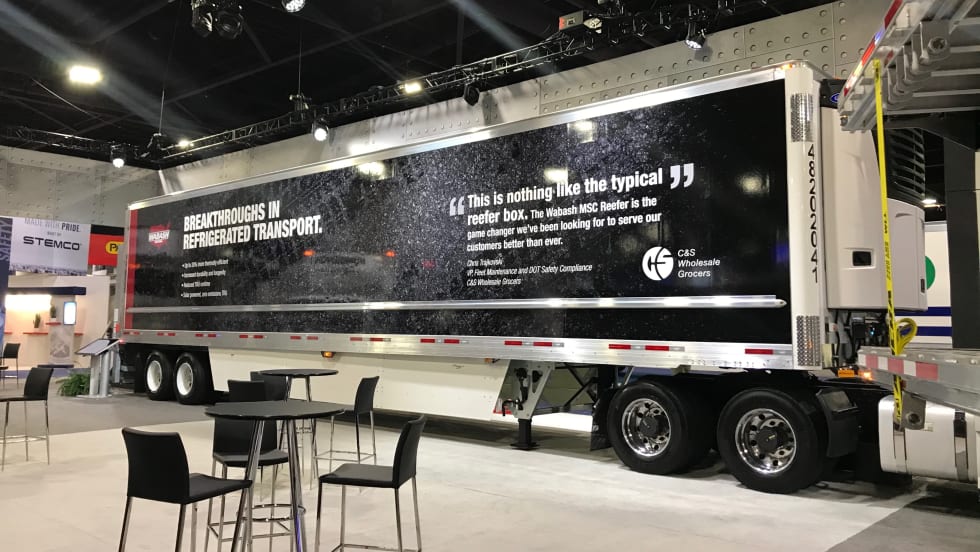
Reefer Trailer Aims to Help Reach Zero Emissions
Wabash National is partnering with C&S Wholesale Grocers to test a new type of zero-emissions refrigerated trailer.
Read More →