




Super-cube rig for Walmart Canada might raise some issues
What's this? A modern reiteration of a 1930s truck-and-trailer combination? Sort of. It's a high-capacity tractor-trailer combination recently assembled in Ontario for possible use by Walmart Canada, which calls it a "super cube" truck. And it's generating a bit of controversy

Trailer of this special rig is 60.5 feet long, 7.5 feet longer than allowed in Ontario, but a special permit would allow operational testing. Its COE tractor was built up from a Freightliner Argosy glider kit.
What's this? A modern reiteration of a 1930s truck-and-trailer combination? Sort of. It's a high-capacity tractor-trailer combination recently assembled in Ontario for possible use by Walmart Canada, which calls it a "super cube" truck. And it's generating a bit of controversy.
The rig, consisting of a COE tractor with a dromedary box and a 60-foot, 6-inch-long semitrailer, was put together for Walmart as a pilot project. A second rig is planned. It'd require a special permit to operate, because, while it meets the overall length limit for a rig in Ontario (23 meters or 75.5 ft), the trailer is 7.5 feet longer than 53-footers widely used in the province.
In a press release, Walmart said the rig can carry 30% more cargo than a standard 53-foot trailer, and would allow the giant retailer to haul as many goods with fewer trucks. It showed off the rig at a recent sustainability conference.
Innovative Trailer Design, of Mississauga, built the trailer. Its president, Benney Di Franco, told the Toronto Star newspaper that in addition to its added length, the trailer has ha lower floor that results in a greater interior height.
Walmart said the trailer has two decks, and the drom box holds four pallets of cargo. Bi-fold doors at the drom's rear and in the trailer's nose allows cargo movement between the vehicles and from or to a dock. Kingpin setting is 60 inches, compared to the usual 40 inches on a standard semitrailer.
The Ontario Ministry of Transportation is involved and told the Star that it has done "extensive safety and performance testing." The agency "will determine the best way to integrate the new trucks into our highway system," said Ontario's transport minister, Bob Chiarelli.
Unless there are some permit restrictions limiting the gross combination weight of the vehicle, under Ontario regs, it could weigh as much as 92,800 lb.
HDT's Equipment Editor, Jim Park, who lives in Ontario, says for-hire carriers don't like the extra-long trailer because it'd give a private fleet higher productivity that might put the for-hire guys at a disadvantage. If the idea catches on, it could spark a round of re-equipping.
This truck and trailer might also threaten long combination vehicles now operated by various fleets, like twin 53s with standard-height floors. Some of these carry lighter commodities like those envisioned for this Walmart high cube rig.
Reinventing the Argosy
This COE power unit, meanwhile, might pose an exhaust emissions problem. It was assembled by a dealer from a glider kit made by Freightliner in North Carolina. Gliders are new trucks with used or rebuilt powertrains, and the engine usually doesn't meet current emissions limits. This is legally OK if the glider replaces a wrecked truck or tractor, but in Canada it might not be if it's built for an entirely new purpose.
Don Moore, CEO of the Canadian Transportation Equipment Association, wrote a letter to members on the subject. Writing about gliders in general and citing Canadian law, he said that if the rig is titled as a 2012 vehicle, its exhaust performance would have to match.
"The emissions from a given model year vehicle must be met, so the engine must meet those requirements; i.e. a 2012 model-year vehicle must be able to meet 2012 emission requirements for the given class of vehicles and/or engines," Moore concluded.
By the way, a COE was needed to squeeze the maximum cube into Ontario's 75.5-foot overall length limit for tractor/semitrailer combos. If a conventional-cab tractor were used, the drom box would not fit and the rig would not be so productive, even if it stayed within the overall limit.
Freightliner is the only North American manufacturer that still makes a Class 8 high COE, though primarily for export. That's why an Argosy glider, which the builder also offers, was used here. (Class 8 low COEs, like Mack, Peterbilt and others build as trash collection chassis, use current diesels, so would be emissions-legal. But their cabs would probably be considered too cramped for highway service.)
Would this rig work in the U.S.? Some western states have overall length limits that would allow it, and if engine emissions did not become an issue, glider kits could be the basis for the power units. Then the question is, would it make operational sense for anyone?
What's Old is New Again
Jim Park also said this rig reminds him of a concept vehicle that Jim Hebe, then president and CEO of Freightliner, ordered up in the late '90s. It used an Argosy COE tractor with a three-axle 60-foot semitrailer made by Wabash National.
It added productivity but on many hauls would've exceeded the 80,000-pound limit in the States, which Congress was not likely to raise, and of course was overlength in most states. Fleets, fresh from transitioning to 53-foot trailers from 48s (and earlier, to 48s from 45s), for which they made little or no extra profit, wanted no part of Hebe's idea.
I drove that rig and it was a handful, especially in tight turns, even with a steerable third axle. It was painted bright orange - maybe to woo Schneider National Carriers? - and I wonder where it is today.
More Blog Posts
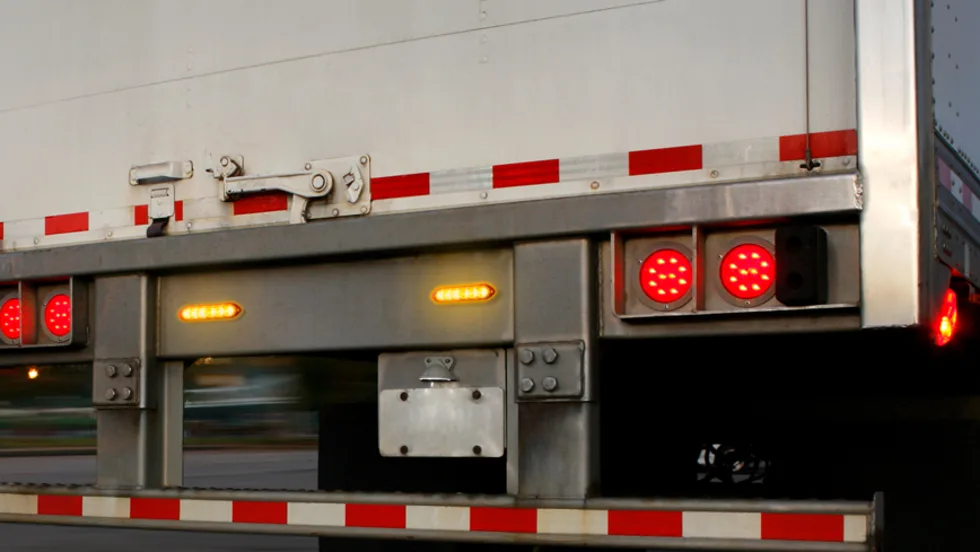
Pulsing Back-of-Trailer Lamps Aim to Prevent Crashes
Can the addition of a pulsing brake lamp on the back of a trailer prevent rear-end collisions? FMCSA seems to think so, if its exemptions are any indication.
Read More →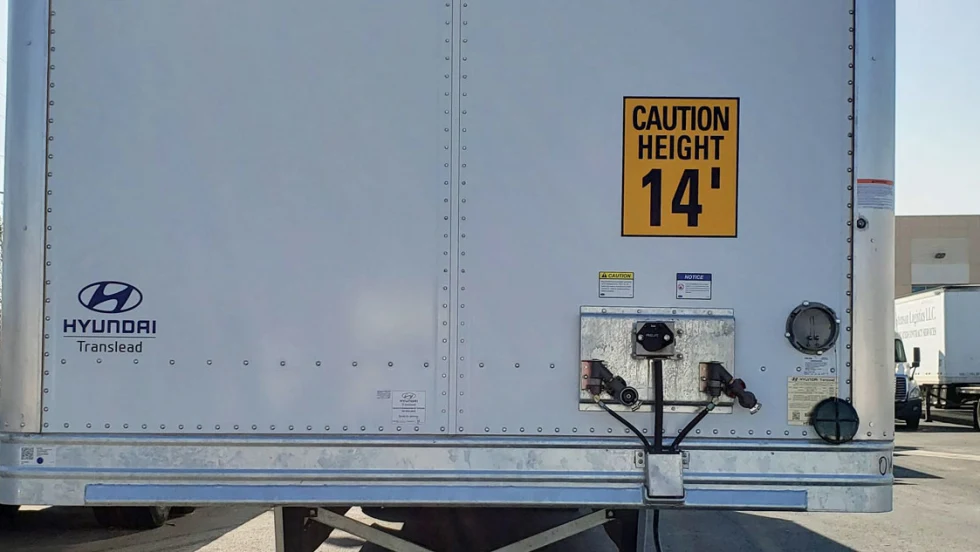
Designing a 14-Foot Trailer
Trailers are 13 feet, 6 inches high, right? Not for Hub Group, which developed a special 14-foot-high trailer spec for a dedicated customer based in California. Learn more in the Trailer Talk blog.
Read More →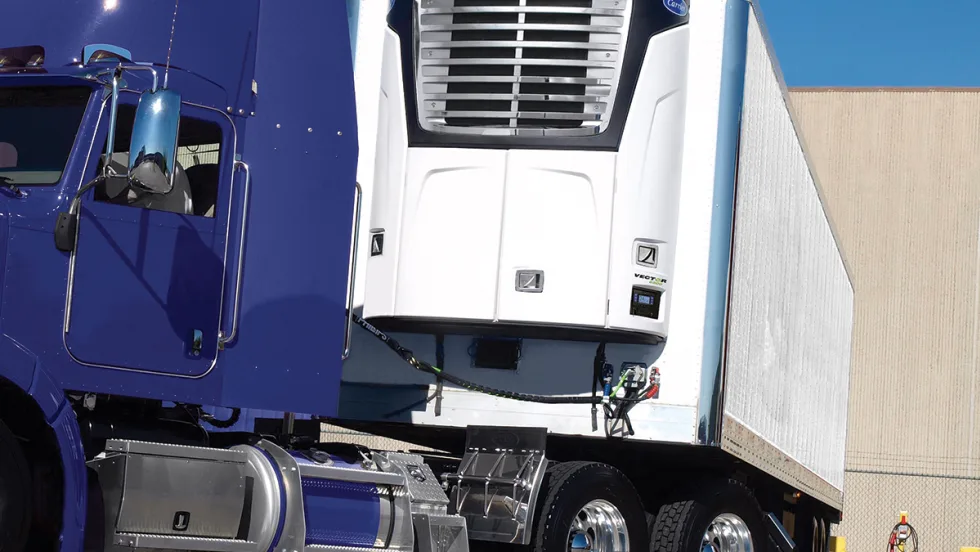
CARB Comes for Reefer Trailers
A new round of emissions control regulations decreed by the California Air Resource Board will begin affecting refrigerated trailer and TRU design and operations next year.
Read More →
5 Ways Data Analysis Maximizes the Value of Trailer Telematics
Are you getting the most out of your trailer telematics investment?
Read More →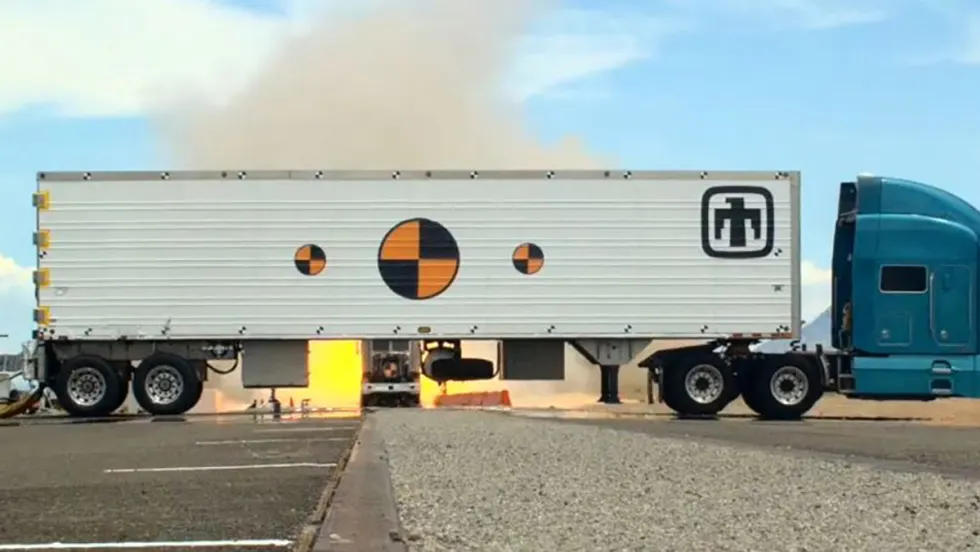
Can You Guess What's in That Trailer?
You don’t always know what’s in the trailers that pass you on the road. But some of those trailers are carrying something a little more dangerous that frozen food or new bedding…like, maybe, a nuclear weapon. But this isn’t an ordinary trailer; this is a trailer specifically made to not only carry this type of payload, but protect it at all costs.
Read More →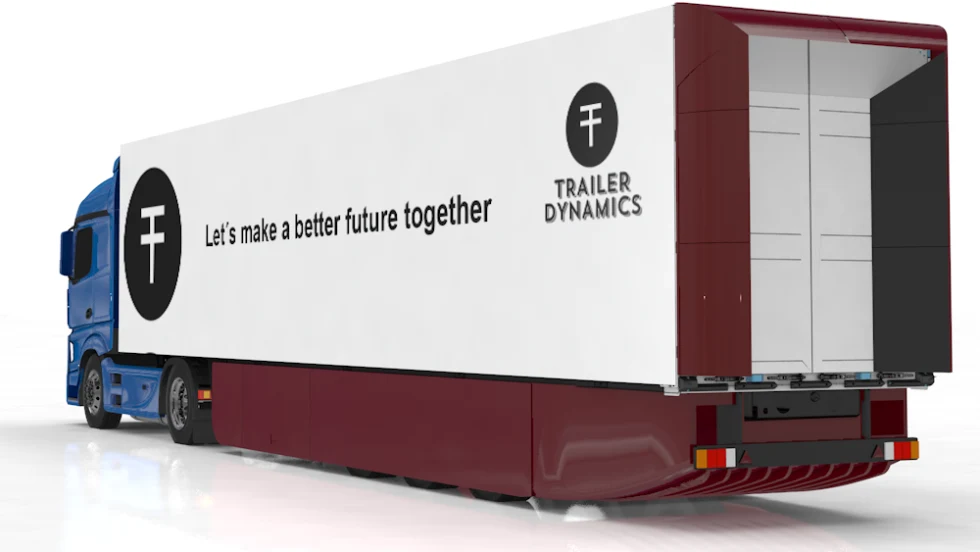
How Trailers Are Harnessing 'Free' Energy
Can trailers play a more active role in sustainable transport beyond aerodynamic add-ons or low-rolling-resistance tires? Some companies think so.
Read More →
Wrapping a Trailer for COVID’s Everyday Heroes
“We don’t only deliver freight. We deliver awareness.” That’s what Jim Barrett, president and CEO of Road Scholar Transport, likes to say about the Dunmore, Pennsylvania-based carrier’s “awareness fleet.” Its latest trailer wrap honors the everyday heroes of the pandemic.
Read More →
How a Tanker Fleet is Using Unorthodox Trailer Lighting to Fight Rear-End Collisions
Groendyke Transport watched the number of rear-end collisions with its trailers rise steadily until it tried an unorthodox and then unapproved method of alerting following drivers that its trucks were applying brakes and slowing down.
Read More →
The Role Trailers are Playing in COVID-19 Funerals
In places such as New York City and Detroit, overwhelmed hospitals and mortuaries are using refrigerated trailers to store the bodies of people killed by COVID-19.
Read More →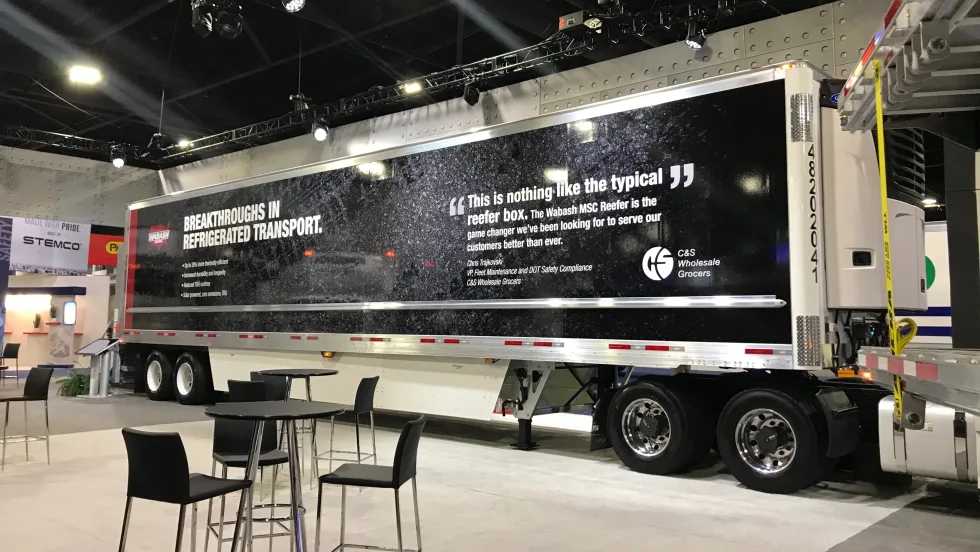
Reefer Trailer Aims to Help Reach Zero Emissions
Wabash National is partnering with C&S Wholesale Grocers to test a new type of zero-emissions refrigerated trailer.
Read More →