




Roll-Off Truck’s Raised Rails Batter a Bridge
Roll-off truck drivers: Did you turn off the PTO? Trucks and trailers are sometimes incompatible with overpasses. Tom Berg has more in his Trailer Talk blog.

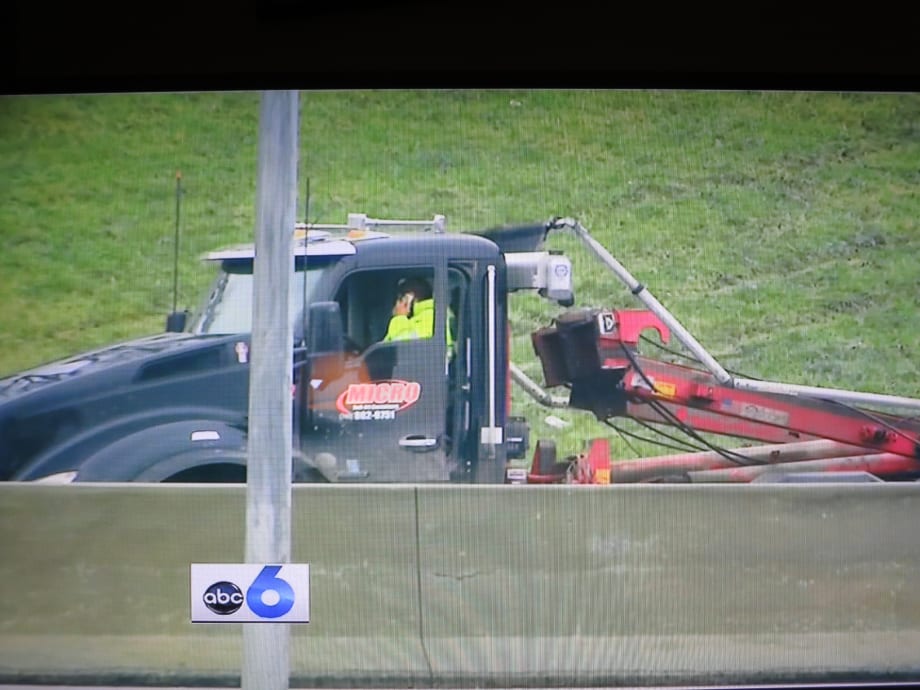
The truck driver calls in the incident, and was reportedly fired. He probably forgot to turn off the PTO, whose pump re-raised the roll-off's rails.

Visible just above the tree, a roll-off truck approaches a bridge with its rails raised.
Trucks and trailers are sometimes incompatible with overpasses. When a vehicle’s too high for the overhead clearance, bam! We’ve all seen structural beams that have been battered by too-tall trucks attempting to get through and whose drivers suddenly found it wasn’t physically possible.
Often it’s a van-type trailer whose top is sheared back – “skinned,” some folks say. The bridge wins in such a contest because it's much stronger than the vehicle.

The bridge and its surveilance camera shakes as the rails batter supporting beams below.
But last Friday afternoon it was a roll-off trash truck whose driver was breezing along a freeway on the south side of Columbus, Ohio. The truck carried no trash bin, but unbeknownst to him, the hoist had raised its longitudinal rails so they were sticking up like a beefy battering ram at the ready. It plunged into the large I-beam supports of a bridge, tearing down the first one and damaging three others.
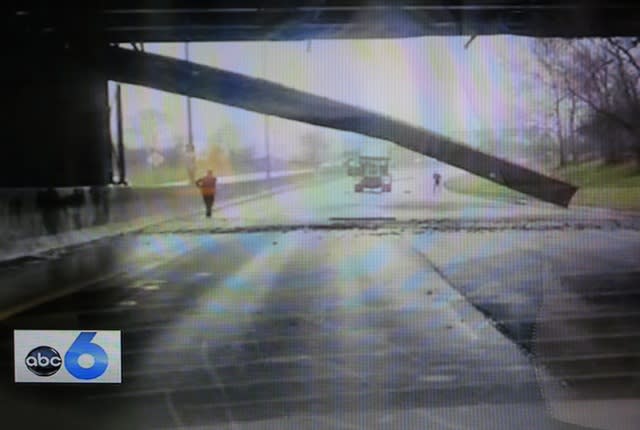
Beam on the edge of bridge came down and others were damaged. A contractor quickly began repairing the mess.
This temporarily blocked the westbound lanes of the freeway (State Route 104) and, because of the bridge’s weakened understructure, transportation department officials closed several lanes of the busy boulevard above (South High Street). This got considerable coverage from local news media, and I shot some photos from video aired by Channel 6 News.
A young couple who witnessed the crash from their car just behind said the truck driver stopped but seemed “unfazed.” His company's bosses apparently weren’t so cool about it, and a representative told the couple that they fired the driver on the spot. Police charged him with reckless operation and an overheight-vehicle violation, the Columbus Dispatch reported.
The bridge has been hit before, the newspaper reported, but its clearance height is 15 feet, 8 inches, well above the federal standard of 14 feet. Thirteen feet, 6 inches is the maximum allowable height for trucks operating without a special permit.
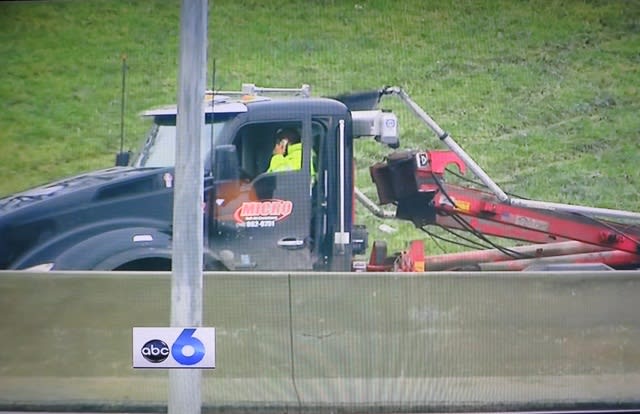
The truck driver calls in the incident, and was reportedly fired. He probably forgot to turn off the PTO, whose pump re-raised the roll-off's rails.
What causes hoists to raise like that? I figured the driver had probably forgotten to turn off the PTO after delivering a bin. As he got back on the road, the PTO-driven pump repressurized the hydraulic lines leading to the hoist, raising the rails.
I checked this idea with Jim Pigg, a sales rep at Alley-Cassetty Truck Center down in Nashville, Tenn., which specializes in roll-off trucks. He agreed, but added that air or water in a control line may have frozen and prevented the PTO from disengaging.
“That happens sometimes, usually with dump trucks, all over the world,” he said. “It doesn’t happen a lot, but when it does, it can cause problems. The cold can do bad things to machinery.”
A driver can see a raised dump body in his side-view mirrors, but the rails on a roll-off body are out of view. A center rear-view mirror inside the cab, as in a car, would allow a roll-off truck's driver to see through the back window, if he bothers to look at the mirror to see what's happening back there.
Ohio DOT officials got a contractor to the site right away and a crew cut the fallen beam and used a crane to lift it out of the way. They were replacing it and other damaged beams, and most of the bridge’s lanes were reopened by early this week.
More Blog Posts

Pulsing Back-of-Trailer Lamps Aim to Prevent Crashes
Can the addition of a pulsing brake lamp on the back of a trailer prevent rear-end collisions? FMCSA seems to think so, if its exemptions are any indication.
Read More →
Designing a 14-Foot Trailer
Trailers are 13 feet, 6 inches high, right? Not for Hub Group, which developed a special 14-foot-high trailer spec for a dedicated customer based in California. Learn more in the Trailer Talk blog.
Read More →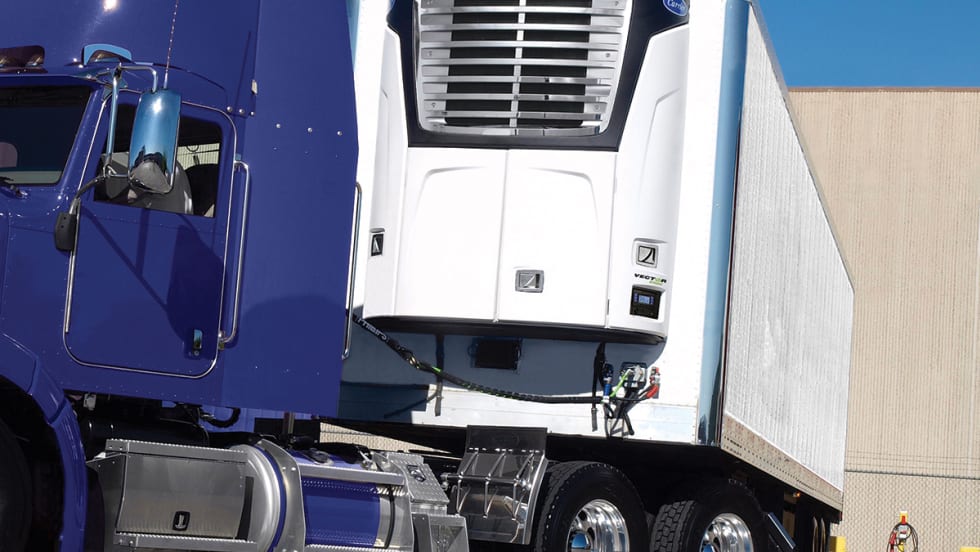
CARB Comes for Reefer Trailers
A new round of emissions control regulations decreed by the California Air Resource Board will begin affecting refrigerated trailer and TRU design and operations next year.
Read More →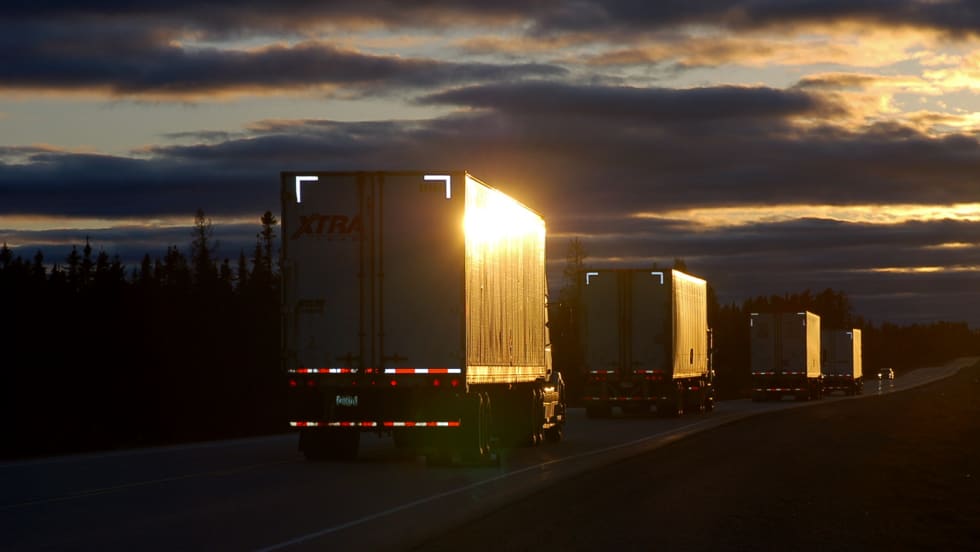
5 Ways Data Analysis Maximizes the Value of Trailer Telematics
Are you getting the most out of your trailer telematics investment?
Read More →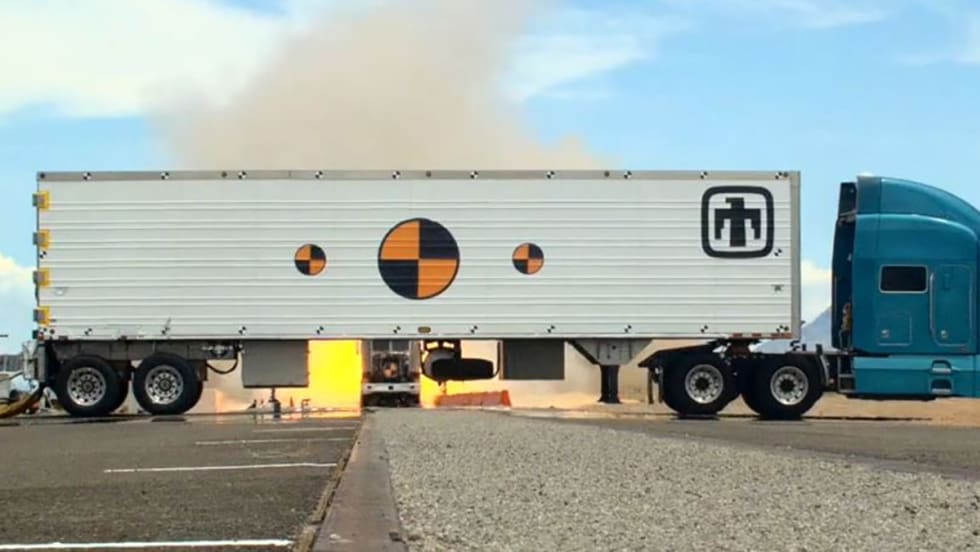
Can You Guess What's in That Trailer?
You don’t always know what’s in the trailers that pass you on the road. But some of those trailers are carrying something a little more dangerous that frozen food or new bedding…like, maybe, a nuclear weapon. But this isn’t an ordinary trailer; this is a trailer specifically made to not only carry this type of payload, but protect it at all costs.
Read More →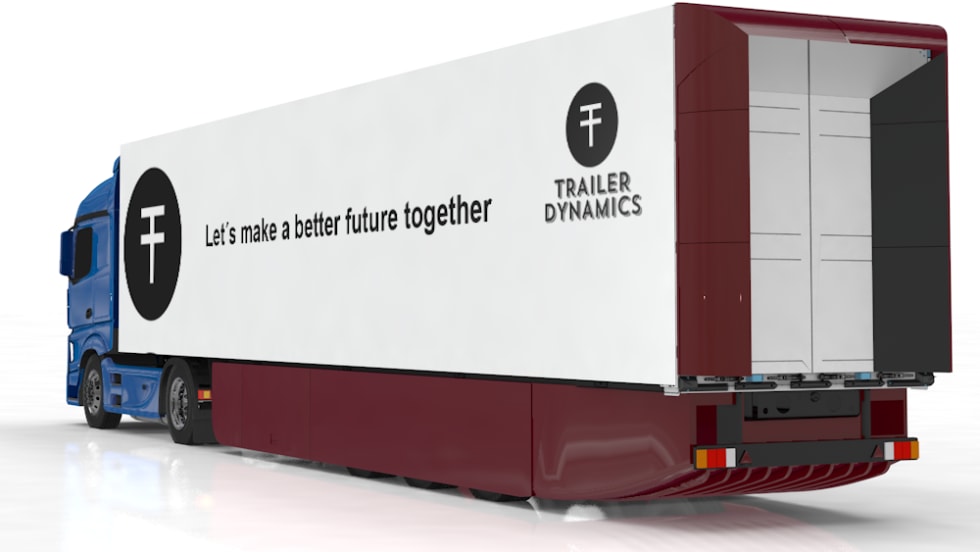
How Trailers Are Harnessing 'Free' Energy
Can trailers play a more active role in sustainable transport beyond aerodynamic add-ons or low-rolling-resistance tires? Some companies think so.
Read More →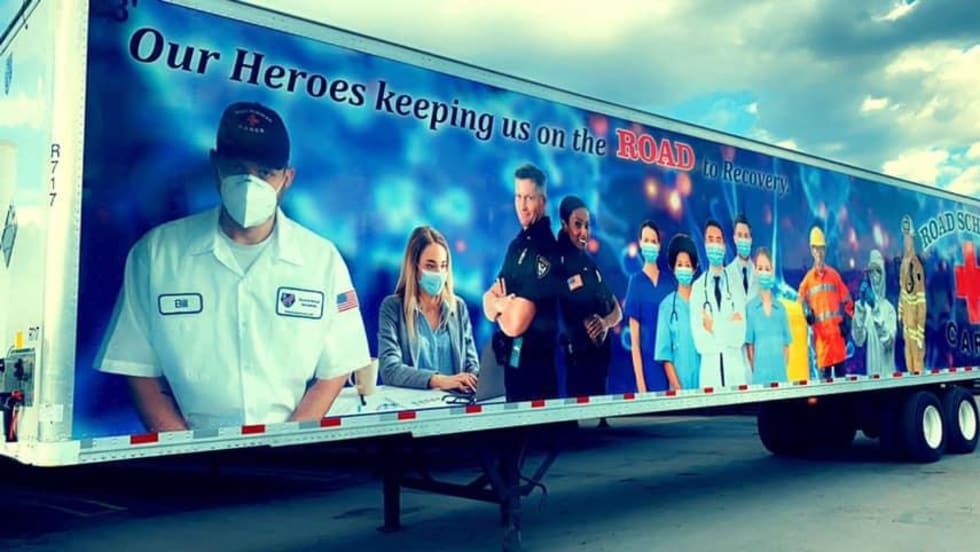
Wrapping a Trailer for COVID’s Everyday Heroes
“We don’t only deliver freight. We deliver awareness.” That’s what Jim Barrett, president and CEO of Road Scholar Transport, likes to say about the Dunmore, Pennsylvania-based carrier’s “awareness fleet.” Its latest trailer wrap honors the everyday heroes of the pandemic.
Read More →
How a Tanker Fleet is Using Unorthodox Trailer Lighting to Fight Rear-End Collisions
Groendyke Transport watched the number of rear-end collisions with its trailers rise steadily until it tried an unorthodox and then unapproved method of alerting following drivers that its trucks were applying brakes and slowing down.
Read More →
The Role Trailers are Playing in COVID-19 Funerals
In places such as New York City and Detroit, overwhelmed hospitals and mortuaries are using refrigerated trailers to store the bodies of people killed by COVID-19.
Read More →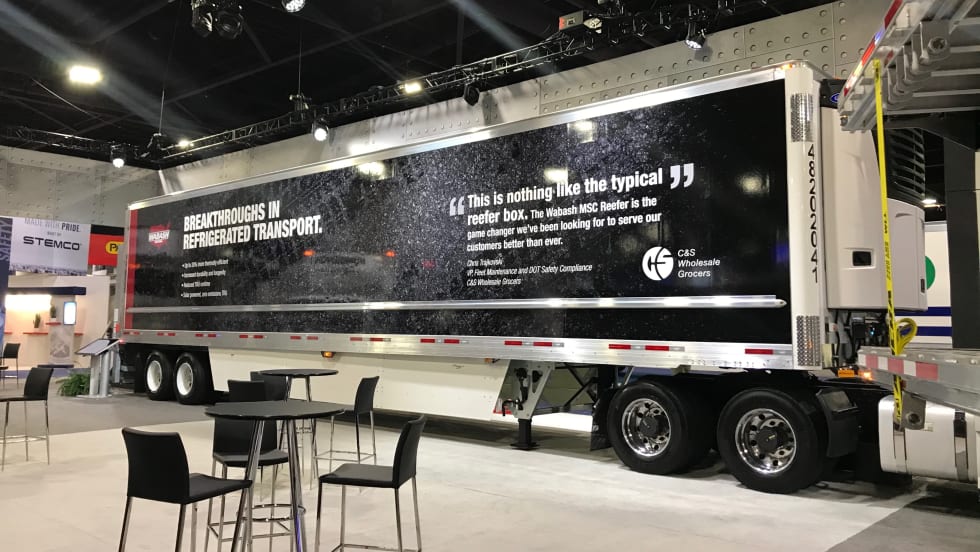
Reefer Trailer Aims to Help Reach Zero Emissions
Wabash National is partnering with C&S Wholesale Grocers to test a new type of zero-emissions refrigerated trailer.
Read More →