




Powered Trailer Axle Provides an Off-Road Boost
“SAF Trak” axle is powered from the tractor’s hydraulic wet kit. On the trailer, two hydraulic motors, one at each axle end, turn the wheels to help get the rig moving in slippery conditions.

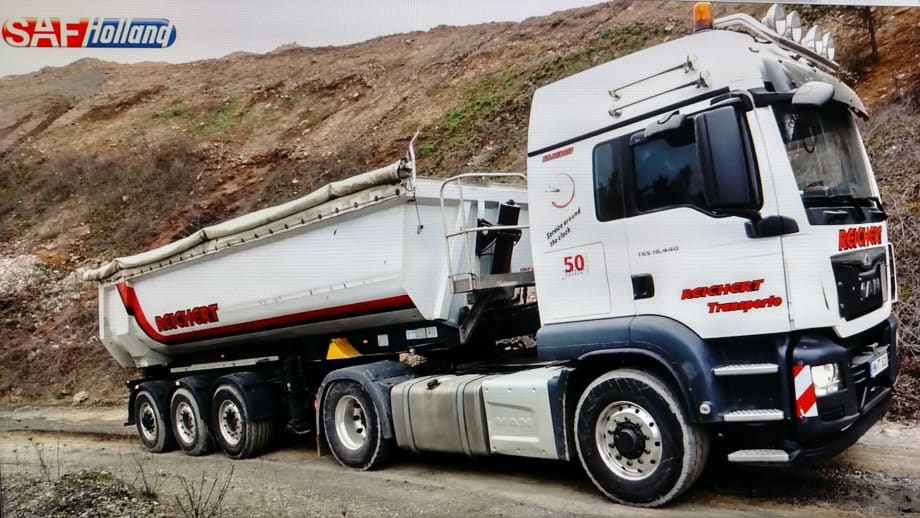
The 4x2 tractor can't get the rig moving on a slippery upgrade, so the trailer's powered rear axle provides a boost. Photo: Tom Berg from SAF-Holland video
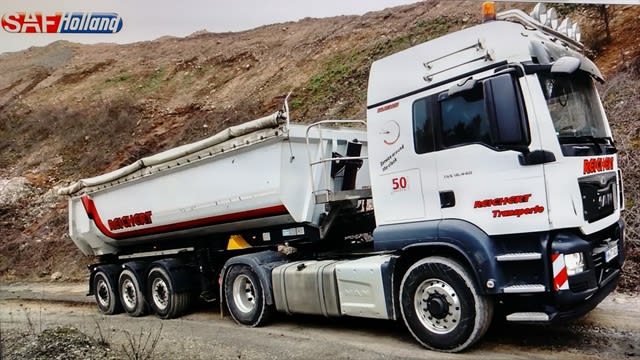
The 4x2 tractor can't get the rig moving on a slippery upgrade, so the trailer's powered rear axle provides a boost.Photo: Tom Berg from SAF-Holland video
Powered trailer axles are unusual, even in Europe where they do things differently with trucks than what we do here in North America. That’s why a new product from SAF-Holland, a hydraulically driven trailer axle, might find acceptance with operators over there.
The predominate Class 8 configuration in Europe is a single-rear-axle, 4x2 tractor pulling a three-axle trailer. Tractors, therefore, cost and weigh less than our common 6x4s that pull a tandem-axle trailer. The 4x2 works fine on pavement, especially with a locking differential, but a single drive axle on end-dump rigs sometimes can’t grab enough traction while off road.
So such operators often use 4x4 tractors, according to Markus Heuser, Germany-based director of global marketing communications for SAF-Holland. Of course, a front-driving axle adds weight and cost to the tractor.
Thus the company’s “SAF Trak” axle. It’s powered from the tractor’s hydraulic wet kit that tips the trailer body. On the trailer, two Poclain hydraulic motors, one at each axle end, turn the wheels to help get the rig moving in slippery conditions. A driver pushes a switch on the dash and compressed oil is sent to the motors to get the traction boost. It works only at low speeds.
As you’ll see in the accompanying video, a hydraulic motor is a 10-cylinder radial, like old aircraft engines. Heuser says the hydraulic tank on the tractor would need to hold a few more gallons of fluid, and of course, the trailer needs to be set up with hydraulic lines extending to the powered axle.
There are no plans to bring the SAF Trak axle here because our 6x4 tractors with twin-screw tandems seem to have enough traction for on/off-road work. But he didn’t say “never,” either.
More Blog Posts
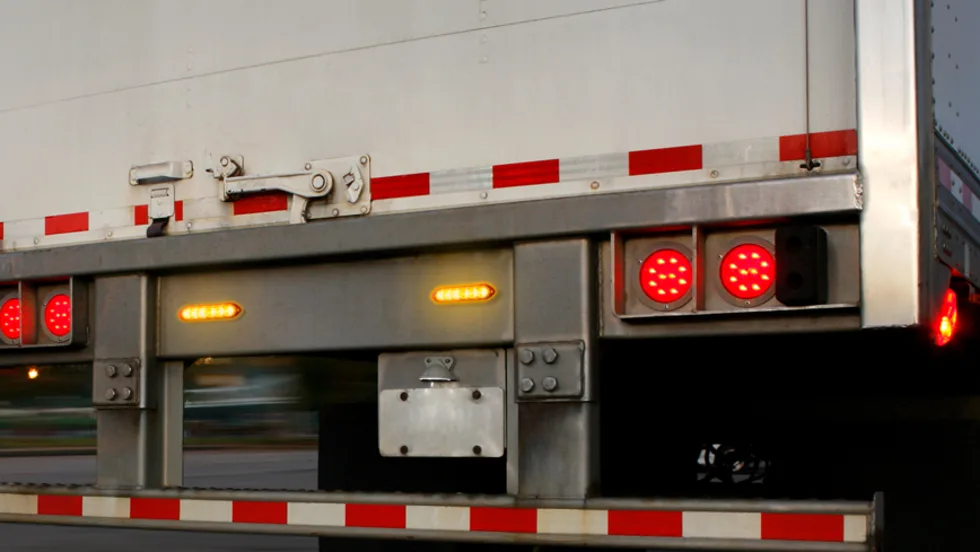
Pulsing Back-of-Trailer Lamps Aim to Prevent Crashes
Can the addition of a pulsing brake lamp on the back of a trailer prevent rear-end collisions? FMCSA seems to think so, if its exemptions are any indication.
Read More →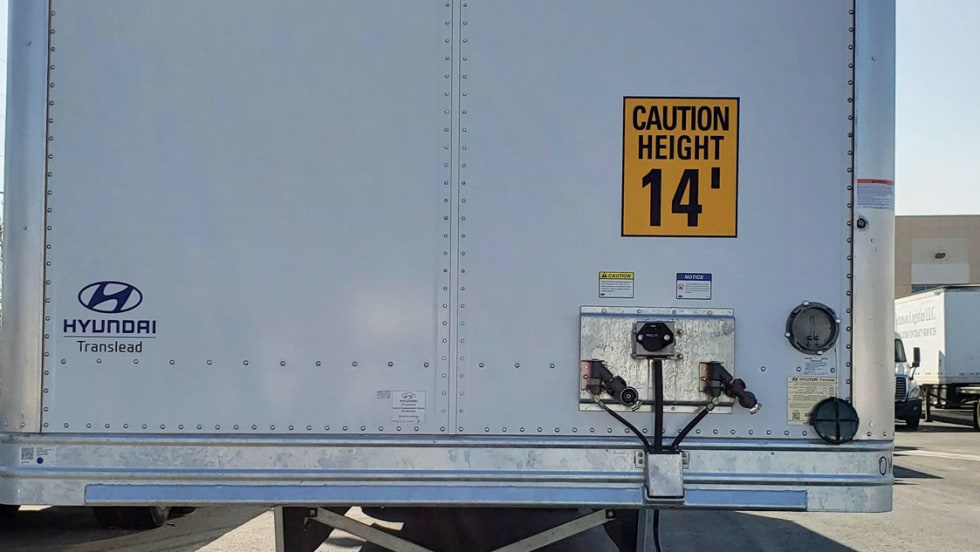
Designing a 14-Foot Trailer
Trailers are 13 feet, 6 inches high, right? Not for Hub Group, which developed a special 14-foot-high trailer spec for a dedicated customer based in California. Learn more in the Trailer Talk blog.
Read More →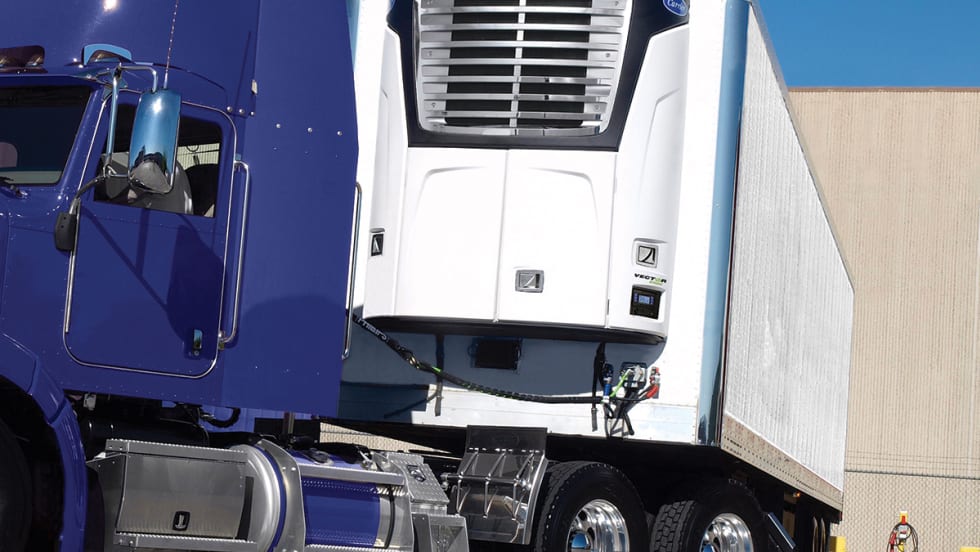
CARB Comes for Reefer Trailers
A new round of emissions control regulations decreed by the California Air Resource Board will begin affecting refrigerated trailer and TRU design and operations next year.
Read More →
5 Ways Data Analysis Maximizes the Value of Trailer Telematics
Are you getting the most out of your trailer telematics investment?
Read More →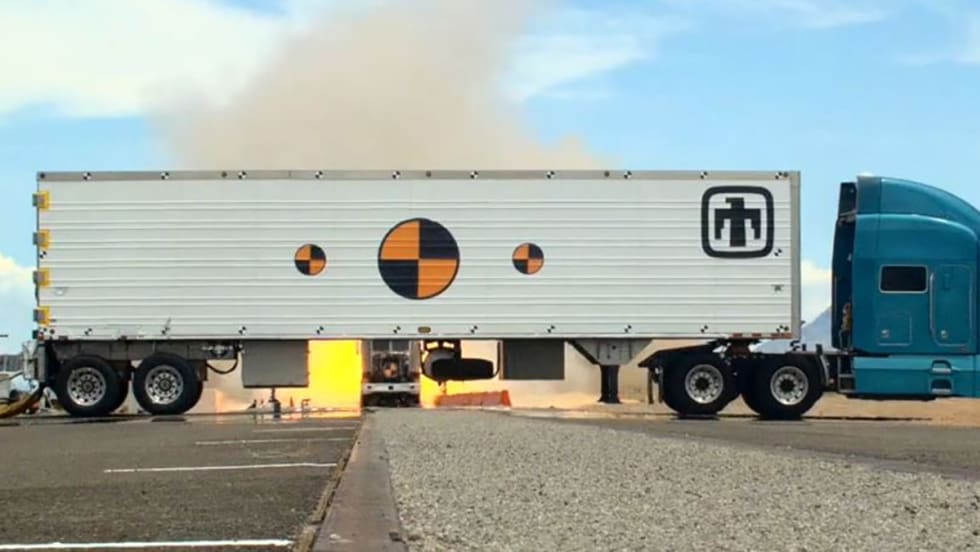
Can You Guess What's in That Trailer?
You don’t always know what’s in the trailers that pass you on the road. But some of those trailers are carrying something a little more dangerous that frozen food or new bedding…like, maybe, a nuclear weapon. But this isn’t an ordinary trailer; this is a trailer specifically made to not only carry this type of payload, but protect it at all costs.
Read More →
How Trailers Are Harnessing 'Free' Energy
Can trailers play a more active role in sustainable transport beyond aerodynamic add-ons or low-rolling-resistance tires? Some companies think so.
Read More →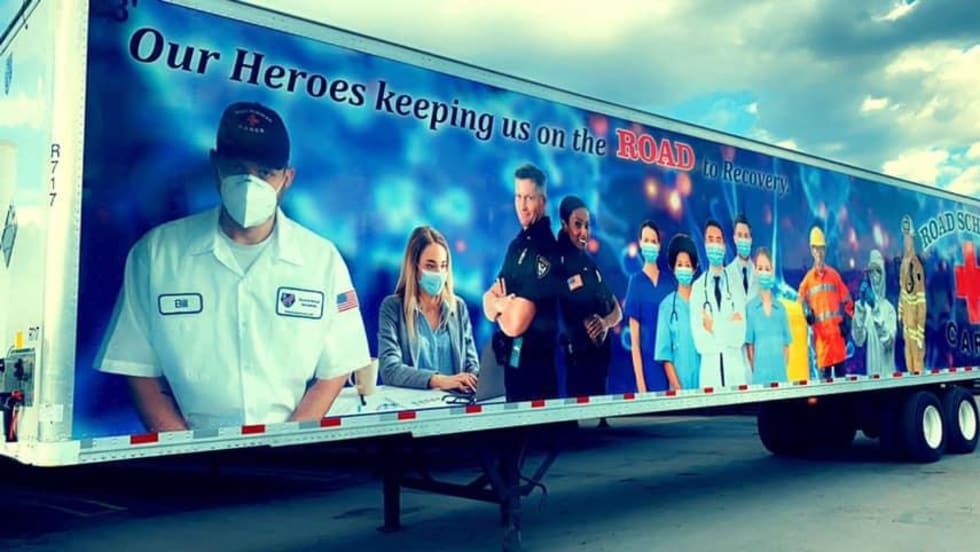
Wrapping a Trailer for COVID’s Everyday Heroes
“We don’t only deliver freight. We deliver awareness.” That’s what Jim Barrett, president and CEO of Road Scholar Transport, likes to say about the Dunmore, Pennsylvania-based carrier’s “awareness fleet.” Its latest trailer wrap honors the everyday heroes of the pandemic.
Read More →
How a Tanker Fleet is Using Unorthodox Trailer Lighting to Fight Rear-End Collisions
Groendyke Transport watched the number of rear-end collisions with its trailers rise steadily until it tried an unorthodox and then unapproved method of alerting following drivers that its trucks were applying brakes and slowing down.
Read More →
The Role Trailers are Playing in COVID-19 Funerals
In places such as New York City and Detroit, overwhelmed hospitals and mortuaries are using refrigerated trailers to store the bodies of people killed by COVID-19.
Read More →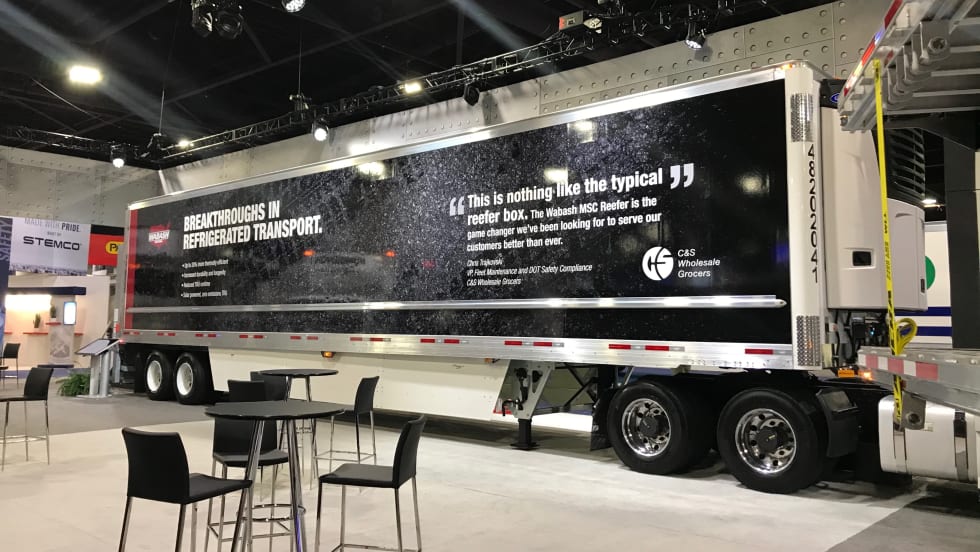
Reefer Trailer Aims to Help Reach Zero Emissions
Wabash National is partnering with C&S Wholesale Grocers to test a new type of zero-emissions refrigerated trailer.
Read More →