




Police sirens, Quiet-Zone crossing could be factors in Texas truck-train tragedy
Many thoughts went through my head when I first heard about the tragic train-truck collision in Midland, Texas, on Nov. 15: Oh, those poor military guys and their families! How could this happen? How could the truck driver mess up like this?
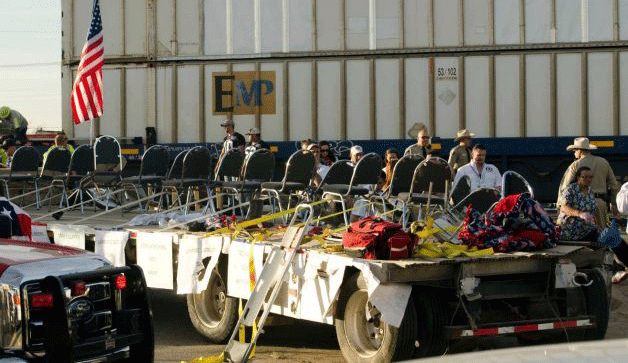
Drop-deck semitrailer remains intact after being struck near its rear by the fast-moving train. Chairs are still strapped in place.
Many thoughts went through my head when I first heard about the tragic train-truck collision in Midland, Texas, on Nov. 15: Oh, those poor military guys and their families! How could this happen? How could the truck driver mess up like this?
Think of the three soldiers and the marine. They had survived harrowing events in Iraq and Afghanistan, only to be killed during a parade honoring them and their colleagues. Yet there was bravery: At least two guys - one of the dead and one of the injured - pushed their wives off the trailer just before the collision, and many witnesses, military and civilian, rushed to aid the victims.
Think of the truck driver, too. He must feel terrible. But why didn't he see or hear the crossing signals or the train's horn? Exactly why is something investigators from local and state police and the National Transportation Safety Board are trying to determine. As of Monday they hadn't named the driver or his company, but said they are cooperating in the investigation.
Here's one plausible reason the driver erred: Celebratory sirens from police cars escorting the parade might have drowned out the signal bells, witnesses told one news outlet.
The gates began to lower just as the rig began crossing the tracks. The rig's driver knew he was in trouble and blew his horn at the slow-moving vehicle just ahead, trying to warn that driver to get his rig, also acting as a passenger-carrying float, out of the way, news reports said. But the train was coming too fast, at 62 mph, and couldn't possibly stop in time.
Here's something else that could be a factor: The crossing was in a Quiet Zone, an official Federal Railway Administration designation that restricts use of locomotive horns, said the NTSB official who briefed reporters after the accident, Mark Rosekind. Quiet Zones are established at the request of local people who are tired of loud horns on heavily-traveled rail lines.
"This is a Quiet Zone where they're not supposed to be hittin' the horn and blasting and making noise," Rosekind said of locomotive engineers. From other sources I know that signal equipment at such crossings sometimes includes a stationary horn that's loud enough to be heard by motorists but not for miles around, as a locomotive horn is. At this point we don't know if the signals had a horn as well as the bells.
In either case, the train's engineer didn't sound the horn as he otherwise would have - you know, those two longs, one short and another long - except for a four-second blast just prior to the impact. So maybe the truck driver didn't have much to hear, especially amid the happy din of a festive civic event, and not until it was way too late.
Here's another quick thought I had while watching that first TV news story: I'll bet the rig is a mess. But I was surprised to see images of an intact tractor-trailer, sitting jackknifed on the pavement just south of the crossing. Wow, that must be one rugged trailer!
Well, yes - most flatbeds, in this case a drop-deck steel-and-aluminum type, have very strong main frames. But the locomotive didn't T-bone the trailer; it got smacked near its rear end, according to an NTSB public affairs officer, Peter Knudson, whom I briefly spoke with by phone Monday morning.
So we can figure that the trailer's heavy spread-tandem assembly took much of the impact. With the force applied there, the semitrailer pivoted on its kingpin and the fifth wheel of the tractor, which was clear of the tracks.
I also noticed that the chairs placed on the deck for the honored passengers were strapped down like pieces of cargo, which explains why most of them remained in place during the impact. The method of securement is one of the many things that NTSB investigators are looking at, said Rosekind.
Of course they are checking the condition of the tractor and trailer. Members of the Texas Department of Public Safety have examined brakes and other components, and thus far have found no defects. They're looking at the driver's logbook as well as his qualifications and driving history, and the trucking company's history and operating procedures. They plan to interview the driver soon.
The driver voluntarily submitted a blood sample soon after the accident, Rosekind said. NTSB technicians will download data from the tractor's engine control module to see if any sudden acceleration or deceleration occurred.
They're also checking the synchronization of the grade crossing signals with traffic lights at a nearby intersection, and the signal operation itself, and at roadway features. They've just done a "sight-distance test" using a locomotive and truck.
They've interviewed the train's engineer and conductor, who were both "fully cooperative," as is their company, the Union Pacific Railway, Rosekind said. I've read that locomotive engineers often are emotionally shaken and scarred by such incidents, even if they're not to blame. We don't know how this engineer is taking it.
Investigators are also looking at "railroad mechanical" factors, including condition of the locomotive units and their air brake systems, and those on train cars. So far there are "no anomalies," he said, nor are there any track defects.
The eastbound train, consisting of four locomotive units and a long string of "well cars" carrying freight containers, was traveling 62 mph in a 70-mph zone. The parade was southbound. By viewing video from the lead locomotive unit's camera, NTSB investigators have established a timeline of the accident:
21 seconds before the collision - the traffic light at a nearby intersection turns green, which allows motor-vehicle traffic on the tracks to get clear of them;
20 seconds - crossing signals' bells and mast lights began operating (20 seconds is the federally stipulated time for this), and the parade float just ahead of the accident rig is almost clear of the tracks;
13 seconds - gates begin coming down (and are supposed to completely lower in 6 to 8 seconds, but are broken in the collision);
12 seconds - accident tractor begins crossing the tracks;
9 seconds - engineer begins sounding warning horn, for four seconds;
7 seconds - a gate strikes a flag pole on the accident trailer;
5 seconds - engineer applies the train's emergency brakes.
Zero second - impact.
At 75 seconds after the impact, the train comes to a stop.
Because the locomotive hit the trailer near its rear end, it's likely that just a few more seconds would've given it enough time to clear the crossing before the train entered it. Seconds matter so much in most accidents, even if their effects last for years, or for those four brave military men, for an eternity.
More Blog Posts
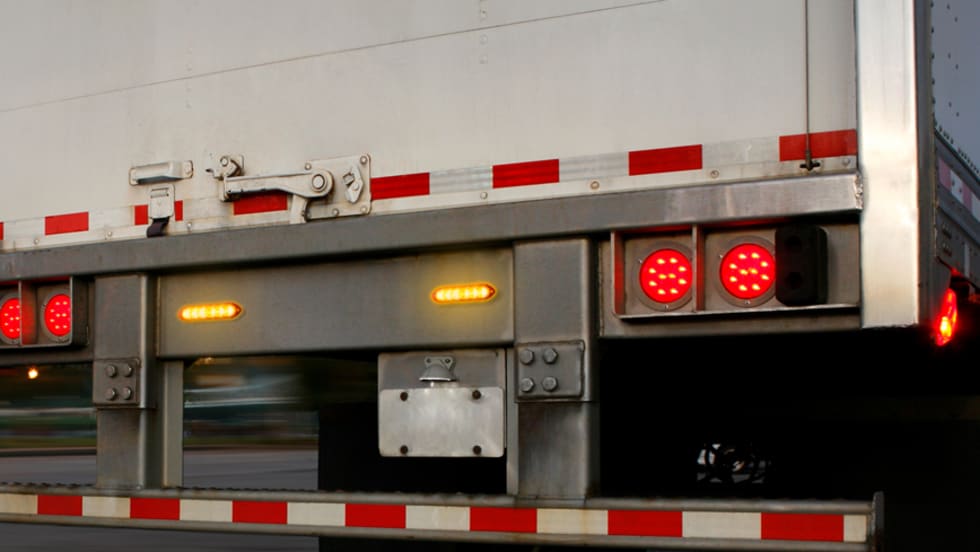
Pulsing Back-of-Trailer Lamps Aim to Prevent Crashes
Can the addition of a pulsing brake lamp on the back of a trailer prevent rear-end collisions? FMCSA seems to think so, if its exemptions are any indication.
Read More →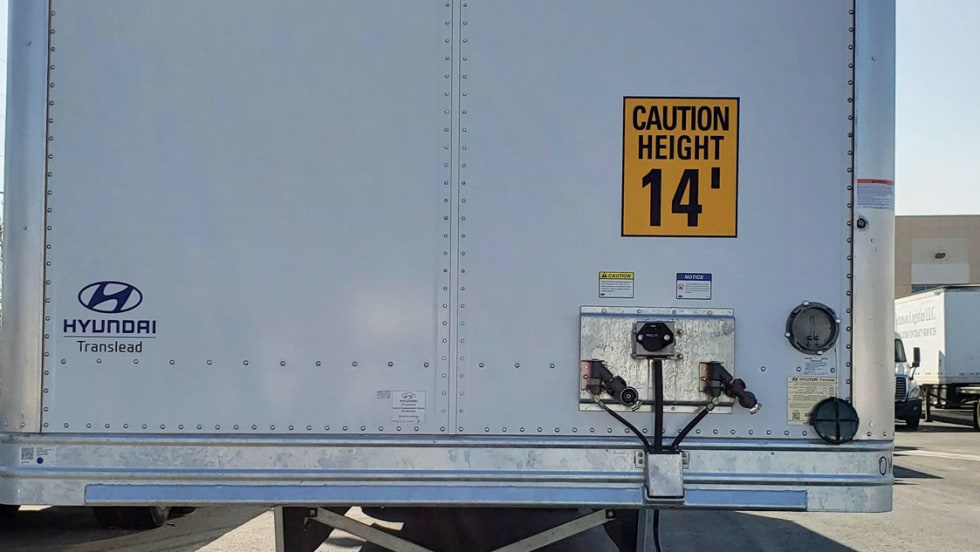
Designing a 14-Foot Trailer
Trailers are 13 feet, 6 inches high, right? Not for Hub Group, which developed a special 14-foot-high trailer spec for a dedicated customer based in California. Learn more in the Trailer Talk blog.
Read More →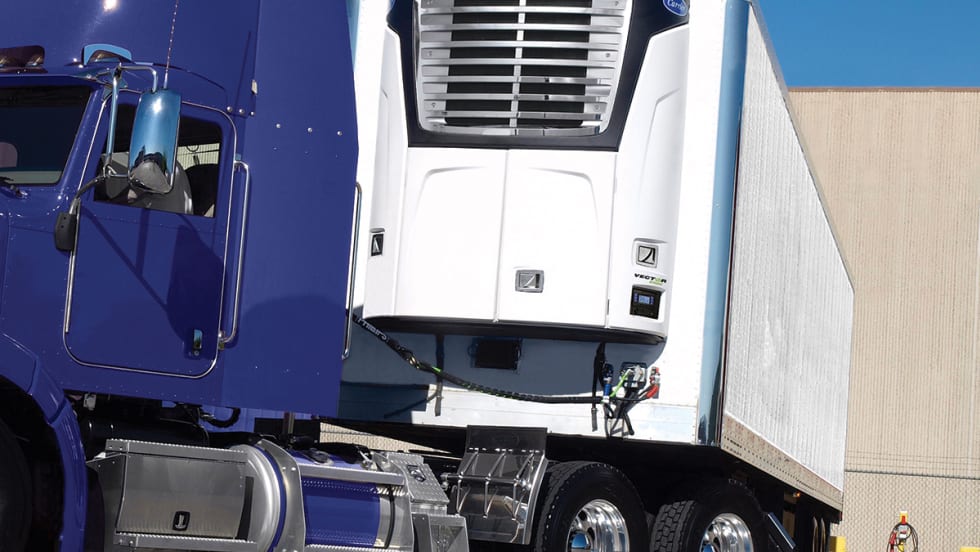
CARB Comes for Reefer Trailers
A new round of emissions control regulations decreed by the California Air Resource Board will begin affecting refrigerated trailer and TRU design and operations next year.
Read More →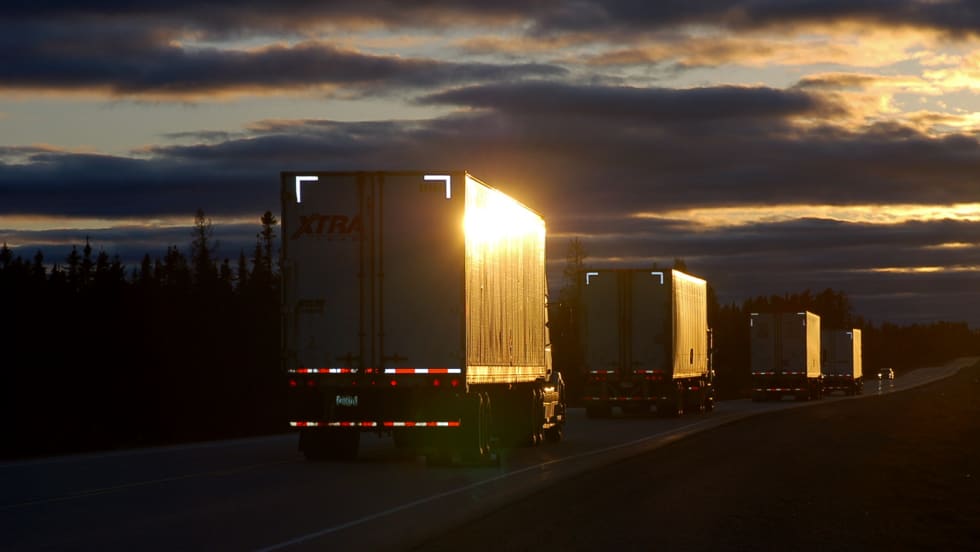
5 Ways Data Analysis Maximizes the Value of Trailer Telematics
Are you getting the most out of your trailer telematics investment?
Read More →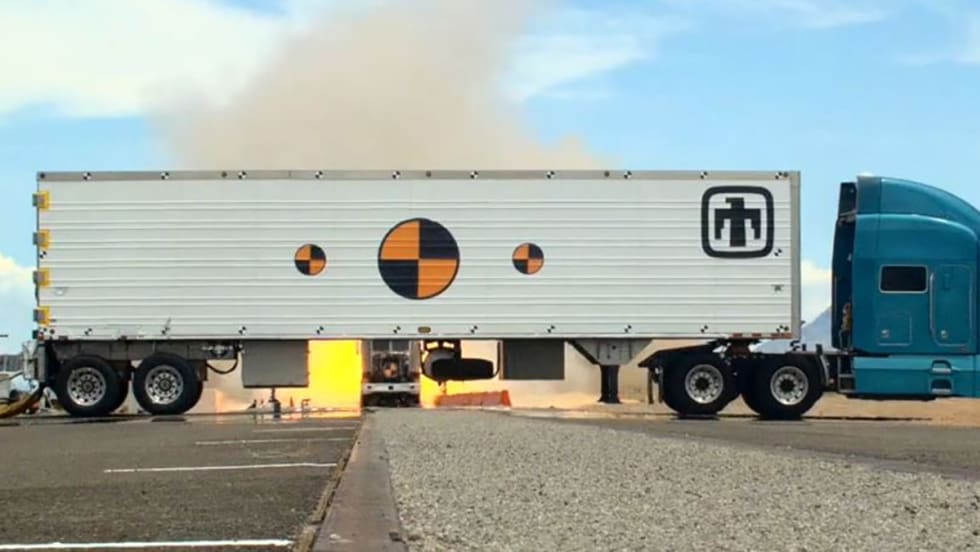
Can You Guess What's in That Trailer?
You don’t always know what’s in the trailers that pass you on the road. But some of those trailers are carrying something a little more dangerous that frozen food or new bedding…like, maybe, a nuclear weapon. But this isn’t an ordinary trailer; this is a trailer specifically made to not only carry this type of payload, but protect it at all costs.
Read More →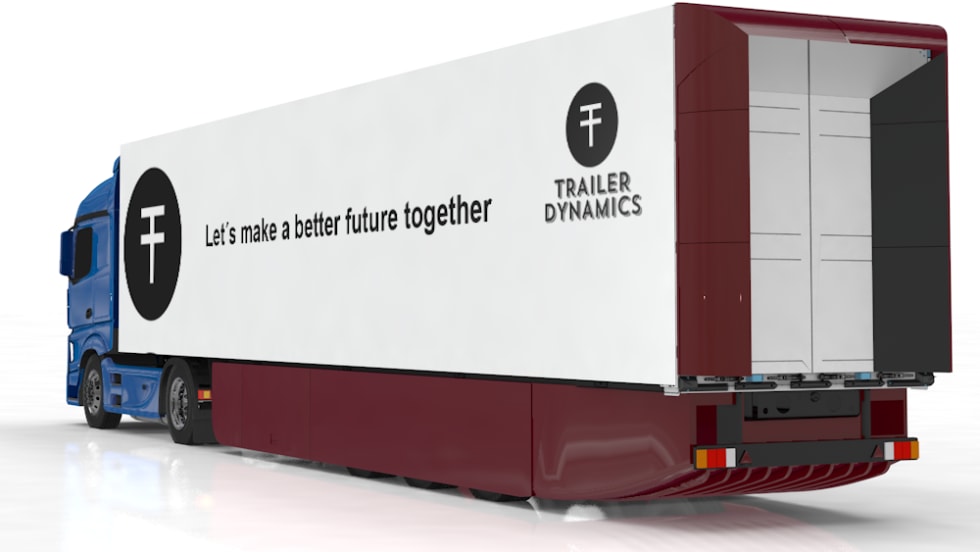
How Trailers Are Harnessing 'Free' Energy
Can trailers play a more active role in sustainable transport beyond aerodynamic add-ons or low-rolling-resistance tires? Some companies think so.
Read More →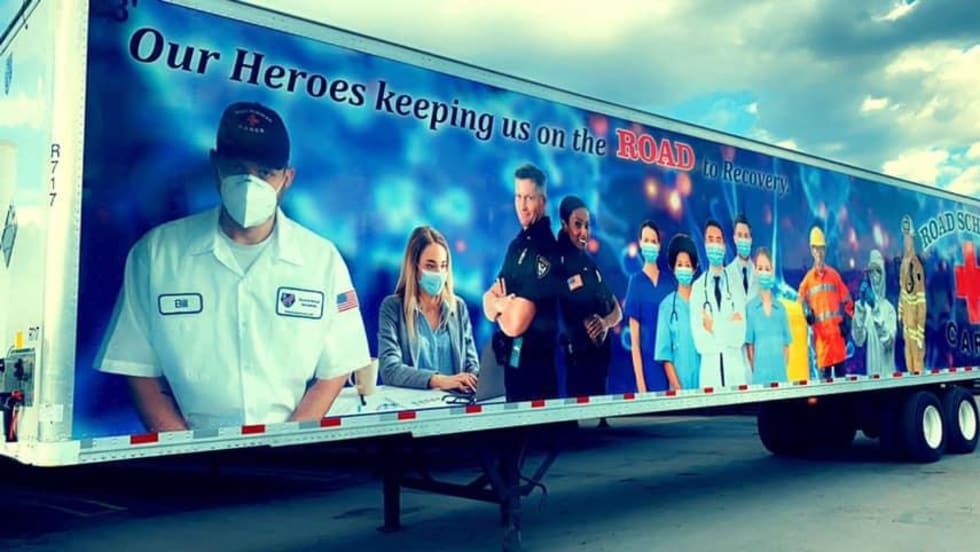
Wrapping a Trailer for COVID’s Everyday Heroes
“We don’t only deliver freight. We deliver awareness.” That’s what Jim Barrett, president and CEO of Road Scholar Transport, likes to say about the Dunmore, Pennsylvania-based carrier’s “awareness fleet.” Its latest trailer wrap honors the everyday heroes of the pandemic.
Read More →
How a Tanker Fleet is Using Unorthodox Trailer Lighting to Fight Rear-End Collisions
Groendyke Transport watched the number of rear-end collisions with its trailers rise steadily until it tried an unorthodox and then unapproved method of alerting following drivers that its trucks were applying brakes and slowing down.
Read More →
The Role Trailers are Playing in COVID-19 Funerals
In places such as New York City and Detroit, overwhelmed hospitals and mortuaries are using refrigerated trailers to store the bodies of people killed by COVID-19.
Read More →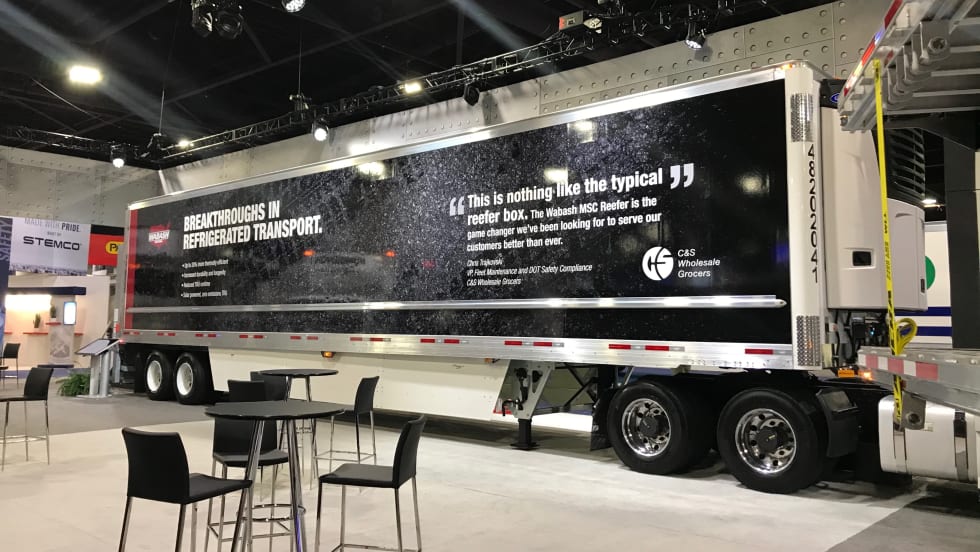
Reefer Trailer Aims to Help Reach Zero Emissions
Wabash National is partnering with C&S Wholesale Grocers to test a new type of zero-emissions refrigerated trailer.
Read More →