




America's Lunar Legacy
We live in an age of technological wonder. And it all started with America’s mission to put men on the Moon. Blog commentary by Senior Editor Jack Roberts.

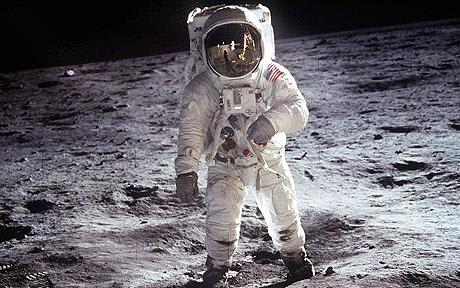
NASA promised American taxpayers that the technology it developed to put men on the moon would eventually find its way into the hands of ordinary people. And it did -- in ways no one could imagine at the time.
Photo: NASA
Fifty years ago next month, for the first time in history, humans landed a spaceship on another world, climbed out and walked around.
The Apollo Program, which put American astronauts Neil Armstrong and Buzz Aldrin on the surface of the Moon was one of the greatest feats of science and engineering in human history. It remains an almost unbelievable triumph – even if most of us have a sort of blasé outlook on it today: “Oh yeah. We walked on the Moon. It was on TV all the time when I was a kid.”
One of the more amazing aspects of America’s accomplishment in winning the space race is that the country was in a constant state of turmoil during the entire life of the Apollo Program. If you know anything at all about the 1960s, you know it was a time full of strife and conflict – the struggle for civil rights, the Vietnam War, social unrest and a new “counter culture,” at home, an ideological Cold War with the Russians (who were doing everything in their power to beat us to the Moon) and the political turmoil of Watergate as the Moon missions wrapped up.
Given all that was going on, there were a lot of people at the time questioning the time and money being spent on sending a few pilots up to walk around on what is essentially a big lump of charcoal.
And so the U.S. government – and NASA, the space agency in charge of the Apollo Program – spend a lot of time defending the mission. Usually, the scientific importance of the space program was the primary talking point. But, almost as often, space advocates would note that the government was developing a lot of new technology in order to enable these space flights. And eventually, they promised, all of that technology would trickle down into the hands of everyday Americans and make our lives better.
And this was true. NASA largely went to the Moon using the slide rule as its primary calculating tool. Computers at the time were expensive, rare, and massive – even the smallest models took up entire rooms. And despite all that size, their actual computing power was abysmal – not to mention that they were notoriously flaky, constantly malfunctioning and requiring lengthy and complicated restarts.
Space travel was – then and now – all about thrust versus weight. It takes tremendous amounts of energy to lift even small objects into earth orbit. So Apollo engineers were absolutely obsessed with weight. Everything on a space craft – from the computers, to the food, to the communications systems, the cameras, the navigation equipment – had to be smaller, lighter and work more efficiently than anything that had ever come before.
So NASA went to work developing the new devices, systems and components that would help them put men on the Moon. When their own efforts failed, they scoured the free world looking for innovators, thinkers and designers to help them come up solve problems and invent new gadgets and tools to aid in that mission. And, they reminded American taxpayers – sooner or later, all of this neat new stuff will find its way into your hands.
And they weren’t lying.
One of the first offshoots of the space program to make a splash in consumer markets was, interestingly enough, Velcro. Developed by a Swedish company, Velcro was the perfect, quick, easy and lightweight solution for keeping astronauts firmly in place in front of a control panel, in a weightless environment where even simply pushing a button could send a full-grown man floating uncontrollably across the spaceship cabin.
More gee whiz devices soon found their way into the marketplace as well. One of the earliest – and most mind-blowing to mathematically challenged kids like myself – was the pocket calculator with a digital display screen. This was incredible stuff in 1973 – right out of Star Trek. Someone would get one at Christmas, and adults and children alike would sit for hours keying random equations into the things and watching in amazement as long strings of numbers appeared on the screen. We didn’t have the faintest idea if the answers to the problems we were entering into the calculators were right or not. But it was stunning, just the same.
Not long after that, the first digital watches began appearing in stores, and we all had our minds blown all over again. And then, once were used to the idea of digital watches, we suddenly got VCRs and – OH MY GOD!! – video game consoles that you plugged directly into your television set!
It was amazing stuff and, looking back today, you realize that we were at the forefront of a steady stream of technology generated by the space program that continues to this very day.
Now, of course, NASA is no longer the innovator and instigator when it comes to new technology. In fact, the agency has become a sort of technological dinosaur, long passed by. Today, all of our innovation comes from private companies like Microsoft, Apple, Intel, Tesla and Samsung – to name just a few. But none of the technology we have today, from the smartphone in your hand to the tablet in the passenger seat to the advanced safety systems on your vehicle and the telematics that stream telemetry back to a fleet (exactly like NASA used to monitor the health of both a spacecraft and its crew, by the way) would be here today without the incredible technological advances made by NASA in its quest to put men on the Moon.
So, next month, when the documentaries begin airing on your high definition internet TV and you see posts on your favorite social media network hailing this monumental accomplishment, remember that all of us benefited from those missions and the insanely brave pilots who undertook them. We live in an age of technological miracles and wonders. And we owe it all to the pioneers who first put humans on the Moon 50 years ago.
More Blog Posts

That Time Mack Trucks Threw Me a Birthday Party
Sometimes the best birthdays are the ones you never planned. Mine happened courtesy of one of America's oldest truck manufacturers, and it reminded me why I still love this industry after more than three decades.
Read More →
Trucking Should Prepare for Long Siege of High Fuel Prices
Many in trucking are treating today's fuel-price surge as a temporary disruption. History suggests they may be making a costly mistake.
Read More →
30 Days on the Road: April 2026
There was a glut of good news for the North American trucking industry. HDT's Jack Roberts takes a look back at our major stories from the month.
Read More →
30 Days on the Road: HDT's Monthly News Roundup for March 2026
HDT's Monthly News Roundup takes a look at the major North American trucking industry news stories from March, 2026.
Read More →
The Major Autonomous News No One is Talking About
Both Aurora Innovation and PlusAI have made under-the-radar announcements that signal a massive game-changer for trucking is coming soon.
Read More →
HDT's Monthly News Roundup: February 2026
February was dreary and dull -- as usual. But the North American trucking industry finally showed some signs of life. But how long that will last is anybody's guess.
Read More →
Like it or Not, The New Year is Here!
HDT's Monthly Trucking Newsletter looks back on the top stories from January, 2026.
Read More →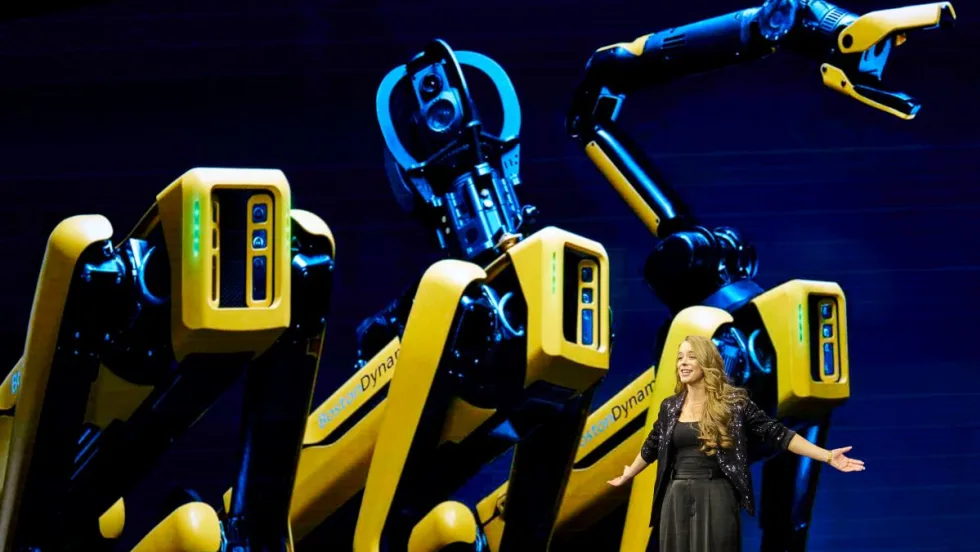
The Robots are Here
After a bruising year for trucking, CES 2026 felt subdued. Until it suddenly offered a glimpse of trucking's next disruption and reminded everyone that technology never waits for the next freight cycle.
Read More →
Robots and Road Rage
Computers never get angry. And that's a good thing on crowded stretch of interstate.
Read More →
For the Love of Old Trucks
Old trucks generally get ignored in classic car circles. Maybe that's changing.
Read More →