




‘Michigan trains’ productive and safe, with a flaming exception years ago
Last month I spent some time in Michigan, the land of highway “trains.” And I was reminded that in spite of what safety extremists claim in Washington, D.C., high-capacity long combination vehicles, or LCVs, can be operated safely.

Last month I spent some time in Michigan, the land of highway “trains.” And I was reminded that in spite of what safety extremists claim in Washington, D.C., high-capacity long combination vehicles, or LCVs, can be operated safely.
My first trip to Michigan was in 1978, and I was astounded by these multi-axle monsters. My eyes and brain couldn’t count their axles quickly enough because my comprehension is limited to three or four objects in a glance. Many of the trains were double-trailer rigs that looked like centipedes on wheels with as many as 13 axles, something I determined after visually breaking them into smaller groups. Each of these had 50 wheels – the steer axle with two wheels and 12 axles with four each. Gadzooks!
Now the maximum number of axles is 11, but many rigs use fewer.
On the way home, on Interstate 75, I stopped at a Pilot Flying J south of Detroit and chatted with a driver of one of these rigs, a large eight-axle single-unit tanker capable of carrying 13,000 gallons of fuel. He said it actually carries less than that because it’s limited to 130,000 pounds on a total of nine axles, which means 11,000 to 12,000 gallons of diesel or gasoline.
Safety is a priority. “They’re really on us,” he said of state troopers who closely watch brakes, tires and other components of these rigs at weigh stations and elsewhere.
The Michigan Department of Transportation discusses and defends the trains – though it doesn’t call them that – on its website. And it says the usual five-axle semi is harder on pavement than the heavier multi-axle rigs.
“Trucks are a critical component of Michigan’s transportation system and carry about half of the total freight moving in Michigan,” the explanation says. “Railroads and Great Lakes freighters each carry approximately one-quarter of the freight. Economics, transportation needs, and Michigan’s weight law have resulted in the development of a unique truck weight system, which allows greater maximum gross vehicle weight than found in other states.
“Research conducted by the American Association of State Highway and Transportation Officials, MDOT and other organizations has shown that pavement damage is directly related to axle loadings, not gross vehicle weight,” an explanation says. “Michigan limits the weight allowed on individual axles, depending upon the spacing between them, with a maximum of 11 axles.
“The maximum gross vehicle weight allowed on a ‘federal-weight-law truck’ is 80,000 pounds, with four of its five axles carrying 17,000 pounds each. The calculated maximum allowable gross vehicle weight on the heaviest ‘Michigan weight-law truck’ is 164,000 pounds, which can only be achieved with the use of 11 properly spaced axles. Most of these axles carry only 13,000 pounds each.
“It would take two and a quarter 80,000-pound trucks to carry the same cargo as a single 164,000-pound Michigan truck. Pavement research has shown that these two smaller trucks actually cause about 60% more pavement damage than does the single heavier truck, because of their higher axle loadings and the extra weight of additional tractors at about 10 tons each.”
Before World War II there was no limit on the number of axles, the discussion says, but the legislature then put it at 13 axles with a top GVW of 169,000 pounds. That lasted until 1967, when the current limits were set. Fewer than 5% of the trucks on state roads are Michigan weight-law trucks, the website adds.
“If Michigan were to reduce its truck weight laws to 80,000 pounds, more damage to the [highway] system may occur because of the need to put more trucks on the road,” it says. “More trucks on the road raise serious questions concerning safety and traffic congestion. Several other states are currently looking at Michigan's axle weight laws and are considering adopting similar laws.”
LCVs are common on toll roads in Indiana, Ohio, Connecticut, New York and Florida, though these trucks don’t have the closely spaced axles as in Michigan. Neither do LCVs in certain states in the Great Plains and the West. Certain Canadian provinces, with B- and C-train rigs, are closer in configuration.
All operate more safely than standard tractor-trailer rigs, various studies have shown, because drivers are usually more experienced and trained to operate the LCVs, and because they have more braking power per ton. And all offer greater productivity, which we will need more of as time goes on, the population continues to grow, more goods need to be moved and highways congestion becomes worse.
Now, trucking doesn’t always get it right. There was one major exception to safe operation, and it also involved tankers. Into the 1980s Michigan allowed short, high double-trailer combinations that were grossly unstable. In sudden maneuvers they could roll over, and did.
In what turned out to be the last such wreck, a driver swerved into a right lane and the rear tanker tipped over; its gasoline spilled out and caught fire, and the conflagration engulfed a pedestrian standing on a corner. He died in the flames. Within a day or two the legislature, already watching the situation, passed emergency legislation outlawing such rigs. That’s why they are now longer and much safer, like the one in the photo.
More Blog Posts

Pulsing Back-of-Trailer Lamps Aim to Prevent Crashes
Can the addition of a pulsing brake lamp on the back of a trailer prevent rear-end collisions? FMCSA seems to think so, if its exemptions are any indication.
Read More →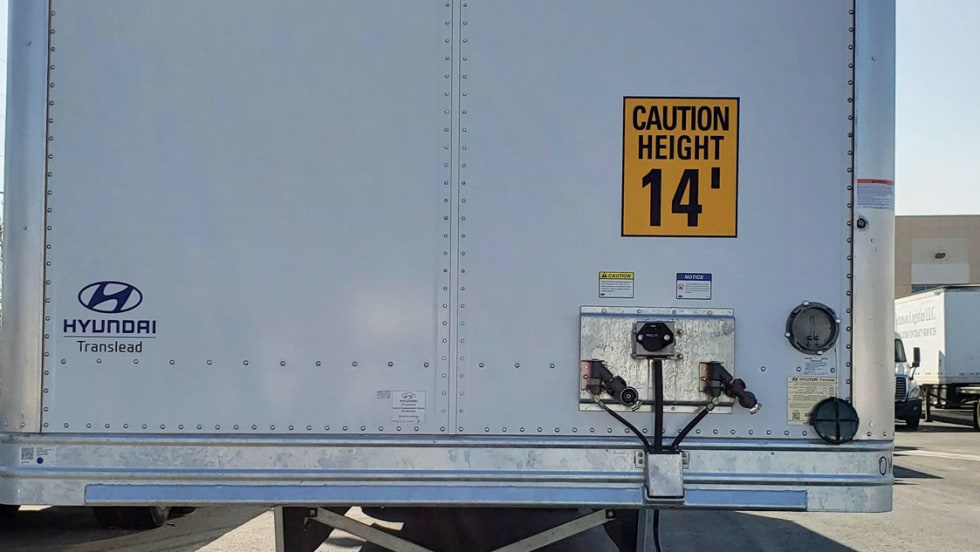
Designing a 14-Foot Trailer
Trailers are 13 feet, 6 inches high, right? Not for Hub Group, which developed a special 14-foot-high trailer spec for a dedicated customer based in California. Learn more in the Trailer Talk blog.
Read More →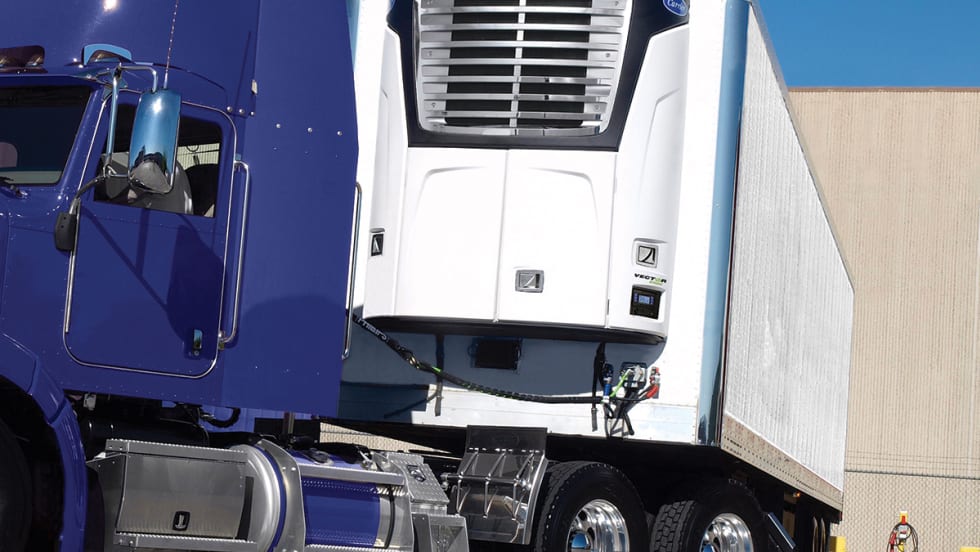
CARB Comes for Reefer Trailers
A new round of emissions control regulations decreed by the California Air Resource Board will begin affecting refrigerated trailer and TRU design and operations next year.
Read More →
5 Ways Data Analysis Maximizes the Value of Trailer Telematics
Are you getting the most out of your trailer telematics investment?
Read More →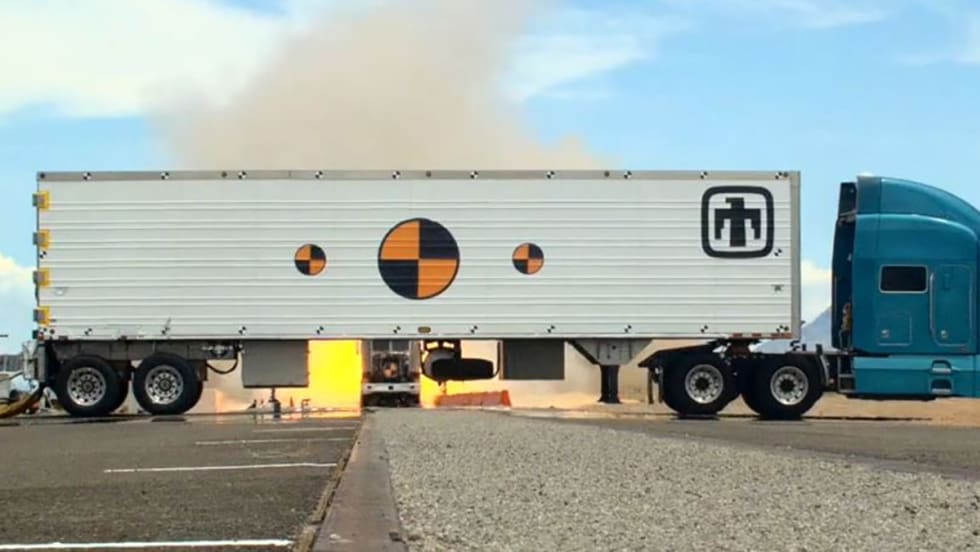
Can You Guess What's in That Trailer?
You don’t always know what’s in the trailers that pass you on the road. But some of those trailers are carrying something a little more dangerous that frozen food or new bedding…like, maybe, a nuclear weapon. But this isn’t an ordinary trailer; this is a trailer specifically made to not only carry this type of payload, but protect it at all costs.
Read More →
How Trailers Are Harnessing 'Free' Energy
Can trailers play a more active role in sustainable transport beyond aerodynamic add-ons or low-rolling-resistance tires? Some companies think so.
Read More →
Wrapping a Trailer for COVID’s Everyday Heroes
“We don’t only deliver freight. We deliver awareness.” That’s what Jim Barrett, president and CEO of Road Scholar Transport, likes to say about the Dunmore, Pennsylvania-based carrier’s “awareness fleet.” Its latest trailer wrap honors the everyday heroes of the pandemic.
Read More →
How a Tanker Fleet is Using Unorthodox Trailer Lighting to Fight Rear-End Collisions
Groendyke Transport watched the number of rear-end collisions with its trailers rise steadily until it tried an unorthodox and then unapproved method of alerting following drivers that its trucks were applying brakes and slowing down.
Read More →
The Role Trailers are Playing in COVID-19 Funerals
In places such as New York City and Detroit, overwhelmed hospitals and mortuaries are using refrigerated trailers to store the bodies of people killed by COVID-19.
Read More →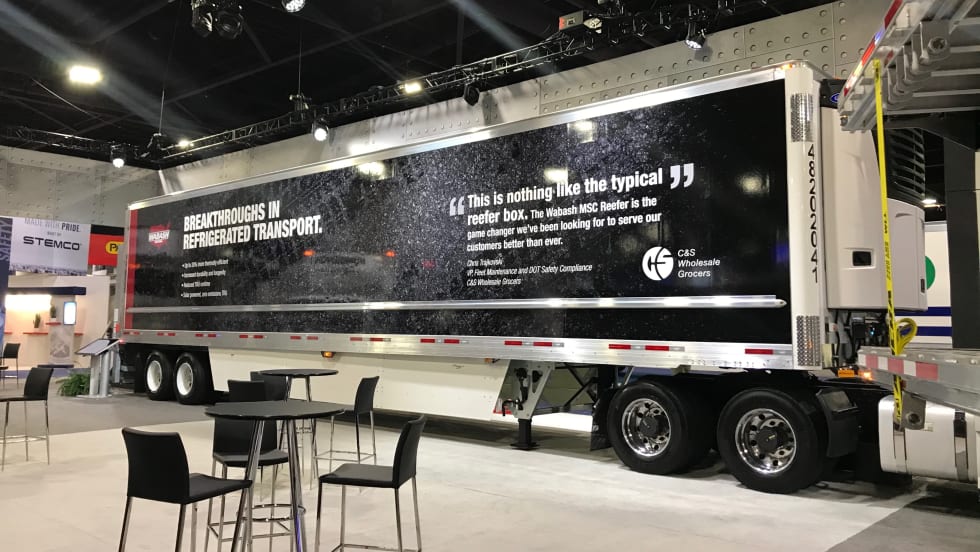
Reefer Trailer Aims to Help Reach Zero Emissions
Wabash National is partnering with C&S Wholesale Grocers to test a new type of zero-emissions refrigerated trailer.
Read More →