




Kilograms, Pounds, Tridems, Spread Tandems, and Weight Laws
Senior Contributing Editor Tom Berg takes a look at a multi-axle flatbed, and a "split tandem" that's still in his memory.

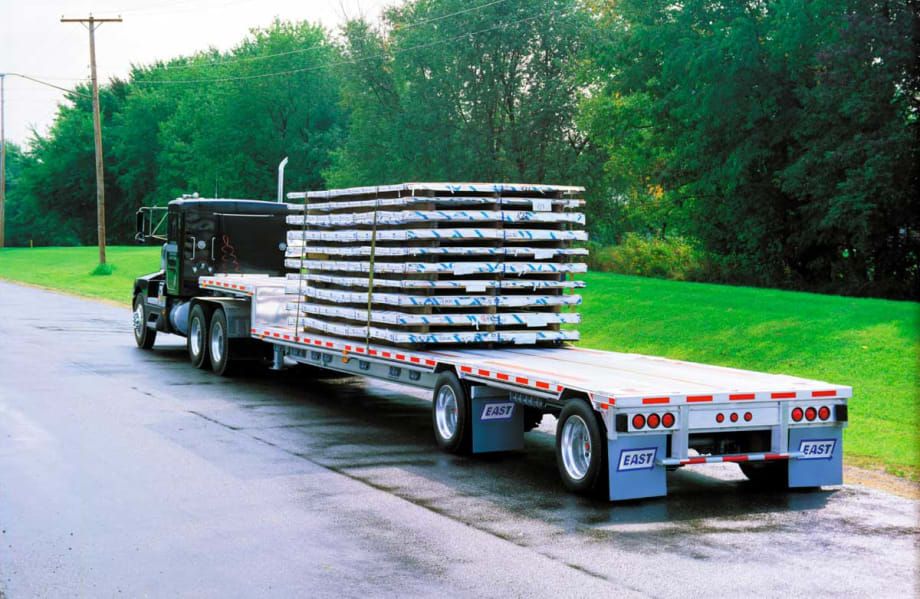
Drop-deck with a spread tandem is far advanced from the “split tandem” flatbed from the 1950s that’s in Berg’s memory, but the spread-axle concept is the same.
Photo courtesy of East Manufacturing
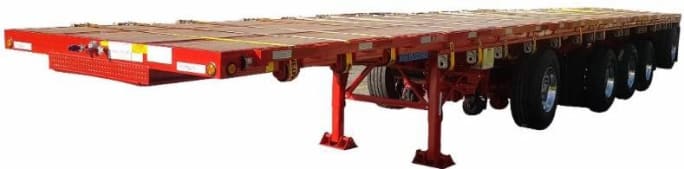
This just in from J & J Trailers – not the one in Somerset, Pennsylvania, but another in Scarborough, Ontario. The Canadian J & J does a monthly newsletter and the June edition reports the delivery of a five-axle steel flatbed, with a stationary tridem, plus one liftable pusher axle and one liftable tag. And it lists some specs and options:
* Model AT-3 Tag-Along Style Trailer
* GVWR 67,500 lbs. Payload capacity approx.. 55,000 lbs.
* Wide-track air brake pilot-hub axles (IMT), 22,500 lbs. each axle.
* Trailer deck is 27’10” long x 8’ 6” wide plus 6’ beavertail @ 12.5” drop.
* 22,500 lbs. style heavy duty leaf spring suspension.
* 14” x 26” or 34 lb/ft wide flange beam frame with 6” steel channel cross members
* Tri Axles are at 49", 54” or 60" centers. Oil bath bearings.
In Ontario, the tridem on this trailer could gross 22,500 kilograms or 49,500 pounds, according to Al Abeelnalek, a sales rep at J & J. And each lift axle could carry 7,500 kilograms or 16,500 pounds. With a tractor, the total gross combination weight is 61,000 kilograms or 134,200 pounds.

In the U.S., that tridem on J & J’s trailer could legally carry 42,500 pounds (more in some states), and each lift axle could carry up to 20,000 (though probably less due to their proximity to the tridem). Those numbers are from the federal B-Formula, which governs interstate operations. Some states use variations on it.
Living in Ohio and close to Michigan with its 11-axle “trains,” I do see multi-axle trailers fairly often, and they never cease to intrigue me. Think of the math (for proper axle spacing along the trailer’s length so as to take advantage of state and federal weight-limit laws) and engineering (for manufacturing) that goes into one!
I guess I was about 9 or 10 when I first noticed a big trailer with unusually placed axles. I was walking with my oldest brother near a busy street in Milwaukee and a rig went by. I could see how that flatbed differed from normal trailers that had axles closer together, and I must’ve asked, “What’s that, Billy?”
“That’s a split tandem,” Bill said. I figured he knew what he was talking about because he was 19 or 20 at the time, and he worked for the phone company as a lineman and often drove the “line truck,” so he knew about such things. That moment has stuck in my memory for 65 years.
Later I learned that the more correct term is “spread tandem,” and that for federal B-Formula purposes the distance between the two axles is 10 feet, 1 inch, so up to 20,000 pounds can be placed on each axle. The extra inch puts the spread safely over the 10 feet legally required for that loading, just in case a zealous inspector puts a tape measure between the two axles.
Greater weights are allowed because the long spread between axles lessens stress on the pavement just below. That spread doesn’t necessarily increase legal payload (80,000 pounds on five axles is still the normal limit), but allows for greater flexibility in placing cargo.
Anyway, that’s why J & J’s email with its latest newsletter got my attention. Do you find such stuff interesting, too?
Related: How Will Trump’s Tariffs Affect Trailer Pricing?
More Blog Posts

Pulsing Back-of-Trailer Lamps Aim to Prevent Crashes
Can the addition of a pulsing brake lamp on the back of a trailer prevent rear-end collisions? FMCSA seems to think so, if its exemptions are any indication.
Read More →
Designing a 14-Foot Trailer
Trailers are 13 feet, 6 inches high, right? Not for Hub Group, which developed a special 14-foot-high trailer spec for a dedicated customer based in California. Learn more in the Trailer Talk blog.
Read More →
CARB Comes for Reefer Trailers
A new round of emissions control regulations decreed by the California Air Resource Board will begin affecting refrigerated trailer and TRU design and operations next year.
Read More →
5 Ways Data Analysis Maximizes the Value of Trailer Telematics
Are you getting the most out of your trailer telematics investment?
Read More →
Can You Guess What's in That Trailer?
You don’t always know what’s in the trailers that pass you on the road. But some of those trailers are carrying something a little more dangerous that frozen food or new bedding…like, maybe, a nuclear weapon. But this isn’t an ordinary trailer; this is a trailer specifically made to not only carry this type of payload, but protect it at all costs.
Read More →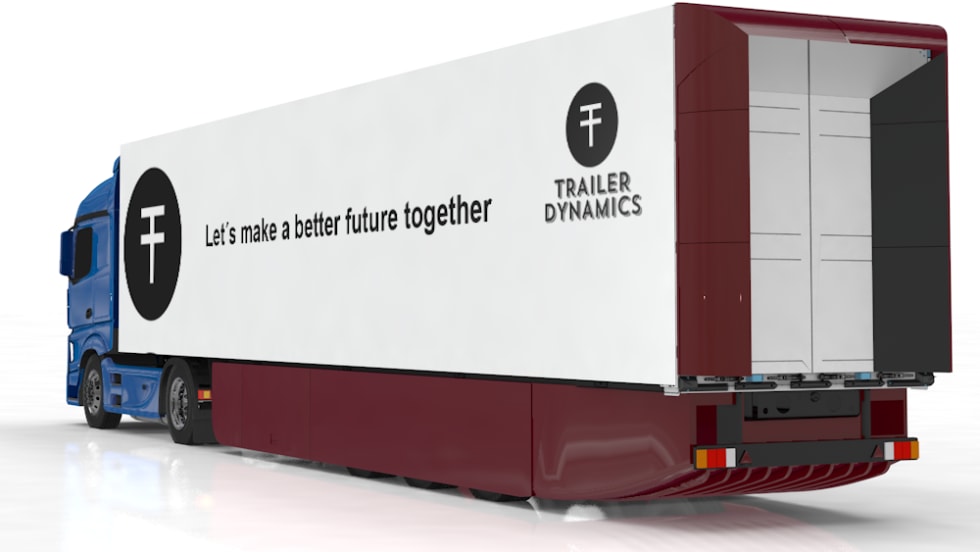
How Trailers Are Harnessing 'Free' Energy
Can trailers play a more active role in sustainable transport beyond aerodynamic add-ons or low-rolling-resistance tires? Some companies think so.
Read More →
Wrapping a Trailer for COVID’s Everyday Heroes
“We don’t only deliver freight. We deliver awareness.” That’s what Jim Barrett, president and CEO of Road Scholar Transport, likes to say about the Dunmore, Pennsylvania-based carrier’s “awareness fleet.” Its latest trailer wrap honors the everyday heroes of the pandemic.
Read More →
How a Tanker Fleet is Using Unorthodox Trailer Lighting to Fight Rear-End Collisions
Groendyke Transport watched the number of rear-end collisions with its trailers rise steadily until it tried an unorthodox and then unapproved method of alerting following drivers that its trucks were applying brakes and slowing down.
Read More →
The Role Trailers are Playing in COVID-19 Funerals
In places such as New York City and Detroit, overwhelmed hospitals and mortuaries are using refrigerated trailers to store the bodies of people killed by COVID-19.
Read More →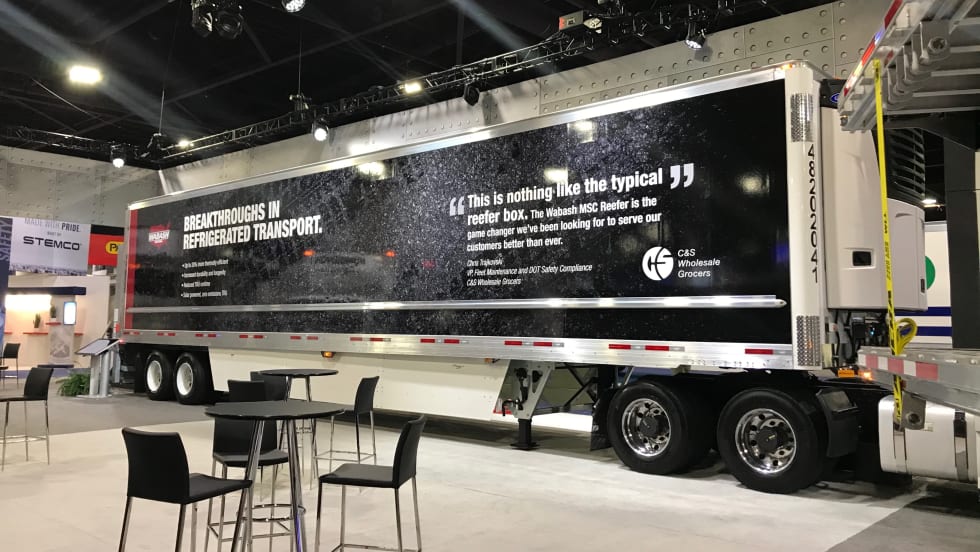
Reefer Trailer Aims to Help Reach Zero Emissions
Wabash National is partnering with C&S Wholesale Grocers to test a new type of zero-emissions refrigerated trailer.
Read More →