




It's Snowing, Folks. Slow Down!
Watch this video and see if you'd have driven into the situation differently.

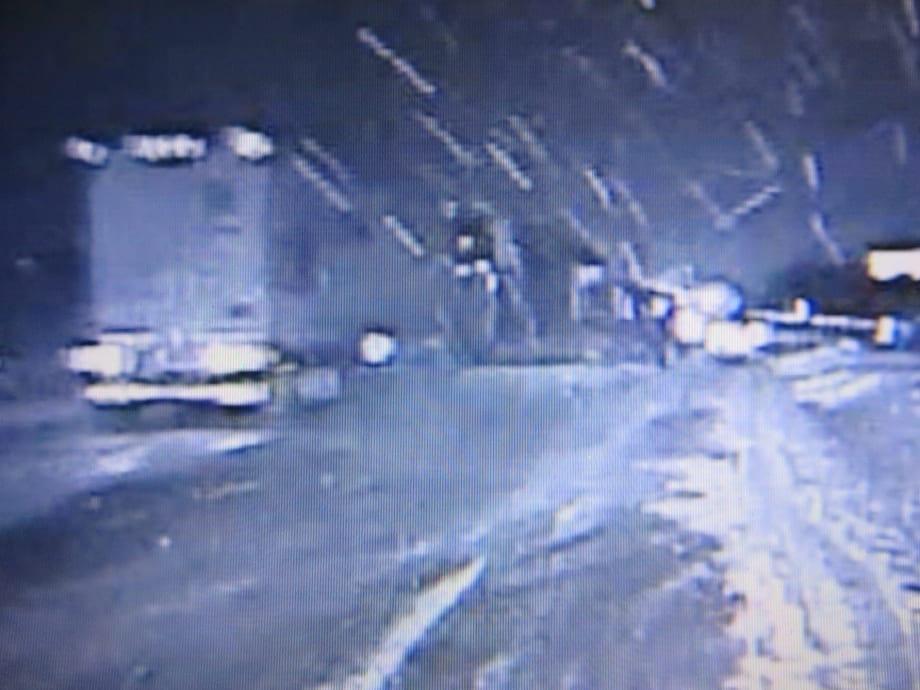
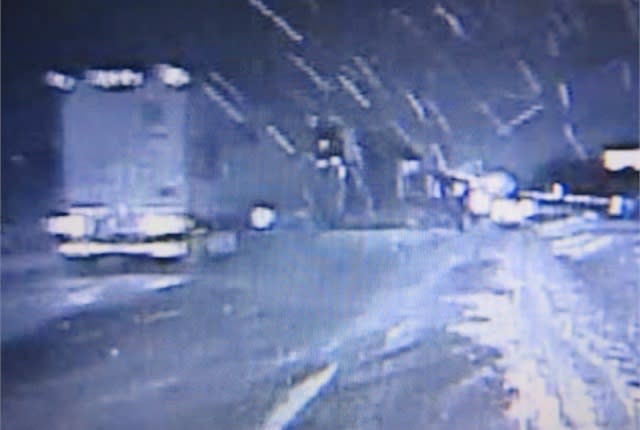
Drivers, slow down, especially when it’s snowing! That’s the best advice that can come from that video out of Minnesota aired on Tuesday, Nov. 11. It shows a tractor-trailer skidding into parked emergency vehicles on snow-covered Interstate 94 in Rogers, near Minneapolis-St. Paul. This was during the big snow storm that barreled across western Canadian provinces and northern states on Monday.
News reports say that on Monday night, a Rogers Police SUV, a Minnesota State Patrol squad car and a tow truck were attending to a previously jackknifed semi. All had their lights flashing, and 200 yards up the road, another squad car was warning drivers of the situation ahead – and its dash cam recorded the collision that happened next. All those flashing lights couldn't stop the second semi before it smashed into two of the vehicles, slightly injuring a police officer and state trooper.
The officer, Jared Peterson, suffered bumps and bruises, but will be fine – surprising when you see the video of the crash, says the report on KMSP-TV’s website. The trooper hit by the semi was not seriously injured.
“He remembers hearing the semi truck's horn, and then there was an explosion,” said Rogers Police Chief Jeffrey Beahen of his officer. “He actually was stunned and got out of his car and got out on to the highway. I don't think he really knew what was going on for a few seconds.”
Chief Beahen said way too many drivers were going way too fast for the conditions Monday -- many at freeway speeds. The chief said even after the impact, other semis were "threading the needle" between the two jackknifed semis, and doing that at 55 to 60 mph.
Anti-lock braking systems, which the tractor and probably the trailer had, don’t work too well on snow- and ice-covered pavement, as the video shows. That’s why cutting speed is so important. Everybody knows it, but too few do it and I’m as guilty as anyone on this. At least the semi’s driver, whoever he was, blew his air horn to warn that he was a-comin'.
More Blog Posts

Pulsing Back-of-Trailer Lamps Aim to Prevent Crashes
Can the addition of a pulsing brake lamp on the back of a trailer prevent rear-end collisions? FMCSA seems to think so, if its exemptions are any indication.
Read More →
Designing a 14-Foot Trailer
Trailers are 13 feet, 6 inches high, right? Not for Hub Group, which developed a special 14-foot-high trailer spec for a dedicated customer based in California. Learn more in the Trailer Talk blog.
Read More →
CARB Comes for Reefer Trailers
A new round of emissions control regulations decreed by the California Air Resource Board will begin affecting refrigerated trailer and TRU design and operations next year.
Read More →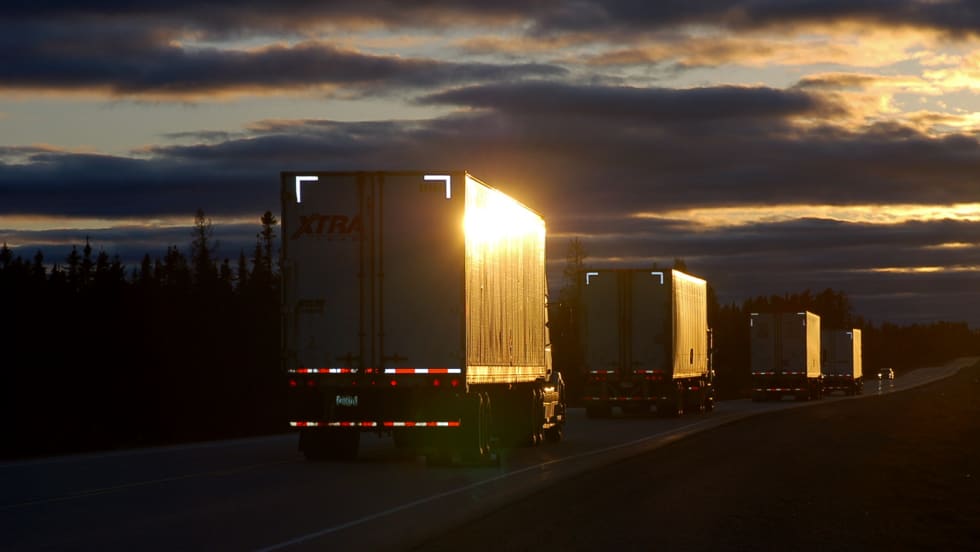
5 Ways Data Analysis Maximizes the Value of Trailer Telematics
Are you getting the most out of your trailer telematics investment?
Read More →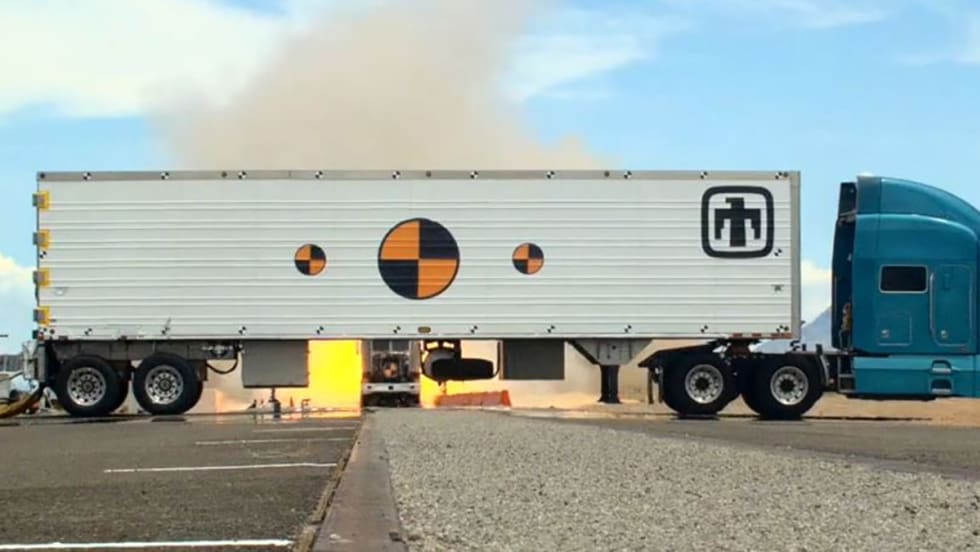
Can You Guess What's in That Trailer?
You don’t always know what’s in the trailers that pass you on the road. But some of those trailers are carrying something a little more dangerous that frozen food or new bedding…like, maybe, a nuclear weapon. But this isn’t an ordinary trailer; this is a trailer specifically made to not only carry this type of payload, but protect it at all costs.
Read More →
How Trailers Are Harnessing 'Free' Energy
Can trailers play a more active role in sustainable transport beyond aerodynamic add-ons or low-rolling-resistance tires? Some companies think so.
Read More →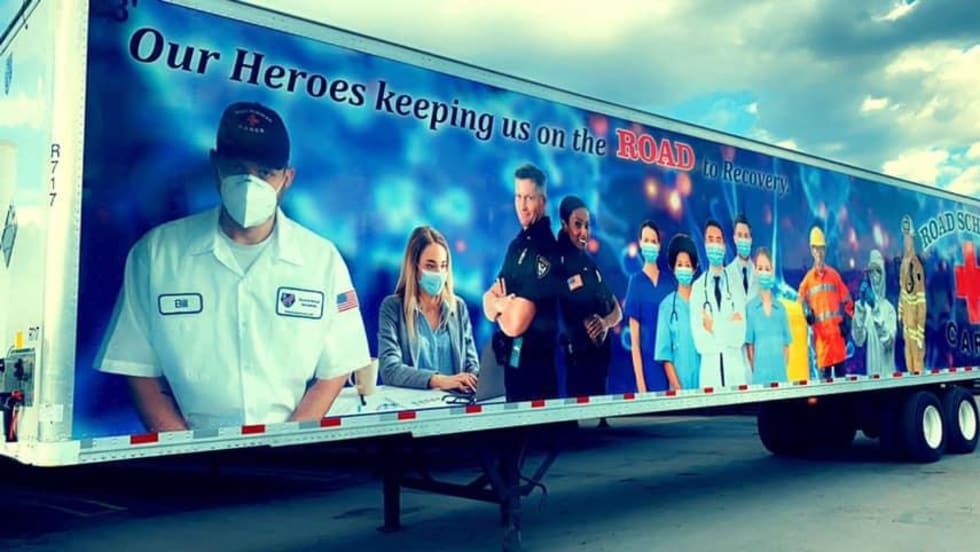
Wrapping a Trailer for COVID’s Everyday Heroes
“We don’t only deliver freight. We deliver awareness.” That’s what Jim Barrett, president and CEO of Road Scholar Transport, likes to say about the Dunmore, Pennsylvania-based carrier’s “awareness fleet.” Its latest trailer wrap honors the everyday heroes of the pandemic.
Read More →
How a Tanker Fleet is Using Unorthodox Trailer Lighting to Fight Rear-End Collisions
Groendyke Transport watched the number of rear-end collisions with its trailers rise steadily until it tried an unorthodox and then unapproved method of alerting following drivers that its trucks were applying brakes and slowing down.
Read More →
The Role Trailers are Playing in COVID-19 Funerals
In places such as New York City and Detroit, overwhelmed hospitals and mortuaries are using refrigerated trailers to store the bodies of people killed by COVID-19.
Read More →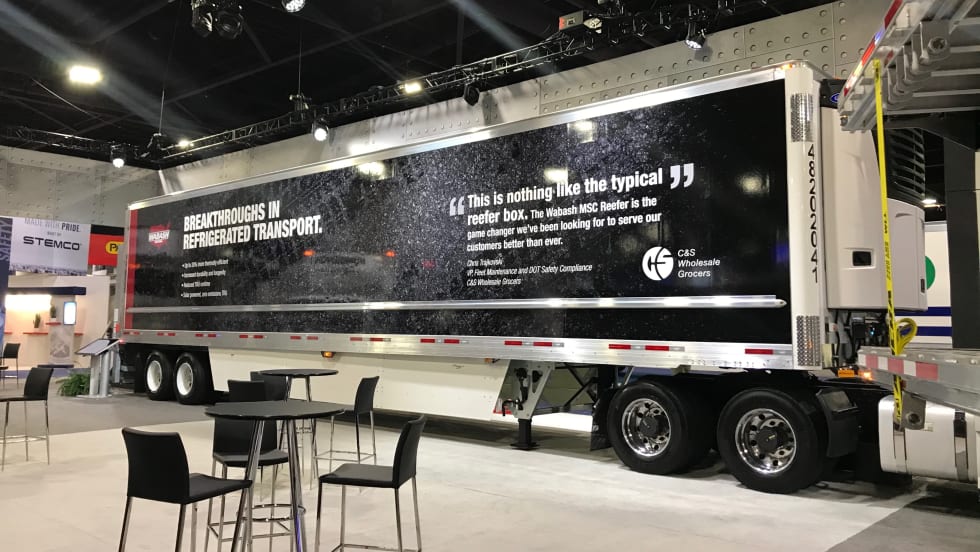
Reefer Trailer Aims to Help Reach Zero Emissions
Wabash National is partnering with C&S Wholesale Grocers to test a new type of zero-emissions refrigerated trailer.
Read More →