





Related - 2018: Year of the Roads?
Infrastructure Plan: Here’s Hoping Action Will Speak Louder than Words
When it comes to the glacially swift rollout of President Trump’s infrastructure plan (now under way for well over a year), it can be perhaps be said, to paraphrase Winston Churchill broadly, that never before has so little been said to so many about so much.
March 1, 2018
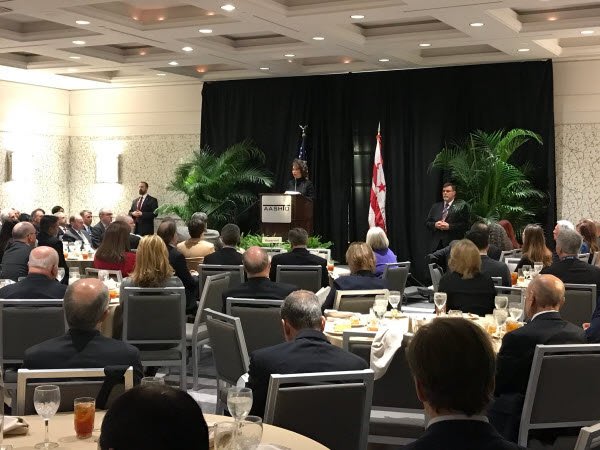
Secretary Chao addressing attendees of AASHTO meeting in Washington on Feb. 28. Photo: via Twitter @USDOT
3 min to read
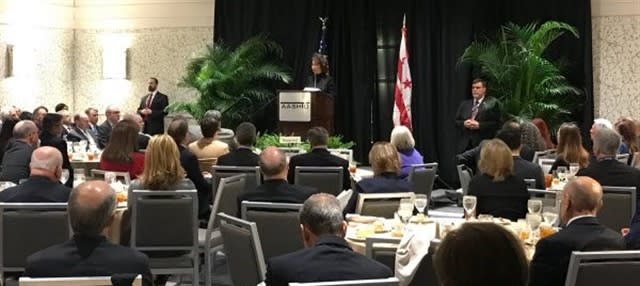
Secretary Chao addressing attendees of AASHTO meeting in Washington on Feb. 28.Photo: via Twitter @USDOT
When it comes to the glacially swift rollout of President Trump’s infrastructure plan (now under way for well over a year), it can be perhaps be said, to paraphrase Winston Churchill broadly, that never before has so little been said to so many about so much.
To be sure, it is becoming increasingly hard for me to grasp why the plan has not been taken up yet by Congress. Especially given that the President's own party holds the majority in both chambers, not to mention that infrastructure funding is widely regarded as a bipartisan element of responsible governance by most Republicans and Democrats.
Consider the gist of the latest policy speech given by Secretary of Transportation Elaine Chao, who is charged with selling the $1.5 trillion invest-and-incentivize plan on Capitol Hill. Chao, who has teased parts of the plan and hinted at other aspects of it in various speeches she has made over the course of the past year, threw a fresh tidbit out on Feb. 28.
Addressing attendees of an American Association of State Highway and Transportation Officials meeting in Washington, DC as the keynote speaker, she advised that a new White House publication was due out soon that promises to present “background on the plan.” And, yes, that wording screamed “vague” to me as well.
Chao described the administration's overall plan as a “comprehensive infrastructure proposal… it is broad, ambitious, and has ignited a necessary debate throughout the nation and in the Congress on infrastructure priorities and processes.”
We’ve all heard that before. But the DOT Secretary did make a point that those who don’t live and breathe policy might need to hear. Pointing out that the Trump plan is “a 10-year investment to modernize our country’s infrastructure assets,” Chao pointed out that it is “comprehensive and separate from a reauthorization package” that typically covers a shorter timeframe.
Chao reiterated that Trump’s goal is to “stimulate at least $1.5 trillion in infrastructure investment, which includes a minimum of $200 billion in direct federal funding. The guiding principles are to use federal dollars as seed money to incentivize infrastructure investment; provide for the needs of rural communities; streamline permitting and speed up project delivery; and reduce unnecessary and overly burdensome regulations.”
Getting a tad more specific, she said “a key element of the proposal is to empower decision-making at the state and local level, who know best the infrastructure needs of their communities. Half of the new infrastructure funds would go towards incentivizing new state and local investments in infrastructure. A quarter of the Federal funds will be dedicated to addressing rural infrastructure needs, as prioritized by state and local leaders.”
Hitting the point about the importance of local control yet harder, she noted that the federal government “only owns about 10% of our country’s infrastructure, and contributes about 14% of total infrastructure spending. The rest is owned and funded by state and local governments. So, giving decision-making power back to local communities makes a lot of sense.”
Perhaps. But many if not all in trucking-- not to mention in American business in general and the vast majority of the Members of Congress belonging to both major parties-- might beg to differ, arguing that it is the federal government that has the constitutional duty to ensure the free flow of commerce.
On top of that, if the federal government is entrusted with the overarching promise of affording us all life, liberty, and the pursuit of happiness, doesn’t that mean it should be making sure there are miles and miles of fully funded and good and safe roads and bridges for us to drive upon?
Subscribe to Our Newsletter
More Blog Posts
Congress Dancing on the Ceiling. Again.
It’s time once more on Capitol Hill to battle over the debt ceiling, rather than conduct the nation’s urgent business, says HDT Business/Washington Contributing Editor David Cullen.
Read More →
Infrastructure on Capitol Hill: On Two Tracks to Somewhere
It’s likely an infrastructure bill will pass. But how big it will be, and who will pay for it, rides on lots of politicking.
Read More →
Gaming Out The Biden Infrastructure Proposal on Capitol Hill
The Biden Administration's American Jobs Act, the core of which is infrastructure funding, is on a long road to becoming law – replete with more twists and turns than a mountain highway.
Read More →
4 Ways Washington May Change Trucking Laws and Regulations
As the balance of power in Washington has shifted, trucking likely will see changes in laws and regulations. But how that happens isn't just like the Schoolhouse Rock version of "I'm Just a Bill."
Read More →
Regulatory Outlook 2020: Keep an Eye on Hours of Service
What's in store for trucking from the regulators in Washington, D.C., this year? Executive Editor David Cullen says the government wheels move slowly, but hours-of-service is among those to watch in 2020.
Read More →
Logistics Ain't What it Used to Be
You can no longer expect to run a motor carrier of any size without at least a glancing appreciation for the impact logistics— in one way or another-- has on every link in the supply chain.
Read More →
Will Dustup over Cleanup of Car Emissions Gut Truck GHG Rules?
What does Trump's revocation of California's vehicle emission waiver mean for the federal Phase 2 GHG emission rules already in place for commercial vehicles? Commentary by Executive Editor David Cullen.
Read More →
Some Sober Advice on the Drug & Alcohol Clearinghouse
The Federal Motor Carrier Safety Administration's prep work for the Drug & Alcohol Clearinghouse includes amassing an impressive amount of informational guidance online that can be accessed at a dedicated website. Commentary by Executive Editor David Cullen.
Read More →
Here's to Our Winners
The managers, executives, and owners of truck operations who are honored each year by Heavy Duty Trucking with our Truck Fleet Innovator awards so often seem to be moving at a fast clip in how they think about things. Blog Commentary by Executive Editor David Cullen.
Read More →
ATA Takes Madison Avenue to Pitch Highway Funding on Capitol Hill
A new advertising and grassroots campaign by ATA might just sell Congress on fixing our roads. Commentary by David Cullen, Executive Editor.
Read More →