





Related: Hybrid Electric-Drive Trailer Tandem Promises Quick Payback
Hyliion's Powered Trailer Axle Goes to Europe
The Intelligent Electric Axle axle replaces a “passive” axle on a standard trailer tandem or tridem, and promises big fuel savings – 10 to 20% from hybrid-powered operation alone, Hyliion claims.
September 18, 2016
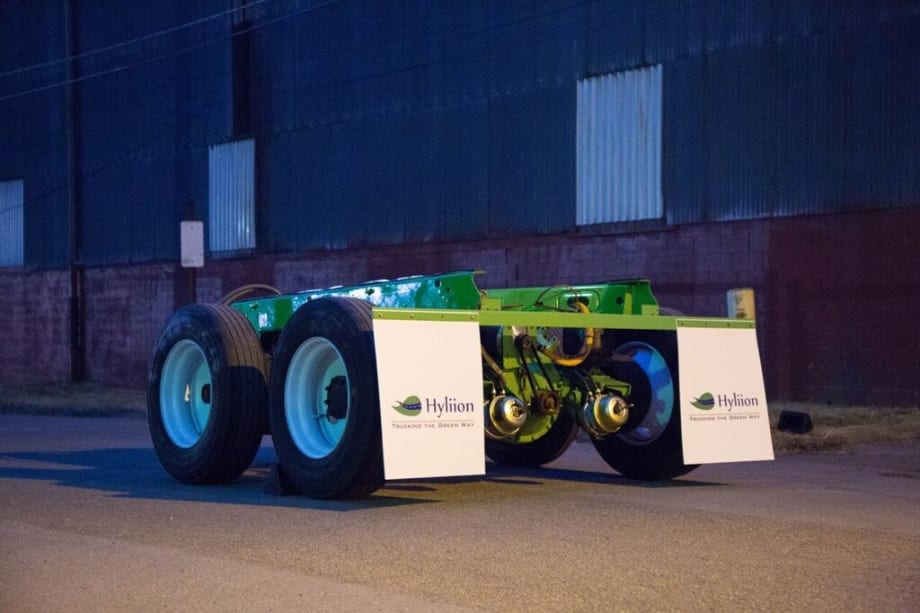
Like the North American version, the powered axle for Europe would replace a "passive" axle. Image: Hyliion Inc.
2 min to read
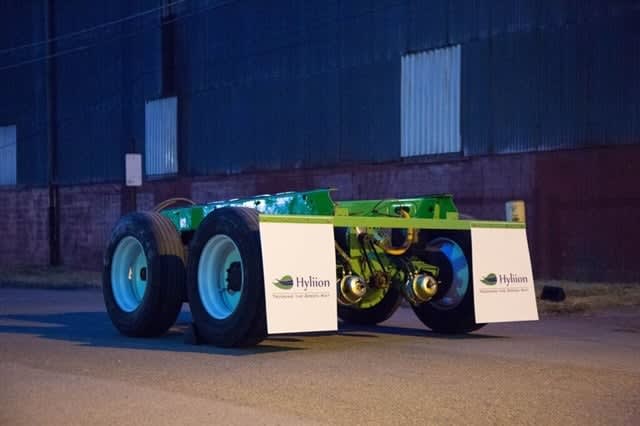
Like the North American version, the powered axle for Europe would replace a "passive" axle. Image: Hyliion Inc.
Hyliion, the designer of a hybrid electric-powered axle for trailers, is taking its concept to Europe by exhibiting at the giant IAA truck show in Hannover, Germany this week. The company’s business development director, RF Culbertson, says it is sharing a booth with its battery supplier, Gentherm, in Building 16.
Meanwhile, the company has coined a name — Intelligent Electric Axle — for the product.
As we’ve written before, the Hyliion (HIGH-lee-on) axle includes a motor-generator that runs through a standard differential. It captures kinetic energy as the truck coasts or brakes, converts it to electricity that’s stored in lithium-ion batteries, then sends the energy back to the axle to help launch a truck or push it up a hill. Electronic controls -- the intelligence in the system -- run the process.
The system is independent of the tractor (and thus will work with any type, new or old), and the driver does nothing to make it operate except making sure it’s switched on, says Thomas Healy, Hyliion’s founder and CEO.
The powered axle replaces a “passive” axle on a standard trailer tandem, and promises big fuel savings – 10 to 20% from hybrid-powered operation alone. Healy says another 10% or more in fuel can be saved if the batteries are used as an auxiliary power unit to run heating, cooling and other accessories in a tractor sleeper during rest breaks, or by running the reefer unit, lift gate or other equipment on a trailer.
The European version would also replace a passive axle in a trailer’s tridem or tandem, and/or the dead axle on a 6x2 truck commonly operated there. Many configurations are possible, he and Culbertson point out.
The Hyliion people are introducing their European concept as plans proceed for fleet testing and manufacturing here in the USA. Initial test units will be assembled at the company’s shop in Pittsburgh, Pa., and volume production – assuming it comes – will probably be contracted out.
Subscribe to Our Newsletter
More Blog Posts

Pulsing Back-of-Trailer Lamps Aim to Prevent Crashes
Can the addition of a pulsing brake lamp on the back of a trailer prevent rear-end collisions? FMCSA seems to think so, if its exemptions are any indication.
Read More →
Designing a 14-Foot Trailer
Trailers are 13 feet, 6 inches high, right? Not for Hub Group, which developed a special 14-foot-high trailer spec for a dedicated customer based in California. Learn more in the Trailer Talk blog.
Read More →
CARB Comes for Reefer Trailers
A new round of emissions control regulations decreed by the California Air Resource Board will begin affecting refrigerated trailer and TRU design and operations next year.
Read More →
5 Ways Data Analysis Maximizes the Value of Trailer Telematics
Are you getting the most out of your trailer telematics investment?
Read More →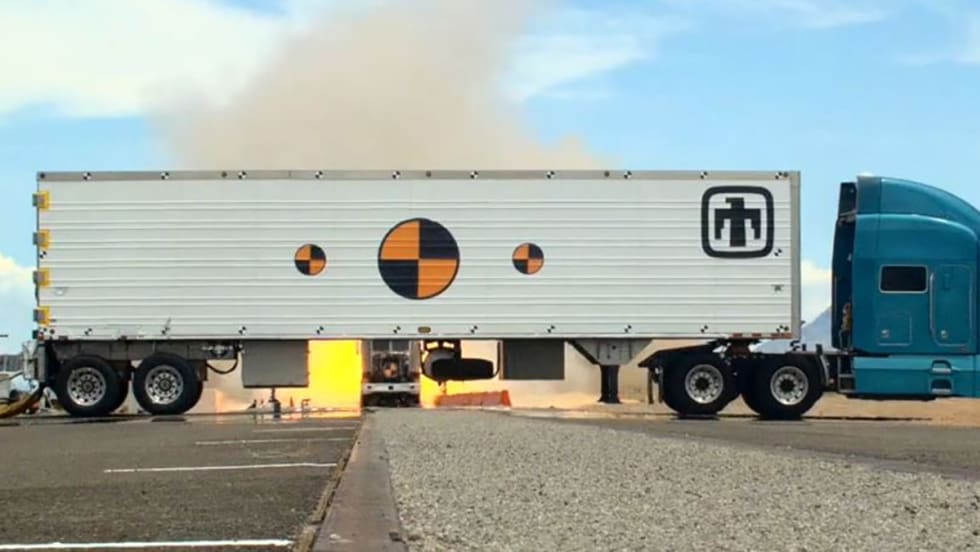
Can You Guess What's in That Trailer?
You don’t always know what’s in the trailers that pass you on the road. But some of those trailers are carrying something a little more dangerous that frozen food or new bedding…like, maybe, a nuclear weapon. But this isn’t an ordinary trailer; this is a trailer specifically made to not only carry this type of payload, but protect it at all costs.
Read More →
How Trailers Are Harnessing 'Free' Energy
Can trailers play a more active role in sustainable transport beyond aerodynamic add-ons or low-rolling-resistance tires? Some companies think so.
Read More →
Wrapping a Trailer for COVID’s Everyday Heroes
“We don’t only deliver freight. We deliver awareness.” That’s what Jim Barrett, president and CEO of Road Scholar Transport, likes to say about the Dunmore, Pennsylvania-based carrier’s “awareness fleet.” Its latest trailer wrap honors the everyday heroes of the pandemic.
Read More →
How a Tanker Fleet is Using Unorthodox Trailer Lighting to Fight Rear-End Collisions
Groendyke Transport watched the number of rear-end collisions with its trailers rise steadily until it tried an unorthodox and then unapproved method of alerting following drivers that its trucks were applying brakes and slowing down.
Read More →
The Role Trailers are Playing in COVID-19 Funerals
In places such as New York City and Detroit, overwhelmed hospitals and mortuaries are using refrigerated trailers to store the bodies of people killed by COVID-19.
Read More →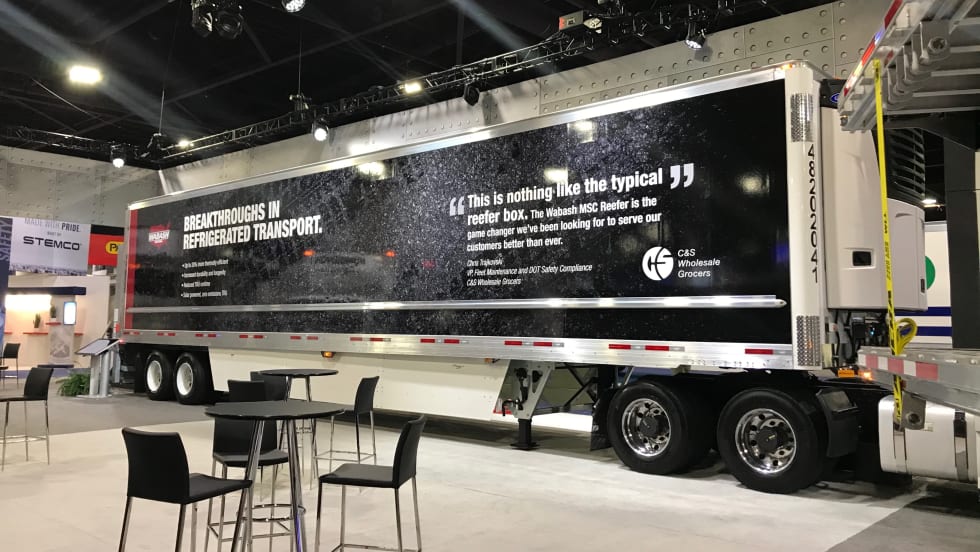
Reefer Trailer Aims to Help Reach Zero Emissions
Wabash National is partnering with C&S Wholesale Grocers to test a new type of zero-emissions refrigerated trailer.
Read More →