





Related: Hurricane Harvey Could Disrupt Trucking for Some Time
'High-Water Vehicles' Take Many Forms in Harvey Rescue Work
Trucks perform vital work, but explosions at a chemical plant near Houston involved refrigerated trailers that stored temperature-sensitive compounds. Tom Berg also explores some of the various vehicles, including trailers, being used in relief efforts in this Trailer Talk blog.
August 31, 2017
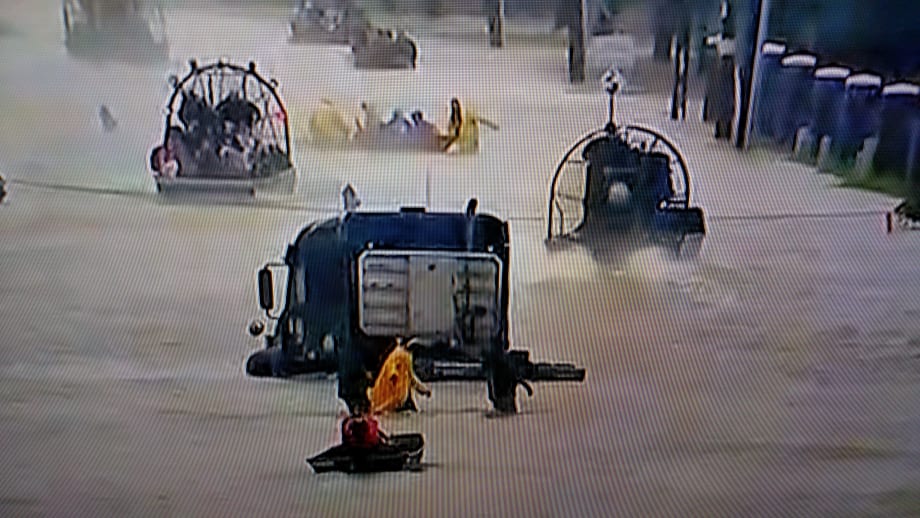
Most civilian trucks, including this tractor that seems to be hitched to a drop-deck trailer, could not cope with Harvey's deep waters. As winds subsided, air boats joined outboard-motor-powered craft and helicopters in rescue efforts. Image: Screen capture, ABC News
3 min to read
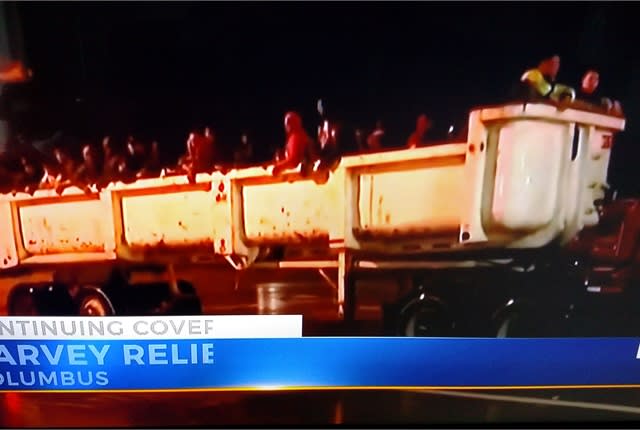
An end-dump rubble trailer became a personnel carrier during rescue efforts in the midst of Hurricane Harvey in southeast Texas. Image: Screen capture, NBC News
Devastating floods from Hurricane Harvey’s rains have prompted thousands of rescues in southeast Texas, many involving “high water vehicles,” as PBS and CNN news reports early this week called them. As the emergency unfolded, such vehicles took many shapes, some military and some civilian.
And now we learn that explosions at a chemical plant near Houston involved refrigerated trailers that stored temperature-sensitive compounds. Arkema Inc., in Crosby, Texas, about 25 miles northeast of Houston, had warned that organic peroxides were in danger of igniting because electric power needed to cool them was lost.
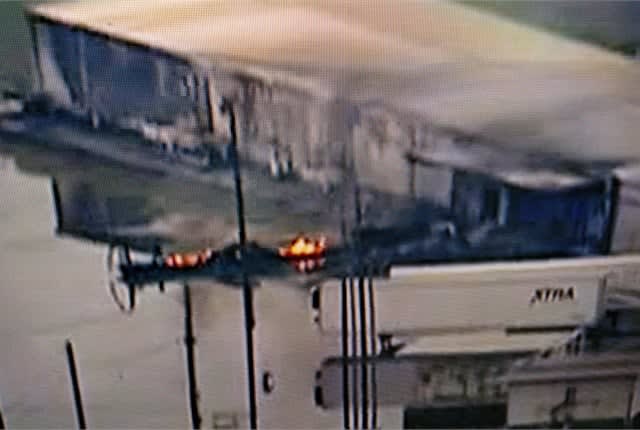
Aerial video shows what appear to be remains of a smouldering trailer. After contaminated fuel shut down its reefer unit, a temperature-sensitive chemical stored inside "combusted." Another reefer van is parked nearby. Image: Screen capture, Fox News
The compounds were stored in “18-wheeler box vans” on the premises, according to a county fire chief interviewed on NBC’s Today program. Contaminated fuel caused the reefer units to fail and the chemicals heated up; about 1 a.m. local time on Thursday, the first of several explosions -- company officials called them "combustions" -- occurred.
Much more positive and heartening roles were played by trucks whose crews set out into deep waters to rescue stranded residents in the region as Harvey stormed ashore. Many were military trucks built to ford deep waters, some operated by National Guard units who were among the first of the first responders to the emergency. Also quick to act were city crews with municipal trucks, and civilians who used their own trucks and trailers to help neighbors.
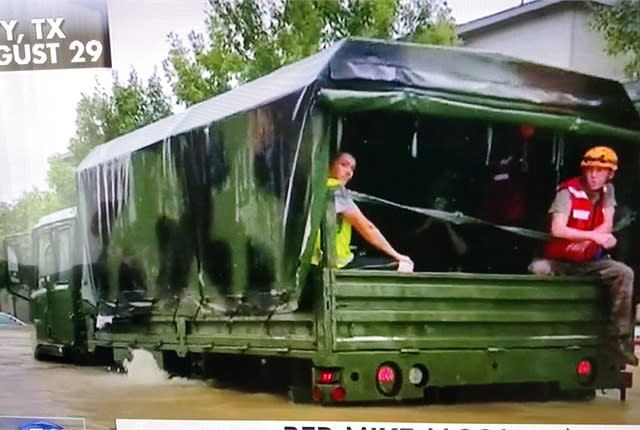
Military 5-ton 6x6 truck wades through deep water with evacuees. Image: Screen capture, Fox News
Footage shot by news crews showed Army-design 2.5- and 5-ton trucks, whose high chassis, tall wheels, water-proof ignitions, and lofty air intakes allowed them to operate normally where most other trucks and cars stalled. These were vital in early stages of the storm when strong winds and blinding rain kept aircraft away.
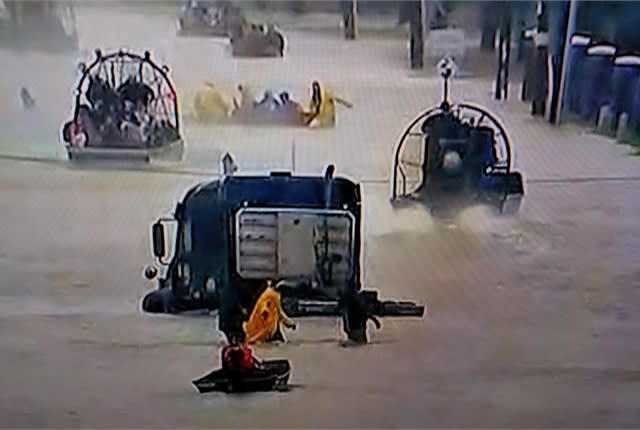
Most civilian trucks, including this tractor that seems to be hitched to a drop-deck trailer, could not cope with Harvey's deep waters. As winds subsided, air boats joined outboard-motor-powered craft and helicopters in rescue efforts. Image: Screen capture, ABC News
I found one unusual example in a civilian-owned ex-military vehicle: A “massive truck” from Kansas City headed to the Houston area, dispatched by the owner of Stonehenge Landscape & Design in Kansas City. The firm has a surplus Oshkosh 8x8 heavy equipment transporter it uses to haul decorative boulders, and it’s ideal for high-water rescue work.
As reported by Fox4 TV News, a crew sent by the company’s owner, Spencer Sherf, had previously rescued a family stranded by high water in Overland Park. When he heard news about Harvey, he offered the truck to Texas authorities. “Get that thing down here,” he was told. “You could be a lot of help right now.” A crew loaded it with emergency supplies, including an inflatable boat, and headed south.
Closer to the action was another “massive” (in civilian eyes) truck, owned by 8th Wonder Brewery in downtown Houston. Its employees went out on rescue missions, as reported by Eater, an online feature service. The truck, which appears to be an old-series 5-ton 6x6 cargo transporter once common in military inventories, apparently is used for promotional purposes by the business. This is the finest kind of promotion work it could do.
Much more normal was a round-bottom end-dump trailer (pictured at top of this story) I spotted on a newscast Wednesday evening. It was carrying a dozen or so people to high ground, presumably following their transfer to the tall trailer from smaller vehicles. Who owns that rig was not reported, but generosity was so normal that it has become anonymous. And whatever works is being used.
Harvey, which is still blowing hard and dumping huge amounts of rain as it moves northeast, is an epoch event whose terrible effects will rival that of Katrina and other earlier hurricanes. Trucks will be vital to cleanup and recovery efforts for years to come. And the noble people who operate them are examples of how tragedy brings out the best of humanity.
Subscribe to Our Newsletter
More Blog Posts
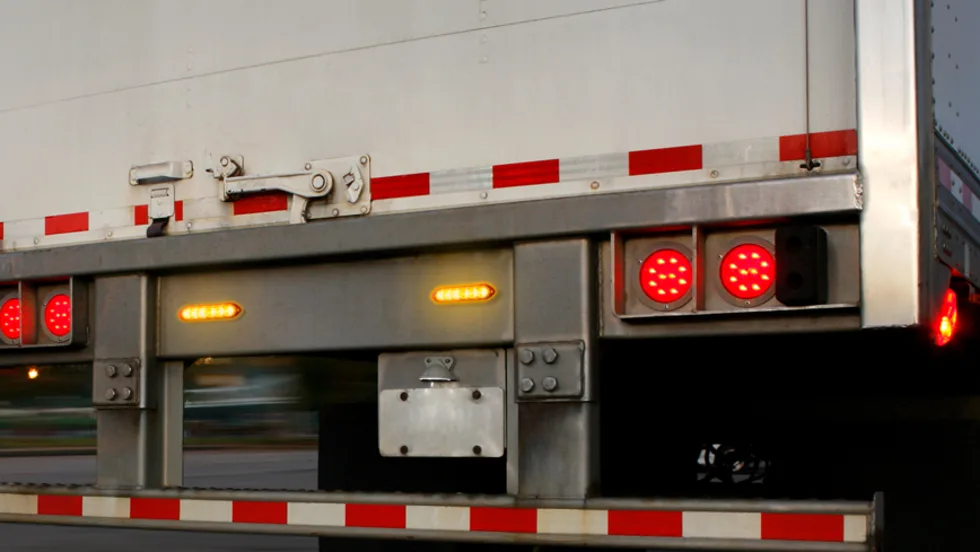
Pulsing Back-of-Trailer Lamps Aim to Prevent Crashes
Can the addition of a pulsing brake lamp on the back of a trailer prevent rear-end collisions? FMCSA seems to think so, if its exemptions are any indication.
Read More →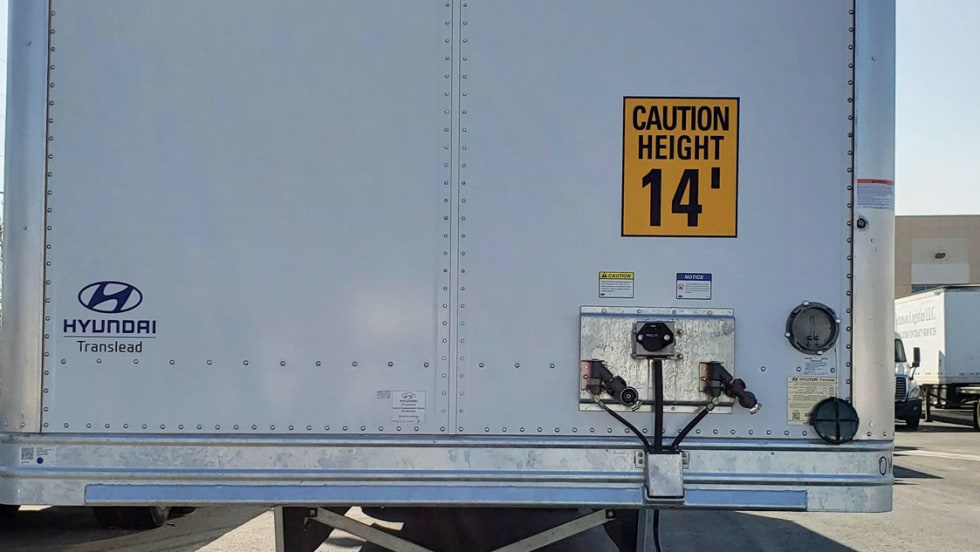
Designing a 14-Foot Trailer
Trailers are 13 feet, 6 inches high, right? Not for Hub Group, which developed a special 14-foot-high trailer spec for a dedicated customer based in California. Learn more in the Trailer Talk blog.
Read More →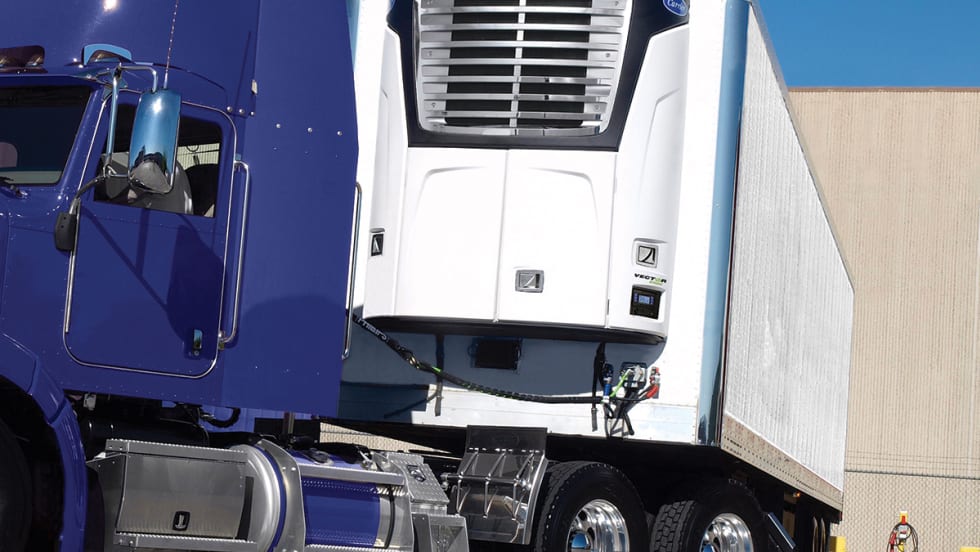
CARB Comes for Reefer Trailers
A new round of emissions control regulations decreed by the California Air Resource Board will begin affecting refrigerated trailer and TRU design and operations next year.
Read More →
5 Ways Data Analysis Maximizes the Value of Trailer Telematics
Are you getting the most out of your trailer telematics investment?
Read More →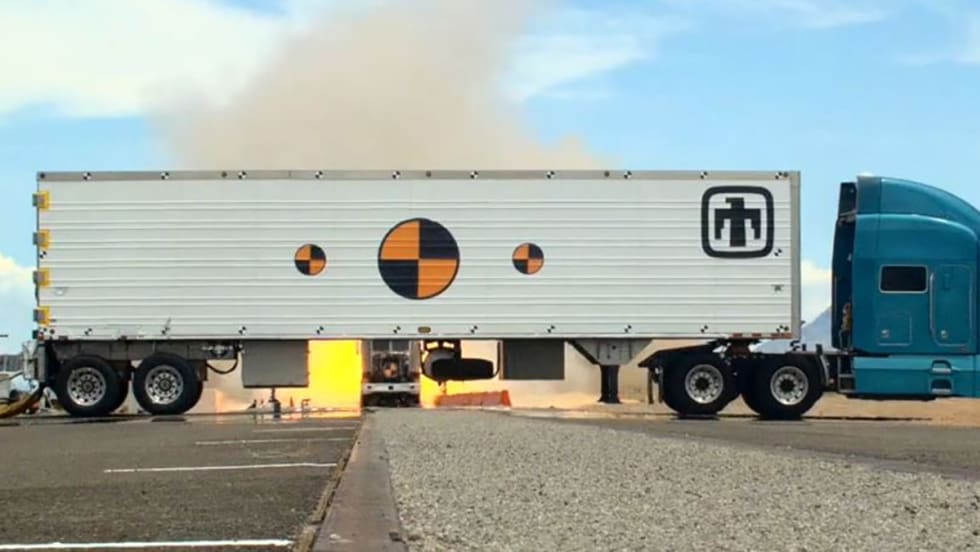
Can You Guess What's in That Trailer?
You don’t always know what’s in the trailers that pass you on the road. But some of those trailers are carrying something a little more dangerous that frozen food or new bedding…like, maybe, a nuclear weapon. But this isn’t an ordinary trailer; this is a trailer specifically made to not only carry this type of payload, but protect it at all costs.
Read More →
How Trailers Are Harnessing 'Free' Energy
Can trailers play a more active role in sustainable transport beyond aerodynamic add-ons or low-rolling-resistance tires? Some companies think so.
Read More →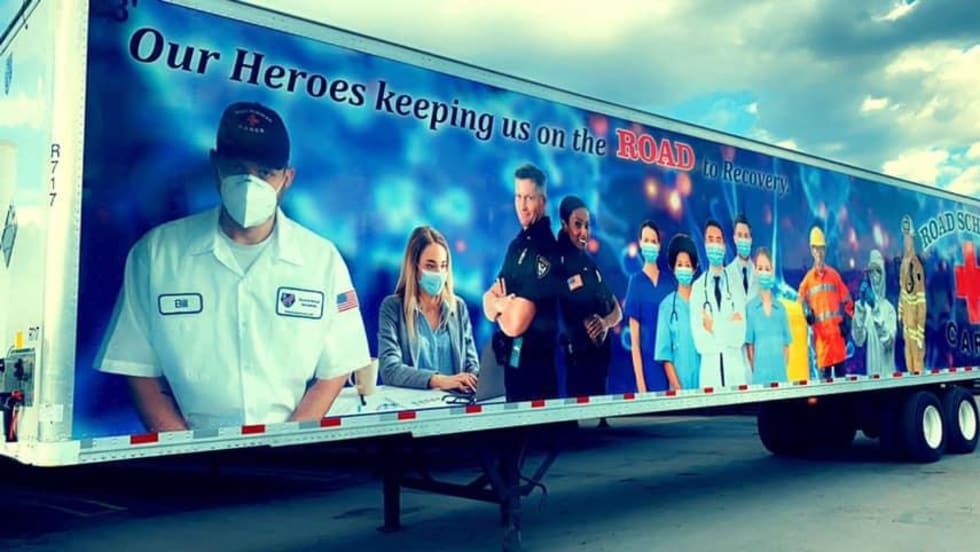
Wrapping a Trailer for COVID’s Everyday Heroes
“We don’t only deliver freight. We deliver awareness.” That’s what Jim Barrett, president and CEO of Road Scholar Transport, likes to say about the Dunmore, Pennsylvania-based carrier’s “awareness fleet.” Its latest trailer wrap honors the everyday heroes of the pandemic.
Read More →
How a Tanker Fleet is Using Unorthodox Trailer Lighting to Fight Rear-End Collisions
Groendyke Transport watched the number of rear-end collisions with its trailers rise steadily until it tried an unorthodox and then unapproved method of alerting following drivers that its trucks were applying brakes and slowing down.
Read More →
The Role Trailers are Playing in COVID-19 Funerals
In places such as New York City and Detroit, overwhelmed hospitals and mortuaries are using refrigerated trailers to store the bodies of people killed by COVID-19.
Read More →
Reefer Trailer Aims to Help Reach Zero Emissions
Wabash National is partnering with C&S Wholesale Grocers to test a new type of zero-emissions refrigerated trailer.
Read More →