




Some Trailers Are Exempt From Rear Impact Guard Regulations
A pipeline contractor in Ohio operates a specialty trailer that is exempt from rear impact guard regulations. Senior Contributing Editor Tom Berg found them parked off a highway.

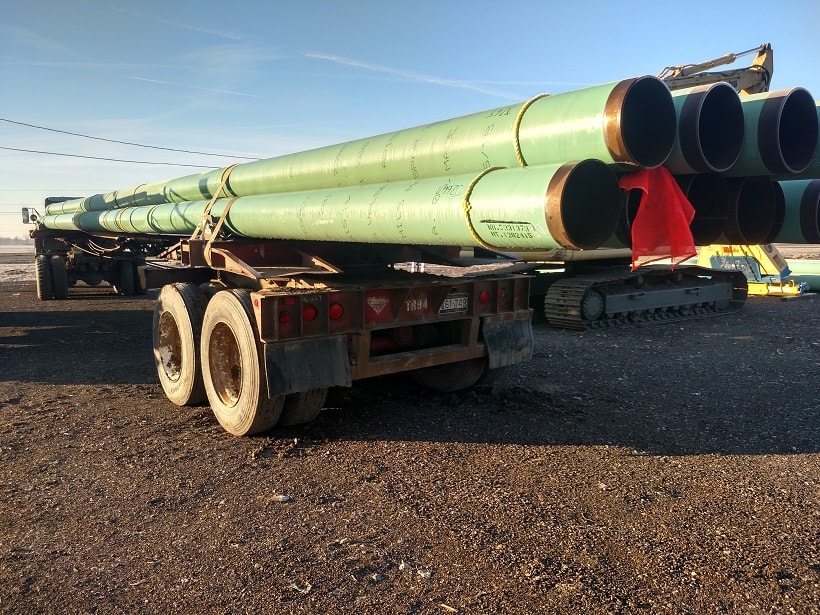
This pole trailer has a bumper but not a shock-absorbing rear impact guard, which wasn’t required when this aging vehicle was built. Under current federal regs, it would be exempt from the RIG requirement because of its rear-set axle and wheels. This one totes a load of piping for a gas transmission line.
Photos: Tom Berg
The other day I was motoring along U.S. 36/Ohio 37 west of Sunbury when I spotted a pole trailer parked in a large dirt lot off the highway. It was loaded with coated-steel pipe, ready for installation on a gas pipeline that apparently is being built nearby. It caught my eye because pole trailers are among the types exempt from rear impact guards under federal regulations, about which I’ve written a lot lately.
A rear impact guard, or RIG, is built to absorb impact forces when a car rams the rear of the trailer, and keep it from running under the trailer. A pole trailer is exempt from needing a RIG because its rear-set axles and wheels would stop a car before it went too far. It is among several types specifically listed in Federal Motor Vehicle Safety Standard 223. It still needs a bumper, though, and this trailer has one.
Pole trailers get their name from the pole-like structure that forms a backbone that connects the tandem to the forward structure, including the upper coupler assembly (or is it because such trailers sometimes carry utility poles?). That steel spine is in two parts, with a smaller diameter pipe able to slide into or out of a larger one to retract or extend it to suit the load’s length. I suppose that’s done by applying the trailer brakes and moving the tractor forward or backward, like moving a sliding tandem.
I found a website for a manufacturer that specializes in such vehicles, and saw that the pole is more often a beam-type structure, and that there are numerous types of trailers used in various construction activities. The company’s name is Brooks Brothers, and no doubt its employees are all nattily attired in shirts and suits from the clothing maker of the same name (or maybe not).
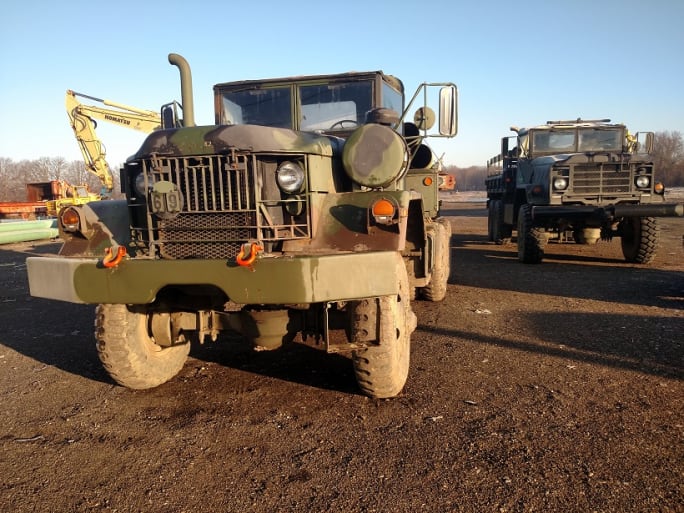
This pole trailer is hitched to an ex-military tractor, a 5-ton 6x6 well suited for off-road service. Next to it is a 5-ton 6x6 cargo truck. Both are owned by a pipeline contractor.
The trailer I found looked rather old, and I couldn’t find a builder’s plate on it. It was hitched to an ex-military truck-tractor, a 5-ton 6x6 well suited for off-road service, including pipeline construction. Parked next to it was a 5-ton cargo truck outfitted with a ladder so workers can easily climb aboard (seems like an overly heavy vehicle to be a personnel carrier, but that’s what it looked like).
The tractor had all kinds of data and instruction plates on its dashboard, but I didn’t see its model number. A little on-line research tells me that it’s in the M-800 or -900 series, probably with a big ol’ Cummins NH-250 diesel or a smaller Hercules multi-fuel engine. I didn’t climb up and open the hood to find out.
The government sells such trucks to specialty dealers who resell them to users like the pipeline contractor that owns these two units. They are inexpensive to buy and ideal for crawling around in mud or sand. Usually they’re hauled to a work site rather than driven there, so don’t incur the costs of registration.
Sometimes buyers are enthusiasts, often former soldiers who might or might not yearn for the good ol’ days in uniform but appreciate the appearance and capabilities of these trucks. I’m one of ‘em, but no, I don’t have a 5-tonner parked in my back yard. Or a pole trailer, for that matter.
More Blog Posts
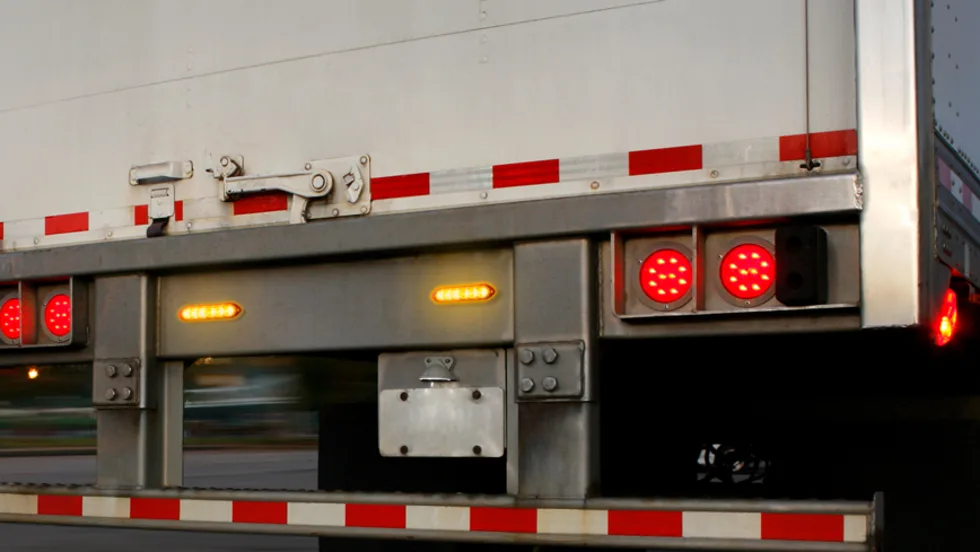
Pulsing Back-of-Trailer Lamps Aim to Prevent Crashes
Can the addition of a pulsing brake lamp on the back of a trailer prevent rear-end collisions? FMCSA seems to think so, if its exemptions are any indication.
Read More →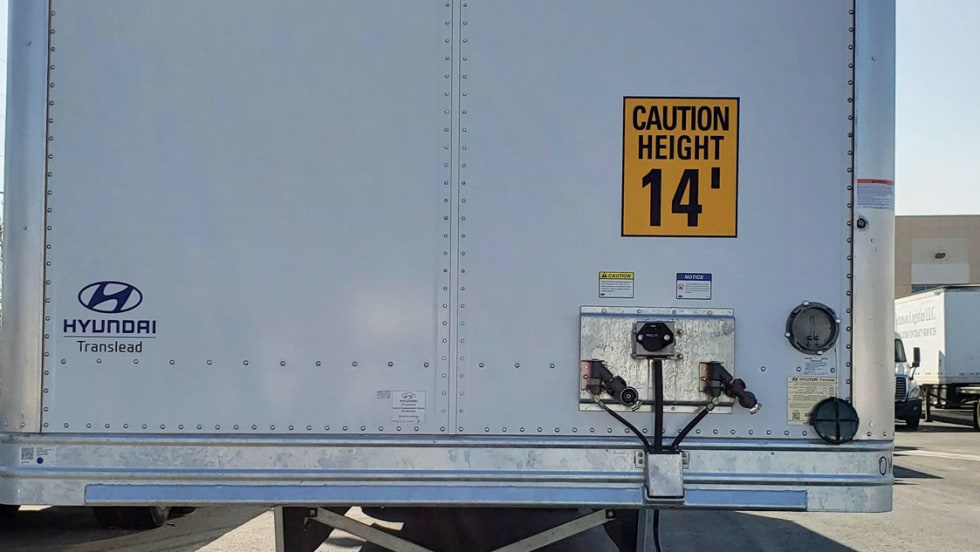
Designing a 14-Foot Trailer
Trailers are 13 feet, 6 inches high, right? Not for Hub Group, which developed a special 14-foot-high trailer spec for a dedicated customer based in California. Learn more in the Trailer Talk blog.
Read More →
CARB Comes for Reefer Trailers
A new round of emissions control regulations decreed by the California Air Resource Board will begin affecting refrigerated trailer and TRU design and operations next year.
Read More →
5 Ways Data Analysis Maximizes the Value of Trailer Telematics
Are you getting the most out of your trailer telematics investment?
Read More →
Can You Guess What's in That Trailer?
You don’t always know what’s in the trailers that pass you on the road. But some of those trailers are carrying something a little more dangerous that frozen food or new bedding…like, maybe, a nuclear weapon. But this isn’t an ordinary trailer; this is a trailer specifically made to not only carry this type of payload, but protect it at all costs.
Read More →
How Trailers Are Harnessing 'Free' Energy
Can trailers play a more active role in sustainable transport beyond aerodynamic add-ons or low-rolling-resistance tires? Some companies think so.
Read More →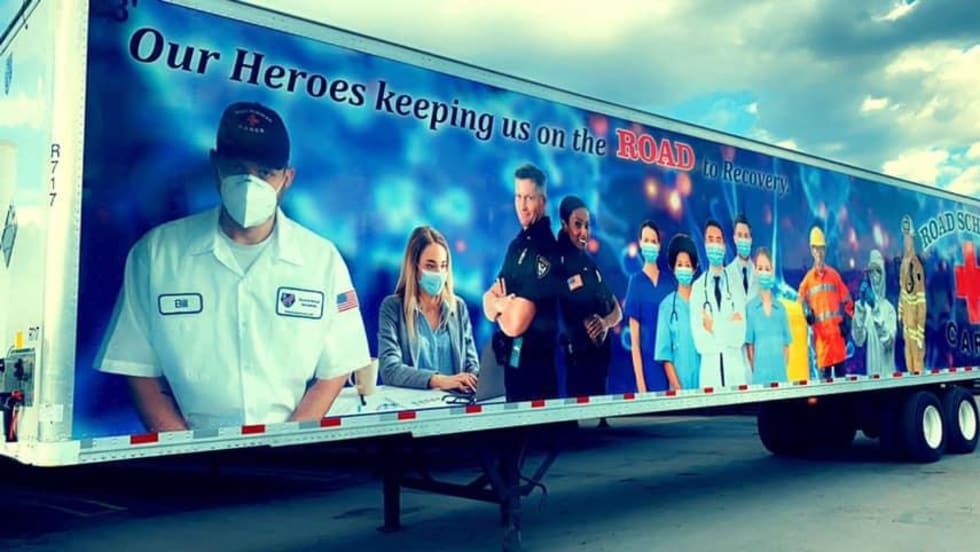
Wrapping a Trailer for COVID’s Everyday Heroes
“We don’t only deliver freight. We deliver awareness.” That’s what Jim Barrett, president and CEO of Road Scholar Transport, likes to say about the Dunmore, Pennsylvania-based carrier’s “awareness fleet.” Its latest trailer wrap honors the everyday heroes of the pandemic.
Read More →
How a Tanker Fleet is Using Unorthodox Trailer Lighting to Fight Rear-End Collisions
Groendyke Transport watched the number of rear-end collisions with its trailers rise steadily until it tried an unorthodox and then unapproved method of alerting following drivers that its trucks were applying brakes and slowing down.
Read More →
The Role Trailers are Playing in COVID-19 Funerals
In places such as New York City and Detroit, overwhelmed hospitals and mortuaries are using refrigerated trailers to store the bodies of people killed by COVID-19.
Read More →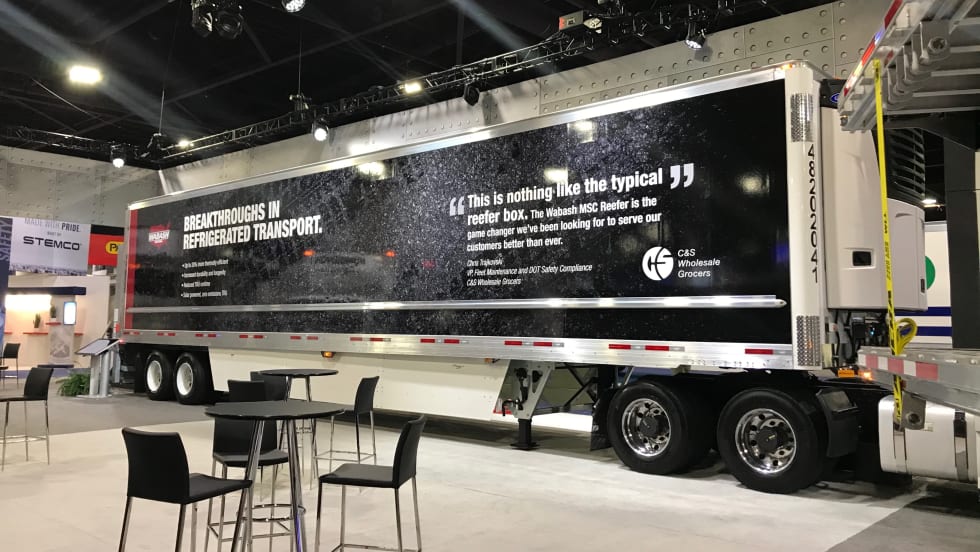
Reefer Trailer Aims to Help Reach Zero Emissions
Wabash National is partnering with C&S Wholesale Grocers to test a new type of zero-emissions refrigerated trailer.
Read More →