




Harvey Was One Thing, But Irma's Getting Personal
This monster has a female name but is no lady, what with sustained winds of 185 mph and gusts of more than 200. I've got relatives and friends in her path, and that's really scary, says Tom Berg in his Trailer Talk Blog.

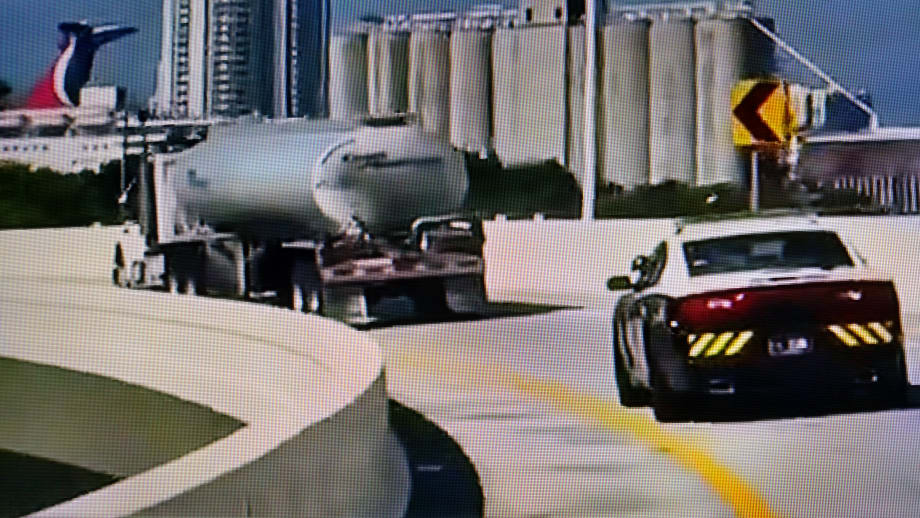
Gasoline tankers are getting police escorts, like this one in Miami. Florida's governor has asked surrounding states to ease weight and driving-hour restrictions for tankers. Screen capture from ABC News
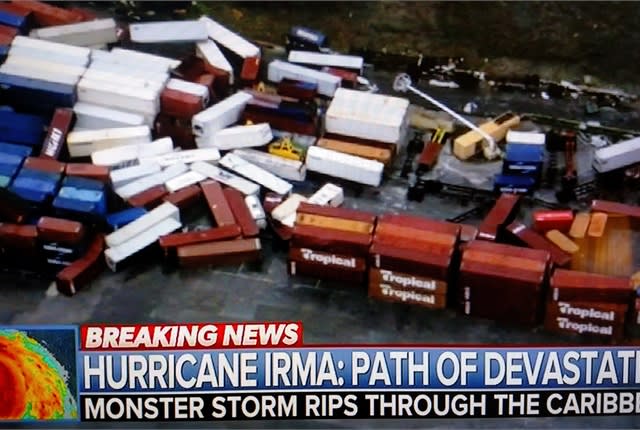
Irma's extreme winds scattered heavy freight containers at a terminal on St. Maarten in the Caribbean.Image: screen capture from NBC News
This hurricane season might well be the worst on record for the United States. One monster storm, Harvey, deposited immense amounts of rain on parts of Texas and Louisiana, and recovery has only just begun. Now another beast, Irma, is lashing the Caribbean islands with some of the highest winds ever recorded, and headed toward Florida and points north.
On the island of St. Maarten, Irma’s high sustained winds – as much as 185 mph with gusts over 200 mph -- scattered steel freight containers. As seen from the air, they looked like blocks of wood a kid might have thrown around. When empty, 20- and 40-foot containers weigh from about 5,200 pounds to more than 12,000, according to an Evergreen Marine Corp. website. Loaded, they're much heavier. It takes the force of F-3 and higher tornados to do that, one news reporter said, but a twister blows past in a minute or two while Irma’s blasts can last more than two hours as it moves slowly by. Good lord!
Thursday night, I talked with two nieces in central Florida who said they’re planning to hunker down and ride out the storm. “What else can you do?” one of them said. “I-75 and I-95 are parking lots,” filled with cars full of people fleeing Irma, “so you sit in line, maybe going 15 miles an hour, all the while burning gas, and then you get low on gas and you pull off to buy some, but there isn’t any. So you look for a hotel room, but there aren’t any.”
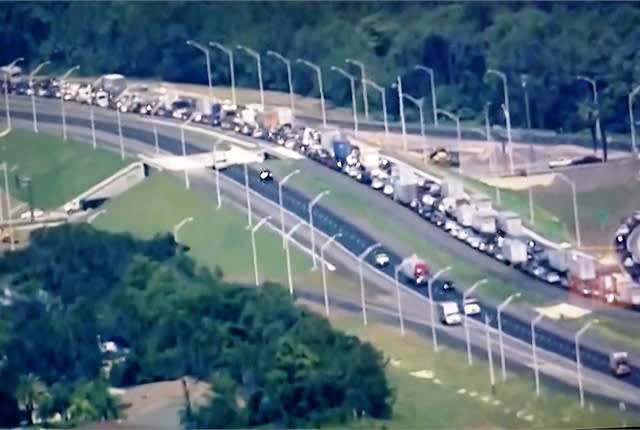
Cars and trucks fleeing Hurricane Irma choke a freeway in south Florida. If they run low on fuel, they're in trouble. Screen capture from NBC News
A few minutes later, on another call, her sister cited the same reasons, then added, “So there’s no way out.” That’s scary. They’ve been through ‘canes before, but nothing this big and this strong. The storm could weaken a bit by the time it travels up the peninsula, so they should be OK. I love them, and it pains me to say “should.”
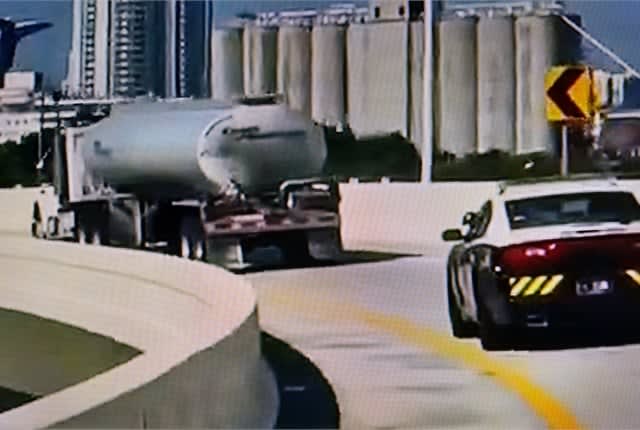
Gasoline tankers are getting police escorts, like this one in Miami. Florida's governor has asked surrounding states to ease weight and driving-hour restrictions for tankers. Screen capture from ABC News
As for scarcity of gasoline, that isn’t surprising because it always happens during emergencies. However, on last night’s newscasts, there were a few seconds of video showing a police car shadowing a gasoline tanker on a Miami freeway, evidently bound for filling stations.
Now, I’ve seen long lines at gas pumps in 1973 and ’79, during the first and second Arab Oil Embargos, and waited in some of them. But I’ve never heard of police having to escort tankers to get them through traffic, but also to guard against looting of the precious liquid. Governor Rick Scott asked officials in neighboring states to relax weight and driving-hour rules to expedite gas shipments, and said federal authorities already have.
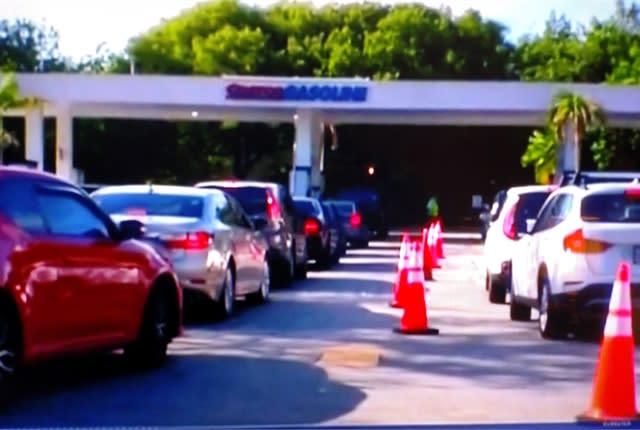
Long lines have formed at filling stations, just as they have in past emergencies. Screen capture from NBC News
Miami is the home of a third person I talked with Thursday evening. He’s an old college friend who resides in an apartment building not far from the beach. He was out shopping for provisions when I reached him. He’s in the hurricane’s bullseye and knows it, but cited the same reasons for staying – clogged highways and lack of gas. Also, a bed-ridden brother lives in the same building, so my friend needs to watch out for him. They live on the 11th and 8th floors, respectively, where winds will be stronger than on the ground. Good luck, fellas, and I mean it.
The last remnants of Harvey reached central Ohio, where I live, days after blasting the Gulf Coast, though we saw only dark clouds and stiff breezes. Irma is also expected to pass through, and we might get some rain from her. By then I’ll know how my loved ones in Florida fared, and right now I'm praying for the best.
More Blog Posts
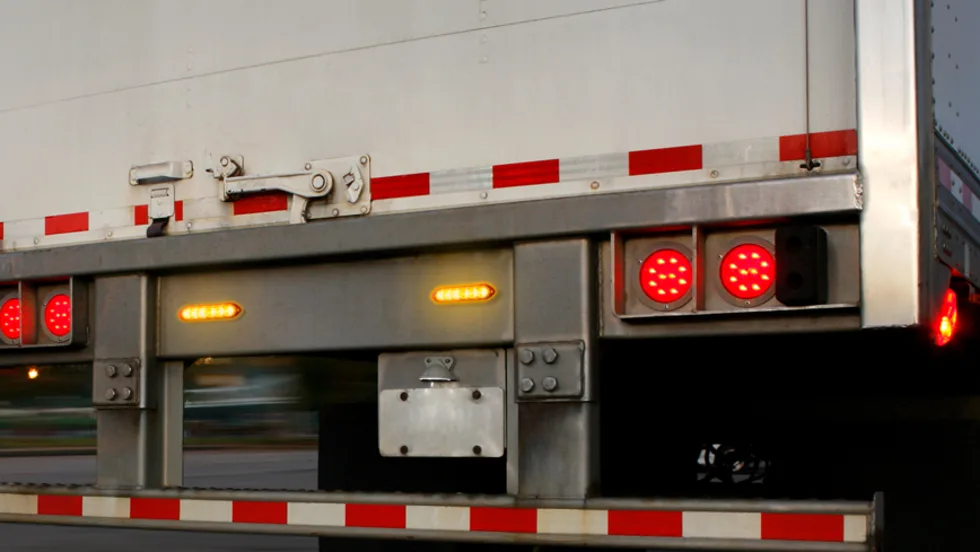
Pulsing Back-of-Trailer Lamps Aim to Prevent Crashes
Can the addition of a pulsing brake lamp on the back of a trailer prevent rear-end collisions? FMCSA seems to think so, if its exemptions are any indication.
Read More →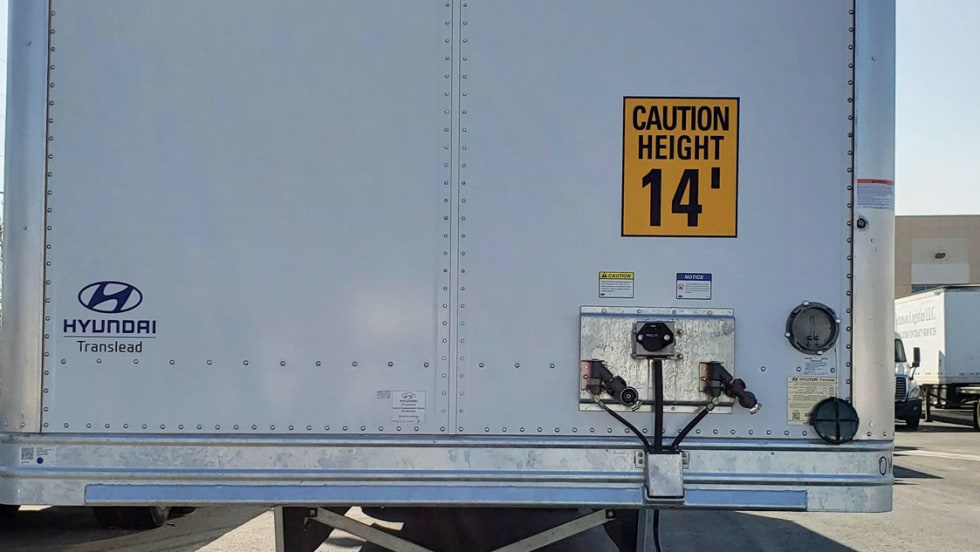
Designing a 14-Foot Trailer
Trailers are 13 feet, 6 inches high, right? Not for Hub Group, which developed a special 14-foot-high trailer spec for a dedicated customer based in California. Learn more in the Trailer Talk blog.
Read More →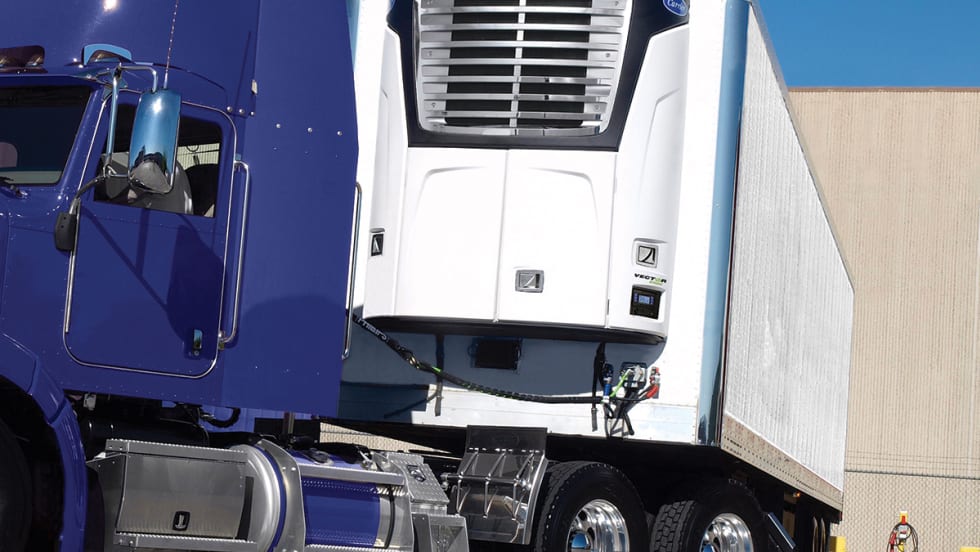
CARB Comes for Reefer Trailers
A new round of emissions control regulations decreed by the California Air Resource Board will begin affecting refrigerated trailer and TRU design and operations next year.
Read More →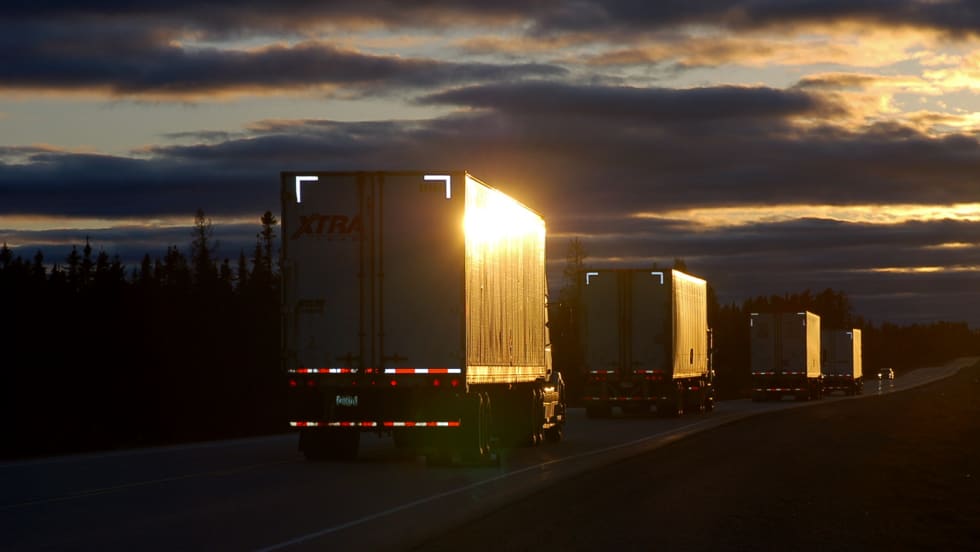
5 Ways Data Analysis Maximizes the Value of Trailer Telematics
Are you getting the most out of your trailer telematics investment?
Read More →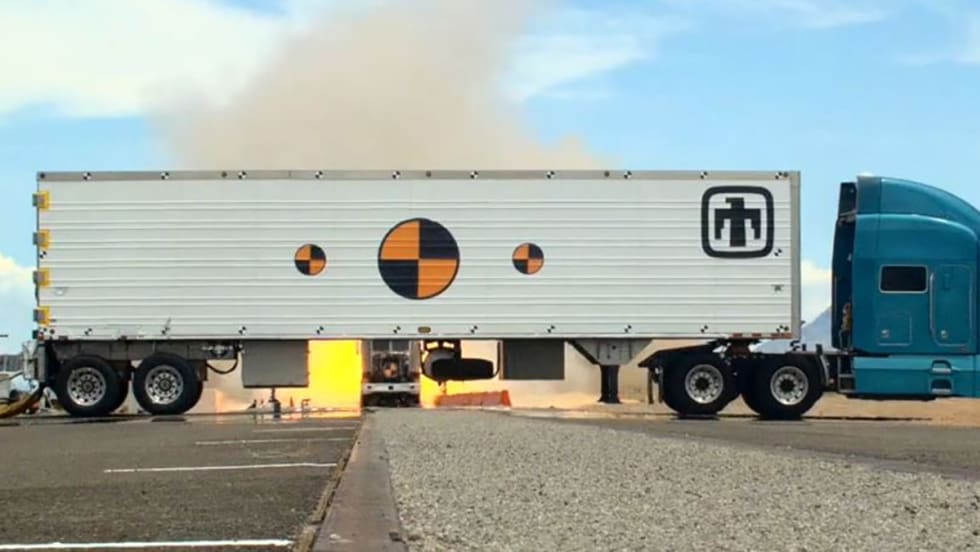
Can You Guess What's in That Trailer?
You don’t always know what’s in the trailers that pass you on the road. But some of those trailers are carrying something a little more dangerous that frozen food or new bedding…like, maybe, a nuclear weapon. But this isn’t an ordinary trailer; this is a trailer specifically made to not only carry this type of payload, but protect it at all costs.
Read More →
How Trailers Are Harnessing 'Free' Energy
Can trailers play a more active role in sustainable transport beyond aerodynamic add-ons or low-rolling-resistance tires? Some companies think so.
Read More →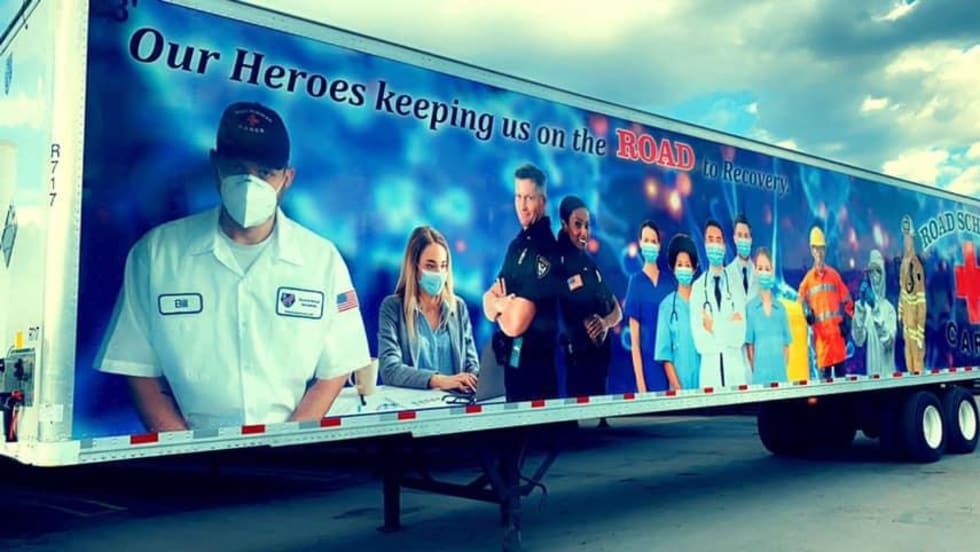
Wrapping a Trailer for COVID’s Everyday Heroes
“We don’t only deliver freight. We deliver awareness.” That’s what Jim Barrett, president and CEO of Road Scholar Transport, likes to say about the Dunmore, Pennsylvania-based carrier’s “awareness fleet.” Its latest trailer wrap honors the everyday heroes of the pandemic.
Read More →
How a Tanker Fleet is Using Unorthodox Trailer Lighting to Fight Rear-End Collisions
Groendyke Transport watched the number of rear-end collisions with its trailers rise steadily until it tried an unorthodox and then unapproved method of alerting following drivers that its trucks were applying brakes and slowing down.
Read More →
The Role Trailers are Playing in COVID-19 Funerals
In places such as New York City and Detroit, overwhelmed hospitals and mortuaries are using refrigerated trailers to store the bodies of people killed by COVID-19.
Read More →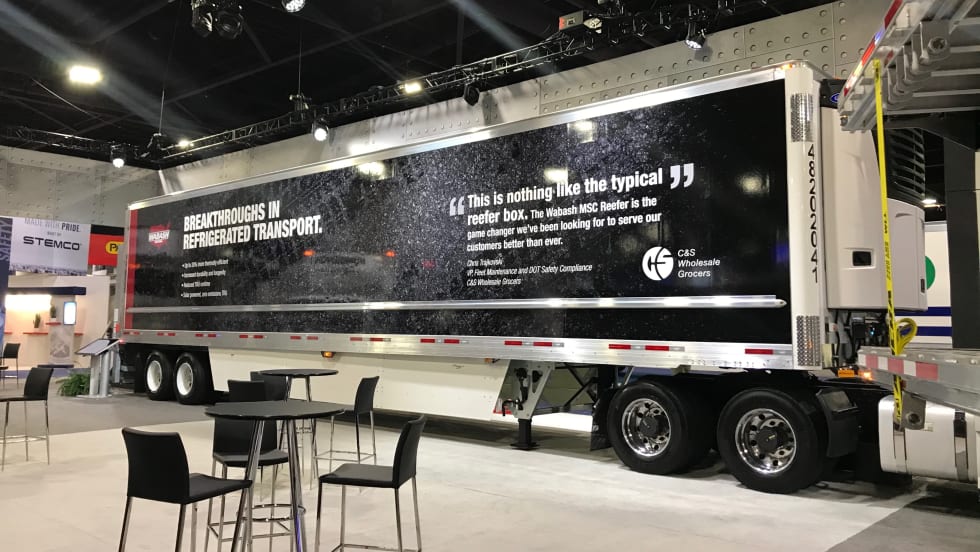
Reefer Trailer Aims to Help Reach Zero Emissions
Wabash National is partnering with C&S Wholesale Grocers to test a new type of zero-emissions refrigerated trailer.
Read More →