





Related: Pressure Systems International Invests in Plasma-Based Aerodynamics
Force Field Could Form 'Electric Boat Tail' to Cut Turbulence
Plasma, the stuff of lightning and the Northern Lights, can be harnessed to alter the flow of air over trucks.
July 22, 2016
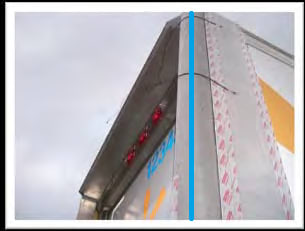
Actuators installed on the top and sides of a van. They will work with swing and roll-up doors.
3 min to read
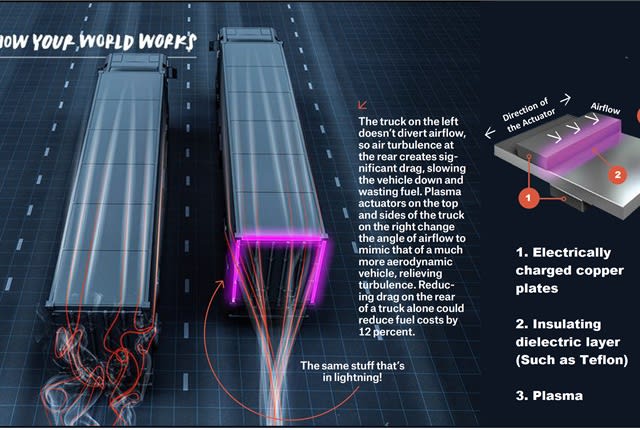
Operation seems thoroughly thought-out and was proven in 1/15-scale wind-tunnel tests. Now it must be road-tested on real trailers for practicality and decent ROI. Images and photo: Plasma Stream Technology
A sci-fi-like force field as an aerodynamic improver? That’s the idea of scientists and engineers working to harness plasma, the stuff of lightning and the Northern Lights, to alter the flow of air over trucks.
Controlled plasma is “real,” and could be an alternative to mechanical appendages on trailers and trucks in as little as two years, said Tim Musgrave, president and CEO of P.S.I., the maker of the tire-pressure monitoring and inflation device.
His company has invested money in Plasma Stream Technology, a small Iowa firm that’s developing the concept. It licensed the technology and design for a power supply from Notre dame based on past work done with General Motors and the National Aeronautics and Space Administration, said Pranay Bajjuri, an electrical engineer who's co-founder/advisor at Plasma Stream.
For trucks, the first device would be an “electric boat tail,” he said (website here). Plasma actuators are attached to the top and sides of a trailer’s rear edges; they generate the force field to smooth air flow and greatly reduce turbulence immediately behind that otherwise causes drag.
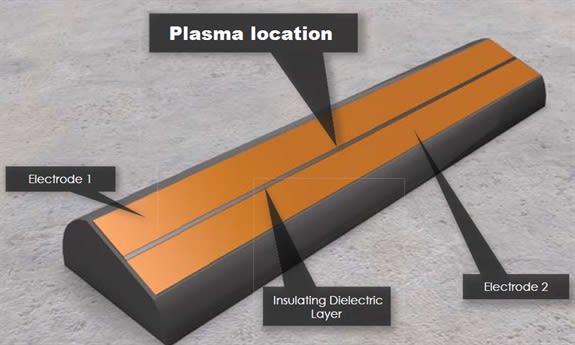
Electrodes inside the actuator form a plasma stream between them. The resulting force field bends and smooths air.
Each actuator consists of two electrodes working across a plastic-type material to generate the force field, he explained. Electricity comes from a truck’s 12-volt system, from which it is stepped up to its operating level of 6 to 8 kilovolts. Current is very low, amounting to about 1 watt per meter of actuator.
Like physical air fairings, the force field becomes more effective at higher speeds, but also requires higher electrical power, Bajjuri said. It will save as much or more than a folding boat tail but weigh much less.
The concept’s been proven in a 1/15-scale wind tunnel, and now needs to be tested on the road, Musgrave said. Several large fleets are interested.
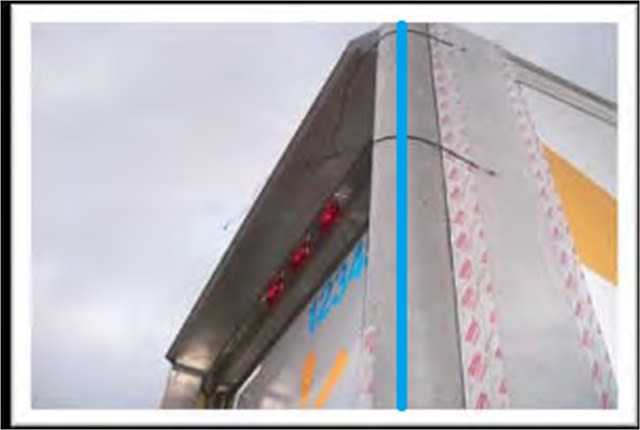
Actuators installed on the top and sides of a van. They will work with swing and roll-up doors.
Musgrave thinks actuators could also be placed underneath and on trailer noses to generate force fields in those areas of turbulence. Flatbeds and other non-box trailers might benefit from the actuators where now the widely used fairings do not improve aerodynamics. The idea is to use Plasma Stream actuators instead of boat tails, side skirts and other current products.
“They could move air right over the top of a tractor” no matter what its physical shape is, Musgrave said. They could also replace side skirts and other devices now used on tractors. But he’s cautious.
“We’ve invested in it but we will not sell it if it’s not of the same quality as P.S.I., otherwise it will tarnish our name,” Musgrave said. “We’re only interested in marketing and selling it on tractor-trailers," for which P.S.I. has distribution rights, “not locomotives or anything else we know nothing about.” He declined to specify the amount of money invested.
As for manufacturing, “We’ll have to wait and see exactly what’s in it,” he said. “The power supply will be the most complex piece. It’s likely something that would go to the lighting manufacturers, the electrical suppliers….
“But you know fleet people. You have to prove to the industry that it’s workable, and that it’s affordable. Then we can go in with information on a reasonable return on investment.”
Subscribe to Our Newsletter
More Blog Posts

Pulsing Back-of-Trailer Lamps Aim to Prevent Crashes
Can the addition of a pulsing brake lamp on the back of a trailer prevent rear-end collisions? FMCSA seems to think so, if its exemptions are any indication.
Read More →
Designing a 14-Foot Trailer
Trailers are 13 feet, 6 inches high, right? Not for Hub Group, which developed a special 14-foot-high trailer spec for a dedicated customer based in California. Learn more in the Trailer Talk blog.
Read More →
CARB Comes for Reefer Trailers
A new round of emissions control regulations decreed by the California Air Resource Board will begin affecting refrigerated trailer and TRU design and operations next year.
Read More →
5 Ways Data Analysis Maximizes the Value of Trailer Telematics
Are you getting the most out of your trailer telematics investment?
Read More →
Can You Guess What's in That Trailer?
You don’t always know what’s in the trailers that pass you on the road. But some of those trailers are carrying something a little more dangerous that frozen food or new bedding…like, maybe, a nuclear weapon. But this isn’t an ordinary trailer; this is a trailer specifically made to not only carry this type of payload, but protect it at all costs.
Read More →
How Trailers Are Harnessing 'Free' Energy
Can trailers play a more active role in sustainable transport beyond aerodynamic add-ons or low-rolling-resistance tires? Some companies think so.
Read More →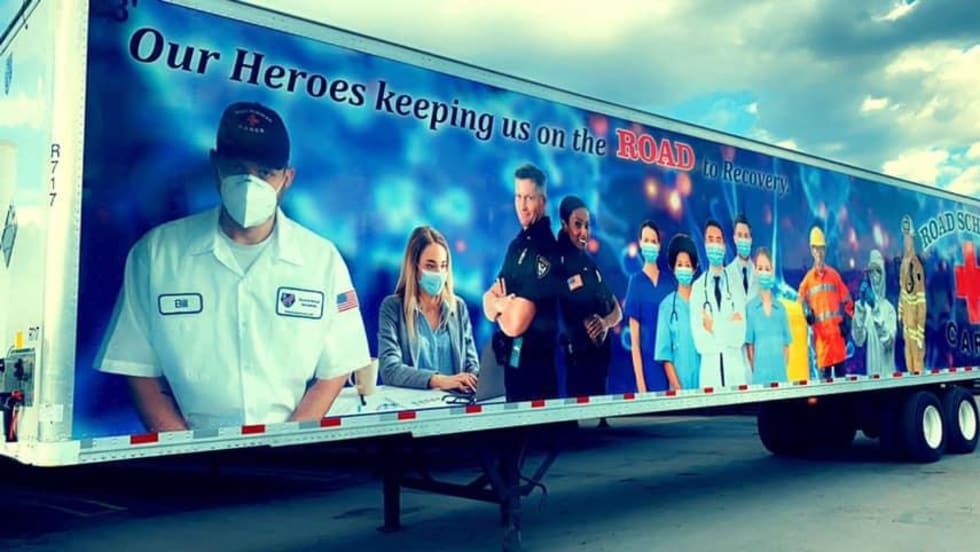
Wrapping a Trailer for COVID’s Everyday Heroes
“We don’t only deliver freight. We deliver awareness.” That’s what Jim Barrett, president and CEO of Road Scholar Transport, likes to say about the Dunmore, Pennsylvania-based carrier’s “awareness fleet.” Its latest trailer wrap honors the everyday heroes of the pandemic.
Read More →
How a Tanker Fleet is Using Unorthodox Trailer Lighting to Fight Rear-End Collisions
Groendyke Transport watched the number of rear-end collisions with its trailers rise steadily until it tried an unorthodox and then unapproved method of alerting following drivers that its trucks were applying brakes and slowing down.
Read More →
The Role Trailers are Playing in COVID-19 Funerals
In places such as New York City and Detroit, overwhelmed hospitals and mortuaries are using refrigerated trailers to store the bodies of people killed by COVID-19.
Read More →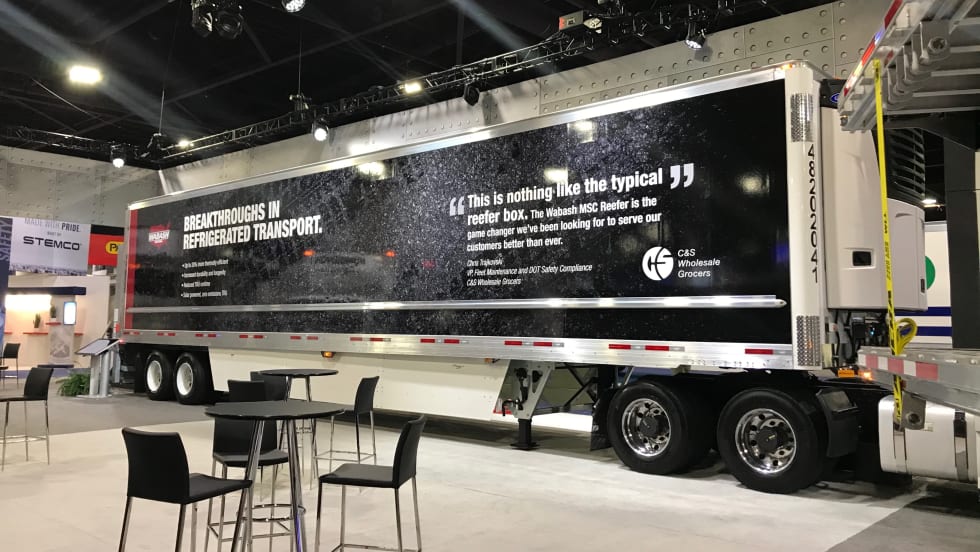
Reefer Trailer Aims to Help Reach Zero Emissions
Wabash National is partnering with C&S Wholesale Grocers to test a new type of zero-emissions refrigerated trailer.
Read More →