




England's Containers Travel Far Even Before They Begin Working
The domestic refrigerated containers used by C.R. England in its award-winning TempStack intermodal operation enter service only after a long journey from Asia to the American Midwest. And their typical hauls are likewise lengthy
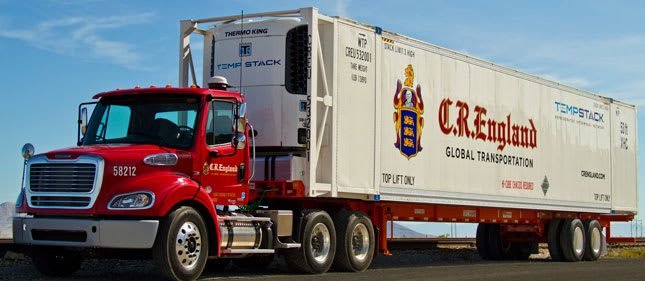
C.R. England’s new containers go from China to the American Midwest to be outfitted with Thermo King reefer units. Drayage tractors are Freightliner M2-112s with DD13 engines.
The domestic refrigerated containers used by C.R. England in its award-winning TempStack intermodal operation enter service only after a long journey from Asia to the American Midwest. And their typical hauls are likewise lengthy.
The 53-foot cargo boxes are made by China International Marine Containers (CIMC), headquartered in Shenzhen, Guangdong province, near Hong Kong, that claims to be the largest manufacturer of steel shipping containers (and is the parent of Vanguard Trailers in Monon, Ind.).
But England's containers are aluminum-skinned with interiors very much like highway trailers, says Zach England, vice president, intermodal. They come from China and enter the U.S. in Portland, Ore. From there they are sent by rail to Chicago, then pulled to a Thermo King dealer in Portage, Ind., where the reefer units are installed. This avoids taxes that would otherwise have to be paid to the state of California, if they were imported and fitted with reefers there.
Reefer units occupy about 3 feet in the front portion of the containers, but the remaining 50 feet of cargo length is enough because most of the frozen-food commodities are heavy and the containers weigh out before they fill up, England says.
Sending containers over the rails instead of pulling them over highways in 2009 cut vehicle exhaust emissions equivalent to not burning 3.5 million gallons of gasoline, according to environmentalists' calculations. For that, the carrier won Thermo King's Energy Efficiency Leader Award.
England says that actual savings are hard to figure, but include not just saved diesel fuel but also many driver-related expenses and equipment wear and tear. The award was presented last week at the carrier's Salt Lake City headquarters.
The Argument for Containers
England now has 90 domestic containers in operation with 210 on the way. They'll enter service in 2011's first quarter. The carrier also has piggyback trailers in operation for trailer-on-flatcar ops, but "we think containers are the future, particularly the double-stack containers, because to railroads they are very efficient," England says.
"Railroads aren't concerned so much with weight, but length," because train length directly affects a rail line's flow capacity. Solid double-stack trains composed of "well" cars loaded with domestic and 20- and 40-foot ocean-going containers are familiar sights on mainlines that parallel Interstate 40 in the West and other highways there and in the Great Plains. Often TOFC vehicles are in the same train, and it's obvious that twice as many containers fit in the same length.
A rail haul for an England domestic container averages 1,600 miles, he says. In most lanes the elapsed time is comparable to solo, single-driver trucks, in some lanes it's as fast as team-driven trucks. "We tell shippers to expect solo times," England says.
For example, San Bernardino to Chicago is 68 hours, arriving on the third afternoon. England ships about 100 containers a day, seven days a week. BNSF Railway, which carries most of England's shipments, runs two trains a day, five days a week, plus one train each of the remaining days. England also deals with the other three major U.S. railroads, Union Pacific, CSX and Norfolk Southern.
"We send them on the fastest trains there are," he says. "The on-time service is tremendous. Railroads have done a terrific job with their service. The old, preconceived notion of how railroads are - that they're slow, that you can't find your shipments, that they're a black hole - is no longer true.
"We use StarTrak so we know where they are. We can change settings on the reefer, we can do anything the driver can do over the computer."
Intermodal Terminals
The carrier has intermodal terminals in Chicago and two places in California: Mira Loma (near San Bernardino), and Stockton (just south of the Bay Area). There are also small intermodal operations in Dallas, Salt Lake City, Seattle and others cities.
England is not buying container chassis but instead uses pool chassis from Trac Intermodal for pickup and delivery. The average dray haul to and from a railroad's intermodal terminal 60 miles, and most are under 150 miles. Beyond that it becomes uneconomical because many of these miles are not directly billable to shippers, especially if the destination is in the reverse direction of the primary rail haul, like west of Chicago or east of Stockton, England explains.
"We do 90 percent of our own drayage," he says, using company drivers and daycab tractors. "Drayage service is very desirable for drivers. They're home every night or every other night. Pay is good, they work very hard, but they're paid well. Turnover is about 25 percent for dray drivers, and for over-the-road drivers it's 150 percent."
Most are former England OTR drivers. "It's tremendous to have these drivers who are very experienced, going in and out of the ramps. They know how it works, they know the customers." England now has 40 drayage drivers, and about 40 will be added each year as the service expands.
Dray tractors are Freightliner M2-112 daycabs with DD13 engines. They are less costly and run fewer miles, so last longer. A dray tractor is expected to serve seven years before it's traded, versus three years for a more expensive sleeper-cab OTR tractor.
However, truck and trailer manufacturers need not despair, because the TempStack container operations remain a small part of C.R. England's total hauling. OTR trucking still accpounts for the vast majority of its operations, Zach England says.
More Blog Posts
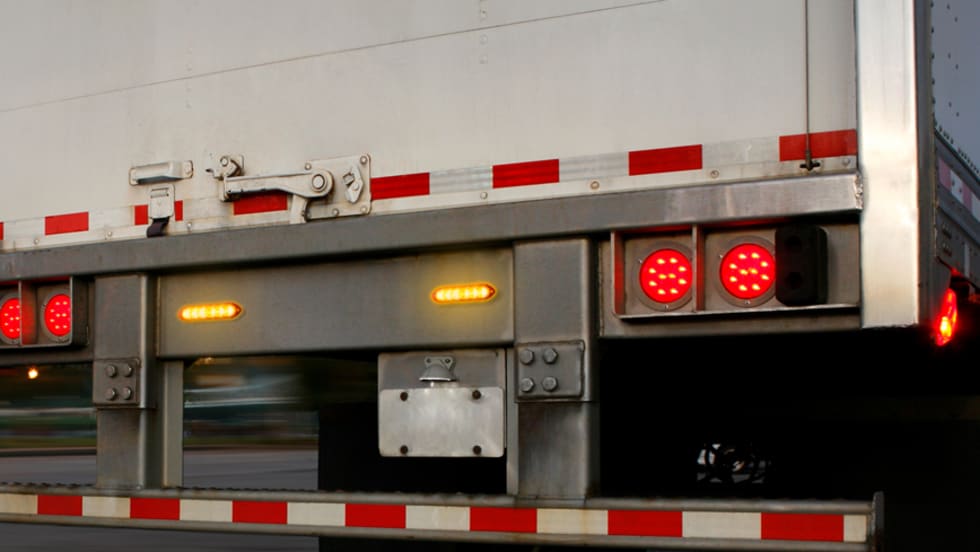
Pulsing Back-of-Trailer Lamps Aim to Prevent Crashes
Can the addition of a pulsing brake lamp on the back of a trailer prevent rear-end collisions? FMCSA seems to think so, if its exemptions are any indication.
Read More →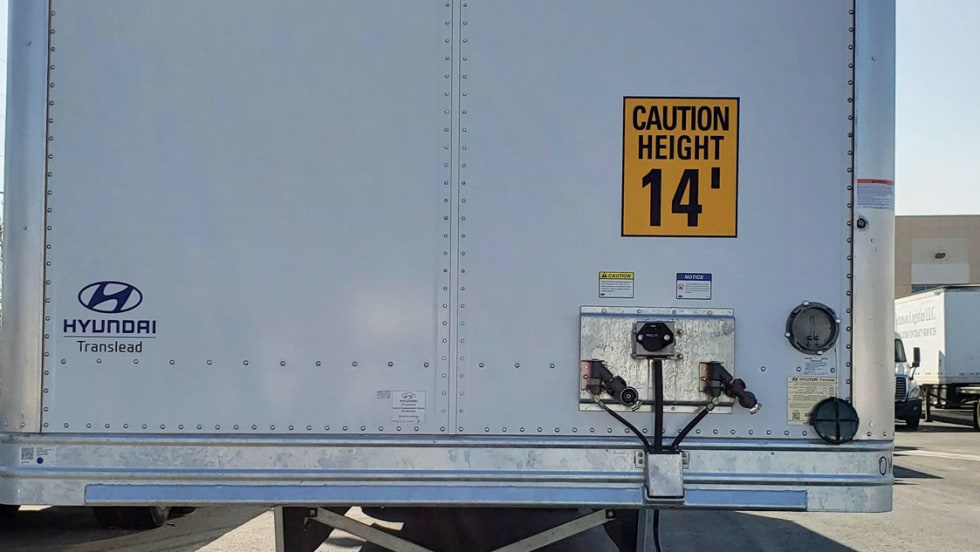
Designing a 14-Foot Trailer
Trailers are 13 feet, 6 inches high, right? Not for Hub Group, which developed a special 14-foot-high trailer spec for a dedicated customer based in California. Learn more in the Trailer Talk blog.
Read More →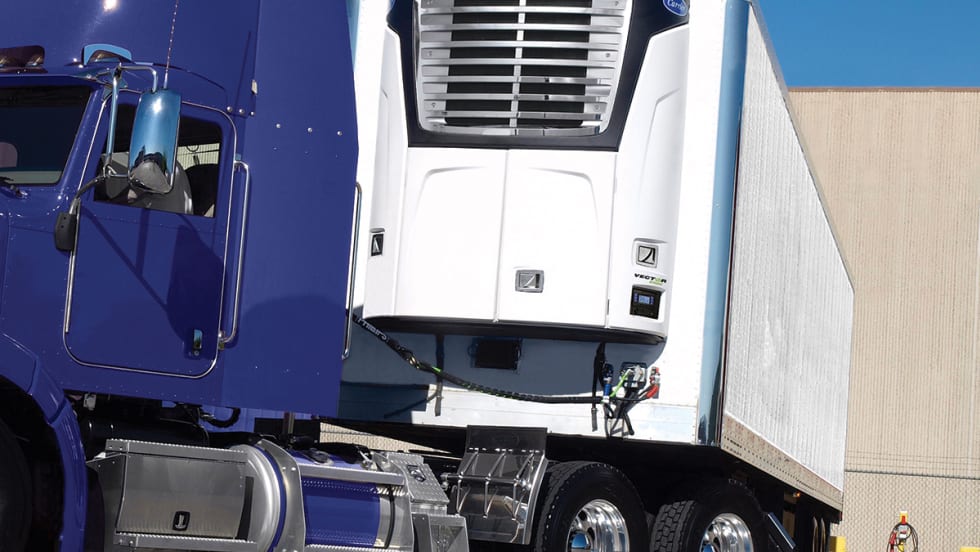
CARB Comes for Reefer Trailers
A new round of emissions control regulations decreed by the California Air Resource Board will begin affecting refrigerated trailer and TRU design and operations next year.
Read More →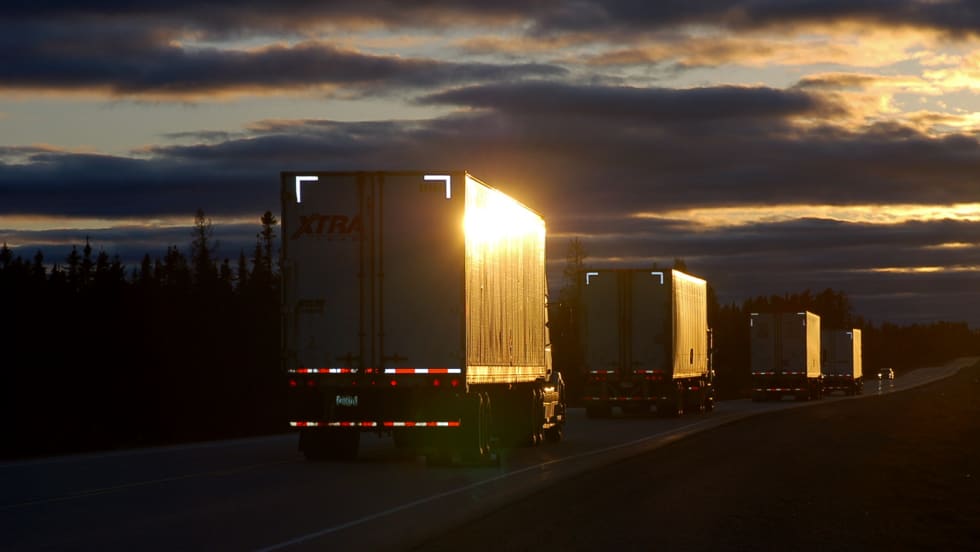
5 Ways Data Analysis Maximizes the Value of Trailer Telematics
Are you getting the most out of your trailer telematics investment?
Read More →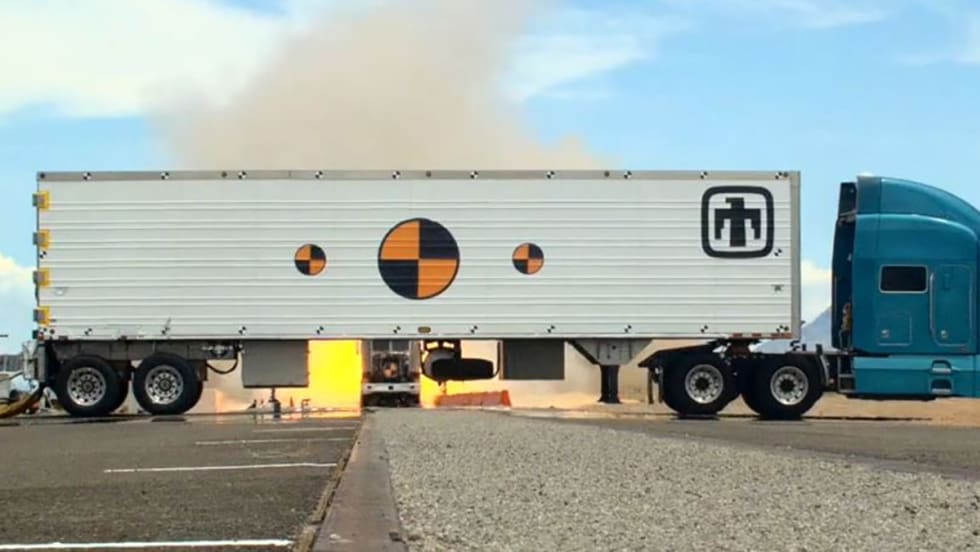
Can You Guess What's in That Trailer?
You don’t always know what’s in the trailers that pass you on the road. But some of those trailers are carrying something a little more dangerous that frozen food or new bedding…like, maybe, a nuclear weapon. But this isn’t an ordinary trailer; this is a trailer specifically made to not only carry this type of payload, but protect it at all costs.
Read More →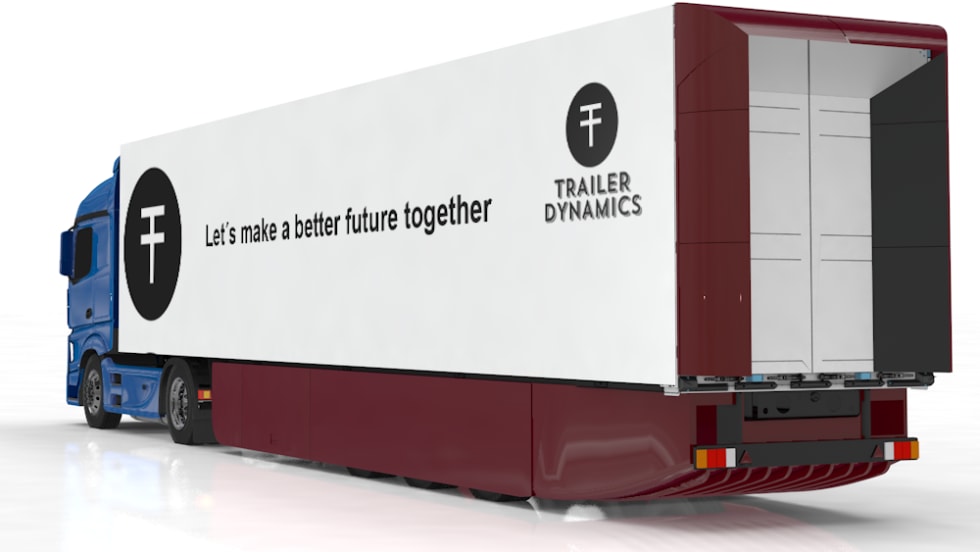
How Trailers Are Harnessing 'Free' Energy
Can trailers play a more active role in sustainable transport beyond aerodynamic add-ons or low-rolling-resistance tires? Some companies think so.
Read More →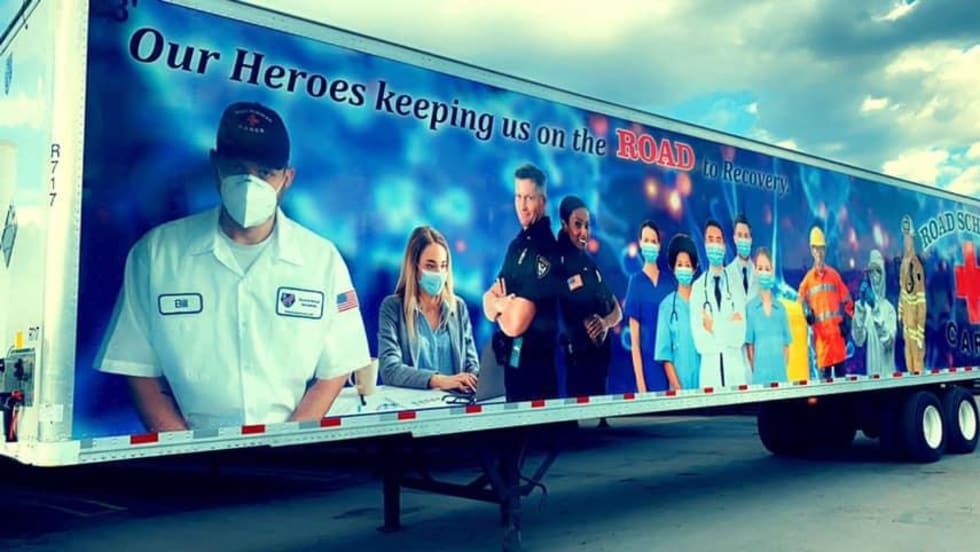
Wrapping a Trailer for COVID’s Everyday Heroes
“We don’t only deliver freight. We deliver awareness.” That’s what Jim Barrett, president and CEO of Road Scholar Transport, likes to say about the Dunmore, Pennsylvania-based carrier’s “awareness fleet.” Its latest trailer wrap honors the everyday heroes of the pandemic.
Read More →
How a Tanker Fleet is Using Unorthodox Trailer Lighting to Fight Rear-End Collisions
Groendyke Transport watched the number of rear-end collisions with its trailers rise steadily until it tried an unorthodox and then unapproved method of alerting following drivers that its trucks were applying brakes and slowing down.
Read More →
The Role Trailers are Playing in COVID-19 Funerals
In places such as New York City and Detroit, overwhelmed hospitals and mortuaries are using refrigerated trailers to store the bodies of people killed by COVID-19.
Read More →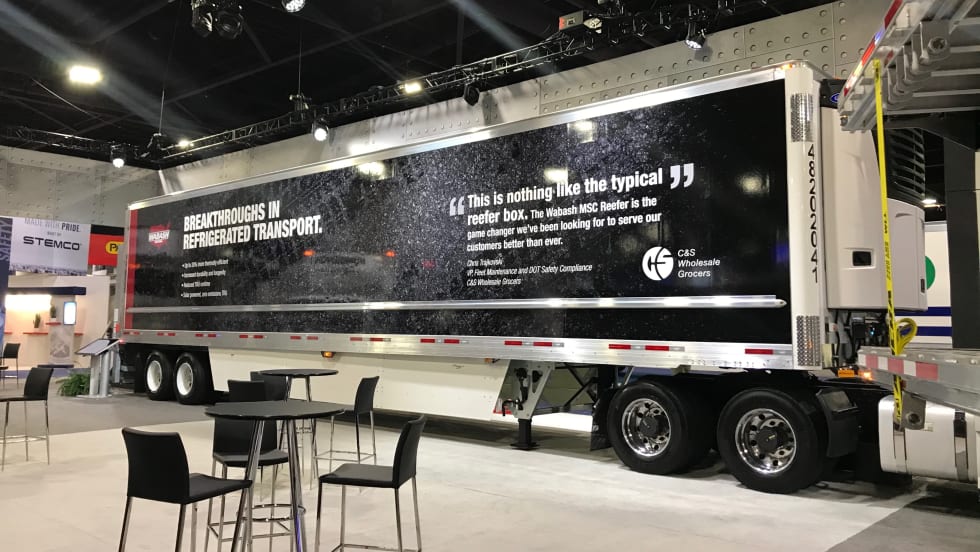
Reefer Trailer Aims to Help Reach Zero Emissions
Wabash National is partnering with C&S Wholesale Grocers to test a new type of zero-emissions refrigerated trailer.
Read More →