




Closing the Trailer Gap
When you see drawings or mockups of futuristic trucks, one of the things you'll notice is there's virtually no gap between the tractor and trailer


When you see drawings or mockups of futuristic trucks, one of the things you'll notice is there's virtually no gap between the tractor and trailer. That makes for a very cool-looking concept vehicle, but how do you achieve that in the real world while still being able to back the rig around tight corners?
At the ATA's Technology & Maintenance Council meeting earlier this year, I got to see a demonstration of one way it could be done, courtesy of Jost International, which demonstrated its new Smart Gap System.
Gregory Laarman, vice president of engineering, explains that the idea is to close the gap between the tractor and the trailer so the wind continues over the top of the trailer rather than getting caught in the gap, where it creates aerodynamic drag.
The system consists of a fifth wheel slider assembly, with hydraulic cylinders and actuator controlled by sensors and an ECU. A hydraulic pump and accumulator actually move the fifth wheel. The system senses when it is safe and more fuel efficient to close the gap between tractor and trailer at certain speeds and under certain conditions.
There are several positions, based on the speed of the vehicle. The closest brings the gap down to 24 inches.
When conditions indicate the need to return to a more conventional position, as in a turn or an emergency maneuver, the system automatically does so, quickly and without driver involvement.
Laarman explains it to me at TMC:
The platform is the Jost Pro Tech integral angle inboard style slider assembly, which offers a 100-pound savings over conventional sliders, Jost says.
In addition, the SGS assembly incorporates a cab actuated air release for the kingpin locking mechanism, advanced technology low lube liners on the top plate, and the Jost Lubetronic system to provide small amounts of lubricant automatically to friction points.
Jost officials told me they're in discussions with truck makers about refining and offering the new system.
One question I had later was, what effect would that have on axle weight regulations? Carroll told me, "We are working through the front axle considerations with some partners."
More Blog Posts

Beyond the Central Transport Settlement: Lessons on Hiring and Risk
The $5.5 million discrimination settlement raises broader questions about hiring practices, safety performance, and the hidden risks that can lurk in a fleet's recruiting process.
Read More →
Are Diesel Shortages Something to Worry About Again?
There’s a certain déjà vu when tensions flare in the Middle East and diesel price spikes can give you panic attacks. What parallels are there between the current situation and the 1970s energy crisis?
Read More →
NOx Isn’t Laughing Gas. Let’s Clear That Up.
A recent EPA reference mixed up NOx and nitrous oxide. It’s an easy mistake. Just not one you expect to see in emissions policy. Let’s look at the difference.
Read More →
TMC 2025 Takeaway 2: Buy... or Subscribe?
TaaS. Does that mean trucks as a service, trailers as a service, or tires as a service? HDT's Deborah Lockridge has another takeaway from the Technology & Maintenance Council meeting in her blog.
Read More →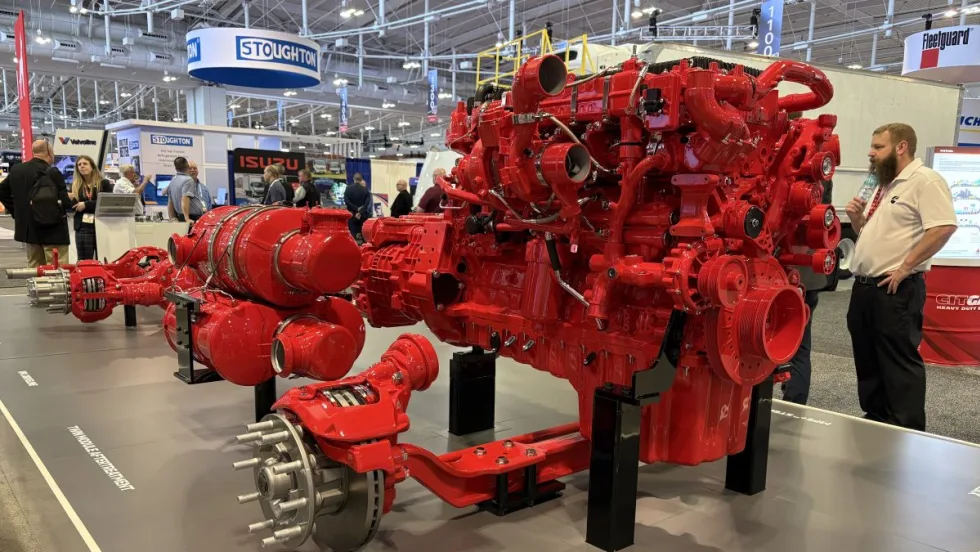
TMC 2025 Takeaway: The Journey Toward Vertical Integration
HDT's Deborah Lockridge on how the trucking industry has moved toward "vertical integration" over the past 25 years.
Read More →
Trucks Are For Girls!
HDT Editor and Associate Publisher Deborah Lockridge is a longtime Girl Scout leader and loves to connect her passion for inspiring girls with her love of the trucking industry.
Read More →
Trucking Advocacy: Impact Beyond the 2024 Elections
No matter who wins the election, trucking continues to work to educate the people who pass the laws and make the rules that affect the industry. HDT's Deborah Lockridge shares insights from two major trucking associations in her All That's Trucking blog.
Read More →
Recharge Your Brain for Better Business
Skimping on vacation may be the worst thing you can do for your business, your career, and your mental health. In her All That's Trucking blog, Deborah Lockridge writes about the importance of giving your brain what it needs to be innovative.
Read More →
Trucker Pre-Trip Leads to Mission 'Im-paw-sible'
See what happened when a truck driver found an unexpected stowaway during his pre-trip inspection.
Read More →
HDT Editor: 2023's Most Important Trucking Topics
Read Deborah Lockridge's picks for the most significant stories we covered at HDT in 2023: freight recession, zero-emission trucks, drivers and marijuana, and more.
Read More →