




Automated trailer inspection idea advances
There's much work ahead if the idea of automating pre-trip inspections of trailers is to become reality. That was the feeling during a session on the subject at the fall meeting of the Technology & Maintenance Council of ATA
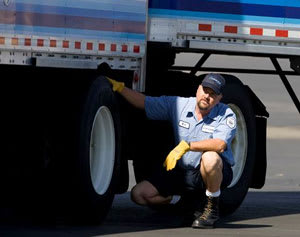
A driver's visual safety inspection of trailer components would be electronically aided and greatly speeded if a TMC idea becomes reality.
There's much work ahead if the idea of automating pre-trip inspections of trailers is to become reality. That was the feeling during a session on the subject at the fall meeting of the Technology & Maintenance Council of ATA.
A contingent within TMC is writing a "white paper" describing how trailers would be equipped so component conditions could be instantly captured by an electronic tool, and encouraging the establishment of the means to accomplish this.
They are not trying to write a standard, which is sometimes done by other efforts within TMC or the Society of Automotive Engineers.
Electronic-based inspections would augment the hands-on visual pre- and post-trip inspection that drivers are supposed to do, along with filling out an inspection form.
Begun last year, the effort is headed by Charlie Fetz, vice president for product development at Great Dane Trailers, who led a discussion during the September session in Pittsburgh, Pa.
"I would envision someone walking up to the trailer in the yard and querying it, and a panel or some other device would allow that," Fetz said. "So there needs to be a panel or a small device that can get the signal processed. We in my company are actually interested in building a system like this. We could have it standard."
The panel mounted somewhere on the trailer would tie together wiring or wireless signals from sensors placed throughout the vehicle, Fetz and others suggested.
An electronic wand wielded by a driver - or maybe his smartphone -- would query the panel, which would respond by transmitting data to the handheld device. It would then display the various conditions and tell if anything needed adjustment or repair.
This would be done before the trailer was pulled onto the road where it would be subject to official inspections and possible expensive fines, or worse, get involved in a costly accident.
More work has been done on the paper since it was first presented at TMC's annual meeting in Tampa, Fla., last February. Authors have spelled out in greater detail what they would like and how it should be accomplished.
They say that items to be inspected electronically are the same as those now looked at by conscientious drivers, though some details go beyond the usual visual checks:
-Service brakes, including connections (stroke length, imbalance, airflow per chamber, available air pressure or flow, timing, friction material thickness)
- Parking brake
- Anti-lock braking system functionality
- Reflectors and lights (through open or closed circuit)
- Tires (tread depth, pressure, mechanical damage)
- Coupling devices (pintle hook and kingpin properly engaged and locked)
- Wheels and rims
- Wheel ends (proper lubrication, bearing adjustment and temperature)
- Doors and hatches (properly closed)
- Reefer fuel tank (fuel level)
- Lift gate (position)
- Tandem slider pin engagement
Few of those items are now linked to anything electronic. The few with "brains," like anti-lock braking systems, use different electronic protocols and owners need different tools to read their status. Fetz and his colleagues want them standardized, and a few electronic inspection products would use that standard to tie everything together.
Sensors would have to be rugged, resistant to road chemicals, last the life of the trailer, widely available and inexpensive. The wand, smartphone or other device would have to be rugged, lightweight, and able to read multiple sources and record and interpret data. It would display measurements, and "go" and "no-go" operation, on a color touch screen. Only one device would be needed to read everything on the trailer.
A complete system would be accurate, able to transmit information to a central office, and of course inexpensive. It would be modular and expandable, and use standardized communication protocols.
Yet to be determined is whether it would be wireless or wired together, using an additional or existing circuit on the wiring harness. A new circuit would have connectors for all the sensor wiring and another to tie into the central panel; if signals should go into the tractor for display there, another cable would probably be needed, or the standard seven-way connector expanded.
If the European 15-way connector/cable were used on North American trucks, there'd be plenty of circuits to carry such signals to the tractor for display while the rig is underway, said Bob Phillips, president and CEO of Phillips Industries, when quizzed about it later. But it's not, and is not likely to be adopted here.
Multiplexing might allow an existing wire, like the power-line circuit, to carry signals, though he was wary of overburdening it.
An i-Box, a Phillips nose box that ties together various trailer electrical functions, might form the basis for the kind of panel Fetz is talking about, Phillips said. Wireless communication between sensors and the panel would be simpler, but problems with electromagnetic interference might arise.
At the session during the Pittsburgh meeting, Fetz fielded others from audience members. One came from John Sullivan, a former TMC general chairman and currently director of maintenance for Reliable Carriers.
"For DOT audits, they look for paper with someone's signature," he said. "That would have to be included."
"This would not replace that, or the person," Fetz answered. "It would be a method to speed the inspection."
There are some inspection-aiding systems already available, the paper notes, but most are specific to devices they support.
"These on-board monitoring systems offer sensors for tire pressure, brake friction material wear, proper tractor/trailer coupling, trailer door opening/closing, trailer reefer unit operation and potentially others as sensors are available," the white paper states.
"The monitored functions are sensed and available (as appropriate) while the vehicle is stationary or in motion, and could potentially be used as a part of a pre- or post-trip inspection."
"We already have it," declared someone in the audience at the close of the session. "Zonar." Zonar Systems, a specialty supplier, makes an electronic inspection product used on transit buses. Couldn't this be the basis for a trailer or truck system?
"Yes and no," answered Mike McQuade, Zonar's chief technology officer, when asked about the idea following a press conference a month later in Las Vegas. "That would require connections to sensors placed around the vehicle, and that gets very expensive."
McQuade had just introduced an electronic tablet that, among other things, would prompt drivers to look at the components specified for pre- and post-trip inspections. But it's not very close to what's envisioned in the TMC white paper.
Still, the committee has products and methods to build its idea on. Further discussions will continue and more sessions will follow at future TMC meetings.
More Blog Posts
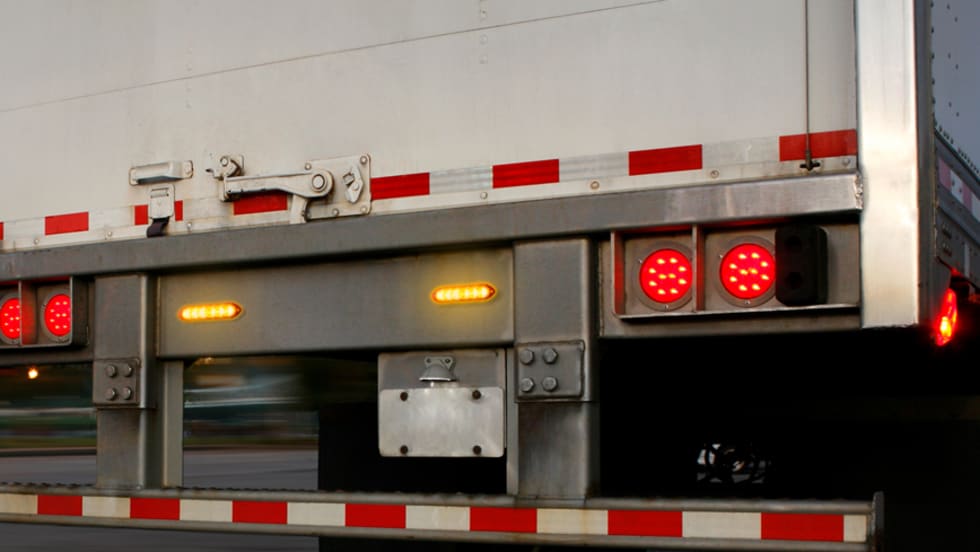
Pulsing Back-of-Trailer Lamps Aim to Prevent Crashes
Can the addition of a pulsing brake lamp on the back of a trailer prevent rear-end collisions? FMCSA seems to think so, if its exemptions are any indication.
Read More →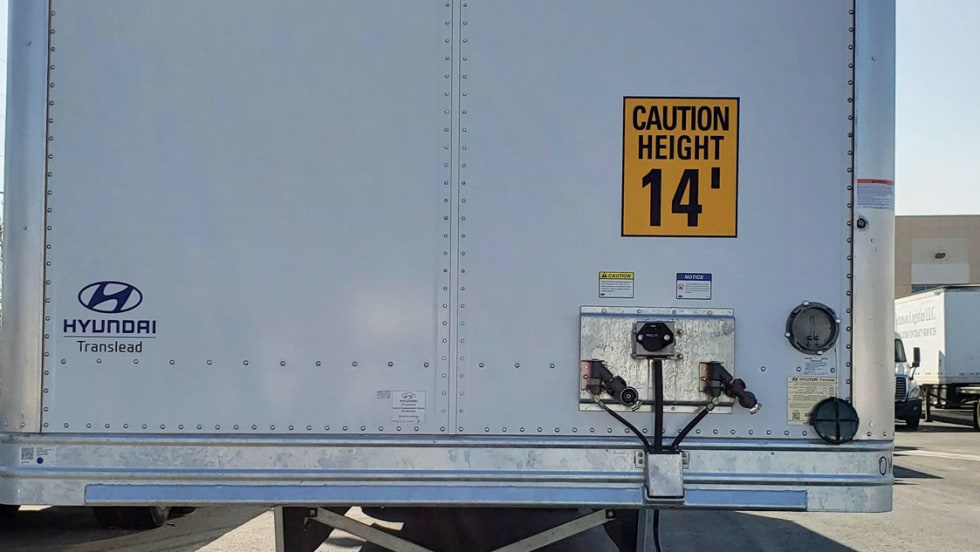
Designing a 14-Foot Trailer
Trailers are 13 feet, 6 inches high, right? Not for Hub Group, which developed a special 14-foot-high trailer spec for a dedicated customer based in California. Learn more in the Trailer Talk blog.
Read More →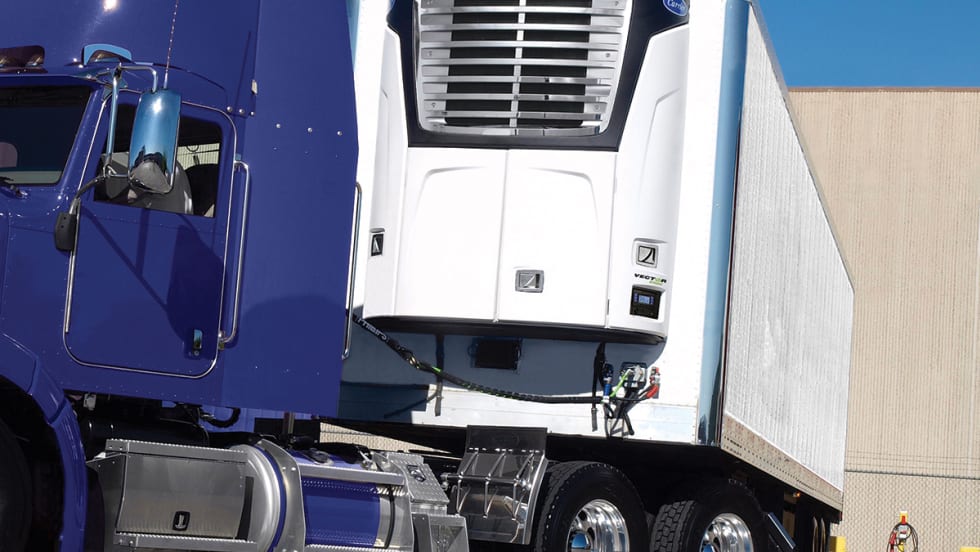
CARB Comes for Reefer Trailers
A new round of emissions control regulations decreed by the California Air Resource Board will begin affecting refrigerated trailer and TRU design and operations next year.
Read More →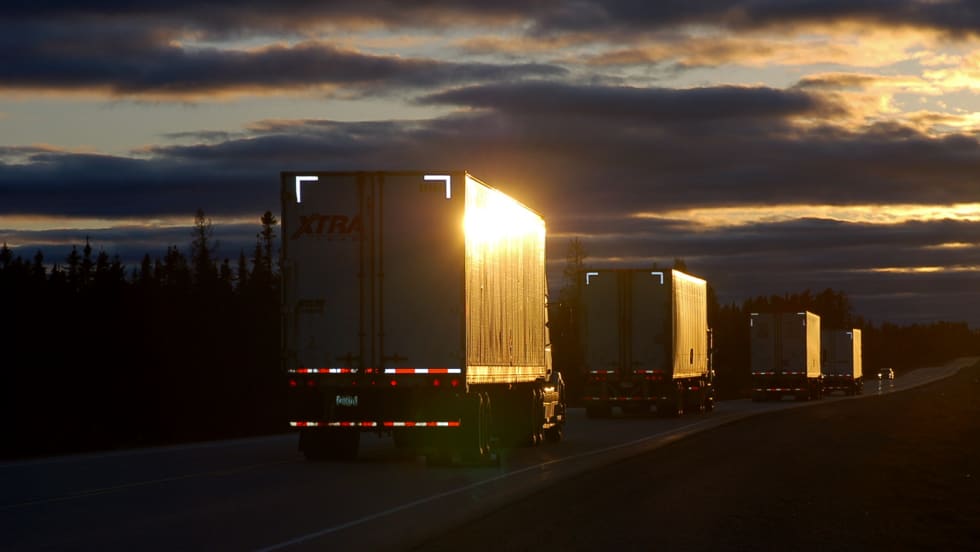
5 Ways Data Analysis Maximizes the Value of Trailer Telematics
Are you getting the most out of your trailer telematics investment?
Read More →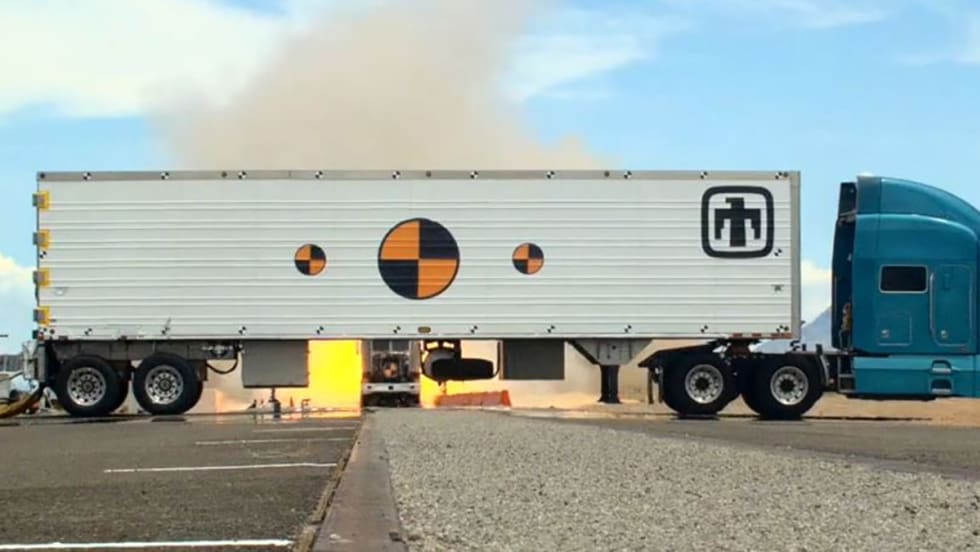
Can You Guess What's in That Trailer?
You don’t always know what’s in the trailers that pass you on the road. But some of those trailers are carrying something a little more dangerous that frozen food or new bedding…like, maybe, a nuclear weapon. But this isn’t an ordinary trailer; this is a trailer specifically made to not only carry this type of payload, but protect it at all costs.
Read More →
How Trailers Are Harnessing 'Free' Energy
Can trailers play a more active role in sustainable transport beyond aerodynamic add-ons or low-rolling-resistance tires? Some companies think so.
Read More →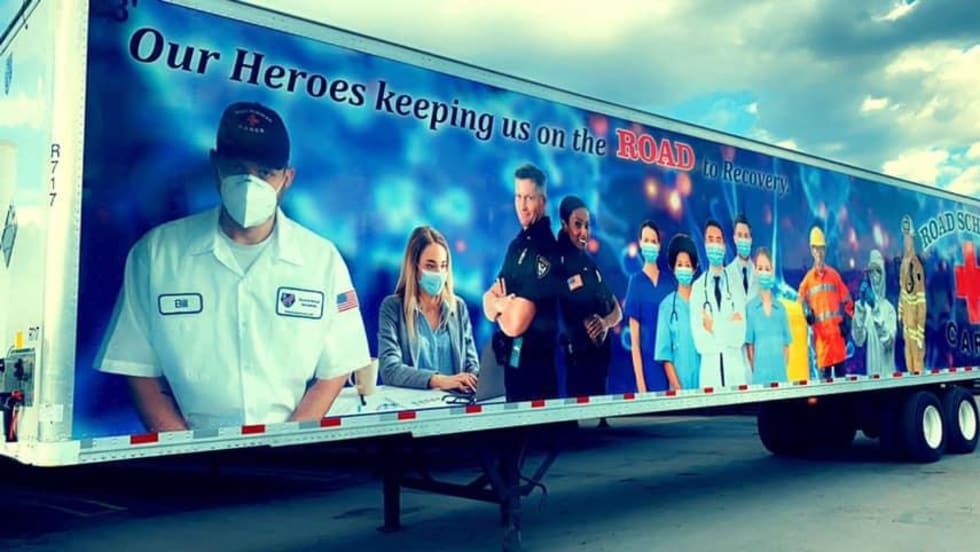
Wrapping a Trailer for COVID’s Everyday Heroes
“We don’t only deliver freight. We deliver awareness.” That’s what Jim Barrett, president and CEO of Road Scholar Transport, likes to say about the Dunmore, Pennsylvania-based carrier’s “awareness fleet.” Its latest trailer wrap honors the everyday heroes of the pandemic.
Read More →
How a Tanker Fleet is Using Unorthodox Trailer Lighting to Fight Rear-End Collisions
Groendyke Transport watched the number of rear-end collisions with its trailers rise steadily until it tried an unorthodox and then unapproved method of alerting following drivers that its trucks were applying brakes and slowing down.
Read More →
The Role Trailers are Playing in COVID-19 Funerals
In places such as New York City and Detroit, overwhelmed hospitals and mortuaries are using refrigerated trailers to store the bodies of people killed by COVID-19.
Read More →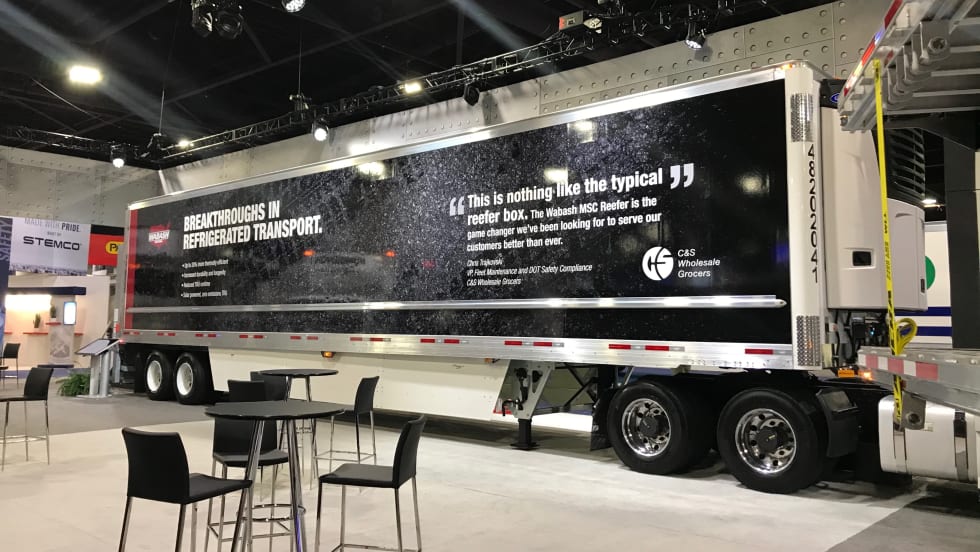
Reefer Trailer Aims to Help Reach Zero Emissions
Wabash National is partnering with C&S Wholesale Grocers to test a new type of zero-emissions refrigerated trailer.
Read More →