




Are Trailers More Aerodynamically Important than Tractors?
ATDynamics, now part of Stemco, says 75% of wind drag at highway speeds comes from the trailer.

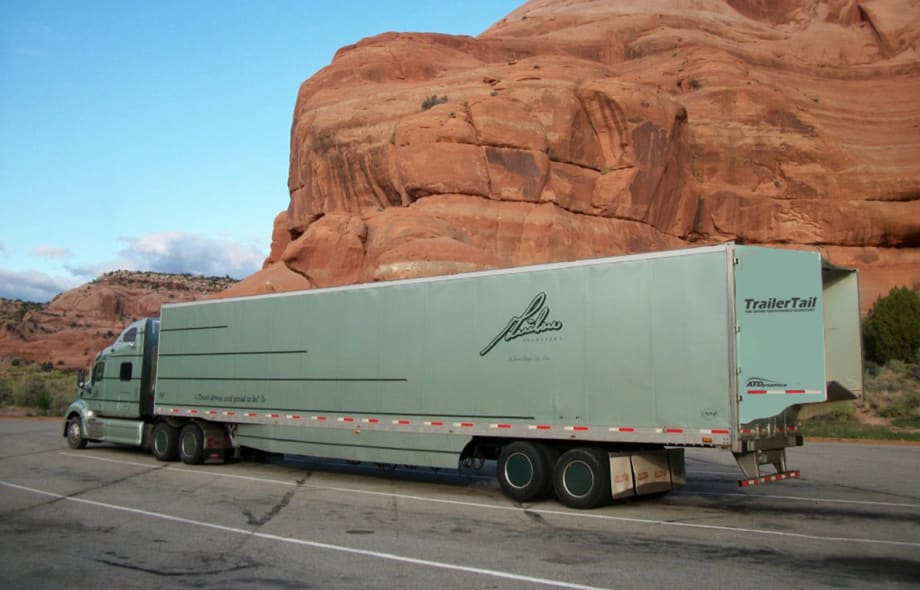
Photo via ATDynamics
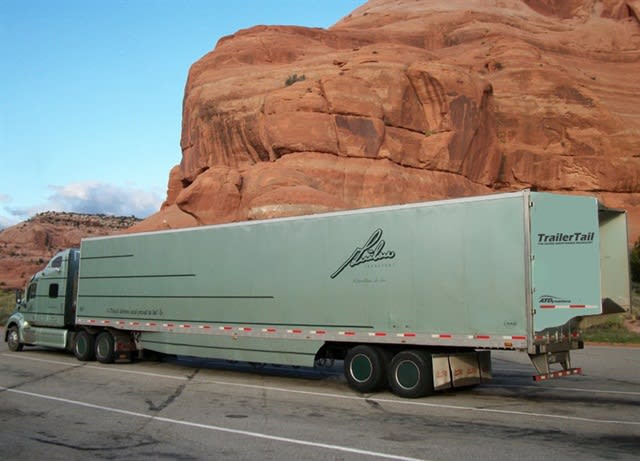
Photo via ATDynamics
Flash! You can save more with trailer aerodynamics than what’s on the tractor. Who says?
Bob Sliwa, the self-taught aerodynamicist and founder of AirFlow Truck Co. who got 10.4 mpg by modifying his early 1980s “square” rig that was averaging 4.4 mpg. Then in the 2003-04 he got 13.4 mpg with a bullet-shaped tractor that he called, yes, the Bullet. Now he’s aiming for more with a new StarTruck project. Shell Lubricants is backing him in this.
Sliwa plans to fashion a streamlined carbon-fiber body and mount it on a new International ProStar chassis. He’ll integrate that with a standard 53-foot dry van that itself will be highly modified.
“One thing I’ve learned is that the trailer’s rear is more important than the tractor’s front,” Sliwa said in my Fuel Smarts story from mid-May. “The best shape is a teardrop,” even if it’s not practical for most dry-freight vans or reefers.
(Actually, a British trailer builder has made teardrop-shaped trailers for a beverage distributor over there. The distributor says they save fuel, even though the vehicles make a number of stops during a normal shift.)
Another, more educated expert is Derek Rotz, senior manager of Advanced Engineering for Daimler Trucks, who headed its government-sponsored SuperTruck project. That included much wind-tunnel studying of an integrated tractor-trailer.
“The testing indicates that over two-thirds of the aerodynamic benefits actually come from the trailer,” he says in an upcoming story on the Freightliner SuperTruck in HDT’s June issue. Managing Editor Stephane Babcock wrote the article, which I think you’ll find interesting.
ATDynamics, now part of Stemco, says 75% of wind drag at highway speeds comes from the trailer, and it’s divided evenly among three areas: the gap between tractor and trailer; the underside; and the trailer’s rear. Applying farings in all three places eliminates much of that.
No one’s saying that you can just buy an old square-hooded K-Whopper, Petercar or Fruitliner with a 1985 NTC-400 diesel, hitch it to a swoopy trailer, run balls-out and expect to get decent fuel economy. An aerodynamic tractor with an efficient powertrain, driven sensibly, is the first step. And the gap between the tractor and trailer needs to be as short as possible.
After that, look at the bare trailer and see what you can add to reduce drag. Examples are now out on the highway: side skirts, nose and rear-end treatment, and wheel covers. Also, consider low-rolling-resistance tires and maybe wide-base single wheels and tires. Maintain everything properly, limit top speed and drive smoothly, and you’ll probably gain 1 to 2 mpg.
I’m getting those numbers from engineers at Peterbilt Motors who, years ago, hooked a modified Model 372 COE tractor really close to a 48-foot van trailer, to which they applied deep side skirts and a boat tail that was “truncated,” or in effect chopped off.
The boat tail was a permanently-mounted appendage with inward-curving side panels, a downward-sloping header, and a floor extension with a smooth underside. The pathway to the overhead door was narrower than normal but still wide enough to allow forklift loading into the interior. (Of course, folding boat tails have since made that structure obsolete.)
The engineers said the trailer treatments alone improved the tractor’s fuel economy by 1.5 mpg – a huge increase in the days when 4 to 5 mpg was about par. In spite of publicity (including a story I did for Heavy Duty Trucking), it got no interest from trailer makers or fleet operators, who seemed to think it was totally impractical.
Meanwhile, Peterbilt executives decided that they were in the business of making trucks, not trailers, and dropped the project.
Now, with federal support (the SuperTruck program) and pressure (upcoming fuel-economy rules), we’ll see even more aerodynamics applied to trailers, like ‘em or not.
More Blog Posts

Pulsing Back-of-Trailer Lamps Aim to Prevent Crashes
Can the addition of a pulsing brake lamp on the back of a trailer prevent rear-end collisions? FMCSA seems to think so, if its exemptions are any indication.
Read More →
Designing a 14-Foot Trailer
Trailers are 13 feet, 6 inches high, right? Not for Hub Group, which developed a special 14-foot-high trailer spec for a dedicated customer based in California. Learn more in the Trailer Talk blog.
Read More →
CARB Comes for Reefer Trailers
A new round of emissions control regulations decreed by the California Air Resource Board will begin affecting refrigerated trailer and TRU design and operations next year.
Read More →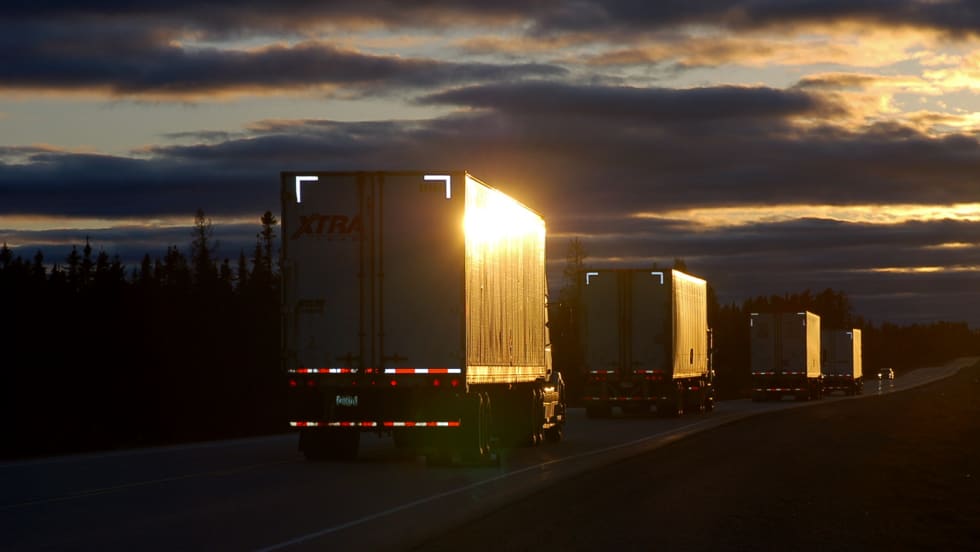
5 Ways Data Analysis Maximizes the Value of Trailer Telematics
Are you getting the most out of your trailer telematics investment?
Read More →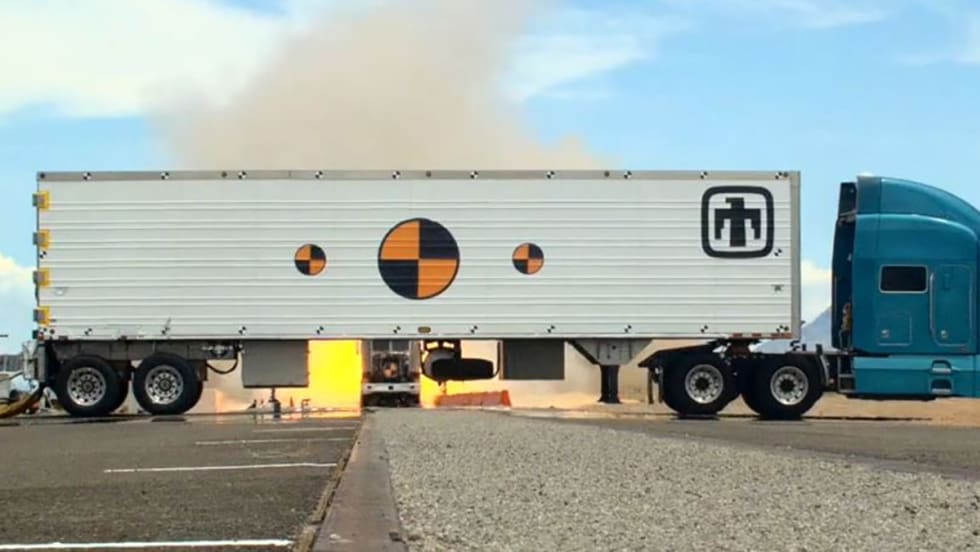
Can You Guess What's in That Trailer?
You don’t always know what’s in the trailers that pass you on the road. But some of those trailers are carrying something a little more dangerous that frozen food or new bedding…like, maybe, a nuclear weapon. But this isn’t an ordinary trailer; this is a trailer specifically made to not only carry this type of payload, but protect it at all costs.
Read More →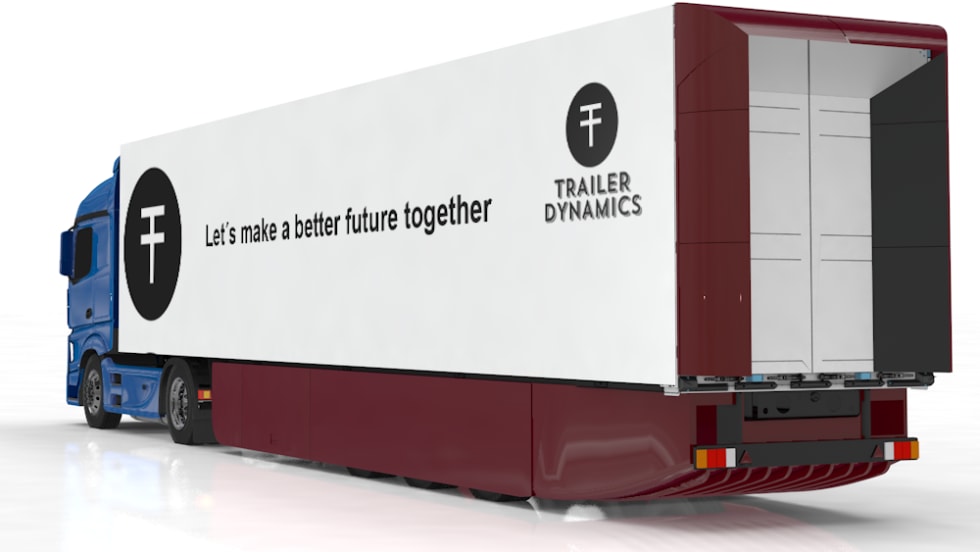
How Trailers Are Harnessing 'Free' Energy
Can trailers play a more active role in sustainable transport beyond aerodynamic add-ons or low-rolling-resistance tires? Some companies think so.
Read More →
Wrapping a Trailer for COVID’s Everyday Heroes
“We don’t only deliver freight. We deliver awareness.” That’s what Jim Barrett, president and CEO of Road Scholar Transport, likes to say about the Dunmore, Pennsylvania-based carrier’s “awareness fleet.” Its latest trailer wrap honors the everyday heroes of the pandemic.
Read More →
How a Tanker Fleet is Using Unorthodox Trailer Lighting to Fight Rear-End Collisions
Groendyke Transport watched the number of rear-end collisions with its trailers rise steadily until it tried an unorthodox and then unapproved method of alerting following drivers that its trucks were applying brakes and slowing down.
Read More →
The Role Trailers are Playing in COVID-19 Funerals
In places such as New York City and Detroit, overwhelmed hospitals and mortuaries are using refrigerated trailers to store the bodies of people killed by COVID-19.
Read More →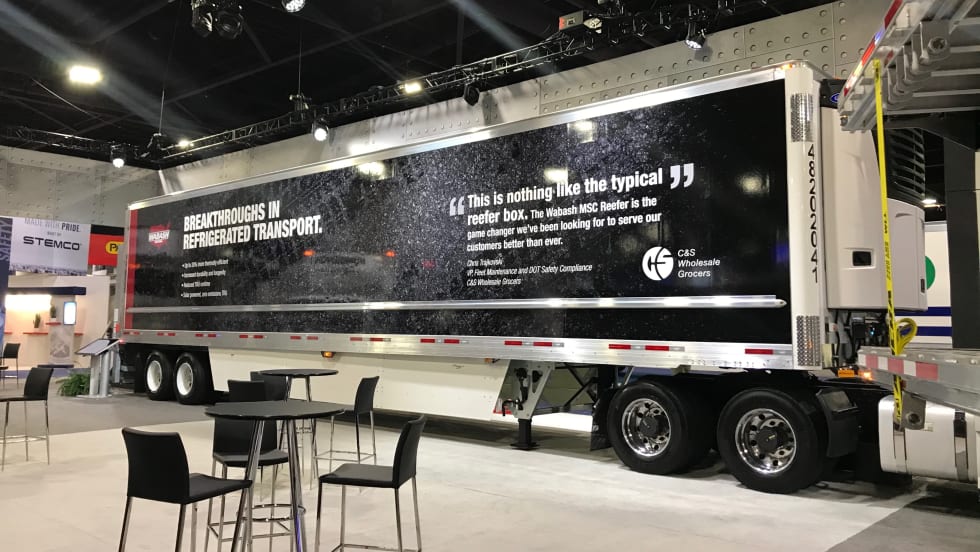
Reefer Trailer Aims to Help Reach Zero Emissions
Wabash National is partnering with C&S Wholesale Grocers to test a new type of zero-emissions refrigerated trailer.
Read More →