




Are tolls the answer to our crumbling infrastructure?
Two stories hit my desk last week that highlight the place of tolls and public-private partnerships in the debate on infrastructure funding
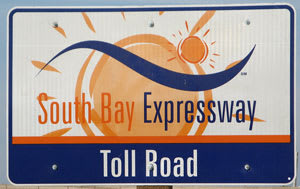
The South Bay Expressway was touted as an example of how public-private partnerships could work. But only a few years after it opened, it filed for bankruptcy reorganization.
Two stories hit my desk last week that highlight the place of tolls and public-private partnerships in the debate on infrastructure funding.
First, there was this Reason-Rupe opinion poll finding that 77% of those polled oppose increasing the federal fuel tax, while 58% thought new roads and highways should be funded by tolls, and 55% favored using public-private partnerships to build critical infrastructure projects.
This followed a recent town hall meeting where presidential hopeful Mitt Romney Romney said he doesn't like borrowing, but is willing to do it if there's a specific revenue stream to pay it back -- and specifically used tolls as an example.
It's not the first survey to put numbers to Americans' reluctance to pay higher fuel taxes, even though most agree that something needs to be done about our infrastructure. In a study done almost a year ago by the Rockefeller Foundation, only 27% said that raising the federal gasoline tax would be an "acceptable" way to provide more highway funding. Instead, most survey respondents supported more private investment as an acceptable option for raising more transportation money.
Yet as this story illustrates, public-private partnerships aren't a slam-dunk.
In 2003, southern California officials got a $140 million loan through the Transportation Infrastructure Finance and Innovation Act, or TIFIA, for the South Bay Expressway in San Diego County. It was the first tollroad to get a TIFIA loan, according to published reports. TIFIA is today being touted as a partial solution for the country's infrastructure funding crisis.
Then-Transportation Secretary Norman Mineta called the loan "a TIFIA success story, demonstrating how innovative federal financing tools can attract private investment to critical transportation projects."
Officially owned by the California Department of Transportation, the toll road would be leased to a group of private backers until 2042. Those private backers expected that with the rapid suburban growth near San Diego, they would get a handsome return on their investment.
But this public-private partnership didn't work out so well, thanks to the housing bust. As Tollroads News pointed out in reporting on the bankruptcy filing, "The tollroad is located in the west coast's 'Subprime Central' zone or mortgage walkaway country on the eastern fringe of suburban development. A boom area for a couple of decades everything stopped just as the road opened."
The road also was hit by a drop-off in U.S.-Mexico trade when Mexico hit the U.S. with punitive tariffs for not opening the border to cross-border trucking as agreed to under NAFTA.
The South Bay Expressway company filed for Chapter 11 bankruptcy reorganization in March of 2010. After emerging from it in April, the 10-mile toll road was sold to the San Diego Association of Governments last month. Well, actually they didn't buy the road, since the government already owned it. What they bought was the operating lease to operate the road and collect tolls for the balance of the contract -- about 31 years.
Macquarie, a big Australian infrastructure investment company that was one of the backers, wrote the road off as a loss. Interestingly, however, the federal government says it will at least break even on its loan.
As the writer of this article points out, "The road's tortured history, and especially its journey through bankruptcy court, are enough to convince critics of PPPs that this is one bet the feds never should have made."
More Blog Posts
The Diesel Price Crisis Has No Easy Fix
Washington is trying everything from oil-reserve releases to longer driving hours for fuel haulers. None addresses all the forces keeping diesel prices high.
Read More →
Beyond the Central Transport Settlement: Lessons on Hiring and Risk
The $5.5 million discrimination settlement raises broader questions about hiring practices, safety performance, and the hidden risks that can lurk in a fleet's recruiting process.
Read More →
Are Diesel Shortages Something to Worry About Again?
There’s a certain déjà vu when tensions flare in the Middle East and diesel price spikes can give you panic attacks. What parallels are there between the current situation and the 1970s energy crisis?
Read More →
NOx Isn’t Laughing Gas. Let’s Clear That Up.
A recent EPA reference mixed up NOx and nitrous oxide. It’s an easy mistake. Just not one you expect to see in emissions policy. Let’s look at the difference.
Read More →
TMC 2025 Takeaway 2: Buy... or Subscribe?
TaaS. Does that mean trucks as a service, trailers as a service, or tires as a service? HDT's Deborah Lockridge has another takeaway from the Technology & Maintenance Council meeting in her blog.
Read More →
TMC 2025 Takeaway: The Journey Toward Vertical Integration
HDT's Deborah Lockridge on how the trucking industry has moved toward "vertical integration" over the past 25 years.
Read More →
Trucks Are For Girls!
HDT Editor and Associate Publisher Deborah Lockridge is a longtime Girl Scout leader and loves to connect her passion for inspiring girls with her love of the trucking industry.
Read More →
Trucking Advocacy: Impact Beyond the 2024 Elections
No matter who wins the election, trucking continues to work to educate the people who pass the laws and make the rules that affect the industry. HDT's Deborah Lockridge shares insights from two major trucking associations in her All That's Trucking blog.
Read More →
Recharge Your Brain for Better Business
Skimping on vacation may be the worst thing you can do for your business, your career, and your mental health. In her All That's Trucking blog, Deborah Lockridge writes about the importance of giving your brain what it needs to be innovative.
Read More →
Trucker Pre-Trip Leads to Mission 'Im-paw-sible'
See what happened when a truck driver found an unexpected stowaway during his pre-trip inspection.
Read More →