




A Rolling Tarp Might Have Worked for an O-O's Special Load
Chameleon Innovations' literature says the firm offers inside widths of up to 104.4 inches and heights of up to 144 inches, plus custom dimensions to suit a customer’s operations.

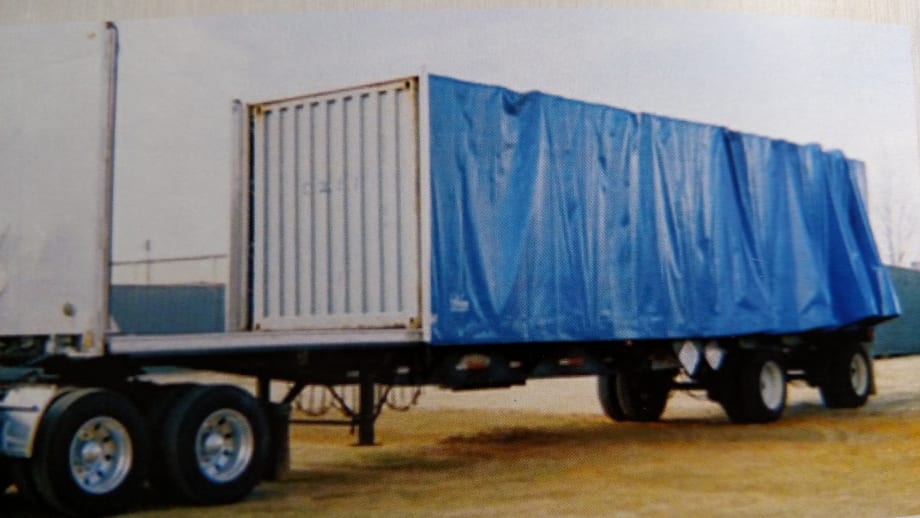
Rolling tarps retract either forward or aft to allow a flatbed to be loaded normally. Then, when rolled back and locked, the cargo is protected as though it were in a van. Photos: Tom Berg
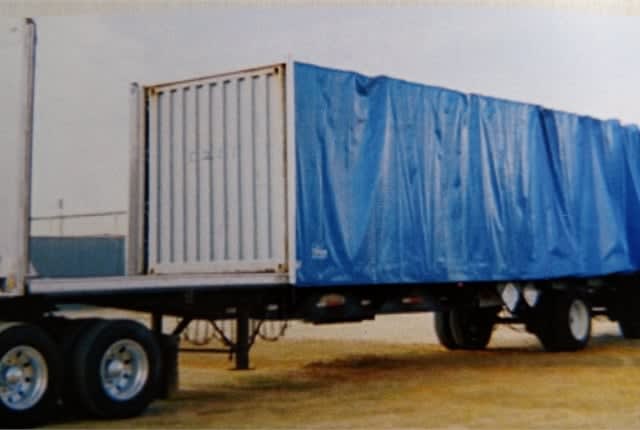
Rolling tarps retract either forward or aft to allow a flatbed to be loaded normally. Then, when rolled back and locked, the cargo is protected as though it were in a van. Photos: Tom Berg
Quite a few years ago I was at the Mid-America Trucking Show, chatting with an owner-operator about the loads he carried on his flatbed trailer. Some of the loads required tarping, which is a lot of work, especially in foul weather.
“Why don’t you have a Conestoga or something like it?” I asked, referring to the semi-permanent rolling tarp systems displayed at the Louisville show every year.
“I’d buy one today if it weren’t for my best customer,” he answered. “They make metal fencing that ships in rolls. They lay crossways on the bed and hang over the edge, just above the rub rails. Those systems move on tracks that are on the edges of the platform. They wouldn’t work with that load.”
The o-o had his own operating authority and had lined up a group of customers who paid well and gave him steady loads. The fence manufacturer was one of them, so for him, a bare deck and manual tarping was the only way to go.
I thought of this guy while at the North American Commercial Vehicle Show in September in Atlanta. Chameleon Innovations’ booth had a flatbed trailer equipped with one of the Canadian company’s rolling tarp systems. I stopped to take a look and saw that its tracks were just outside the platform. I’ll bet that might work with those rolls of fencing, I thought.
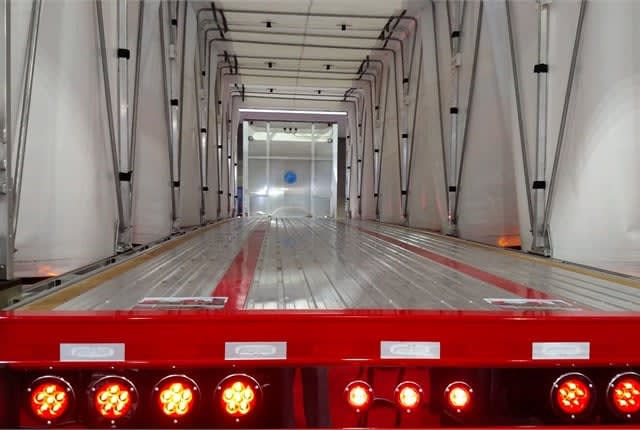
This Chameleon system, spotted at the North American Commercial Vehicle Show, mounts outside the deck, making room for full-width loads.
The builder’s literature says the firm offers inside widths of up to 104.4 inches and heights of up to 144 inches, plus custom dimensions to suit a customer’s operations. If the flatbed must carry outsized loads, the rolling tarp can be slid off and onto a stand, so it can be left at home. Swivel casters allow that stand to be rolled around for storage.
Of course, the tarp allows the trailer to be loaded like any flatbed by folding forward or aft, then rolled back into place and tightly secured so it protects the load like a van.
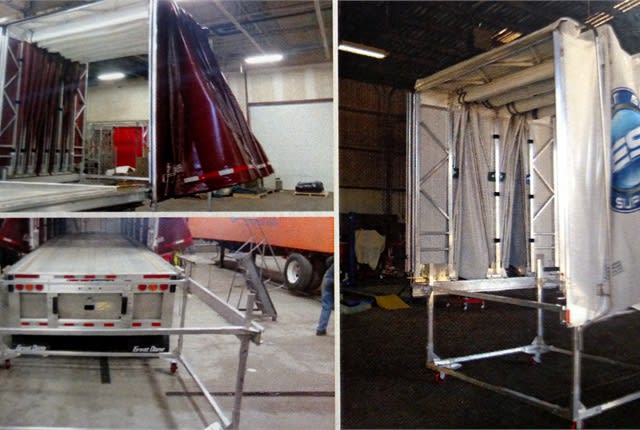
Chameleon offers a stand to store a rolling tarp system, allowing the flatbed to carry an outsized load.
Chameleon, based in Pointe-Clair, Quebec, offers many other features for its rolling tarps. Those include van-type rear doors and headboards with access doors, vents, lights, shelves, and aerodynamic improvers.
Custom colors and graphics for the PVC fabric are available from Chameleon and other makers of rolling tarp systems. Platform trailers equipped with these tarps are some of the most handsome on the highway, I think. And they eliminate manual tarping, saving time and work. If I were in the flatbedding business, I’d try to find a way to make a system work.
More Blog Posts

Pulsing Back-of-Trailer Lamps Aim to Prevent Crashes
Can the addition of a pulsing brake lamp on the back of a trailer prevent rear-end collisions? FMCSA seems to think so, if its exemptions are any indication.
Read More →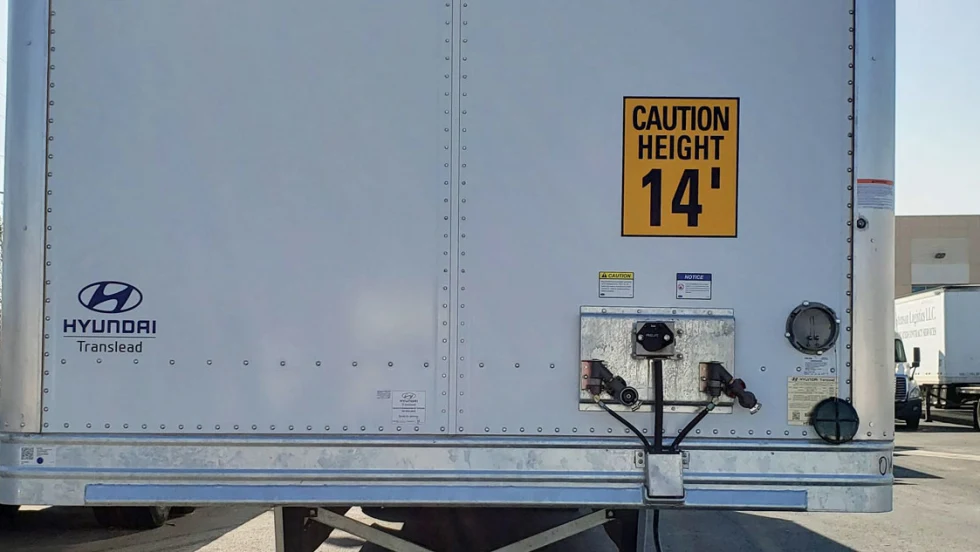
Designing a 14-Foot Trailer
Trailers are 13 feet, 6 inches high, right? Not for Hub Group, which developed a special 14-foot-high trailer spec for a dedicated customer based in California. Learn more in the Trailer Talk blog.
Read More →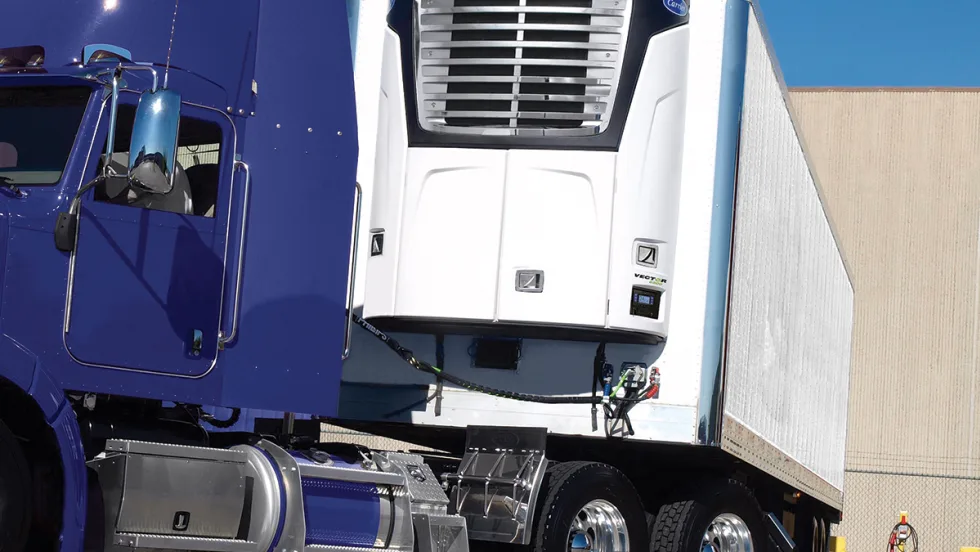
CARB Comes for Reefer Trailers
A new round of emissions control regulations decreed by the California Air Resource Board will begin affecting refrigerated trailer and TRU design and operations next year.
Read More →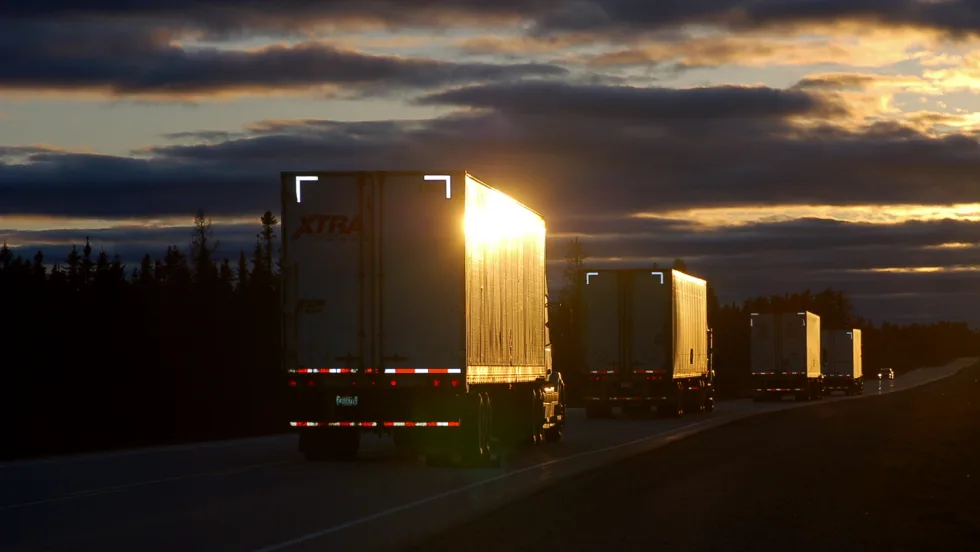
5 Ways Data Analysis Maximizes the Value of Trailer Telematics
Are you getting the most out of your trailer telematics investment?
Read More →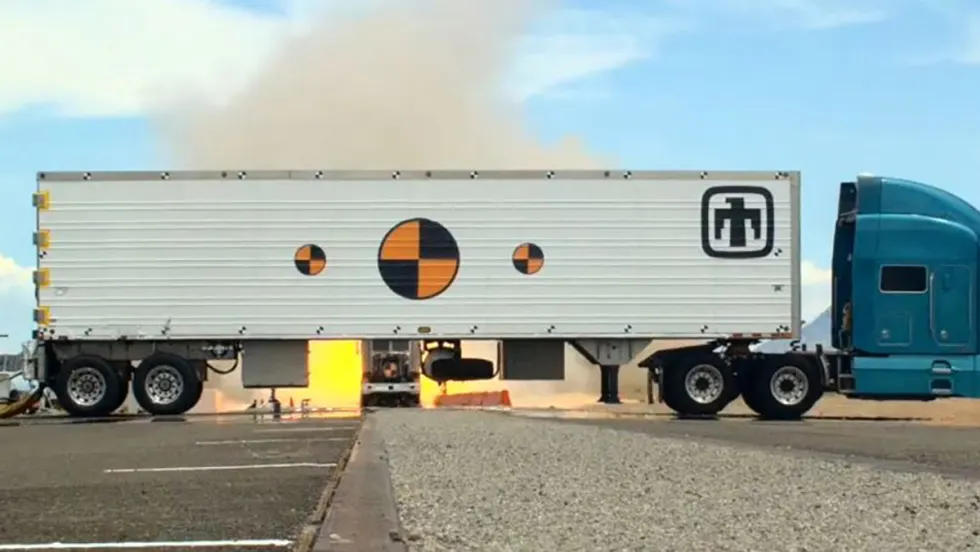
Can You Guess What's in That Trailer?
You don’t always know what’s in the trailers that pass you on the road. But some of those trailers are carrying something a little more dangerous that frozen food or new bedding…like, maybe, a nuclear weapon. But this isn’t an ordinary trailer; this is a trailer specifically made to not only carry this type of payload, but protect it at all costs.
Read More →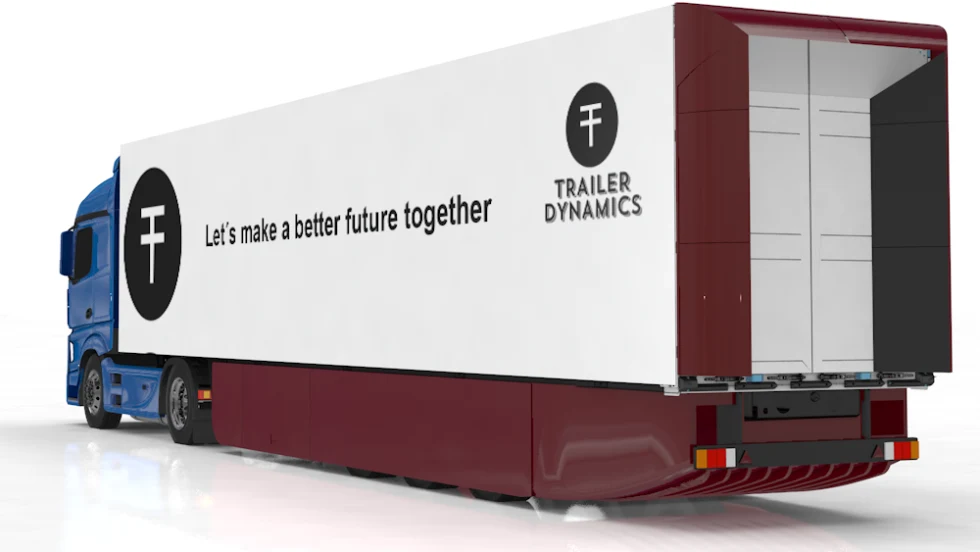
How Trailers Are Harnessing 'Free' Energy
Can trailers play a more active role in sustainable transport beyond aerodynamic add-ons or low-rolling-resistance tires? Some companies think so.
Read More →
Wrapping a Trailer for COVID’s Everyday Heroes
“We don’t only deliver freight. We deliver awareness.” That’s what Jim Barrett, president and CEO of Road Scholar Transport, likes to say about the Dunmore, Pennsylvania-based carrier’s “awareness fleet.” Its latest trailer wrap honors the everyday heroes of the pandemic.
Read More →
How a Tanker Fleet is Using Unorthodox Trailer Lighting to Fight Rear-End Collisions
Groendyke Transport watched the number of rear-end collisions with its trailers rise steadily until it tried an unorthodox and then unapproved method of alerting following drivers that its trucks were applying brakes and slowing down.
Read More →
The Role Trailers are Playing in COVID-19 Funerals
In places such as New York City and Detroit, overwhelmed hospitals and mortuaries are using refrigerated trailers to store the bodies of people killed by COVID-19.
Read More →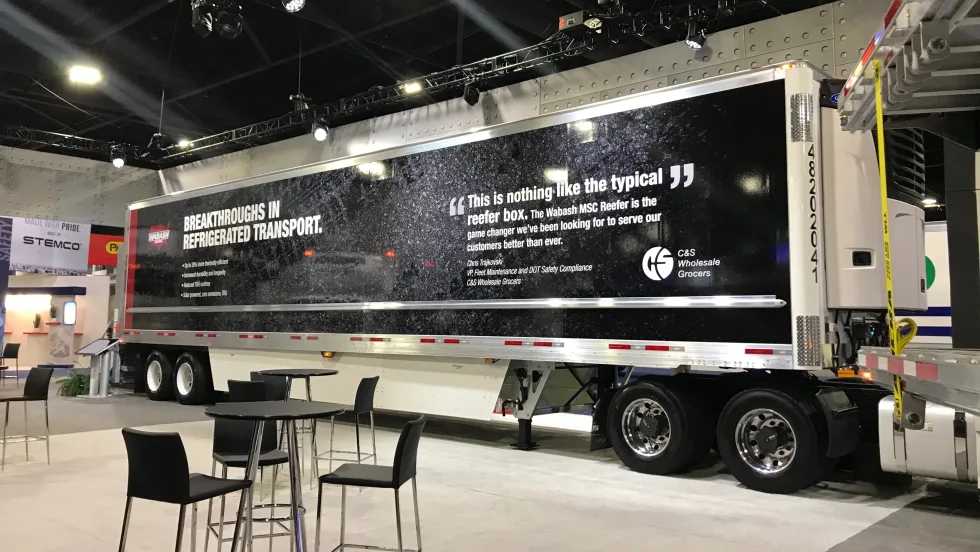
Reefer Trailer Aims to Help Reach Zero Emissions
Wabash National is partnering with C&S Wholesale Grocers to test a new type of zero-emissions refrigerated trailer.
Read More →