




75-Ton 9-Axle Lowboy Hauls More, Saves Money for Equipment Dealer
Bill Miller Equipment needed a trailer of higher capacity, with axle configurations and versatility to haul it through numerous states. Talbert built one. Tom Berg has the story in his "Trailer Talk" blog.

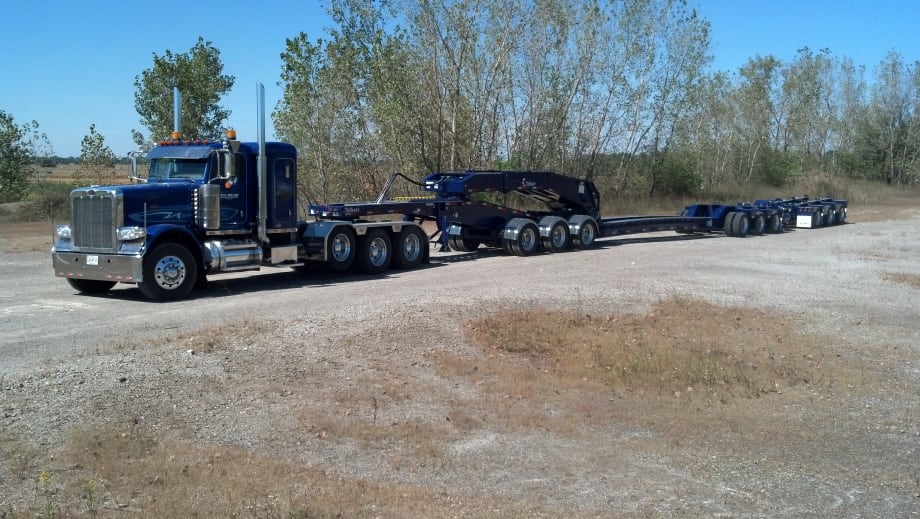
Trailer includes a 3-axle "jeep" dolly, 3-axle lowboy and 3 flip-down axles. Axles can be removed for lighter-weight loads.
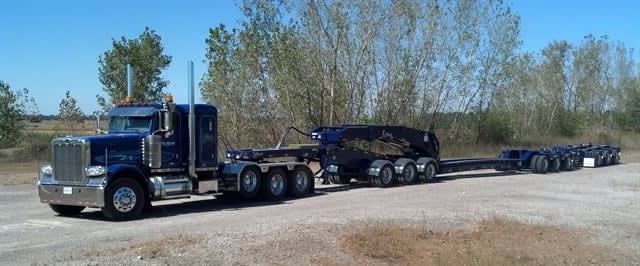
Trailer includes a 3-axle "jeep" dolly, 3-axle lowboy and 3 flip-down axles. Axles can be removed for lighter-weight loads.
One of the facts of life in hauling heavy off-road machinery is the high cost of tearing one down into movable pieces and reassembling it at the user’s site. These efforts can add many thousands of dollars in travel and wages to a transaction. A better idea is to move the machine in one piece, if you can find something to haul it on.
Nathan Miller, son of the founder of Bill Miller Equipment Sales in Eckhart Mines, Md., did that with the help of Talbert Manufacturing and its local dealer, Hale Trailer, Brake & Wheel. With much input from Miller and his crew, Talbert engineers designed a nine-axle lowboy setup that can carry large, heavy equipment like Caterpillar 990-series wheel loaders that each weigh about 75 tons.
The Miller organization sells, rents, leases and moves machines to auction venues and operators of coal, gold and copper mines in the United States, including Nevada, some 2,500 miles away from home base. Trailers and tractors must be set up to legally carry big and heavy loads in many states.
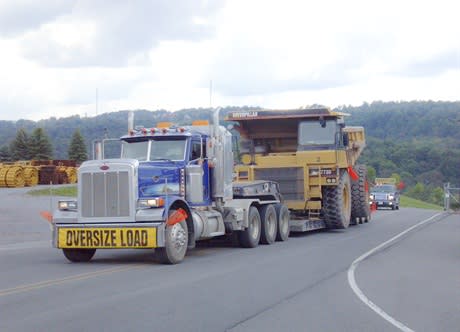
Peterbilt 388 tractor, assembled from a glider kit, has a lift axle ahead of its tandem and a 600-hp Cat C16.
“We wouldn’t be in the equipment business if we couldn’t mobilize and service the equipment we buy and sell,” Nathan says. “The idea is, if we sell it and rent it, we can move it and maintain it just as well as anyone in the business.”
Bill Miller Equipment runs a fleet of eight road tractors, 15 service trucks, 16 trailers, two crane trucks and three late-model boom trucks, all manned by professional operators. The company has 100 employees in all. What’s been changing over the past few years is the size of the equipment to be hauled.
Miller began buying and selling some of the bulkier, heavier mining equipment about five years ago, just as the equipment industry began picking up. At the time, the average weight of the larger equipment like large Cat 992G, 993K and 994F wheel loaders was 150,000 pounds – too much for the company’s 55-ton-capacity trailers. So equipment had to be torn down and loaded aboard several trailers.
“The time alone that it took to dismantle the equipment was taxing,” Nathan says. “Add in the extra trucks and trailers we needed to haul the equipment, and we weren’t being resourceful or realistic.”
On average, it took a two or three-person crew from one to three 12-hour days to dismantle the equipment, and the same amount of time to reassemble. The labor costs alone were $4,300, in addition to the fuel costs and maintenance for the number of trailers they needed for a move.
As logistics manager and a driver for the company, Nathan went to Talbert and Hale, the dealer, for a solution. A trailer had to be of higher capacity, with the axle configurations and versatility to haul it through numerous states.
The Rensselaer, Ind.-based manufacturer came back with a proposal for a new specialized trailer, a 75-ton 3+3+3 spread-axle. The design was for a nine-axle vehicle consisting of a three-axle jeep dolly, a three-axle lowboy with a flip gooseneck extension, an E3Nitro nitrogen-assisted dampening system, and three removable flip axles.
When Nathan saw the drawings, he knew the trailer was fairly close, but for the 992G wheel loaders, the trailer’s gooseneck needed a place for the loader arm to sit. This would not only require a boom well, but also a lower profile.
Nathan took a pencil to the gooseneck on Talbert’s drawing, and his revisions led to what Talbert says is the lowest gooseneck it ever fabricated. Engineers configured the gooseneck’s hydraulics, geometry and shape, designing a boom well specifically for the 992G loader arms and bracing it with a half-inch steel plate to boost durability.
“I told them this is what we needed, and they did it,” Nathan says. “I don’t know how many other companies would have just told me to forget it. Talbert made it work. That really means a lot when your company depends on it.”
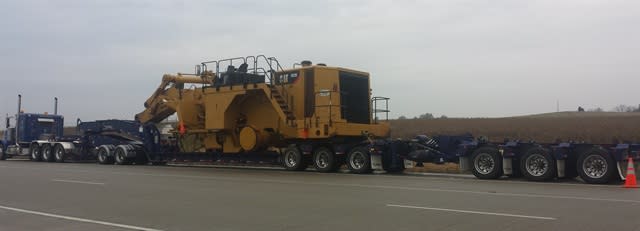
Cat 992G loader's wheels and bucket had to come off, but otherwise it went as a 150,000-pound load.
He singles out Talbert’s Northeast sales representative, Russ Losh, for being especially helpful during the design process.
The E3Nitro provides proportionate weight distribution to the rear axle group, according to Talbert people. It hydraulically dampens axle movement and controls load transfer among axles. When operated as a 3+1 or 3+2 configuration, the rear flip axles can be lifted for easy backing.
The flip axles have removable connections with a 60-inch spacing between each. There’s a 15-foot, 1-inch spacing between the third and fourth axles to make it legal in certain states. Axle-weight adjustments for scaling is easy with the E3Nitro feature, Nathan adds.
The trailer is pulled by a four-axle Peterbilt 388 tractor assembled from a glider kit. It has a 600-horsepower Cat diesel, a never-used 2000-model C16 – what old-car and truck restorers call new old-stock, or NOS -- that had been stored at a dealer. The Eaton Fuller 18-speed transmission was remanufactured.
Bill Miller Equipment received the specialized trailer from Talbert and Hale in October 2013. The crew has made several trips across the states since then, and Nathan says he’s seeing the benefits of the trailer, both fiscally and logistically.
On any run the trailer reduces the number of tractor-trailers needed. On long hauls that saves about $6,000 per rig in fuel, tires and other expenses. But he says the savings actually add up quicker on local runs because there are more loading and unloading operations in a given time period.
The trailer weighs 68,000 pounds, about normal for this type of equipment, he says. The tractor weighs 25,000 and a typical load is 150,000, adding up to a gross combination weight of 243,000 pounds.
“Adding this trailer to our fleet has saved us an immense amount of time and money,” he says. “We can load bigger equipment, which means we’re spending less time on tear down.” He added that the E3Nitro makes scaling at checkpoints a simple adjustment rather than the 15- to 20-minute process it is with earlier trailers.
In six months, Bill Miller Equipment reduced its cross-country loads by six. Since each load costs the company about $6,000, Nathan anticipates the company is on target to save $72,000 in a year. That’s not including labor costs and expenses from some of the local loads the company has been able to condense, as well.
Because certain components on the new Talbert trailer are interchangeable with others, crews can rearrange the goosenecks and flip axles on all of his trailers. Nathan says he wouldn’t hesitate to purchase another one.
More Blog Posts
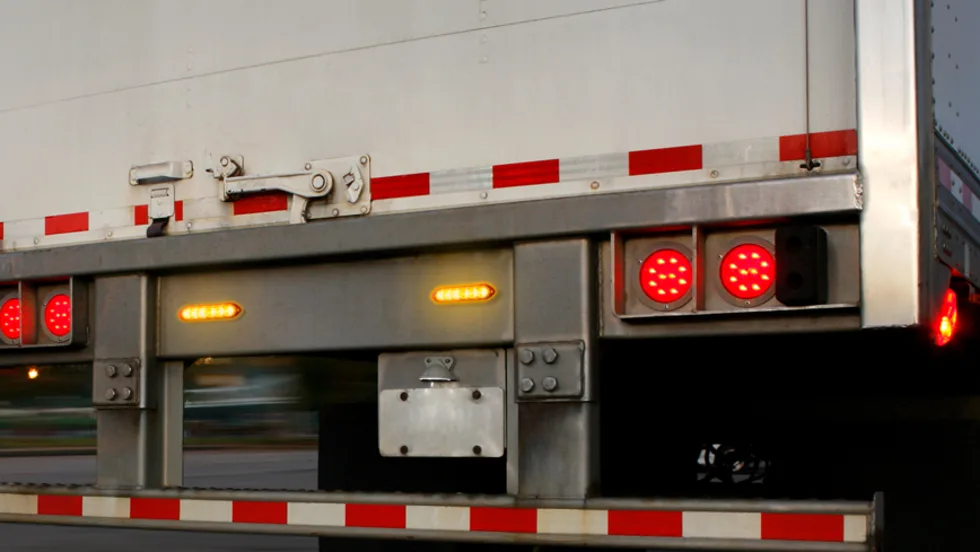
Pulsing Back-of-Trailer Lamps Aim to Prevent Crashes
Can the addition of a pulsing brake lamp on the back of a trailer prevent rear-end collisions? FMCSA seems to think so, if its exemptions are any indication.
Read More →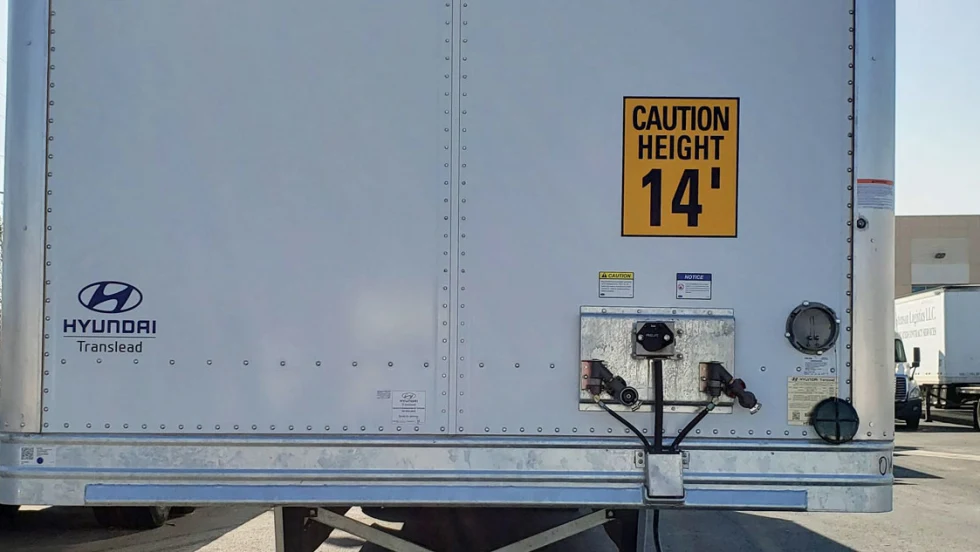
Designing a 14-Foot Trailer
Trailers are 13 feet, 6 inches high, right? Not for Hub Group, which developed a special 14-foot-high trailer spec for a dedicated customer based in California. Learn more in the Trailer Talk blog.
Read More →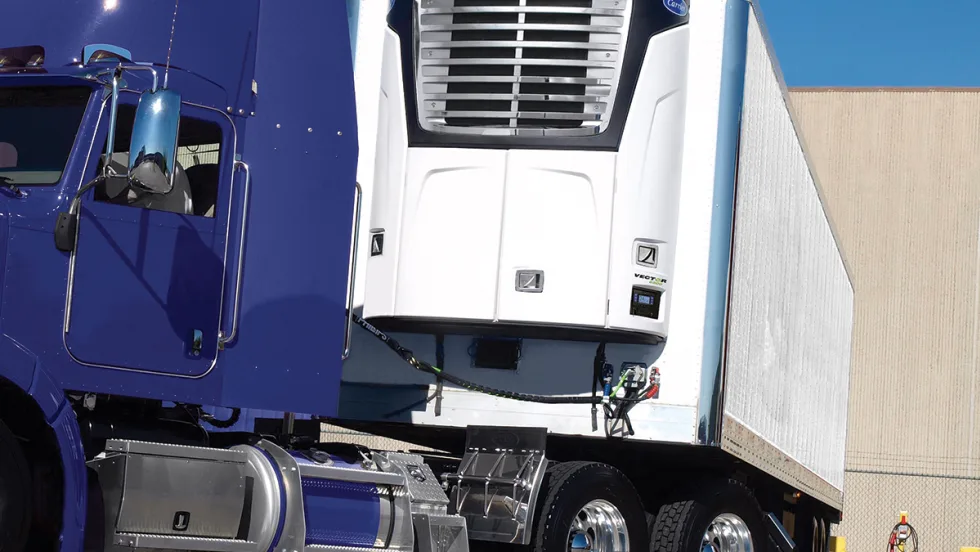
CARB Comes for Reefer Trailers
A new round of emissions control regulations decreed by the California Air Resource Board will begin affecting refrigerated trailer and TRU design and operations next year.
Read More →
5 Ways Data Analysis Maximizes the Value of Trailer Telematics
Are you getting the most out of your trailer telematics investment?
Read More →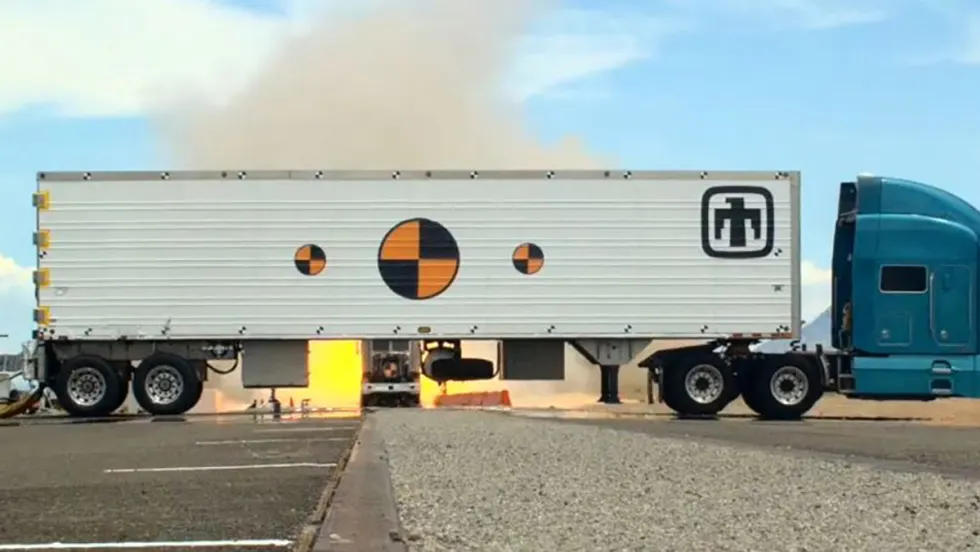
Can You Guess What's in That Trailer?
You don’t always know what’s in the trailers that pass you on the road. But some of those trailers are carrying something a little more dangerous that frozen food or new bedding…like, maybe, a nuclear weapon. But this isn’t an ordinary trailer; this is a trailer specifically made to not only carry this type of payload, but protect it at all costs.
Read More →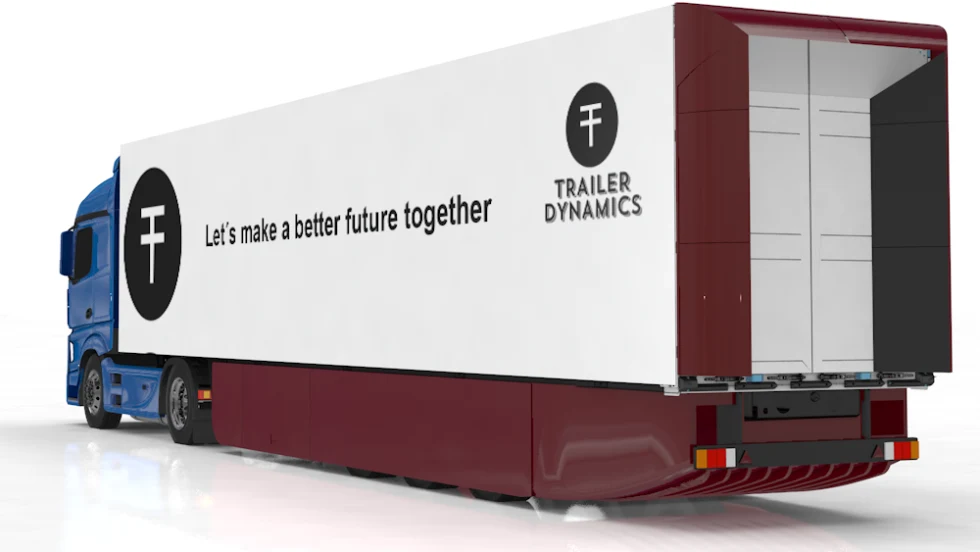
How Trailers Are Harnessing 'Free' Energy
Can trailers play a more active role in sustainable transport beyond aerodynamic add-ons or low-rolling-resistance tires? Some companies think so.
Read More →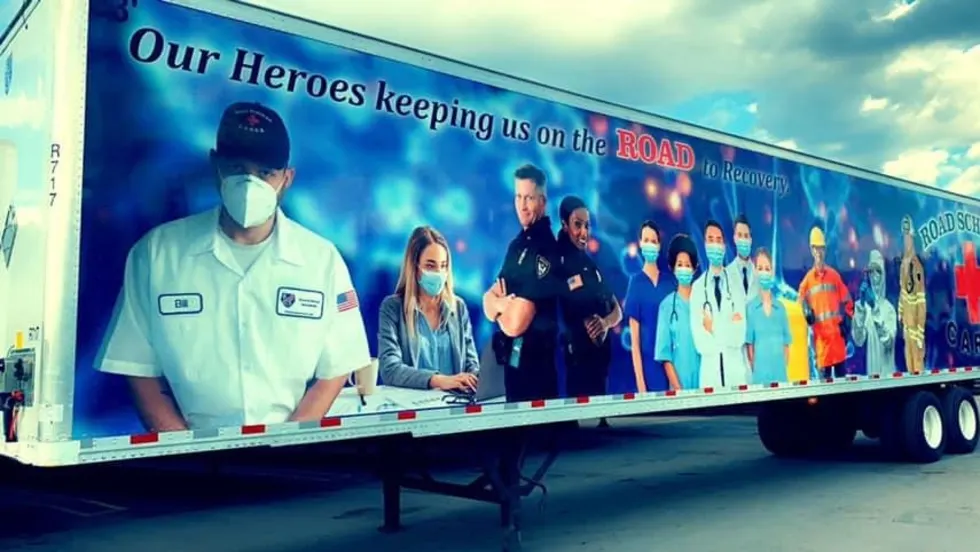
Wrapping a Trailer for COVID’s Everyday Heroes
“We don’t only deliver freight. We deliver awareness.” That’s what Jim Barrett, president and CEO of Road Scholar Transport, likes to say about the Dunmore, Pennsylvania-based carrier’s “awareness fleet.” Its latest trailer wrap honors the everyday heroes of the pandemic.
Read More →
How a Tanker Fleet is Using Unorthodox Trailer Lighting to Fight Rear-End Collisions
Groendyke Transport watched the number of rear-end collisions with its trailers rise steadily until it tried an unorthodox and then unapproved method of alerting following drivers that its trucks were applying brakes and slowing down.
Read More →
The Role Trailers are Playing in COVID-19 Funerals
In places such as New York City and Detroit, overwhelmed hospitals and mortuaries are using refrigerated trailers to store the bodies of people killed by COVID-19.
Read More →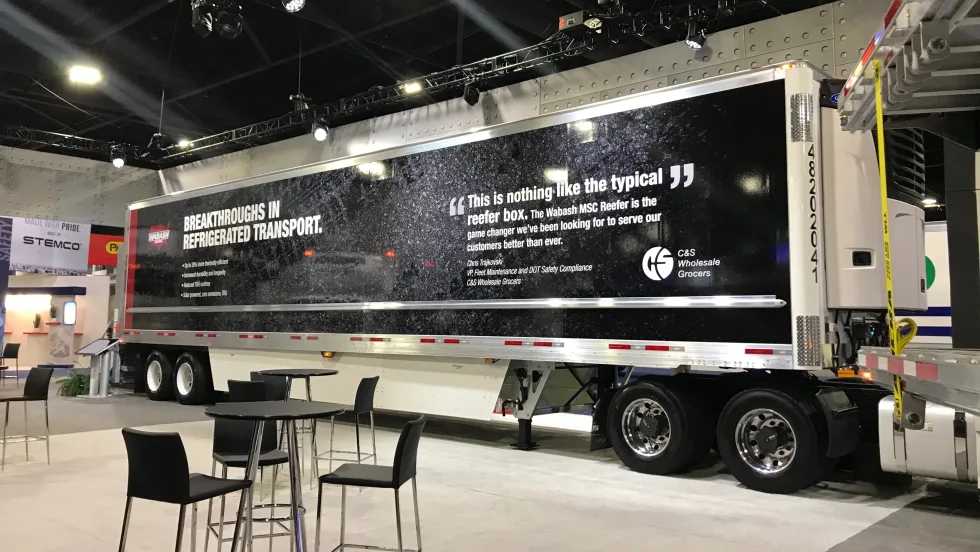
Reefer Trailer Aims to Help Reach Zero Emissions
Wabash National is partnering with C&S Wholesale Grocers to test a new type of zero-emissions refrigerated trailer.
Read More →