Heavy Duty Trucking Logo
MenuMENU
SearchSEARCH

Will Electric Trucks Need New Suspensions?

Electric trucks will redefine how we move freight, but will the addition of a few tons of batteries demand a redesign of the vehicle itself? Find out.

Jim Park
Jim ParkFormer HDT Equipment Editor
Read Jim's Posts
November 24, 2021
Will Electric Trucks Need New Suspensions?

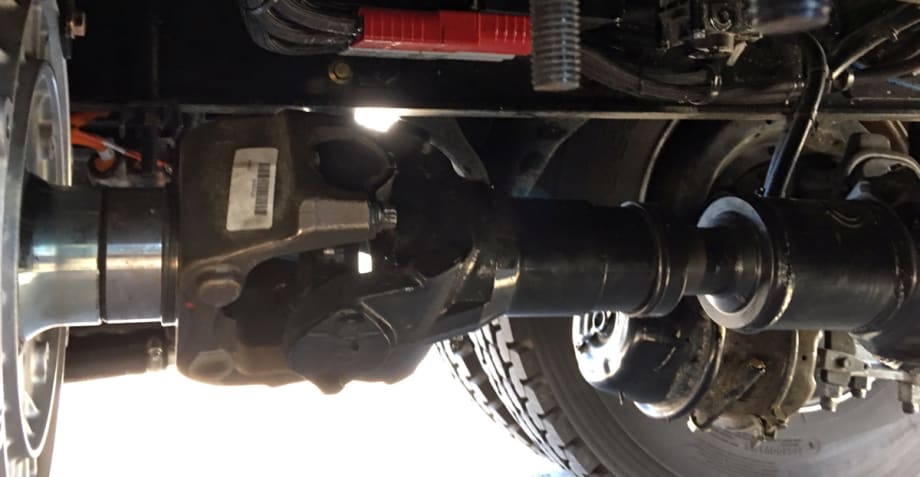
Mounting electric drive motors on or close to the drive axle frees up frame space for batteries and doesn’t force suspension makers into radically different configurations.

Photo: Jim Park

4 min to read


Electric trucks will redefine how we move freight, but will the addition of a few tons of batteries demand a redesign of the vehicle itself? One system you may not consider a candidate for disruption is suspensions. Current experience suggests available options are up to the task, but there’s still room for optimization.

Ad Loading...

Battery-electric truck configurations offer drivetrains similar to those we now use: traditional drive axles with an electric motor bolted to the front of the differential housing rather than a propeller shaft. Conventional suspensions will have conventional axle and frame attachment points, though they may be beefed up a little to accommodate the additional volt-driven torque and the braking torque incurred during regenerative braking.

Take regional haul or refuse operations. Fleets will want to leverage the enhanced acceleration and deceleration capability of electric drivetrains, so some suspension design revisions will be necessary to tolerate higher stresses.

Ad Loading...

“When you think about the high longitudinal stresses generated by aggressive acceleration and deceleration, it’s not just the suspension that gets a workout. It’s everything from the chassis to the tires,” says Ashley Dudding, director of engineering for commercial vehicles at Hendrickson. “We can make design revisions to accommodate for that, and during vehicle development there’s a tuning process where they can regulate the braking and driving forces to mitigate the additional stress.”

Suspensions Targeted for Weight Reduction?

OEMs will be turning over every stone possible to shave chassis weight to make more room for batteries. Suspensions will be targeted for weight reduction, too. But at the same time, suspensions, particularly steer axle suspensions, will be tasked with managing higher tare weights and redistribution of weight around the chassis.

Dudding says Hendrickson learned a lot from early work with transit bus suspensions. There, range is everything. The big challenge was making room for a couple of thousand pounds of batteries. Transit buses are somewhat unique in that they run high axle loads, sometimes as high as 29,000 pounds on a single axle. The hunt for additional capacity led to significantly higher axle ratings for steer and drive axles.

Of course, trucking doesn’t have that kind of flexibility; we’re still limited to bridge formula axle weights. But Dudding says steer axle weight ratings are likely to increase in some cases to make room up front for batteries, and that could necessitate higher weight ratings for steer axles and suspensions.

“The batteries have to go somewhere,” Dudding says. “Depending on the chassis layout of a medium-duty truck, for example, if you load up the rear portion of the frame, that increases the weight on the drive axle, possibly compromising payload. However, if you upgrade from a 10K steer axle to a 12K, you’ve now got room there weight-wise for an additional 2,000 pounds of battery. You may have to be careful how you load the truck, but your drive axle weights won’t be adversely affected if the weight goes up front.”

Ad Loading...

Nothing would change on a typical medium-duty chassis with a 200-kWh battery pack. The 10K axle would be fine in most cases. If you wanted to up the battery size for increased range, going to a 12K or even a 13.2K would help. The same thinking applies to Class 8 trucks. Once you strip out the diesel powertrain and fuel tanks, you have reduced the chassis weight by 3,000 to 4,000 pounds. But if you install 8,000 pounds of batteries, as with a 500-kWh battery pack, the best place to put that extra capacity is on the steer axle.

Looking Ahead

Several truck makers and suspension suppliers told HDT it would be business as usual.

“For an electric driveline, the suspensions are matched based upon the gross vehicle loading, duty cycle, and intended operational life,” says Brett Pope, director of electric vehicles for Volvo Trucks North America. “This takes into account any load distribution differences on a vehicle or impact from an electric driveline.”

It seems that fleets have little to worry about in terms of dramatic changes to their beloved ladder frames and familiar suspension configurations. There was talk in the early days of the electric evolution of using independent suspensions and a variety of new designs, but it appears that won’t be necessary, at least in the near term. That also reduces manufacturing complexity and the need for lots of additional engineering work.

That could change as new technologies emerge. Electric truck chassis are strikingly similar to diesel trucks, with the possible exception of the elimination of the driveshaft. Electric drive motors are now mounted on the front of the differential housing, and the weight and geometry of the e-axles are similar to a regular axle, Dudding says.

Ad Loading...

He doesn’t see the need, yet, to move to wheel-end motors, which could force changes in traditional suspension designs for packaging and spacing concerns. “With the torques that are required, and the packaging, I don’t see wheel motors on our near-term horizon,” he says. “I really think you’re going to see drive axles retain the central motor, and I think they’re going to do a good job.”

BEV 6x2s Offer 4-Way Savings

Many North American truckers don’t like 6x2 drivetrains, but the e-revolution could change that. With battery-electric trucks, the focus is on weight and range. Using 6x2 drivetrains can save some 400 pounds, and the energy consumption savings by virtue of reduced gearing losses and parasitic drag when the non-driven axle is lifted can exceed 5%. That could add dozens of miles to the anticipated range of a battery-powered truck or allow the battery load to be reduced to save weight and cost. 

Hendrickson has proven the weight and energy savings with its Optimaax liftable axle in a pusher configuration (the driven axle at the rear). According to Ashley Dudding, director of engineering for commercial vehicles, having only one electric drive axle can reduce the cost of the vehicle substantially without compromising traction.

“The conventional tag-axle 6x2s have a reputation for traction problems,” he says. “That’s a significant problem when they’re unladen or when running over irregular terrain. But with the Optimaax in a pusher configuration, you can drive the truck partially loaded with the axle up and deploy it only when it’s needed. That actually improves traction when lightly loaded.”

Since most on-highway applications truly require only one drive axle, the savings offered by a 6x2 include eliminating the cost of a second motor, the weight savings, and the reduced energy consumption offered by lowered parasitic losses and tire rolling resistance when the axle is raised. That’s savings on four fronts, all by simply eliminating one drive axle.

“I think the 6x2 concept is very appealing for electric vehicles,” Dudding adds. “Carriers that run diminishing loads or a high percentage of empty miles will find 6x2 a very compelling and cost-effective alternative to traditional drive axles.” 

This article first appeared in the November 2021 issue of Heavy Duty Trucking. 

Subscribe to Our Newsletter

More Equipment

Gray Volvo tractor pulling trailer on open highway
Fuel Smartsby Deborah LockridgeMay 1, 2026

New High-Horsepower Natural Gas Engine Could Expand Fleet Options

Westport and Volvo are demonstrating a 500-hp truck with diesel-like efficiency — one that also offers what Westport says is a better pathway to using hydrogen fuel in trucks.

Read More →
Aurora Innovation self-driving truck.
Equipmentby News/Media ReleaseApril 30, 2026

Hirschbach Announces Plan to Deploy 500 Aurora Autonomous Trucks

Hirschbach and Aurora Innovation have inked a non-binding deal outlining a path to deploy 500 Aurora Driver-powered trucks into fleet operations.

Read More →
Bosch-Kodiak self-driving truck partnership.
Equipmentby News/Media ReleaseApril 30, 2026

Bosch, Kodiak AI Advance Toward Scaled Production of Autonomous Truck Hardware

New sensor integrations and component validation signal a shift from strategy to execution as Kodiak and Bosch push toward high-volume driverless truck deployment.

Read More →
Ad Loading...
Great American Trucks: REO
Equipmentby Jack RobertsApril 29, 2026

Great American Trucks: REO

The evolution of the modern truck was a long, slow affair. But perhaps no other company did more to establish the template for what a modern truck should be, and how it should perform, than REO.

Read More →
Western Star's Star Nation customer event.
Equipmentby News/Media ReleaseApril 27, 2026

Western Star Doubles Down on Driver Pride With 2026 Star Nation Experience

Western Star has expanded its operator-focused Star Nation competition and outreach to spotlight skill, attract new drivers, and strengthen industry ties.

Read More →
HDT Spotlight: Volvo VNR test drive.
Equipmentby Jack RobertsApril 23, 2026

Is the All-New VNR Volvo's Safest Truck Ever?

The all-new Volvo VNR is jam-packed with advanced safety features. Join HDT for a first-hand look at how Volvo is keeping drivers safer and productive on the road.

Read More →
Ad Loading...
2026 Volvo VNR
Equipmentby Jack RobertsApril 22, 2026

Volvo Redesigns the VNR With Drivers and Tight Turns in Mind

At Volvo’s New River Valley customer center, the all-new VNR proves that maneuverability, safety, and driver confidence can coexist in a regional-haul workhorse.

Read More →
Great Dane trailer.
Equipmentby News/Media ReleaseApril 21, 2026

FTR: Trailer Orders Jump in March, but Demand Still Lags

March trailer orders posted an unexpected monthly jump, but demand still trails historical norms as fleets prioritize power units over trailing equipment.

Read More →
Humble cabless autonomous freight hauler.
Equipmentby News/Media ReleaseApril 21, 2026

Autonomous Start-Up Humble Announces Cabless Autonomous Electric Hauler

A new autonomous truck startup company is targeting yard, port, and short-haul freight with a lighter, fully autonomous platform designed for dock-to-dock moves.

Read More →
Ad Loading...
Circles with trucks demonstrating sustainable features and Top Green Fleets logo
Fuel Smartsby Deborah LockridgeApril 16, 2026

Top Green Fleets of 2026: Nomination Deadline Extended

Is your company a leader in sustainability efforts among trucking fleets? If so, Heavy Duty Trucking's editors want to hear from you.

Read More →