




Learn more about alignment in the September issue of Heavy Duty Trucking.
Why You Should Pay Attention to Trailer Alignment
Proper trailer axle/wheel alignment is critical to maximizing tire life, and it's only become more important with the use of wide-base single tires on trailers for fuel economy and weight savings.
by Ted Armstrong, SAF-Holland
August 22, 2017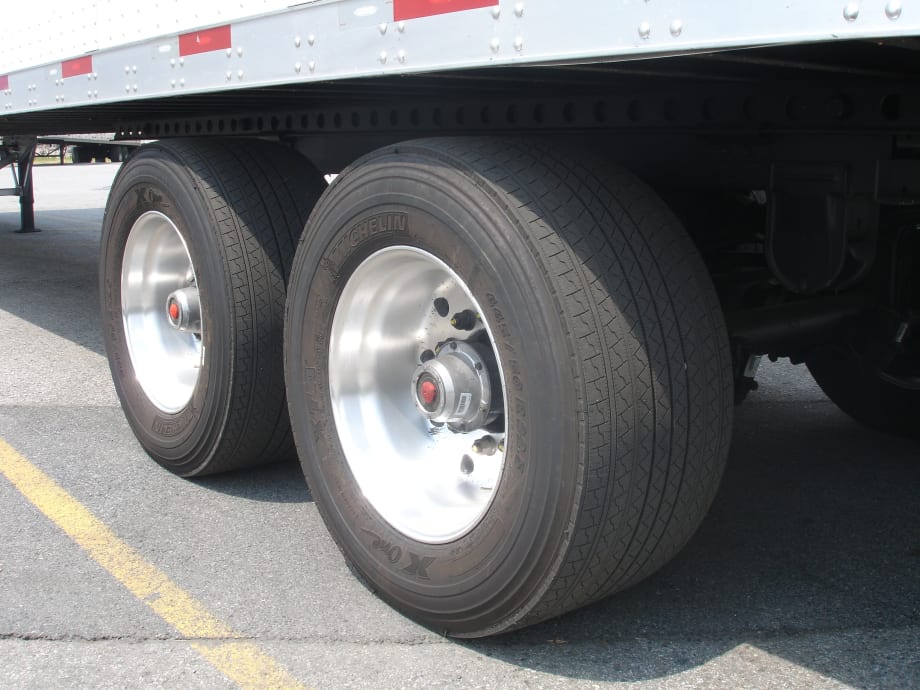
Trailer alignment is more important than ever when you run wide-base tires. HDT file photo
3 min to read
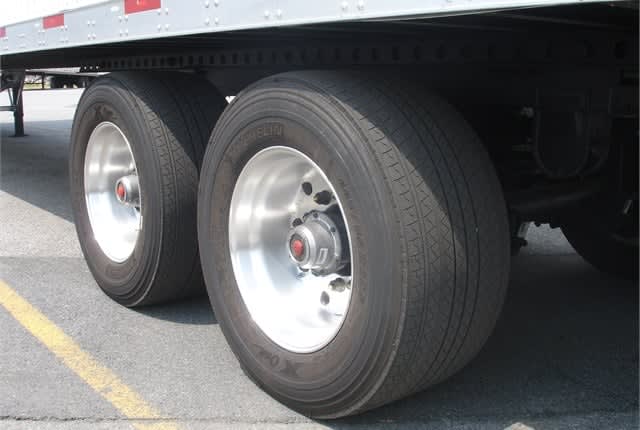
Trailer alignment is more important than ever when you run wide-base tires.HDT file photo
Proper trailer axle/wheel alignment is critical to maximizing tire life, and it's only become more important with the use of wide-base single tires on trailers for fuel economy and weight savings.
Achieving alignment with today’s sophisticated laser alignment equipment provides for a more accurate process than past methods for achieving alignment.
The introduction of wide-based tires to the trucking industry created a need to pay even closer attention to the manufacturer's alignment recommendations. The construction of wide-based tires varies from manufacturers with their different types and specifications.
The tread face of the radial tire reacts differently on wide-based tires, so it is more susceptible to wear when not aligned properly. Alignment is critical to preventing tire scuff, or wear across the face/footprint of the tire. The footprint across the face, or portion of the tire’s tread that touches the road surface, should be rolling in-line with the direction of the vehicle (travel of the trailer). Dog tracking occurs when one or more of the trailer’s axles are not aligned properly. Both axles should track true with the trailer to prevent premature tire tread wear.
Proper maintenance of suspension components is critical to establishing and maintaining alignment to maximize tire life. Even though your trailer manufacturer sets the alignment, it can change because of operating characteristics. The more severe your application, the more often routine maintenance will be required.
The importance of inspecting suspension components, bushings and fasteners during routine maintenance checks can’t be overlooked. Worn bushings on air ride suspensions are a leading cause of loss of initial manufacturer’s alignment. In addition, ensuring proper torque on U-bolts and track bar/rods on mechanical suspensions during routine maintenance intervals is crucial as well. Excessive wheel end play can also cause premature tire wear.
The three components of tire wear are: Alignment; Toe; and Camber. Axles that are perfectly aligned, but have negative camber when fully loaded, could still experience inside tire wear. If, however, it is aligned with proper camber but with an improper toe setting, premature tire wear from scuffing will result. Any one of these combinations not at the proper setting will lead to premature tire wear.
Another consideration is axle camber, which if not spec’d properly for your application could lead to inside tire wear, because of suspension axle deflection under load. Wide-based tires are more susceptible to this than conventional duals. Inside tire wear on conventional duals requires that the inside set of tires be replaced, however, both tires have to be replaced for inside wear on wide-based tires.
You can achieve axle alignment that appears correct, but don’t be fooled by only this measurement; tires can still wear. All measurements should be taken with an empty trailer, and properly positioned to suspension manufacturers recommendations. When taking measurements, the suspension should be at ride height, slider suspensions should be slid to the most rear position, pull pins should be engaged, and the trailer pulled into the service bay in a relaxed suspension running position.
For tire balance, the proper procedure of the tire manufacturer should be followed to ensure proper mounting to the wheel. Improper mounting can cause an out-of-round condition resulting in excessive radial run-out. Proper mounting of the wheel to the hub-pilot, and properly centered is also necessary.
Ted Armstrong is OEM technical support manager for trailer products at SAF-Holland.This article was authored and edited according to the standards of HDT's editors to provide useful information to our readers.
Subscribe to Our Newsletter
More Maintenance

Sponsored•September 16, 2026
Color Match Smarter: Tools That Restore & Perform
For fleet managers and collision repair professionals keeping heavy-duty trucks on the road, getting the color right the first time isn't just about appearance — it's about efficiency, turnaround time, and bottom-line results. Discover how today's digital color tools are transforming the repair process from guesswork to precision.
Read More →
Wrong Repair Prompts Recall of Freightliner, Western Star 4x2 Trucks
DTNA is recalling more than 2,400 trucks that received an incompatible software fix instead of the hardware repair required to address brake valve corrosion.
Read More →
Truck Drivers Need More Than Another Alert
Fleets have more visibility into truck health, safety events, and driver activity than ever. The next challenge is turning all that information into useful guidance for the person who has to decide what to do next.
Read More →

The Maintenance Checks Trucking Fleets Should Prioritize Before Fall Freight Picks Up
Making it through August isn’t the same as being ready for the next several months of operation. Find out what systems may have suffered from summer heat and need to be checked out before fall.
Read More →
What Three Fleets Are Doing Differently When Buying Truck Parts in 2026
With freight improving but costs still climbing, fleet maintenance executives explain how they're balancing price, quality, and supplier relationships.
Read More →
Paccar Recalls 2027 Trucks Built This Summer for Possible Electrical Problem
The nearly 6,000 Kenworth and Peterbilt trucks in the recall could potentially lose engine power, among other things.
Read More →
Will API PC-12 Oil Change Trucking Fleet Maintenance?
The new API PC-12 heavy-duty engine oil category reflects the changing demands of modern diesel engines. But fleets like Foodliner are looking to getting their own data before making decisions on adopting the new oils and questions such as extending oil drain intervals.
Read More →
Brake Safety Week to Focus on Drums and Rotors
Commercial vehicle inspectors are focusing on truck brakes during CVSA's Brake Safety Week, August 23-29.
Read More →Possible Battery-Cable Fires Prompt Recall of 15,000+ International MV and HV Trucks
On the recalled vehicles, manufacturing variations can cause the battery interconnect cable to contact the auxiliary stud and hold down the bracket.
Read More →
Rush, MCT Team Up to Grow Refrigeration Service Network
The joint venture will operate MCT's network of Carrier Transicold dealerships and mobile service locations, with the companies promising greater service capacity and uptime for refrigerated fleets.
Read More →