




Why You Need a Great Website
Why is a website important? Because if you don't have one, you don't exist to a very large number of potential customers


If you don't have a website - or if it leaves a bad impression - you might be invisible, or worse. Many fleets or shops won't buy from someone without a website because these customers can't check out the operation online.
Why is a website important? Because if you don't have one, you don't exist to a very large number of potential customers.
A website is one of the things you absolutely must have if you are in business today, just like a business card or phones any piece of office or shop equipment.
"A website is mandatory," says Tom Marx of the Marx Group, a marketing communications company that has worked in the automotive and heavy-duty aftermarket for more than 25 years. "It's no different than a business card."
In today's world, he says, businesses have to depend on digital marketing for people to find them and understand the personality of a company.
Wendy Heaton of Dane Henas Design, Sacramento, agrees. "Besides the phone, it is the number one interface between a business and its customers. People expect to be able to find information about a business online. If they can't, it says something about that business," she says. And that something's not good.
Marx notes that your website gives your company visibility in the digital world. "Today, that digital world is probably as important as the physical world," he says. "Because without the digital presence, people won't find you. They'll look at competitors who have a more developed web program and see you as being a less-than-competent supplier."
Even for companies that use outside sales forces, a website is important. "Are you trying to get new business or maintain your current business?" Marx asks. Either way, the site is important. "Perhaps a website is not as critical to maintain your current customers, but for obtaining new customers, I think it is a critical tool."
He adds that from his experience, many fleets or shops won't buy from someone without a website because these customers can't check out the parts operation online.
Equally as important as having a website is making sure it makes a positive impression.
"A website is a company's store front," Marx says. People base their impression of your business on what they see when they walk in the door. If your store is disheveled, disorganized and people have a hard time finding stuff, the impression will be less than favorable. It's the same with a website.
"Not only is it important that you have the website, but it's the quality of the website and the frequency that website is updated," Marx says.
Whenever a company is looking to do business with somebody, almost always they will go to the website to check out the company and form an impression on the competency of that company.
Even if you already have a website, it may be time to take a look at it and see if it's time for an overhaul.
Some parts of a website are more important than others, but all "great" sites will have a few basic elements. These basics include a home page, company background page, bios on key staff, and pages that talk about products and services.
Marx says there are other parts of the site his company has found are important as well. One is a page with testimonials from your customers describing your products or services.
The contact page is one of the more critical ones, Marx says, so someone can go on the site and find a list of key salespeople, executives or counter people, click to send an e-mail and know they are going to get a prompt reply. Don't limit contact information to that page, though; make sure people can easily find a main phone number and address on the home page.
From a structural standpoint, the site should be easy to navigate and it should have a clean look.
"It really depends on the client, but we have some rules of thumb about how sites should work," says Heaton. "They should be easy to read, easy to use; in other words, the navigation is intuitive. We like to do sites where you can get a good sense of a site by mousing over the drop-downs. You shouldn't have to dig deep down and then kind of wind your way back to the home page."
Heaton adds that lots of information does not have to equal clutter. "We tend to not do cluttered designs, but sometimes having a lot of information is necessary. You want your site to be clean and inviting, but we never skimp on the information people need. Because that is what the Web is for. It's not just signage."
Marx agrees that clean and uncluttered is probably preferable.
"I think there is a movement in some retail worlds to have a tremendous amount of data on the home page because that makes it easier for search engines to find them, but that in a way is a negative because it makes it so cluttered there is no focus to it." Finding the site doesn't help if people are turned off by what they see once they get there.
An important part of the site that's not visible is making sure search engines, like Google, Yahoo or Bing, will find your website. For instance if you have a distributorship in Memphis, and someone types in "truck parts in Memphis," you want the site designed to come up as close to the first page as possible on Google search. This is called search engine optimization, and much of it is done with meta-tags and keywords.
"There is no reason not to build a site for search," Heaton says. Using the proper keywords on your site helps a company's marketing efforts. When your company pops up when someone is looking for a product or service, that's marketing you don't have to pay for, she adds. "It's a matter of knowing how to design a website correctly to work well with the search engines."
Heaton's designers start with researching the keywords before doing any design work. She notes that the web developer needs to understand the business, so they look at a client's competitors and get a handful of keyword terms together they think are important.
Don't forget the importance of the website address, also called a domain name or URL. Direct names that are easy to remember are your best bet, if they're still available, noted Melanie Lindner in a Forbes.com article on building websites for small businesses. If your company's name is XYZ Truck Parts, a web address such as www.xyztruckparts.com would be a good way to go.
To help drive traffic to your site, make sure your website address is linked to from as many places as possible, for instance in parts buying guides and directories, on websites of associations or buying groups you belong to, etc. Don't forget to put the address on your business cards and other company stationery.
For many distributors and suppliers, offering customers the ability to shop online is key. Marx said in that instance, there are two things you want to look at. First is a shopping cart, so people can order and buy parts. "They can go on the site, find a product, pay for it or use a PO and it's going to be set up and delivered." There are a lot of third-party providers that can provide shopping cart software for your site at minimal expense.
The second thing to look at is an e-catalog. That way, people can look through your online catalog and order parts from that based on part number. The e-catalog should be able to take people directly to the shopping cart. "I believe e-catalog is where we will be moving forward in the future," Marx says.
Here, too, third-party vendors can supply look-up criteria based on part or model numbers so you can plug in the specific parts you are selling. Companies such as AutoPower, DST and Karmak are companies that can help develop e-commerce solutions specific to the truck aftermarket.
When using e-commerce sites, it's important that companies understand what information is available to the public and what is available behind a firewall and limited to customers. Marx says that behind the firewall is where you want to protect pricing programs, accessible only by password. You can develop a dual pricing structure where you can show the manu
More Aftermarket
What Three Fleets Are Doing Differently When Buying Truck Parts in 2026
With freight improving but costs still climbing, fleet maintenance executives explain how they're balancing price, quality, and supplier relationships.
Read More →
ConMet Expands Aftermarket Brake Drum Lineup With TruCast
A new heavy-duty truck brake drum option in the aftermarket gives customers more flexibility within the ConMet product family.
Read More →
Phillips Opens High-Tech Distribution Center for Faster Parts Delivery
Phillips Industries’ new Cincinnati-area distribution center is now shipping aftermarket trucking parts nationwide, aiming to speed up delivery times for customers.
Read More →
Volvo to Sponsor America’s Road Team for 2025
Volvo Trucks announced that it is extending its exclusive sponsorship of America’s Road Team for 2025.
Read More →
Webb to Start Taking Orders for UltraSet Pre-Adjusted Wheel Hubs
Webb, which recently acquired the Stemco Trifecta pre-adjusted hub program, will soon start taking orders for its replacement pre-assembled hub, the UltraSet.
Read More →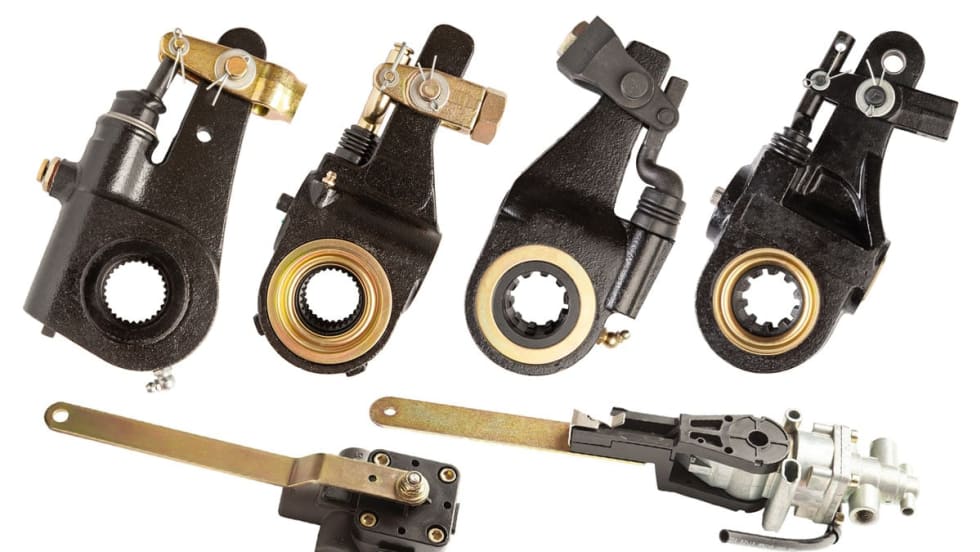
All-Makes Automatic Brake Adjusters, Ride Height Control Valves from Midland
SAF-Holland has added automatic brake adjusters and ride height control valves to its Midland All-Makes Program.
Read More →
ZF Aftermarket Expands [pro]Academy Training
ZF Aftermarket said it is expanding its ZF [pro]Academy training and will be adding 40 new modules this year.
Read More →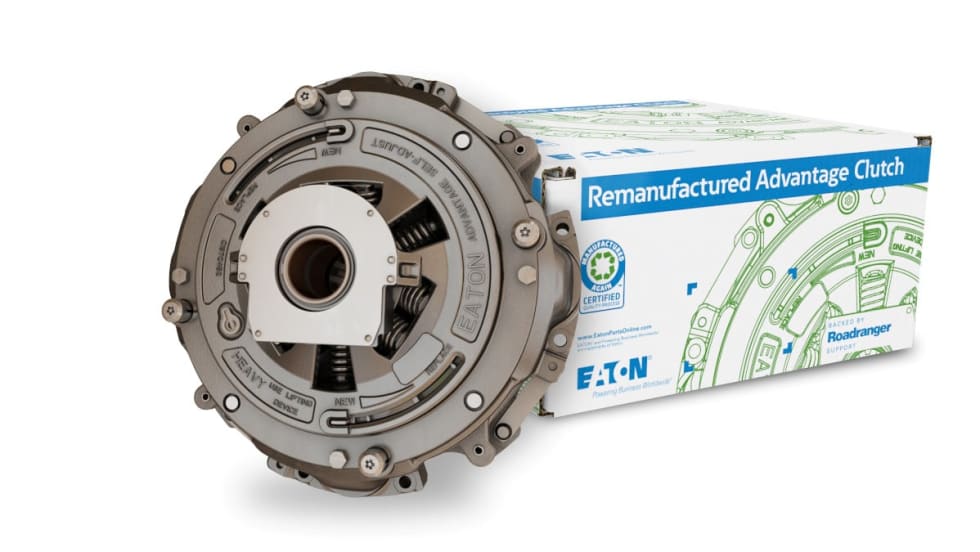
Eaton Adds Remanufactured Advantage Line of Clutches
Eaton has added its Advantage clutches to its remanufactured product line. The clutches feature a unique strap drive intermediate plate designed to allow customers to choose the latest OE specification
Read More →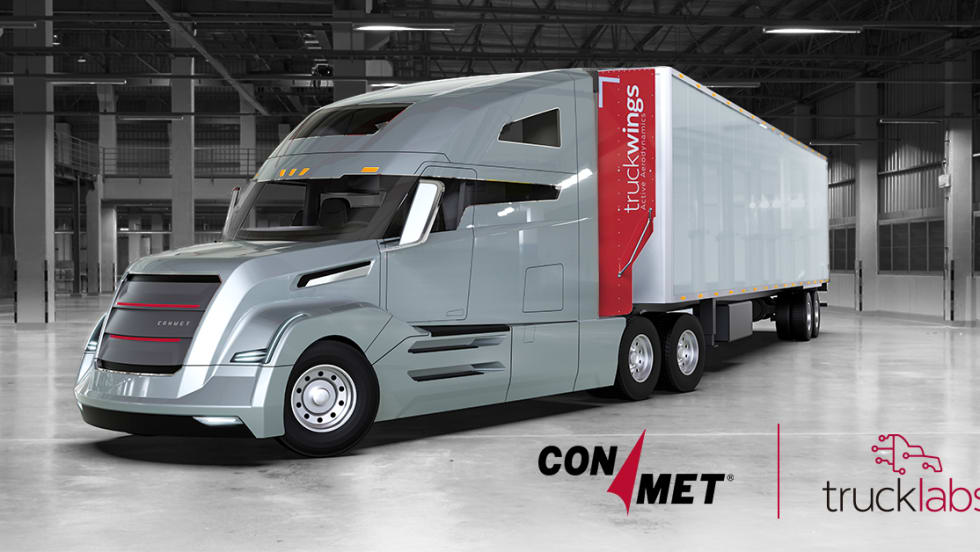
ConMet Acquires TruckLabs, the Creator of TruckWings
Commercial truck and trailer parts provider ConMet acquired TruckLabs, the company that created TruckWings, an aerodynamic device that attaches to truck cabs and deploys to close the gap between truck and trailer. TruckLabs now operates as a subsidiary of ConMet.
Read More →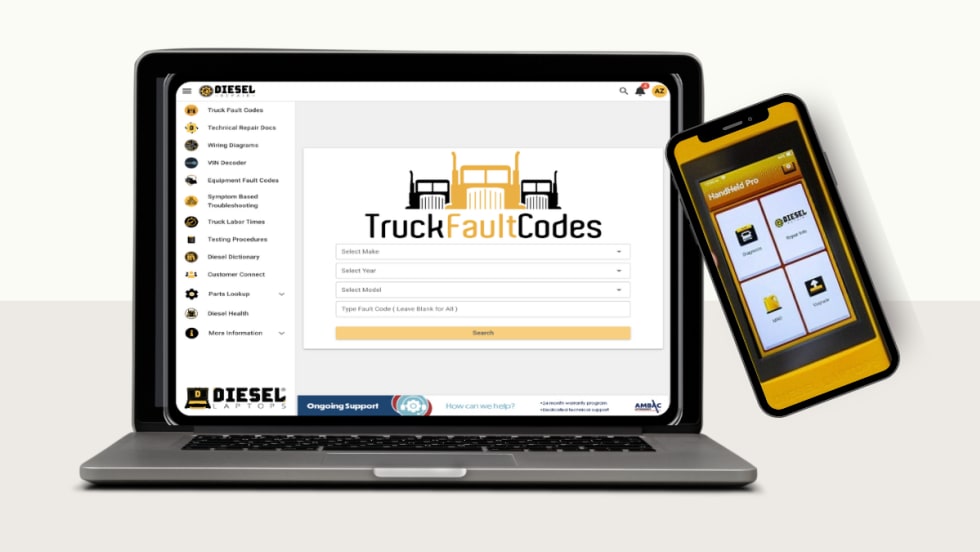
Diesel Laptops Releases Fault-Code-to-Part-Number Tool
Diesel Laptops said its Truck Fault Codes allows users to input a fault code and immediately identify and order the parts needed to complete repair work.
Read More →