




Why the U.S. Military Went to LEDs
Humans have been cursing the darkness and the real and imagined horrors it hides since before recorded tim


Military patrols and supply convoys face increased danger at night, and better headlamps have been helping soldiers in Iraq and Afghanistan. (Photo: convoy at Ft.Irwin; Credit: AM General Corp.)
Humans have been cursing the darkness and the real and imagined horrors it hides since before recorded time
. For soldiers, the enemy is a real horror. Motorized patrols today are painfully susceptible to explosive ambushes, and being able to spot such dangers can help as much as the new armored trucks. So military and civilian experts teamed up to develop improved headlamps that are replacing fixtures that have been standard for more than a generation. Soldiers and fleet managers especially love the light-emitting diode headlamp.
The LED emits a powerful white beam that duplicates daylight and is highly effective, according to the U.S. Army's Tank Automotive Command (TACOM), which pushed for and funded its development by private industry, primarily Truck-Lite. The Army has so far equipped about 50,000 tactical trucks and armored vehicles in Iraq and Afghanistan with LED headlamps, and soldiers have sent letters of thanks for the LEDs to Truck-Lite.
Cost vs. durability
To be sure, the LED headlamp, which is now available in a civilian version, has downsides. It costs many times more than common lamps and, unlike now-popular red, amber and white LED marker, tail and backup lamps, the LED headlamp burns hot. It has to in order to achieve desired brightness. Heavy ballast is needed to absorb that heat. For now it's made only in a 7-inch round configuration that was once common in civilian trucks but is now used mostly in vocational models that don't run much at night. But high-end autos are beginning to employ LEDs in frontal roles, and if it happens in cars it'll eventually find its way to commercial trucks.
A big bonus of LEDs is long life. Diodes are far more rugged than incandescent filaments, so LEDs shrug off vibrations and last the life of any vehicle - 25 or more years - unless, of course, they get whacked. In the long run, not having to replace lamps or bulbs will save huge amounts of money for the military, whose trucks are spread around the world, TACOM sources say. Planners figure every vehicle blows one of its cheap 24-volt incandescent lamps once a year. Replacement lamps have to be kept handy, and soldiers are distracted by the need to remove blown lamps and install new ones. This must be done quickly, or the vehicle is less than 100 percent mission-capable - a major impediment in an organization that demands "operational readiness."
Quest for better lighting
The Army decided in 1998 that better external vehicle lighting was needed, and engineers at TACOM began LED development that included marker and tail lamps. Work on LED headlamps began in 2002. Truck-Lite engineers worked on basic designs and improved them through three generations. After extensive testing in extreme cold and hot conditions, 32 pre-production lamps were sent to Iraq for installation on trucks running between Baghdad and supply bases in Kuwait. Commanders saw how much brighter they were. They demanded more, and got them.
Sunlight-like illumination allows drivers to see objects in the road much more clearly than the yellow haze provided by the old 24-volt incandescent lights, engineers say. Drivers commented on this during testing and operations. Extensive testing where drivers literally tried to break the lights was done in Panama, Alaska, Arizona and elsewhere. Final designs have proven very rugged, and are so effective that soldiers have rigged floodlights from headlamp fixtures to help with nighttime work and further improve security during patrols and convoys.
LEDs look like sunlight because the lamps burn close to the color temperature of actual sunlight, at around 5,000 degrees Kelvin, which is far closer than incandescents or halogens, explains Brad Van Riper, senior vice president and chief technology officer at Truck-Lite. This is why an LED's output resembles sunlight and turns darkness into day. It's a world away from the old 24-volt incandescent lamp, which dates to the 1930s.
The U.S. military began using the 7-inch round incandescent lamp in World War II and standardized on it afterward, TACOM says. Vehicles operated by the militaries of 67 nations who are members of the North Atlantic Treaty Organization also use it so they can help each other keep vehicles running. Instead of the civilian-style 12 volts, military automotive electrical systems operate on 24 volts for operational reliability.
Forward-looking
The new LED headlamp has a silicon oxide coating over the polycarbonate lens that hardens and protects the headlamp from rock/stone throw breakage that used to be encountered frequently using the old glass headlamps. Modern civilian headlamps incorporate similar breakage-resistant designs.
LED headlamps are designed in 24- and 12-volt versions because the Army does have some trucks with 12-volt headlamps. Like the old incandescents, the new LEDs are the standard 7-inch round configuration and use the same mil-spec three-wire connectors. This makes them backward compatible and retrofittable to existing vehicles, such as AM General's Humvee. LEDs have been put on Humvees and are now standard on several series of wheeled tactical trucks and armored fighting vehicles. One is the latest Army "linehaul" tractor, the M-915A5, built by Freightliner.
TACOM invested about $800,000 on the LED headlamp program, and officials note that it's an example of a "dual-use technology development." It's a high-tech device that immediately benefits soldiers, then becomes useful in a commercial product. Truck-Lite introduced a 12-volt civilian version with a plug-in connector last March, and says it has lowered its initial price from about $350 per headlamp to $279. The Army buys it for well under $200 per unit. Truck-Lite says the new commercial price is encouraging a lot of interest, so this bright idea could be lighting the way for truckers of the future.
LED work lights produce even more light
Soldiers want all the illumination they can get during dangerous night-time operations in Iraq and Afghanistan, so the U.S. Army is equipping some of its wheeled and tracked vehicles with Trilliant white LED lights from Grote Industries.
The company says its Trilliants are work lights that are brighter than allowed by federal standards for on-road operation, but they're used as driving lamps in the war zones.
They are usually mounted in groups of six with various lenses to flood areas forward and to the sides of vehicles with electric sunlight so drivers and crew can see what's out there. Most military lights operate on 24 volts, while civilian products run on 12 volts.
From the January 2010 issue of Heavy Duty Trucking.
More Equipment

ZF Expands Commercial Vehicle Push in North America
ZF is expanding its North American commercial-vehicle presence with new transmission applications, electrification, trailer technology and autonomous-driving systems.
Read More →
Tesla Wants a Self-Driving Semi. Are Cameras Enough?
Could Tesla’s camera-only autonomous driving technology work on an 80,000-pound Semi? In this commentary, HDT's Deborah Lockridge takes a look at Tesla, Cybercab, and how autonomous trucks see the road.
Read More →
Kodiak: Driverless Long-Haul Truck Launch on Track for 2026
Kodiak AI says its driverless long-haul safety case is 93% complete and it remains on track to begin commercial operations by year-end 2026.
Read More →
What DOT’s Automated Vehicle Strategy Means for Trucking
The U.S. Department of Transportation issued a new automated-vehicle strategy that outlines plans for driverless-truck regulations, cross-state freight corridors, and federal safety standards.
Read More →
East Coast Port Launches $45M Electric Truck Push
The Port Authority of New York and New Jersey announced millions in incentives for zero-emission drayage trucks, yard tractors, and new charging hubs near the port.
Read More →
PlusAI Going Public to Fund Autonomous Truck Launch
A SPAC deal could provide PlusAI with up to $300 million as it works toward a 2027 commercial launch of factory-built autonomous trucks.
Read More →
NHTSA Moves to Rewrite Truck Fuel-Economy Rules
The National Highway Traffic Safety Administration says it lacks authority to regulate medium- and heavy-duty truck engines separately from complete vehicles, but the existing standards have not yet been eliminated.
Read More →
Detroit Opens Orders for EPA 2027 Engines
Detroit isn’t starting from scratch to meet EPA 2027 diesel emissions standards. Its Gen 6 DD13 and DD15 engines keep much of today’s platform while updating the fuel and aftertreatment systems.
Read More →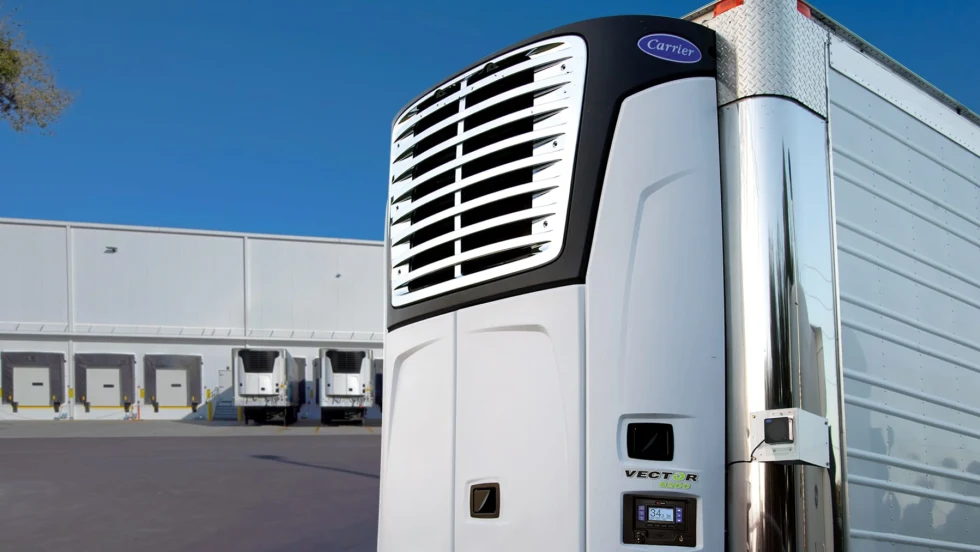
Carrier Transicold Adds All-Electric TRU for Stationary Cold Storage
Carrier Transicold’s new Vector 8200 all-electric transport refrigeration unit gives fleets a diesel-free option for temporary refrigerated and frozen trailer storage.
Read More →
A Closer Look at Kenworth’s Electric T880E Vocational Truck [Video]
Learn more about Kenworth's T880E battery-electric vocational truck at the Paccar Technical Center, including its range, applications, upfitting considerations, and PTO options, in this HDT Spotlight video.
Read More →