




When a 13-Liter Diesel Engine is Right for You
One of the smartest ways to cut weight and cost out of a new truck is to specify an engine that's smaller than what's always been used. But it's smart only if it works the way the operator wants. Some want million-mile life as well as good pulling power

One of the smartest ways to cut weight and cost out of a new truck is to specify an engine that's smaller than what's always been used. But it's smart only if it works the way the operator wants. Some want million-mile life as well as good pulling power.
Several builders of heavy-duty trucks and engines have been arguing for the adoption of 13-liter-class diesels in applications where 15-liter power has been the norm. Modern technology allows smaller engines that make more than enough power and torque to do most over-the-road hauling jobs, they say. And 10- through 13-liter diesels have long been the norm in vocational trucks, which aren't fully loaded all the time but sometimes need to pile on as much payload as possible.
Builders promoting the smaller engine concept are Navistar, which designs and manufactures medium- and heavy-duty diesels for its International trucks; Volvo and Mack, which use engines from Volvo Powertrain; and Kenworth and Peterbilt, which last year began selling a Paccar-made heavy-duty diesel. Their 13-liter products have actual displacements of 12.4 to 12.9 liters. Some refer to these engines as "big-bore," though historically they were sometimes called "medium-bore heavy-duty." Here we'll refer to them as "large-bore."
KW and Pete sales people are actively pushing Paccar's 12.9-liter MX, but will gladly spec trucks with the optional Cummins ISX15 if customers want it. Volvo also offers the ISX15, though it notes increasing penetration of its own D series engines in its trucks. They go into more than 75 percent of all Volvos.
Volvo and Mack also offer a big-bore 16-liter engine made by Volvo Powertrain, called D16 and MP10, respectively, and sell it into the higher end of heavy-duty applications. But for mainstream hauling, they recommend their own large-bore 11- and 13-liter D and MP series diesels, also products of their captive engine builder.
"Thirteen liters is where the game will be played in trucking," declared Jerry Warmkessel, Mack's marketing manager for highway products, at a press conference during the Mid-America Trucking Show in late March. He was being entirely consistent with Mack's history, because most of its own diesels have been in the large-bore category. Customers wanting a bigger engine for a time got a 998-cubic-inch E-9 V-8, though 855-cubic-inch Cummins engines were usually an option.
Today, the MP (for Mack Power) 8 makes more power and torque than most of the old Cummins 855s - or the Caterpillar 3406s and 3408s offered by other truck makers, for that matter - ever did.
That's true of all the current large-bore engines. They have ratings as high as 485 horsepower and 1,650 or 1,750 pounds-feet. Navistar's MaxxForce 13 will soon go to 500 horsepower, Jim Hebe, senior vice president for North American sales operations, announced at Mid-America. That clearly should satisfy the most power-hungry driver in all but the most demanding highway operations.
Hebe and his colleagues have been preaching the 13-liter message for almost two years. They began when they announced that Navistar, once a big Cummins user, would go its own way in emissions control methods. Navistar intended to avoid aftertreatment, which Cummins had adopted, and stayed the course as it finished development of its own MaxxForce 11 and 13 engines. Cummins was out as a supplier, though Navistar stocked up on pre-2010 ISX engines to carry it well into 2010 truck production. They disappeared as the MaxxForces became available.
With Cummins' 15-liter ISX gone and its own MaxxForce 15 still in the future, Navistar's biggest engine was its 12.4-liter MaxxForce 13. It had the power and torque to do the job, so that's what over-the-road operators should use, Hebe said.
Moreover, the MaxxForce 13 weighs hundreds of pounds less than a 15-liter engine, which is important when shippers are sending heavier-than-ever loads of cargo. Because Navistar doesn't use exhaust aftertreatment equipment, hundreds of more pounds are saved. So the weight advantage of an International tractor could be as much as 1,000 pounds versus competitors with 15-liter power.
Navistar's MaxxForce 15 has begun production and is initially offered in a ProStar+ tractor whose nose was lengthened to accommodate it. This summer it will become available in the PayStar vocational series. The big-bore engine combines "iron" parts of the C15 from Caterpillar, Navistar's truck partner since 2009, with Navistar's air, fuel and electronic systems. The MaxxForce15 is there for more severe-service applications, including high-gross-weight combination vehicles and heavy haul operations, Hebe said, but contended the 13-liter engine is still the better way for most highway hauling.
One builder who's not at the 13-liter pulpit is Daimler Trucks North America. Its large-bore 12.8-liter DD13 from Detroit Diesel is standard in certain Freightliner and Western Star models, but it also offers big-bore DD15 and DD16 engines. And customers can choose a Cummins ISX.
"It's not what you need because this is what we have to sell you, but what will work for you," said Brad Williamson, manager, engine and component marketing, in explaining DTNA's approach. The DD13, 15 and 16 engines form "bubbles" of power, torque and hauling ability sales people can show to customers, who then pick what they feel is best for their applications and what they want their engines to do.
One long-time Detroit Diesel customer is Schneider National, whose big orange tractor fleet is 95 percent Freightliner with Detroit power. Steve Duley, vice president of purchasing, says Schneider is concerned primarily with fuel economy, but also with reliability and durability because it keeps its tractors longer than many carriers. That has meant running larger diesels, which most recently has been the DD15 along with some 15-liter ISXs.
"We usually got rid of equipment at 600,000 to a million miles," he said, and a 15-liter Detroit will last that long without major maintenance. "A 13-liter might run that far, but you'd have a higher percentage of overhauls" before the 1 million-mile marker.
But displacement alone has not always been the key factor in longevity.
"A Detroit Series 60 [initially] was an 11-liter that ran a million miles," Duley recalled. "It was a large engine with a lot of iron in its block and crank and other parts, but had limited displacement. We ran Cat C12s and C13s, Cummins M11s and ISMs, and the MBE 4000, and they didn't go that far." Schneider later went to the 12.7- and 14-liter Series 60, which also are long-lived. And the 14s still in the fleet have held up better to exhaust-gas recirculation than smaller versions.
But there is a place in the carrier's operations for 13-liter engines. It uses the DD13 in some tractors assigned to its bulk-commodity division, where lower tare weight is important. And it continuously evaluates competitor trucks and engines "for benchmarking purposes," so is getting Internationals and Volvos with 13-liter power.
It will be looking closely at their fuel economy, as it now does with all engines. Right now the Detroit DD15s do slightly better than the Cummins ISXs - "but they're close" - and also require less regular maintenance, Duley says. But the ISX seems to last a little longer. For historical comparison, the carrier's pre-EGR 12.7 Detroit Series 60s averaged 7.5 mpg. The latest engines using exhaust aftertreatment seem to be equaling that.
From the May 2011 issue of HDT.
More Equipment
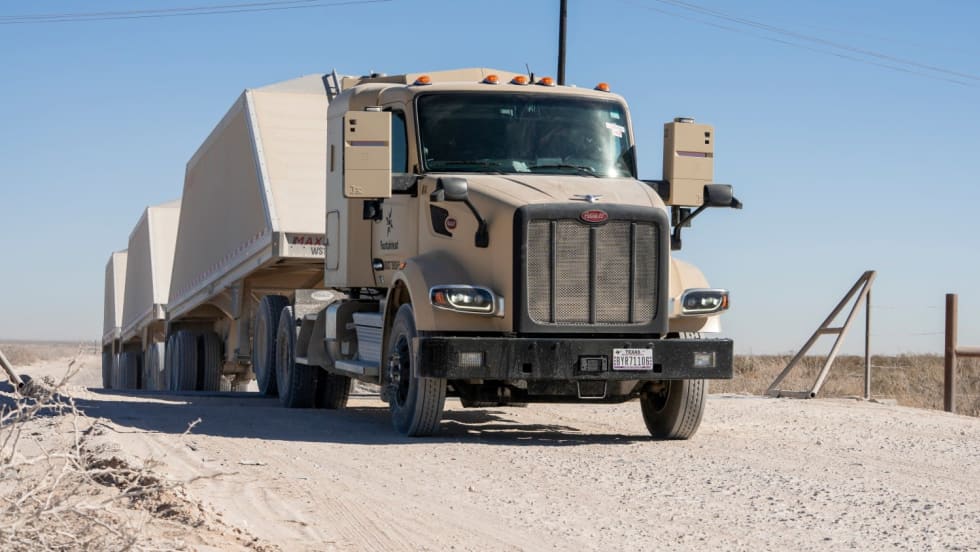
Atlas Expands Kodiak Driverless Truck Fleet in Permian Basin
Atlas Energy Solutions is expanding autonomous frac sand hauling in the Permian Basin with a second load-out location and plans for 100 driverless trucks by mid-2027.
Read More →
Putting Mack’s Command Steer to the Test
A test drive of Mack’s Command Steer active steering system evaluates how it can make truck driving easier and less tiring.
Read More →
Mack, Volvo Expand DEF Derate Software Updates
The updated software gives Mack and Volvo truck owners more time to address DEF-related issues before the engine derates or the vehicle goes into reduced-speed inducement, following new EPA guidance.
Read More →
Rush, MCT Team Up to Grow Refrigeration Service Network
The joint venture will operate MCT's network of Carrier Transicold dealerships and mobile service locations, with the companies promising greater service capacity and uptime for refrigerated fleets.
Read More →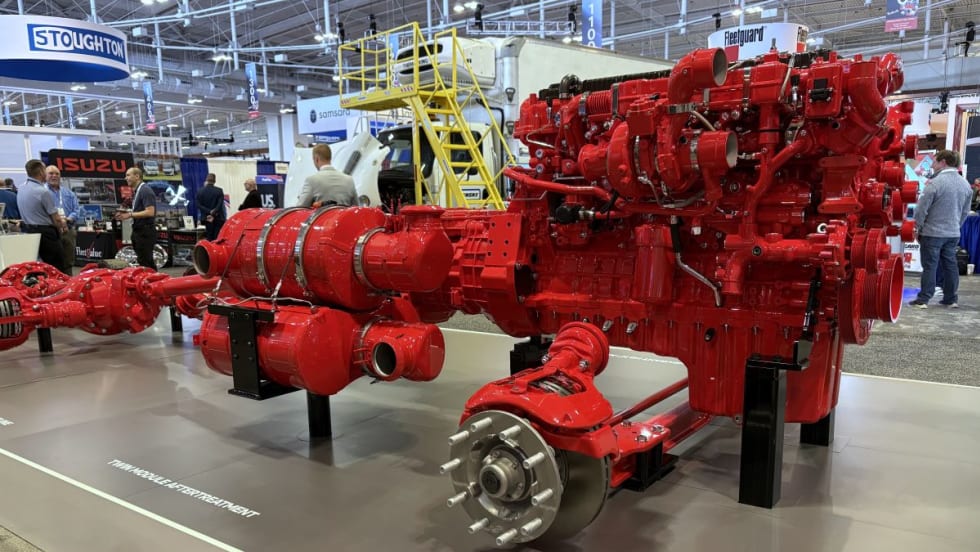
Cummins Adjusts 2027 Engine Rollout After EPA Proposal
The engine maker will gradually introduce its new Model Year 2027 diesel engines while continuing to offer current models during the transition, citing the EPA's proposed emissions rule changes.
Read More →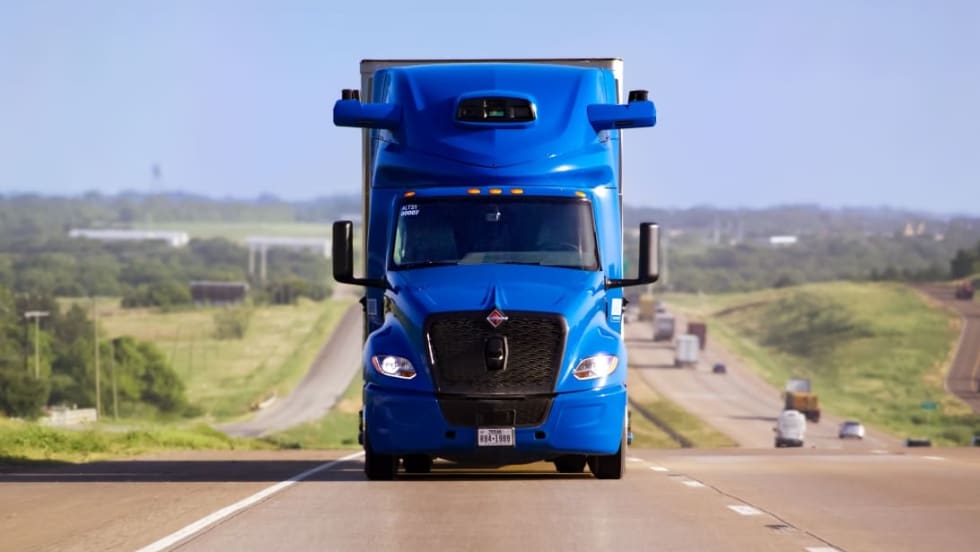
Aurora Rolls Out Next Generation of Driverless Trucks for Commercial Freight
Aurora's latest autonomous trucks it's rolling out with International feature lower-cost hardware designed for a million miles as the company expands commercial driverless freight operations across the U.S. Sun Belt.
Read More →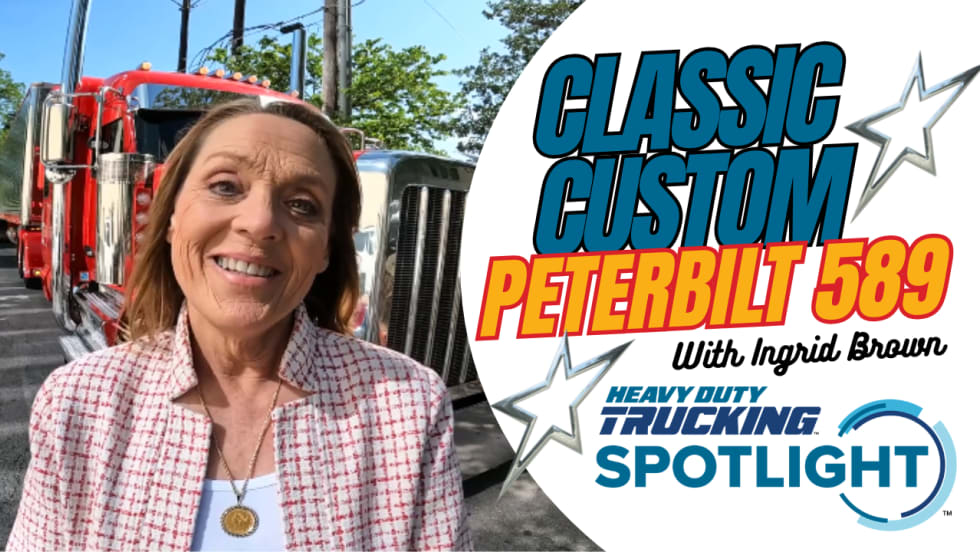
Peterbilt 589 Spotlight: A Close Look at a Custom Working Truck [Video]
There's more to this customized Peterbilt Model 589 and Great Dane refrigerated trailer than chrome and stainless (although there's plenty of that too!) A veteran driver explains the design choices and practical features behind this working truck.
Read More →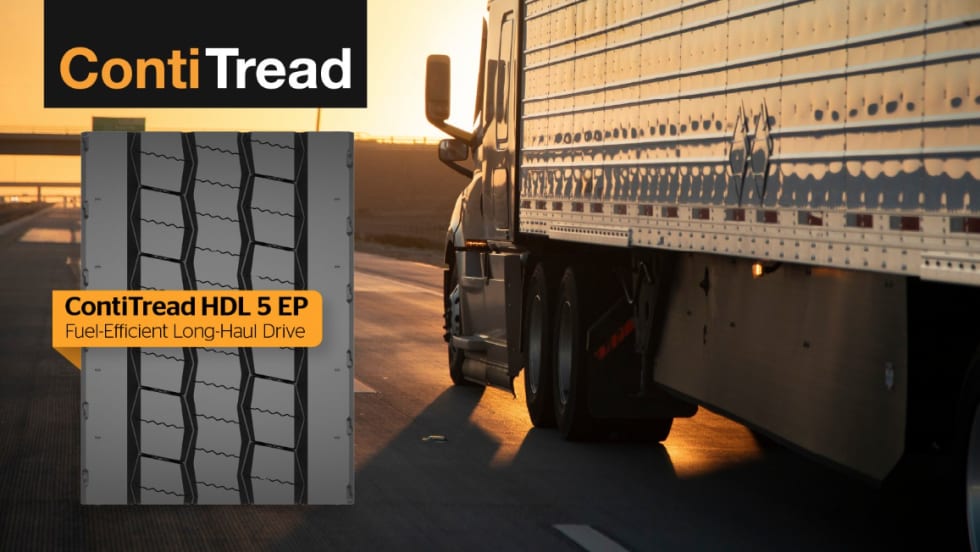
Continental Expands Retread Lineup With New ContiTread HDL 5 EP
New long-haul drive retread is designed to improve fuel efficiency, extend tread life, and lower fleets' cost per mile.
Read More →
EPA Proposal Could Ease 2027 Truck Costs and Buying Uncertainty
The proposal doesn't change the tougher NOx standard, but it would revise key implementation requirements that manufacturers say have driven up costs and complicated fleet purchasing decisions.
Read More →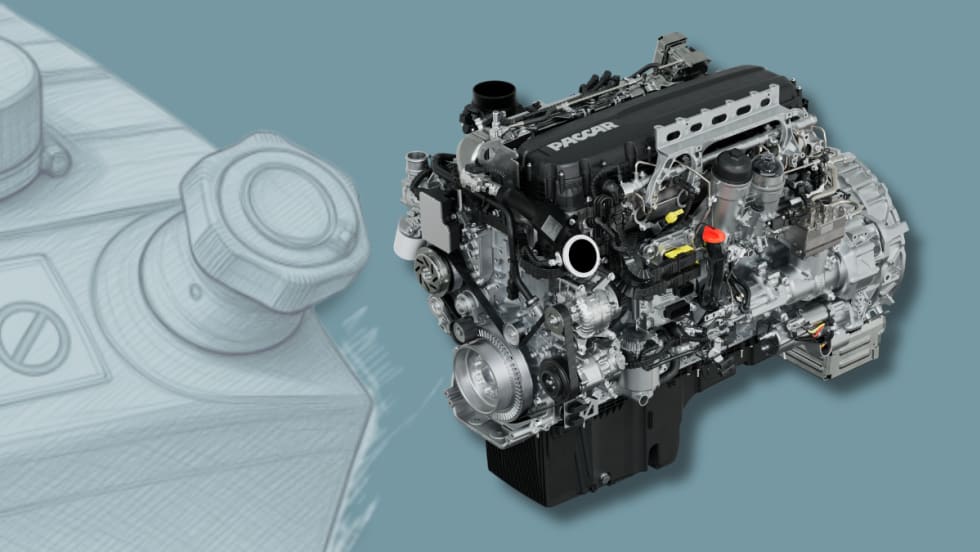
Cummins, Paccar Ease DEF Derates After EPA Guidance
Updated diesel engine software gives truck operators more time to address emissions-system issues while staying compliant with EPA emissions standards.
Read More →