




Turbine-Electric Hybrid Whirs and Whooshes But Saves Fuel, Maker Says
A chrome-plated exhaust stack emits a muted whoosh as this truck's turbine engine spins at tens of thousands of RPMs, drawing the curious among attendees at this ride-and-drive event in downtown Long Beach, Calif.

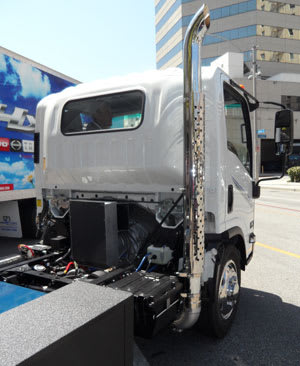
Clean exhaust gas whooshes out the stack as the Wrightspeed microturbine spins a generator to charge this series hybrid's batteries. The sound is not loud, but is like that of a modern airplane's jet engine.
A chrome-plated exhaust stack emits a muted whoosh as this truck's turbine engine spins at tens of thousands of RPMs, drawing the curious among attendees at this ride-and-drive event in downtown Long Beach, Calif.
As part of the Alternative Clean Transportation Expo held last week, the Wrightspeed Route truck is among the vehicles available for sampling. The others have diesel and gasoline engines that run on natural gas, propane and more mundane fuels, but the Route is the only one with a turbine.
It's a "microturbine," actually, and it nestles under the cab of the Isuzu NPR, wrapped in aluminized insulation. Other powertrain components - a 200 kW (268-hp) generator and a 26-kW lithium-ion battery pack -- sit between the truck's frame rails.
At the rear axle are two geared traction drives that use the electricity to propel the truck. There's no body on the frame, so onlookers can freely inspect these parts.
Ian Wright, a native New Zealander who designed the system, invites me to take a spin in this Wrightspeed Route truck. We pile into the cab, buckle up and whir off toward Ocean Avenue, the city's main drag. The accelerator is linked to the traction drives, which run through a 2-speed gearbox, and they smartly push us into motion and down the street. And they drag us down when I take my foot off the pedal.
"It's regenerating now?" I ask Wright, who nods and says, "Oh, yes." The vehicle's motion is being converted into electricity by the generator and sent to the batteries. I turn right onto a cross street and accelerate again. This street quickly dips downhill toward a stop sign, and I again take my foot off the go pedal and the generator pulls down our speed on its own, with no help from the brakes.
"It does it rather aggressively," I remark as I observe the truck's about to stop on the downgrade, so I press lightly on the pedal and move to the painted stop line. "It's almost too aggressive."
"We find in our demonstrations that people get used to it very quickly," Wright says, "and they like it."
"It's a little like driving with a Jake Brake engaged," I say. "You just keep your foot on the pedal and take it off when you want to slow down."
Except, of course, a Jacobs Engine Brake sits atop a diesel engine, and the Isuzu's four-cylinder diesel has been yanked out and replaced by the turbine. So the driveline braking is done electrically, by the generator, which can make as much as 400 retarding horsepower, according to specifications.
Nothing I do with the pedal affects the 250-horsepower microturbine, whose speed is controlled by electronics that are part of the Wrightspeed Route system. The turbine idles at 25,000 RPM and works at a constant 96,000 RPM, Wright explains.
"Ninety-six thousand?!" I exclaim, mentally comparing this to a small diesel's 2,300 or so RPM top turning speed.
"Yes," he smiles.
With no reciprocating pistons or rods, turbines can spin smoothly as well as very fast while their blades compress inlet air, mix it with fuel and ram the super-heated mix against another set of blades to turn the output shaft. For their size turbines can make a lot of horsepower - or thrust in an aircraft - but not much torque.
In this truck, the torque comes from the electric-powered geared drives and they produce another wow-number - 10,600 pound-feet from 0 to 9 mph.
Wright is an unassuming fellow and makes no wild claims about his creation. But in a sales brochure, marketers say the Route system uses half the fuel of a diesel. It'll burn a variety of liquids and gases, and its exhaust is so clean that it needs no aftertreatment. Hmm.
All too soon our round-a-long-block drive is done, and I back the truck into its slot at the curb. I shut off the key and Wright thanks me for taking time to drive the truck. "Thank you," I say.
As I walk toward the truck's rear the turbine keeps whining, then slows when the controls sense that the batteries have been sufficiently charged. Gradually it spools down and the aviation-like sound dissipates. What a neat machine!
Whoops, I forget to ask what it costs. But Wright has agreed to let me take a Route-powered truck out on a longer drive the next time I'm in California, and I'll price one then. Stay tuned for a more extensive article.
More Fuel Smarts

Record Diesel Prices Squeeze Trucking Fleets
Average U.S. diesel prices have climbed to nearly $6 a gallon, surpassing the 2022 record as tight refinery capacity and Middle East disruptions keep fuel costs elevated.
Read More →
How Fuel Delivery Shapes Engine Performance
Fuel delivery depends on more than what happens at the injector. For fleet, maintenance and technical professionals, looking at the full path from pump to injector can provide useful context for understanding engine performance.
Read More →
East Coast Port Launches $45M Electric Truck Push
The Port Authority of New York and New Jersey announced millions in incentives for zero-emission drayage trucks, yard tractors, and new charging hubs near the port.
Read More →

California Bill Could Shed Light on Electric Truck Prices
Why do battery-electric Class 8 trucks remain so expensive? A California bill headed to Gov. Gavin Newsom would give fleets and state agencies more visibility into what manufacturers charge.
Read More →
Detroit Opens Orders for EPA 2027 Engines
Detroit isn’t starting from scratch to meet EPA 2027 diesel emissions standards. Its Gen 6 DD13 and DD15 engines keep much of today’s platform while updating the fuel and aftertreatment systems.
Read More →
Zero-Emission Truck Corridor Planned for West Coast
California, Oregon, Washington, British Columbia and Baja California are coordinating plans for truck charging and hydrogen fueling from Canada to Mexico.
Read More →
A Closer Look at Kenworth’s Electric T880E Vocational Truck [Video]
Learn more about Kenworth's T880E battery-electric vocational truck at the Paccar Technical Center, including its range, applications, upfitting considerations, and PTO options, in this HDT Spotlight video.
Read More →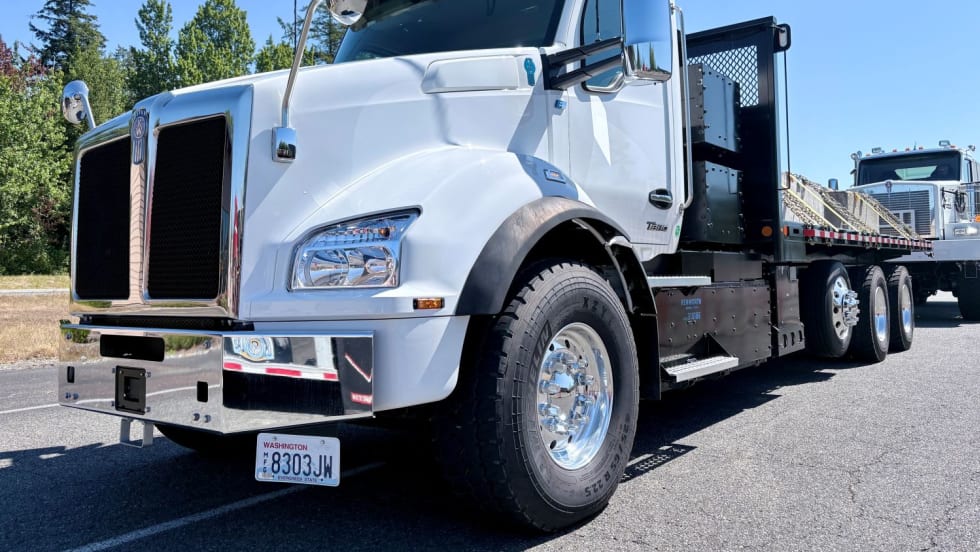
Kenworth T880E Brings EV Power to Vocational Trucks
A closer look at the Kenworth T880E’s range, charging, powertrain and upfit options — and where fleets are showing the most interest.
Read More →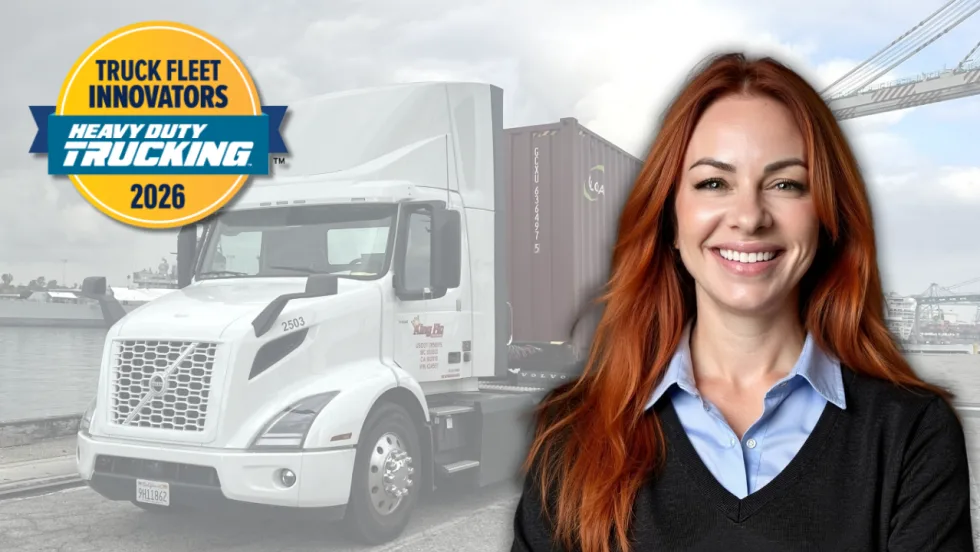
Jennie Abarca Is Proving Electric Trucks Can Do the Job
HDT Truck Fleet Innovator Jennie Abarca is building confidence in fleet electrification one load at a time while openly sharing the challenges she encounters along the way as a small-fleet owner.
Read More →
Cummins Adjusts 2027 Engine Rollout After EPA Proposal
The engine maker will gradually introduce its new Model Year 2027 diesel engines while continuing to offer current models during the transition, citing the EPA's proposed emissions rule changes.
Read More →