




Trailer Tracking
Installation of such devices requires some logistics savvy.
When considering a trailer tracking system, you may think the hardest part is deciding which system is right for your fleet. But that's only half the battle. Getting a system deployed in a timely and proper fashion wins the war.
The best time to figure out how you will deploy a trailer tracking system is when you are taking into consideration the different systems available.
"It generally happens relatively early in the purchase cycle," says Todd Felker, vice president of marketing and product development for the trailer tracking system maker Terion. "Getting the units installed correctly is a very important part of the process, because a good installation results in a good working unit delivering value to the carrier."
Another reason to consider how you will deploy a trailer tracking system early on is that different types of systems have different equipment. Some installations are more intrusive than others. "Some are mounted on the roof, so you don't have to have an empty trailer for the installation, or cut a hole in the trailer," says Roni Taylor, executive vice president for SkyBitz, another trailer tracking manufacturer.
When it comes to deploying a trailer tracking system, there are different routes you can take. You can do the deployment in house, hire a third party, or have the units installed by trailer OEMs before you take delivery of new trailers. Each has its pros and cons.
Should you decide to tackle the job in-house, you don't have to go it totally alone. Most trailer tracking system makers offer installation training sessions so a carrier's installers – typically trailer technicians – can do the job. The upside of this, Felker says, is they can do the installs in the course of a normal day and normal opportunities to touch a trailer. "Having a company install crew that is proficient in doing that gives you a lot of flexibility in getting the units installed when the opportunity arises."
The downside, he says, is it can result in "uneven installations." One installer may do a better job than another. Also, technician turnover – a big problem for some carriers – can slow the process, especially if you have just one or two installers in a given location.
If such downsides are a concern, the option of getting someone else to do the work may be more attractive. That's where a company such as Velociti comes in. Since the early 1990s, Velociti has offered deployment services to fleets, including such names as J.B. Hunt and Knight Transportation. They also work with trailer tracking system providers, helping them install systems they have sold.
While such a deployment plan offers less control and increases your costs, it allows you to start seeing the dividends sooner. "The biggest pro for an outsource is achieving a return on your investment sooner – getting consistent installs across your network of thousands of trailers and having qualified technicians do the work," says Deryk Powell, COO of Velociti.
Recently his company dealt with a fleet with several thousand units that estimated they could deploy their trailer tracking system in 24 months. Velociti said it could do the job in just nine months. The fleet had done the math, estimating trailer tracking would save them about $50 per trailer, per month. "In their analysis, it was pretty simple to figure out they have a lower labor cost in their shops than outsourcing. But by virtue of the fact we could do it 13 months sooner, that $50 a month ROI on each trailer paid for the outsourced install in a couple of months. So it made a pretty compelling case for them to outsource this work."
To make the installation process as efficient as possible, Velociti works with fleets to view their entire universe of trailer routes and shipper locations. "We look at all of that data and daily reports of where the trailers are known to be. From there we find the potential for sitting empty trailers, and then we focus mobile crews that work in those areas," Powell says.
You may think that only large fleets can benefit from third-party deployment, but that's not the case. "Deployment is not dependent on the size of a fleet; rather it's a matter of a fleet's resources," says SkyBitz's Taylor. "We have a number of small fleet customers who have used Velociti to do some of their installs."
Taylor also notes that some SkyBitz customers take advantage of the company's network of hundreds of third-party installers across the country. These shops keep the mobile terminal units on hand so a tractor-trailer can just pull in and get the unit installed without waiting to get back to a company terminal.
Then there's the notion of having the installation done at the OEM level, an option that is becoming popular. Taylor notes that more and more fleets are ordering trailers already spec'd with trailer tracking.
"We do close to half of our installations at the OEM level," says Terion's Felker. "The huge advantage is, you're not waiting to catch a trailer when it's unloaded."
Felker says many customers combine methods. "Some fleets have new trailer builds scheduled throughout the year and plan on installing the devices as those trailers are being built, while at the same time training technicians to install their existing fleet over the year," he says. "Depending on how fast they want to do this, they may even bring in a company like Velociti for an even more concentrated campaign."
More Fleet Management

2026 Blueprint for Countering Smarter Supply Chain Theft
Cargo theft is no longer just the cost of doing business. It's a multi-billion-dollar criminal enterprise exploiting vulnerabilities across your fleet, drivers, and supply chain.
Read More →
How Telematics Improves Visibility, Control, and Performance in Refrigerated Fleets
Explore how telematics help refrigerated fleets improve visibility, uptime, efficiency, compliance, and cargo protection across connected cold chain operations.
Read More →
What the U.S.-Canada Trade War Means for Trucking
Escalating U.S.-Canada tariffs could disrupt cross-border freight, reduce truck volumes, raise costs, and create new uncertainty for carriers on both sides of the border.
Read More →

What Are Trucking’s Top Concerns for 2026?
The American Transportation Research Institute wants to know what's worrying trucking fleet managers, drivers, and other stakeholders in its annual Industry Issues survey.
Read More →
American Trucking Associations Looks for a New Leader
ATA President and CEO Chris Spear abruptly left his job at the association on August 21, at a pivotal time for the trucking industry.
Read More →
Public Wi-Fi Cybersecurity Risks: How Truck Drivers and Fleets Can Protect Their Data
Public Wi-Fi can expose truck drivers and fleets to credential theft, malware, and other cyber threats. Here’s how to reduce the risk on the road.
Read More →
For Nicky Cupp, Fleet Innovation Starts With Frustration
HDT Truck Fleet Innovator Nicky Cupp turns everyday pain points at Fraley & Schilling into opportunities for better technology and smarter processes.
Read More →
Adam Buttgenbach’s Approach to Electric Trucks: Start With Where They Fit
HDT Truck Fleet Innovator Adam Buttgenbach helped PepsiCo build one of North America’s largest EV fleets by focusing on where electric trucks make operational sense.
Read More →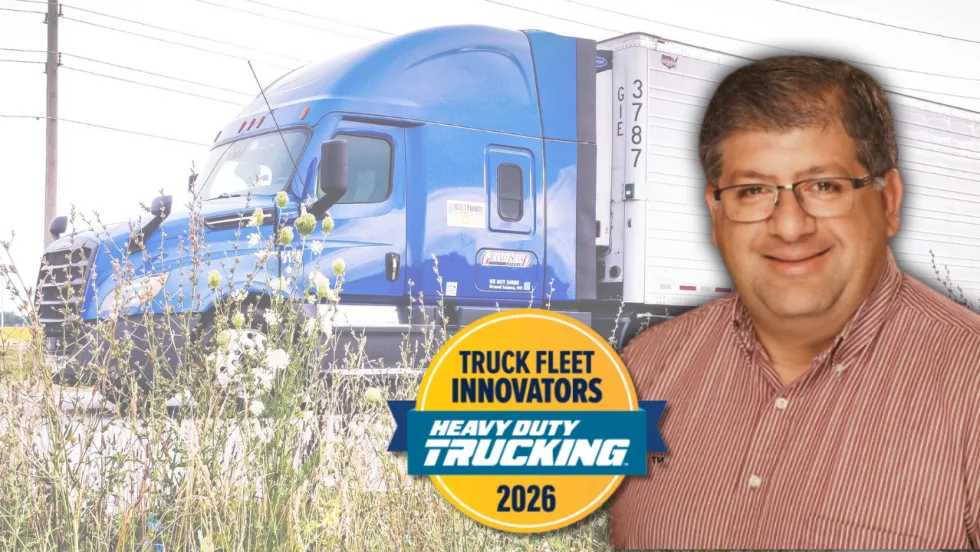
Deen Albert: Let Automation Do the Math, People Make the Decisions
HDT Truck Fleet Innovator Deen Albert makes sure people are still at the heart of operations at Grand Island Express, even while adopting artificial intelligence tools. AI-assisted dispatch helped boost revenue 25% with the same number of trucks.
Read More →
Trimble’s New AI Agent Takes Aim at Fleet Back-Office Busywork
Arc Agent works across Trimble TMS products to automate repetitive tasks such as freight orders, maintenance, invoices, fuel costs and more.
Read More →