




Top Tips for Managing Truck Technology
New technology is a constant in trucking, and how you manage it makes all the difference in the world, according to HDT’s 2020 and 2021 Truck Fleet Innovators, who shared their top tips at Heavy Duty Trucking Exchange.

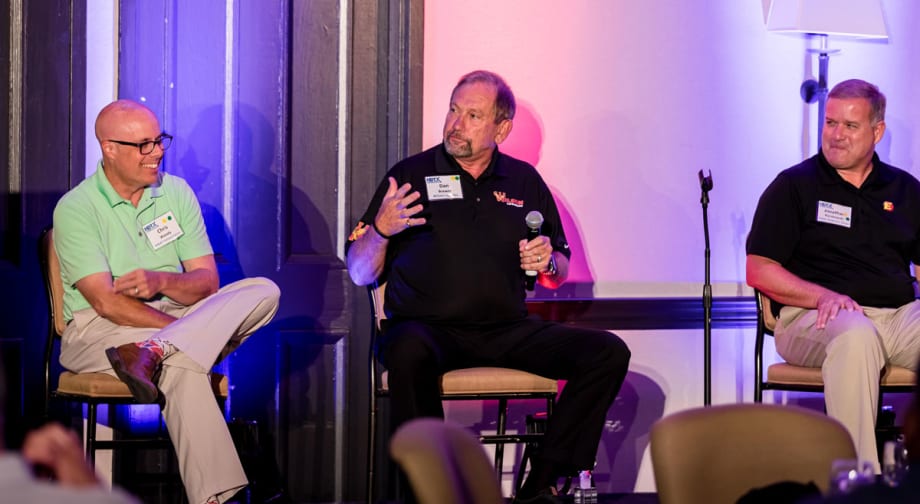
Left to right: Chris Woody of M&W Logistics; Dan Brewer of Wilson Logistics; and Jonathan Koralewski of Estes Express Lines
Photo: HDTX
You don’t get named an HDT Truck Fleet Innovator without investing a lot of time and thought into current trucking trends. And one of the dominant trends in trucking now is the onslaught of technology coming into the industry.
While technology itself is great, the trick for fleets today is managing both the inflow of new technology and its eventual application in real-world trucking operations. Not surprisingly, the 2020 and 2021 HDT Fleet Innovators attending the HDTX Fleet Conference in Phoenix, Arizona, in August were giving serious thought to new technology and its impact on their businesses today.
“The new technology out there today is awesome,” said Shaun Sadler, senior vice president, equipment, U.S. Xpress. “We are heavily invested in as many bells and whistles as we can get.”
Sadler noted that not everyone likes new technology. “We are heavily invested in new safety systems – particularly lane-keeping assistance,” he added. “But a lot of our drivers are frustrated by these systems. They feel like the technology is ‘yelling’ at them all the time, and they get frustrated. Which is exactly what we do not want to happen. Still, we think it’s important to buy in on new technology and introduce it into our fleet today. That way both we as managers, and the drivers, can get educated on what it can do for us in the future.”
Todd Gooch, vice president, transportation, Tribe Transportation, said his fleet was also employing front and rear camera systems. “It’s both amazing and scary to see what these cameras can do,” he told attendees. “Amazing from a protection standpoint for our drivers. But scary when you see what some of these four-wheelers are doing out there.”
Gooch said that for Tribe, the primary technology driver today are the rash of ‘nuclear’ lawsuit settlements hitting the trucking industry. “My goal is to get everyone home safely at night,” he said. “But we need to understand what nuclear verdicts are and the threat they pose to our business and industry. Obviously, we want to avoid them. So, we think these systems are a way to help with both of those goals. But what we’re learning is that we need to present this technology to drivers in a helpful, coaching way, instead of playing ‘Gotcha!’ with them.”
Sadler built on that point, noting that U.S. Xpress has gone back and forth over in-cab camera systems – widely despised by drivers – and outward facing systems.
“We found over time that you really don’t need in-cab cameras,” he said. “A lot of times, an in-cab, outward-facing camera can give you as much information from the reflection on the windshield as a camera as to what a driver was doing during an accident or other event.”
“The tricky part is going to a veteran driver with 20-plus years behind the wheel – and now he’s supposed to take coaching from a guy like me who drives a desk all day,” said Chris Woody, director of safety, M&W Transportation. “So, we’ve sort of backed off that approach and now come to them with a lot more respect for their skills and experience.”
Woody said M&W now gives drivers access to all of their road-incident videos and requires them to watch them on a monthly basis. “These guys and women are professionals,” he said. “So, we treat them that way. They watch the videos, learn from them, and fix issues on their own a lot of times. And of the group that does watch all their videos, 100% earn a monthly safety bonus.”
Woody said there are still instances where he still to talk to people to drive behavioral changes. “These are proud people,” he said. “They have a job doing something very few people can do. Browbeating them from someone who sits in an office all day can come across as very disrespectful if it’s not handled properly. Now, thanks to our new approach, I conduct very few coaching sessions. And they’re only for very serious infractions. Outside of that, about 75% of our drivers now earn a monthly safety bonus. It’s good money. And they deserve it.”

Left to right: Marc Kramer of Soar and Shaun Sadler with U.S. Xpress.
Photo: HDTX
Looking at new alternative fuels and autonomous technology, Sadler said that U.S. Express isn’t paying much attention to battery-electric trucks.
“That’s probably not going to be our thing for quite some time to come,” he noted. “However, we are keeping an eye on developments with hydrogen fuel cell technology. We do think this will be a technology for us going forward. But we also note that the infrastructure just isn’t there – and that’s limiting for us. It’s expensive and there’s just no reason to invest now. So, things will have to change quite a bit on that front before we get serious about hydrogen. But we do believe there are applications within our fleet where we’ll be able to find success with hydrogen once we’re able to implement it.”
Estes Express Lines is investing in electric vehicles on the smaller end of the scale, said Jonathan Koralewski, fleet services training manager. “We’ve invested in both electric forklifts and yard tractors for our operations in California and in Charlotte, North Carolina,” he said. “There’s definitely some driver training involved – particularly when it comes to proper charging practices. But so far, the technology is working. And the forklifts, in particular, have gone over very well. In fact, the operators say they prefer the electric forklifts over the old diesel-powered ones.”
More Fleet Management

Color Match Smarter: Tools That Restore & Perform
For fleet managers and collision repair professionals keeping heavy-duty trucks on the road, getting the color right the first time isn't just about appearance — it's about efficiency, turnaround time, and bottom-line results. Discover how today's digital color tools are transforming the repair process from guesswork to precision.
Read More →
FMCSA Pauses Biennial-Update Enforcement Amid Motus Transition
Carriers whose updates were due on or after June 1 have more time, while FMCSA works to stabilize its new registration system and warns of phishing sites impersonating its new carrier registration system, Motus.
Read More →
2026 Blueprint for Countering Smarter Supply Chain Theft
Cargo theft is no longer just the cost of doing business. It's a multi-billion-dollar criminal enterprise exploiting vulnerabilities across your fleet, drivers, and supply chain.
Read More →


How Telematics Improves Visibility, Control, and Performance in Refrigerated Fleets
Explore how telematics help refrigerated fleets improve visibility, uptime, efficiency, compliance, and cargo protection across connected cold chain operations.
Read More →
What the U.S.-Canada Trade War Means for Trucking
Escalating U.S.-Canada tariffs could disrupt cross-border freight, reduce truck volumes, raise costs, and create new uncertainty for carriers on both sides of the border.
Read More →
What Are Trucking’s Top Concerns for 2026?
The American Transportation Research Institute wants to know what's worrying trucking fleet managers, drivers, and other stakeholders in its annual Industry Issues survey.
Read More →
American Trucking Associations Looks for a New Leader
ATA President and CEO Chris Spear abruptly left his job at the association on August 21, at a pivotal time for the trucking industry.
Read More →
Public Wi-Fi Cybersecurity Risks: How Truck Drivers and Fleets Can Protect Their Data
Public Wi-Fi can expose truck drivers and fleets to credential theft, malware, and other cyber threats. Here’s how to reduce the risk on the road.
Read More →
For Nicky Cupp, Fleet Innovation Starts With Frustration
HDT Truck Fleet Innovator Nicky Cupp turns everyday pain points at Fraley & Schilling into opportunities for better technology and smarter processes.
Read More →
Adam Buttgenbach’s Approach to Electric Trucks: Start With Where They Fit
HDT Truck Fleet Innovator Adam Buttgenbach helped PepsiCo build one of North America’s largest EV fleets by focusing on where electric trucks make operational sense.
Read More →