




Tires & Wheels: 5 Ways to Stretch Your Tire Budget
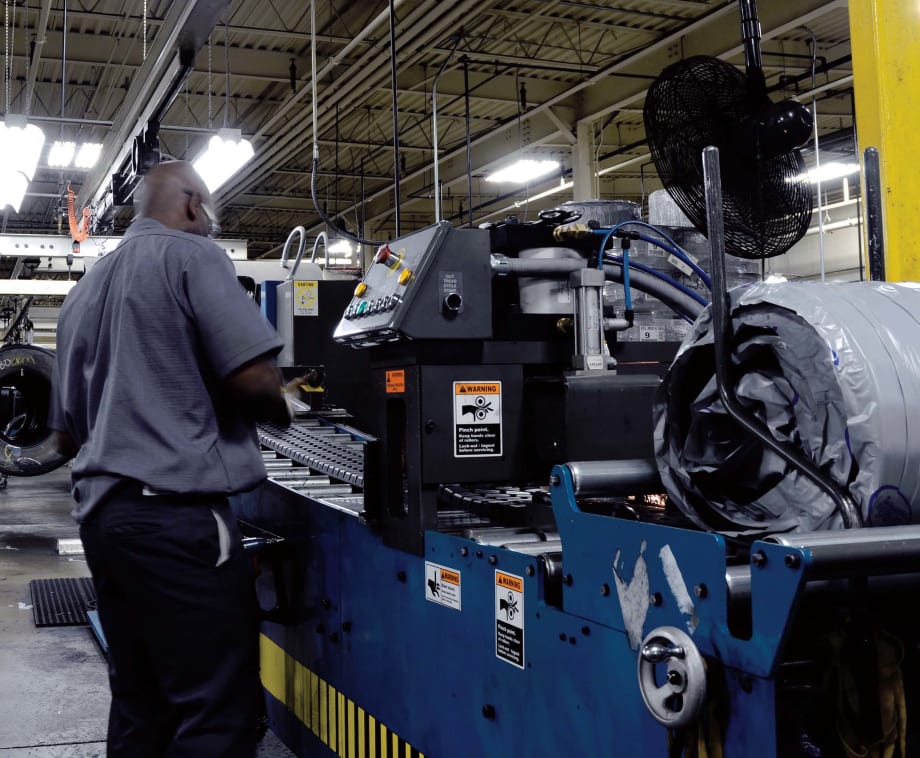
If stretching your tire budget means buying cheaper tires, you may be cheating yourself. You'll get more tires for less money — and that looks good up front — but does that theory hold up after six months or a year?

If stretching your tire budget means buying cheaper tires, you may be cheating yourself. You'll get more tires for less money — and that looks good up front — but does that theory hold up after six months or a year?
There are some applications, such as refuse and some high-scrub or severe service situations, where paying top dollar for a top quality tire makes no sense. The tires get chewed off at such a high rate that even the build quality of a top tire sometimes won't save it.
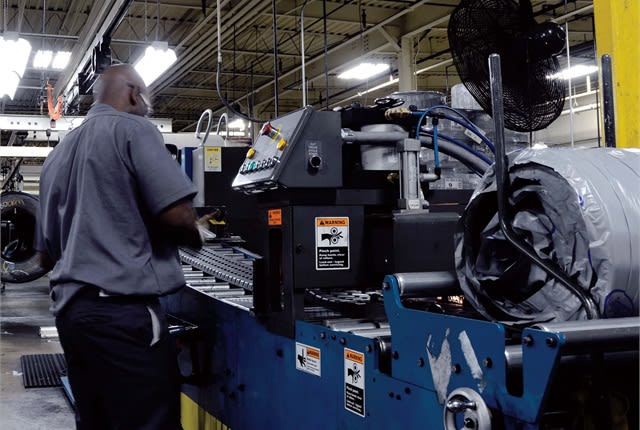
For most fleets, however, quality trumps price over time — provided you're prepared to protect your investment, and manage it to get maximum return. You stretch your budget by minimizing unplanned tire events while striving for maximum casing life, and thus minimum cost per mile.
Right from the Start
You wouldn't put a drive tire on a steer position, or a regional steer tire on a long-haul truck. Tires and retreads come in a dizzying array of tread patterns and compounds optimized for a certain job. Getting the right tire for the job will improve your odds of getting the best life from the tire.
Inflation management
How effective your management program appears on the balance sheet depends on how comprehensive a tire maintenance program you already have. If you're lax in maintaining tire pressure, any system you buy will produce amazing results.
“The worse a guy is at maintaining his tires, the bigger return he's going to see,” says Matt Wilson, business unit manager for controls at Hen-drickson. “If all his tires are running 20% to 30% underinflated consistently, he'll see tremendous results at first with a tire inflation system. On the other hand, a fleet that is very good at maintaining tires won't see as big a return because they are already at or close to the proper pressure.”
Proper inflation for the load is documented to improve both tire life and fuel economy, so there's a double payback there. But tires don't always stay properly inflated, and they have a habit of going flat at the most inopportune times.
Tire pressure monitoring and automatic inflation systems can add value to the tire management plan with very little upfront cost, and they keep paying back long after you have made your return on investment. According to Al Cohn of Pressure Systems International, manufacturers of the Meritor Tire Inflation System, most users will see a payback within 12 months.
“Initially, if the system saves two tires, it's paid for itself. But four or five years out, if it's still saving a couple of tires per year per trailer, you're money ahead.”
Since inflation systems are not widely available for power units, a tire pressure monitoring system can help prevent tire damage from run-flat conditions or outright tire failure by alerting the driver to a problem.
Telematics now allow low-pressure condition notifications to be distributed through the system, so action can be taken to save the tire by someone other than the driver.
“TPMS 2.0 is a fleet-focused concept where data obtained from the tires is sent immediately to the fleet so a manager can make the maintenance call, instructing the driver how to proceed,” says Peggy Fisher, president of TireStamp.
In addition to the practical aspects of minimizing underinflated tires, some TPMS systems provide an operational history of the tire, which can be used to demonstrate due diligence in tire maintenance, points out Phil Zaroor, president of Advantage PressurePro. The Federal Motor Carrier Safety Administration's CSA program also requires fleets to keep records of tire service and proof of repairs.
“The data tracking capabilities of certain systems can help in this regard as well,” Zaroor says.
[PAGEBREAK]Reduce, reuse, retread
A prime, name-brand tire casing is worth about $100 in today's market. An imported no-name casing costs money to haul away. A carefully managed retreading program can get you up to five retreads (more likely three) which extends the per-mile part of the tire lifecycle calculation considerably.
You might get 80,000 miles out of a $300 tire, but half a million miles or more out of a $500 tire that can be retreaded a few times. Which is the better value?
“Name brand tires are always your best bet,” says Matt King of King's Tire Service in Bluefield, W.Va. “We suggest the first cap on a name brand casing should be a drive recap, and then go to the trailer tread if the casing comes back again. Many of the import casings are not wide enough for a drive tread and can only be used in a trailer application.”
King says some of his over-the-road customers are averaging three to four retreads in a casing life. With a little care and a lot of attention to inflation pressure, a good casing may even go two rounds in a drive position.
To get maximum safe life from a tire, Bridgestone suggests running a tire down to about 6/32 before retreading. We say “safe life” because a thinner tread is less resistant to punctures and stone-drilling, which can damage the casing.
Since the tread will all be buffed off at the retreader, there's no value in turning the tire in prematurely.
“You want maximum mileage out of the tread before sending it off to be retreaded, but you don't want to risk casing damage by pushing it too far,” says Guy Walenga, Bridgestone's director of engineering for commercial products and technologies. “Your retreader can advise you on optimum mileage-to-pull based on your casing damage history and the type of operating environment.”
Bridgestone advises running a drive tire down to about 12/32, and then moving it to a trailer position. It has been found that trailer tires run out more slowly than drive tires, so miles-per-thirty-second increases, prolonging the life of the tire even further.
Outsource your troubles
Staff, tools, shop space, liability, lack of recourse — these are only a few of the practical reasons to hand your tire management chores over to an expert.
Bill Guzick, vice president of business development for Michelin North Americas Truck Tires, says it's hard to find cost savings in tire maintenance because regardless of who is doing the work, the costs won't be that different.
“The value lies in relieving the fleet of that one challenge and leaving more resources to focus on the operation,” he says. “The other benefits are less tire-related downtime and fuel savings.”
Done effectively, a tire and wheel program should all but eliminate maintenance-related failures such as leaky valves, underinflation, tire wear related to poor mounting, etc.
And don't forget, you have recourse and warranty when someone else is responsible for shoddy work.
“Outsourcing your wheel/tire program is the best thing since sliced bread,” swears Terry Clouser, former director of maintenance at UPS and AAA Cooper, now retired after 27 years. “It's the way to go for large and small companies. Outsourcing reduces staffing needs along with a lot of the associated risk and exposure, and non-productive costs such as workers comp, possible OHSA citations, etc. It also reduces shop space, and the need for all that tire-related equipment.”
Protect your investment
Tires unfairly take the rap for a lot of vehicle condition issues. Irregular tire wear is almost always a signal that something is amiss upstream of the tire bead.
“Tires can tell you a lot about the condition of the vehicle,” says Tim Miller, Goodyear's commercial tire marketing communications manager. “Train your shop people to diagnose wear patterns so the problem can be caught early. In many cases, the preliminary signs of irregular wear will appear when the tire is fairly fresh - usually in the first 20% to 30% of its expected life. If you catch the wear early, the tire can often be salvaged by remounting it or moving it to another wheel position — maybe on another vehicle.”
Don't just scrap the worn tire, Miller advises. “If you just throw them on the scrap pile you're losing that link to what's going on with the truck. Once they are on the scrap heap, it's too late to identify the problem.”
Identifying the problem is just the first step. You have to remedy the condition that's eating the tires. Otherwise, the next tire you put on will suffer an untimely death as well.
Poor alignment, loose bearings, bad shocks, worn steering components and damaged suspensions are just a few items in the long list of things that kill tires, But if you've invested in premium tires, keeping the truck in top condition will prolong your investment.
Or, just order a truckload of Brand X skins and hone your tire mounting skills. You'll get pretty good at it sooner rather than later.
Inflation. Inflation. Inflation.
There is no better way to improve tire life - perhaps we should say prevent premature tire failure-than maintaining proper inflation pressure.
Proper internal pressure is required to support the load on the tire. “It is not the tire that supports the load, but the air inside the tire,” Goodyear'sTim Miller is fond of pointing out.
Without adequate pressure, excessive flexing of the sidewalls causes the casing to overheat and possibly explode leaving your investment scattered all over the highway.
Daily manual inflation pressure checks are unrealistic, and weekly inspections are often impractical, but you don't want to go out much longer than that. Allowing pressure check intervals to lengthen exponentially increases the risk of premature casing failure.
According to TMC's Recommended Practice 235A, “Tire Inflation Pressure Maintenance,” running a tire 20% under-inflated shortens its life by about 12%. Running tires 30% underinf lated shaves 30% off expected service life. It gets worse as pressure drops.
That same RP notes that a pressure differential of just 5 psi across the tires in a dual set creates a difference in circumference between the tires of up to 5/16 of an inch.The wider the pressure delta, the larger the difference in circumference.
Because two tires of different circumference will not cover the same distance over a given number of rotations, the smaller tire skids along the pavement as it keeps up with the larger tire. You might as well just take a buffing wheel to the tire.
If stretching your tire budget means getting every possible mile out of a tire, inflation management should be a top priority - regardless of how much everybody whines about it.
More Drivers

Truck Drivers Need More Than Another Alert
Fleets have more visibility into truck health, safety events, and driver activity than ever. The next challenge is turning all that information into useful guidance for the person who has to decide what to do next.
Read More →
FMCSA Removes 110 Truck Driver Training Schools from Certified ELDT List
Federal regulators also are targeting more than 160 additional training providers and launching a nationwide audit of third-party CDL skills testers as part of a broader crackdown on trucking fraud.
Read More →
Hours of Service Pilot Programs: FMCSA Readies for 2027 Rollout
Two pilot programs could eventually reshape hours-of-service rules, giving truck drivers options to pause their 14-hour clock or use longer split sleeper rest periods.
Read More →
Medical Cards, English Proficiency Reshape Roadcheck Violations
Medical-card violations jumped to the top of the driver out-of-service list during CVSA’s 2026 International Roadcheck, while English-language proficiency violations appeared among the leading violations for the first time.
Read More →
Driver Trust Can Make or Break the Success of Fleet Safety Technology
New Teletrac Navman research suggests that onboarding, transparency about driver data, and positive feedback can play a significant role in how commercial drivers respond to safety and coaching technology.
Read More →
EEOC Sues KLLM Over Alleged Sex Discrimination in Driver Training
KLLM is facing a federal sex-discrimination lawsuit over policies the EEOC alleges put female truck driver trainees at a disadvantage.
Read More →
FMCSA Moves to Codify English Language Requirements for Commercial Drivers
By changing regulations on English-language proficiency requirements for commercial drivers, rather than relying on a guidance memo, the FMCSA said future administrations won't be able to walk back the Trump administration's stricter enforcement with just a memo.
Read More →
Drivers Put Western Star Trucks to the Test at Star Nation Experience
Watch to get an inside look at the Western Star trucks, technology, and community behind the Star Nation Experience 2026!
Read More →
Trump Administration Looks to Put More Veterans Behind the Wheel
The Freedom Haulers program pulls together existing and expanded programs at several federal agencies to recruit veterans to drive commercial heavy-duty trucks and cut the red tape for them to get a CDL, training, and employment.
Read More →
Putting Mack’s Command Steer to the Test
A test drive of Mack’s Command Steer active steering system evaluates how it can make truck driving easier and less tiring.
Read More →