




There Are at Least Two Sides to Selling a Truck Fleet
Fleets of trucks are bought and sold every day. Some are small fleets that involve only a few trucks. Others are major transactions that transfer ownership of hundreds of trucks valued at millions of dollars. Have you ever wondered what it is like to be a buyer or a seller?
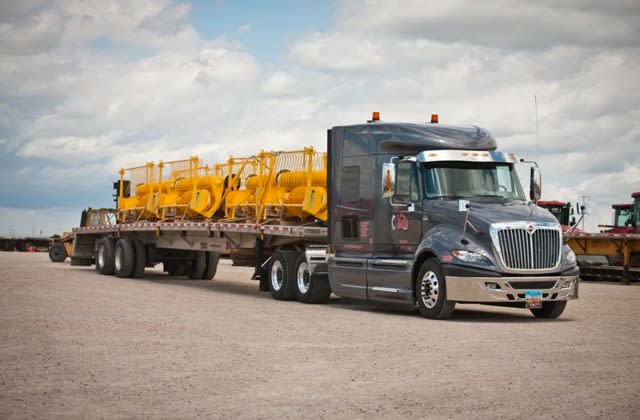
Fleets of trucks are bought and sold every day. Some are small fleets that involve only a few trucks. Others are major transactions that transfer ownership of hundreds of trucks valued at millions of dollars. Have you ever wondered what it is like to be a buyer or a seller?

When you describe a business transaction you routinely say, “It takes two to get a deal done – a buyer and a seller.” Selling a fleet of trucks normally takes three: a buyer, a seller, and a banker to work through all the details and make the deal happen.
There are two basic sides to every truck deal – the buyer’s side and the seller’s side. If you own a fleet of trucks you need to understand what both sides are looking for and how the deal gets done.
On the seller’s side it is important to understand the motives driving (no pun intended) the deal. Warren Lasch, owned a very successful fleet that transported luxury vehicles directly to dealerships nationwide. In business since 1991, the fleet operated 335 trucks and had 375 employees. He recently sold to a private equity group.
“My wife and I decided to sell our company for three reasons. #1 – we knew we did not have the financial resources to take the company to the next level and, selling was the best thing for our employees’ future. #2 we were both in our early 60s and wanted more time to travel and spend with our grandkids. Finally, #3 – we wanted to protect the financial future of our family, and selling helped us do that,” Lasch explained.
On the buyer side, not losing site of the organization’s broader vision and associated culture is often a central theme when stepping up to the deal table. Don Daseke is president and CEO of Daseke Inc. His company owns open deck specialty carriers which currently operate more than 2,000 trucks and 3,600 trailers that provide services to the U.S., Canada and Mexico.
In Daeske’s words, “The key to success in any business is to develop a vision that is embraced by the team, and then communicate that vision. You must be consistent and take care of the people who produce results. Good people want more than just a paycheck these days. They want to be respected and that includes being listened to,” he continues. “Warren Buffet’s strategy has always been to buy companies to build them. We try to do the same thing.”
Again, on the seller’s side, preparing yourself and your company for the sale is critical to a successful deal. Preparing to sell your fleet involves a lot of hard work. “You have to have tight reporting and financial controls, and you should develop policies and procedures similar to what a major corporation would have,” explains Lasch. “I also did a SWOT analysis, that looked at my company’s strengths, weaknesses, opportunities and threats. You want to stay ahead of the buyer and be prepared to answer any questions they may have quickly and efficiently.”
“When we evaluate a fleet to purchase, we look at the strength of the management team, the financial history, the balance sheet, capital expenditures, EBITDA (earnings before interest, taxes, depreciation and amortization), CSA (compliance, safety and accountability) scores, driver turnover rates, safety records, key customers and future potential,” Daseke stated.
Interestingly enough both buyer’s and seller’s tend to agree on one thing – having a trusted investment banking firm involved. Both Daseke and Lasch recommend seeking professional assistance when selling or buying. “We thought we would be done in 3 to 6 months. It took 15 months,” commented Lasch. “The depth of the due diligence is very intense. You need an experienced investment banker who can manage the process, and keep you focused on the business not the sale,” he continues.
“As an example, you may have an offer of $20 million and another for $15 million. On the surface the $20 million looks best, but when you truly understand how the offer is structured and all of the financial implications, the $15 million offer may be the best deal. A good banker will be able to explain both offers in terms you can understand,” Lasch explains.
“Bankers play an important role,” according to Daseke. “They are basically marriage brokers. It’s a complicated process. They match up buyers and sellers based upon: goals, requirements, needs, and culture and management style. A good banker will keep the deal on track, be willing to work with both sides to close the deal. Both the buyer and seller have to work together to close a deal, and a good banker makes the process easier.”
Dealing with key stakeholders: employees, customers, family, etc. is critical during a sale. “Nobody likes surprises. Keep your family and key employees informed along the way,” says Lasch. “Our rule during the sales process was no surprises.” A good investment banker will keep the client informed throughout the process and alert the client to potential issues that could arise.
Whether you are on the buyer side or the seller side in the fleet sales marketplace, both Daseke and Lasch recommend maintaining a pulse on trends in trucking that owners should pay attention to. “It’s going to be very difficult for the small fleet guy to survive,” Daseke comments. “With all of the new requirements for: eLogs, new environmental regulations and safety rules, the cost to operate a small fleet can be overwhelming.”
Both believe driver recruitment and retention will remain an issue for the industry. “We have to make truck driving a more attractive occupation if we are going to grow the industry. A carrier with a proven strategy to recruit and retain drivers will be more attractive to investors,” comments Daseke.
“The market drives trucking,” Lasch explains. “Right now, a lot of fleets are expanding and growing. However, as we saw back in 2008-2009, things can change fast. I would recommend owners be very observant, and develop strategic plans that will protect their company, but also include options that protect your personal financial future. Selling should always be an option.”
A note to sellers: Take time with key stakeholders in your life to answer the following - What do you do after selling your trucking fleet? “After working in trucking for several decades, I wanted to do something different. I was financially secure and my family was protected, so, I decided to launch another business. Now, I am CEO of City Corridor, a digital signage company. It’s about as far from trucking as you can get, but I love it,” Lasch concluded.
Daseke continues to build his fleet. “We’re building a world-class company with the vision of being the premier open-deck/specialty carrier in North America. We are doing that by investing in the best people and the best companies we can find. When our trucking companies work together, we can offer the shippers greater capacity, more diverse equipment, increased reliability, an expanded geography and better customer service.”
There is only one constant in trucking - change. Markets change, equipment changes and owners change. It’s not a matter of “if” you will sell your fleet it is a matter of “when.” Every fleet has a life cycle. Just as fleet owners should always be aware of where the company is in the lifecycle of its fleet, they should be mindful of where they are in their personal life and what they wish to achieve when they retire or sell their business. It is prudent to develop both long and short term plans that will meet both their company and personal goals. This includes preparing for the sale of their business and seeking the counsel of an experienced investment banker.
Max Safavi has executed more than $400 million in M&A transactions and served as CFO for Microdyne and COO of EF Johnson Technologies. He is a graduate of the Booth School of Business at University of Chicago and is currently a Managing Director at Allegiance Capital Corporation.
More Fleet Management

Nomination Deadline Extended for HDT Emerging Leaders
Just a few more days to nominate accomplished trucking fleet professionals under 40 who are making an impact and helping lead the industry forward for the HDT Emerging Leaders award. Deadline extended to October 20!
Read More →
What Will ATA’s New Leader Bring to Trucking's Table?
Incoming President and CEO Mark Colson’s record in Alabama offers clues about his priorities and approach following Chris Spear’s abrupt departure as the head of the American Trucking Associations.
Read More →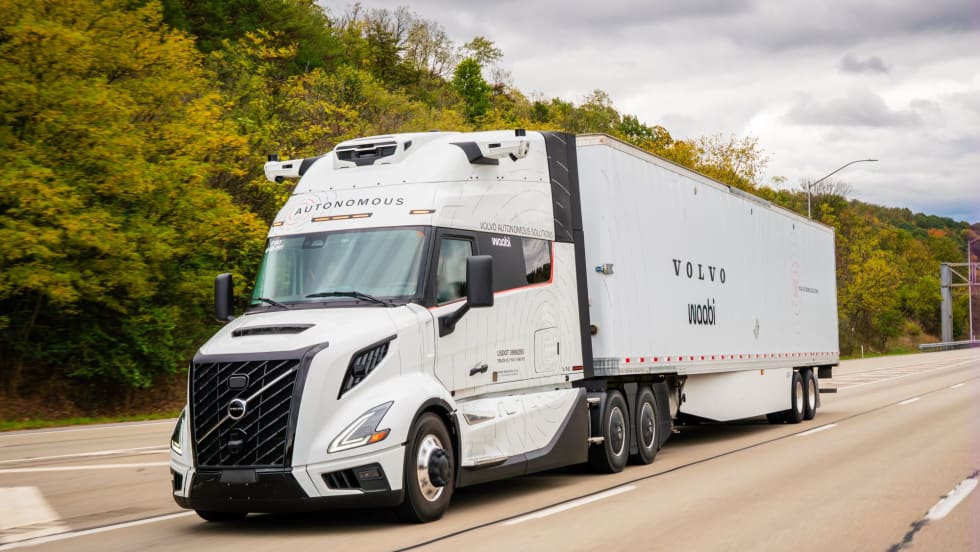
Volvo, Waabi Start Commercial Autonomous Operations in Texas
Volvo VNL Autonomous trucks, powered by the Waabi Driver, are hauling freight directly to third-party facilities for a customer in Texas.
Read More →
Samsara Launches Custom AI Agent Builder
Agent Studio lets fleets create AI tools for hours-of-service monitoring, reporting and driver support, including agents that communicate by phone.
Read More →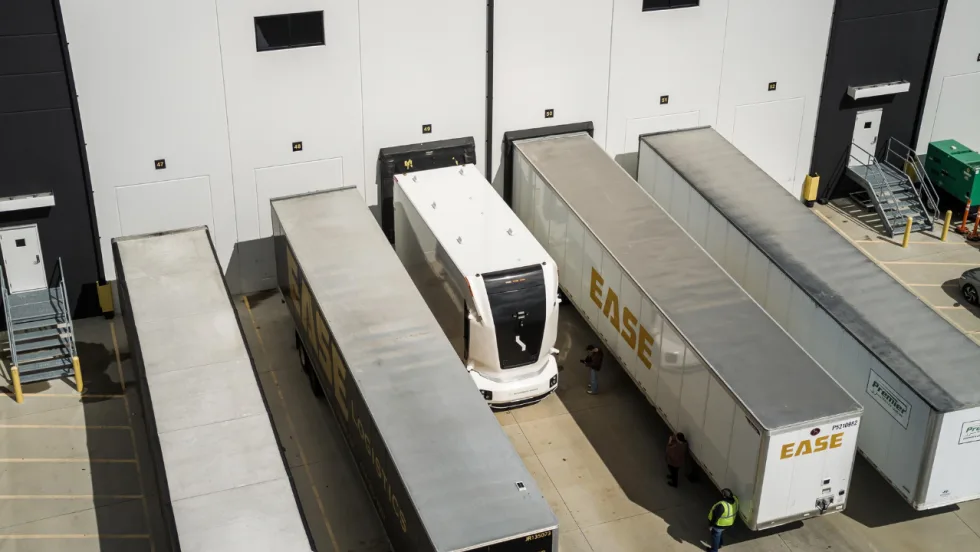
Einride Driverless Electric Trucks Begin Daily Freight Operations in Ohio
Two cabless electric trucks are hauling freight between EASE Logistics facilities in Marysville, Ohio, as part of a multi-state truck automation project.
Read More →
Geotab Links Fleet Card to Vehicle Data
The new card combines fuel discounts with telematics-based purchase controls. Geotab’s analysis also points to potential savings from choosing lower-priced fuel stops.
Read More →
How MFA Helps Protect Trucking Fleets
Multi-factor authentication adds protection when passwords are stolen. Here’s how it works and where fleets should start.
Read More →
How Better Freight Data Helps Trucking Teams Get Ahead of Disruption
Trucking and logistics teams have plenty of data. The problem is getting the right information in front of the right people soon enough to act. Better-connected data can help teams spot trouble earlier and make smarter decisions before small problems become big ones.
Read More →
Trimble: Taking Artificial Intelligence in Trucking Beyond Faster Tasks
At Insight 2026, Trimble executives argued that fleets may need to redesign workflows to get more from AI as it introduced new products and enhancements. AI’s value will depend on how fleets combine automation with their people's knowledge.
Read More →
Build a bulletproof fleet: Uniting ELDs and dash cams for total compliance
An ELD can prove compliance, but it cannot always prove what happened on the road. Discover how uniting accurate ELD data with AI-powered dash cam video can help your fleet strengthen compliance, defend against liability, protect drivers and reduce operational costs.
Read More →