




The Current State of the Dry Bulk Business
During the early years of the Great Recession, almost all trailer manufacturers experienced a sharp drop in demand for their wares. Dry bulk pneumatic trailers, however, were about to get a boon. Read more about the state of the dry bulk pneumatic trailer segment, how fracking has affected the industry, plus trailer-spec’ing tips.

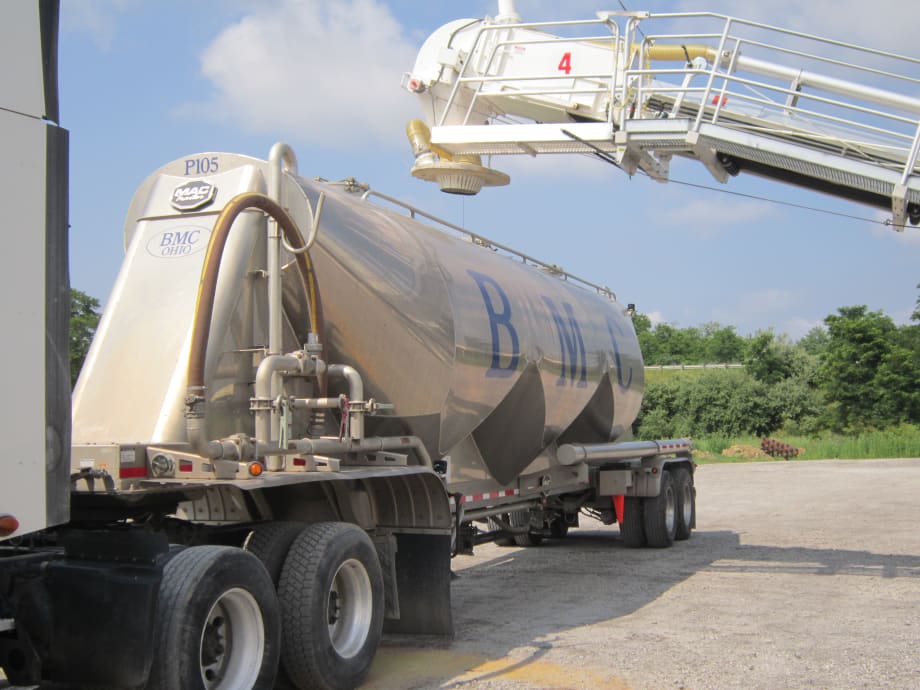
Although the fracking boom has retreated, an upsurge in home building is giving dry bulk a boost.
During the early years of the Great Recession, almost all trailer manufacturers experienced a sharp drop in demand for their wares. Dry bulk pneumatic trailers, however, were about to get a boon.
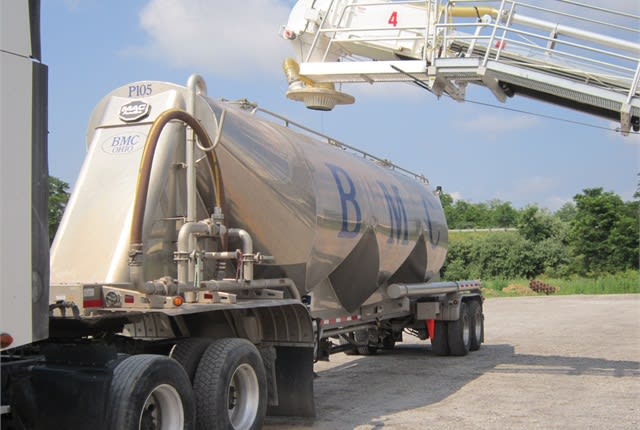
Although the fracking boom has retreated, an upsurge in home building is giving dry bulk a boost.
This boon came in the form of a boom. Specifically, the natural gas boom. Tons upon tons of sand needed to be hauled to locations all across the U.S. to help enable the fracturing part of hydraulic fracturing – more commonly known as fracking. Demand for dry bulk trailers jumped.
“When the sand boom came along with the increase in fracking, it was kind of like a gold rush. Everyone with a line of credit went out and bought a dry bulk trailer,” says Mike Johnson, dry bulk product manager for Mac Trailer Manufacturing.
Jay Morfitt, director of North America Sales and Marketing for Heil Trailer International, monitors charts that go back to January 2006. After the bottom fell out of the market in late 2008, it remained low until 2010.
“In September 2010, demand shot up like a rocket and was a straight up trajectory until January of 2012. The great amount of demand cause by fracking caused anybody and their brother to get into the business,” Morfitt says.
However, demand created by the fracking industry has fallen off as natural gas prices have fallen, with the U.S. demand for natural gas less than the supply.
“Natural gas production caught up with demand in 2012, and drilling of new dry gas wells has dropped along with the demand for dry bulk pneumatic sand trailers,” says Randy Arlt, vice president of sales and marketing for Polar Tank Trailer. “In general, dry bulk demand has returned to pre-2009 levels.”
Michael Heschke, product sales manager at Trail King Industries, says in the past month he has seen some activity in this segment. “Some of those trailers are going back in to that same drilling field, after they went on hiatus for a while.”
Beyond fracking
John Conley, president of National Tank Truck Carriers, says that although the demand created by fracking has subsided, the dry bulk industry is still doing well.
“In both Virginia and Maryland, there have been increases in taxes in both states that are supposed to go to roads, airport extensions and other infrastructure construction. This will also help the dry bulk industry,” Conley says.
The housing market is seeing a bit of an uptick as well, and the reality of the numbers are being seen at the fleet level.
J&M Tank Lines, based in the Southeast, runs about 300 trucks and has been primarily running dry bulk since the 1970s. It does some frack sand hauling, but the predominant cargo in its dry bulk trailers is calcium carbonate. J&M runs approximately 70,000 loads of the stuff every year. It’s used as a filler in many products such as carpet backings, sheet rock and others used in housing construction.
“We are seeing more demand for house-building materials. We’re seeing year-over-year pick up in that particular market, calcium carbonate, of 3% for the past two years,” says Harold Sumerford Jr., owner and CEO of J&M.
Based in Indiana, Bulkmatic Transport hauls about 100 different dry bulk products with its 1,200 dry bulk pneumatic trailers, mostly food products such as flour, sugar and cornstarch as well as a lot of plastics.
Bulkmatic Executive Vice President Alfie Bingham says business has been fairly steady, and while their business is of a seasonal nature for the most part, they are seeing a gradual increase over the past couple of years.
Do’s and don’ts
Whether you’re looking to get into the dry bulk business or upgrade existing equipment, here are a few tips to remember:
• Be aware of the local weight regulations or work with an experienced manufacturer to ensure maximum payload. – Randy Arlt, Polar Tank Trailer
• Spec a trailer for what you are going to be hauling the most. If you are going to be hauling flour, for instance, you need to buy the right size trailer to haul flour, which is different from one needed to haul dense, heavy sand. You can’t maximize your haul unless you know what you are going to haul. – Mike Heschke, Trail King Industries
• Look at the type of pick-up and drop facilities, how and where you are going to be loading and unloading. Make sure you are optimizing that process so you can back on the road quickly. The more loads you can do per day, the more you are going to make. – Jay Morffit, Heil Trailer International
• As much as you configure the trailer for the commodity, you should configure the blower. Blowers come in multiple sizes, so you need to know what you are going to be hauling the most. Remember that it is a fallacy that more pressure makes for faster unloading. You are unloading product with air volume, not pressure. – Mike Johnson, Mac Trailer Manufacturing.
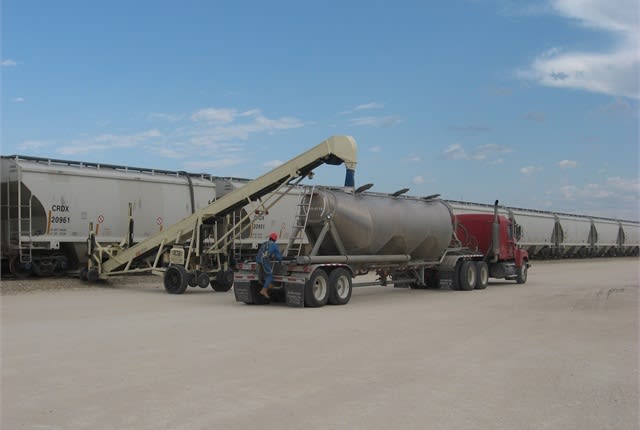
Onboard scales improves efficiency
On-board scales used with dry bulk trailers can help ensure drivers maximize each load, eliminate expensive under-loading, and increase profits by knowing the weight of each axle group while they are loading.
When using Air-Weigh scales, for example, drivers can watch the in-cab display, which shows the steer, drive, and trailer axle group weights, gross vehicle weight and net payload. Drivers who are self-loading can refer to an easy-to-read digital display on the trailer.
When off-loading dry bulk product to more than one customer with Air-Weigh, drivers can use the Net Payload feature. An optional in-cab printer allows drivers to measure how much product they have added or taken off the trailer at a single stop, and provide a weight receipt for that load.
Another new wrinkle in the onboard scale market is a new wireless sensor for mechanical suspension systems from Truck Weight. The company says this gives off-road and severe service fleets a low-cost and simple-to-install alternative to traditional load-cell systems for onboard scales.
Onboard scale manufacturers include:
Air-Weigh, www.air-weigh.com
Cleral USA, www.trucktrailerscales.com
Loadman, www.loadman.com
Right Weigh, www.rwls.com
Truck Weight, www.truckweight.com
Vishay Precision Group, www.vishaypg.com
Vulcan, www.vulcanscales.com
More Fleet Management

Color Match Smarter: Tools That Restore & Perform
For fleet managers and collision repair professionals keeping heavy-duty trucks on the road, getting the color right the first time isn't just about appearance — it's about efficiency, turnaround time, and bottom-line results. Discover how today's digital color tools are transforming the repair process from guesswork to precision.
Read More →
FMCSA Pauses Biennial-Update Enforcement Amid Motus Transition
Carriers whose updates were due on or after June 1 have more time, while FMCSA works to stabilize its new registration system and warns of phishing sites impersonating its new carrier registration system, Motus.
Read More →
2026 Blueprint for Countering Smarter Supply Chain Theft
Cargo theft is no longer just the cost of doing business. It's a multi-billion-dollar criminal enterprise exploiting vulnerabilities across your fleet, drivers, and supply chain.
Read More →


How Telematics Improves Visibility, Control, and Performance in Refrigerated Fleets
Explore how telematics help refrigerated fleets improve visibility, uptime, efficiency, compliance, and cargo protection across connected cold chain operations.
Read More →
What the U.S.-Canada Trade War Means for Trucking
Escalating U.S.-Canada tariffs could disrupt cross-border freight, reduce truck volumes, raise costs, and create new uncertainty for carriers on both sides of the border.
Read More →
What Are Trucking’s Top Concerns for 2026?
The American Transportation Research Institute wants to know what's worrying trucking fleet managers, drivers, and other stakeholders in its annual Industry Issues survey.
Read More →
American Trucking Associations Looks for a New Leader
ATA President and CEO Chris Spear abruptly left his job at the association on August 21, at a pivotal time for the trucking industry.
Read More →
Public Wi-Fi Cybersecurity Risks: How Truck Drivers and Fleets Can Protect Their Data
Public Wi-Fi can expose truck drivers and fleets to credential theft, malware, and other cyber threats. Here’s how to reduce the risk on the road.
Read More →
For Nicky Cupp, Fleet Innovation Starts With Frustration
HDT Truck Fleet Innovator Nicky Cupp turns everyday pain points at Fraley & Schilling into opportunities for better technology and smarter processes.
Read More →
Adam Buttgenbach’s Approach to Electric Trucks: Start With Where They Fit
HDT Truck Fleet Innovator Adam Buttgenbach helped PepsiCo build one of North America’s largest EV fleets by focusing on where electric trucks make operational sense.
Read More →