




The Changing Face of Trucking: Part I
Once upon a time, you had truckload companies, less-than-truckload companies, warehousing/logistics companies, rail intermodal companies, port drayage companies, and brokers. But today, the lines are blurring

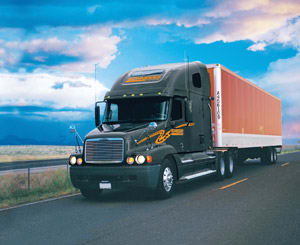
Supply chain pressures and other factors have meant big changes at many large transportation companies, such as Schneider, which now has a growing regional operation.
Once upon a time, you had truckload companies, less-than-truckload companies, warehousing/logistics companies, rail intermodal companies, port drayage companies, and brokers. But today, the lines are blurring.
J.B. Hunt, a pioneer of the truckload business, now generates about three-quarters of its total operating income from intermodal operations. Go to Schneider National's web site, and you'll see a slide show of not only Schneider tractors and trailers, but also trains, planes, ships, forklifts, warehouses, computers, and stacks of intermodal containers - and it's growing its new regional fleet to 2,500 drivers this year. LTL giant Con-way now boasts a truckload division and two divisions that broker loads. FedEx, once known only for its overnight packages, now offers customers LTL, truckload, expedited and more. Average length of haul for big truckload carriers is dropping, while it's rising for the smaller guys.
There are a number of factors at work. In an industry known for tight margins, some companies are turning to diversification to improve the bottom line. Some analysts say the truckload model is simply broken, and LTL hasn't been faring any better. And then there's the question of how the industry may change coming out of the recession and facing tighter government restrictions.
"Some of the strategic drivers that will unfold as the current decade develops could create a much stronger environment for many surviving transportation and logistics companies," says John Larkin, managing director of the Stifel Nicolaus Transportation & Logistics Research Group.
Changing supply chain
Most everyone agrees that a changing supply chain is driving changes in truck transportation.
"Anyone in business has to continue to reinvent themselves to find better ways of doing things," says Marc Rogers, senior vice president/general manager of Schneider's truckload division. "All these moves are about how to drive waste out of the supply chain, whether it's warehouse space or fuel or prices or transit time."
As Larkin points out, rising and volatile energy prices encourage logisticians to shorten supply chains and shift to lower cost/lower service transport modes.
The Stifel Nicolaus analysts expect this decade to see a gradual reversal of the globalization megatrend. Many manufacturers are pulling back manufacturing from Asia and other low-cost countries to North America. A transportation system that has been built to distribute products produced overseas may have to be modified to support a return to shorter supply chains consisting of more and varied links.
"Short haul trucking, less-than-truckload trucking, short-haul rail carload, and barge traffic might all grow as a result."
Another major change is that products and packages are being redesigned to save weight and space, with Walmart leading the way.
Thom Williams, a former transportation executive and now an analyst as the principal of AmherstAlphaAdvisors, remembers visiting Procter & Gamble when they were a customer about seven years ago and running into a group from Walmart who was also visiting that day. Invited to sit in on the meetings, Williams watched as the Walmart representatives lined up a variety of different packages of food and household supplies down the middle of the conference table and asked P&G how they could get those items into smaller packages. They said they wanted to maximize their most valuable commodity, shelf space, reduce handling and warehousing costs, and, of course, transportation costs.
Larkin says anecdotes abound suggesting that one supplier or another has been able to load 30 percent more units on a standard 53-foot trailer or domestic intermodal container. "These sorts of initiatives, as with the shortening of supply chains tend to reduce the number of ton-miles generated on a permanent basis."
Diversification
"In truckload, we continue to see a lot of fleet downsizing and redeployment," says John Larkin. "That speaks to large carriers deciding the traditional long-haul truckload market is not a place they want to be."
In the past decade, some companies have been very successful in diversifying their service offerings, especially expansion into non-asset-intensive services, to offer "one-stop shopping" for shippers. Other companies have tried this and failed. And Larkin says a "me-too" mentality of fleets rushing into these areas could be a mistake for some.
"With some non-asset-based companies generating attractive financial profiles, most are diversifying into what soon may become over-served markets (e.g., truck brokerage). Ironically, it may be those that stick to their knitting that have the last laugh," he says, "as eventually someone has to actually own and operate the transportation asset."
In fact, Larkin and his associates believe that the next decade "will prove our thesis that superior returns will be enjoyed by those carriers that stay focused on their core service offering and, in doing so, generate a superior cost structure and superior value propositions for their customers."
On the other hand, Williams believes the industry hasn't changed enough. The sharp delineations that have traditionally defined the U.S. transportation market - truckload, LTL, rail intermodal, freight brokers, freight forwarders, 3PLs - "do not exist outside of the United States," he says. "In Europe, and in Asia, and in the Pacific and Australia and the Middle East, they're all one and the same." Big companies such as DHL and D.B. Schenker and Agility Logistics provide global logistics services, including trucking, intermodal, warehousing, forwarding, brokerage, etc.
Intermodal
J.B. Hunt Transport is generating per-truck revenues and operating income with its emphasis on intermodal that "are far, far above the heights that would cause any experienced trucker to drool with financial envy," says Williams. According to Stifel Nicolaus, a new deal the carrier signed with Norfolk Southern late last year could position J.B. Hunt to grow its eastern intermodal business at double-digit rates.
Schneider is another big player in intermodal, recently converting its entire intermodal fleet to intermodal containers, rather than piggyback trailers. Swift Transportation is another; according to its web site, its intermodal fleet includes 4,300 53-foot containers, and a domestic fleet of over 45,000 53-foot trailers capable of moving on rail flatcars.
"In a market that's down, domestic intermodal revenue and movements are actually increasing," Larkin says. "That speaks to shippers looking for less expensive, more sustainable alternatives. The growth of intermodal could accelerate as we look down the road at a truckload capacity shortage."
Intermodal transport's share of U.S. long-haul (550+ mile) movements of international and domestic containerized freight was estimated to be 13.3 percent in the fourth quarter of 2009, according to FTR Associates, up 0.2 percent from the third quarter and slightly above the previous high-water mark achieved in Q4 2008.
Regional
Last month, Schneider National announced plans to grow its regional driving fleet to 2,500 this year. Schneider's Rogers explains, "We've seen customers that want to have distribution centers within 500 miles of their store or end customer." Schneider traditionally was long-haul, he notes, but the company has grown the regional network tremendously over the last couple of years.
When he started this job two and a half years ago, Rogers says, about 5 to 10 percent of the business was regional. Now, he says, it's 25 to 30 percent of their freight, and the goal is to have about 50 percent of the freight running regional by the end of 2011.
"The same customers that had long-haul freight also had regional freight; we didn't have the ability to serve that in the past; now we do," Rogers says.
There are several thin
More Fleet Management

Why Private Fleets Are Taking More Freight
Private fleets are putting their own trucks on demanding customers and high-cost lanes as companies seek greater control over service, costs, and capacity.
Read More →
Color Match Smarter: Tools That Restore & Perform
For fleet managers and collision repair professionals keeping heavy-duty trucks on the road, getting the color right the first time isn't just about appearance — it's about efficiency, turnaround time, and bottom-line results. Discover how today's digital color tools are transforming the repair process from guesswork to precision.
Read More →
FMCSA Pauses Biennial-Update Enforcement Amid Motus Transition
Carriers whose updates were due on or after June 1 have more time, while FMCSA works to stabilize its new registration system and warns of phishing sites impersonating its new carrier registration system, Motus.
Read More →


2026 Blueprint for Countering Smarter Supply Chain Theft
Cargo theft is no longer just the cost of doing business. It's a multi-billion-dollar criminal enterprise exploiting vulnerabilities across your fleet, drivers, and supply chain.
Read More →
How Telematics Improves Visibility, Control, and Performance in Refrigerated Fleets
Explore how telematics help refrigerated fleets improve visibility, uptime, efficiency, compliance, and cargo protection across connected cold chain operations.
Read More →
What the U.S.-Canada Trade War Means for Trucking
Escalating U.S.-Canada tariffs could disrupt cross-border freight, reduce truck volumes, raise costs, and create new uncertainty for carriers on both sides of the border.
Read More →
What Are Trucking’s Top Concerns for 2026?
The American Transportation Research Institute wants to know what's worrying trucking fleet managers, drivers, and other stakeholders in its annual Industry Issues survey.
Read More →
American Trucking Associations Looks for a New Leader
ATA President and CEO Chris Spear abruptly left his job at the association on August 21, at a pivotal time for the trucking industry.
Read More →
Public Wi-Fi Cybersecurity Risks: How Truck Drivers and Fleets Can Protect Their Data
Public Wi-Fi can expose truck drivers and fleets to credential theft, malware, and other cyber threats. Here’s how to reduce the risk on the road.
Read More →
For Nicky Cupp, Fleet Innovation Starts With Frustration
HDT Truck Fleet Innovator Nicky Cupp turns everyday pain points at Fraley & Schilling into opportunities for better technology and smarter processes.
Read More →