




Test Drive: Natural Gas Freightliner Cascadia 113
Freightliner’s Cascadia 113 and the ISX12 G from Cummins Westport aren’t exactly strangers. About 100 of the trucks have been in customer hands for some months now. Equipment Editor Jim Park takes one for a spin.

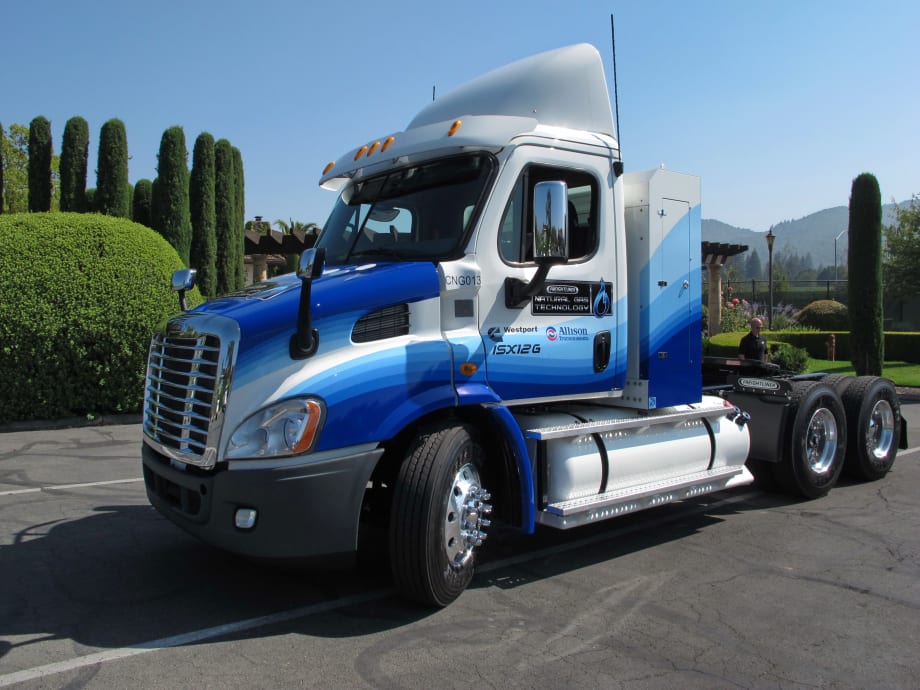
Freightliner’s Cascadia 113 and the ISX12 G from Cummins Westport aren’t exactly strangers. About 100 of the trucks have been in customer hands for some months now.
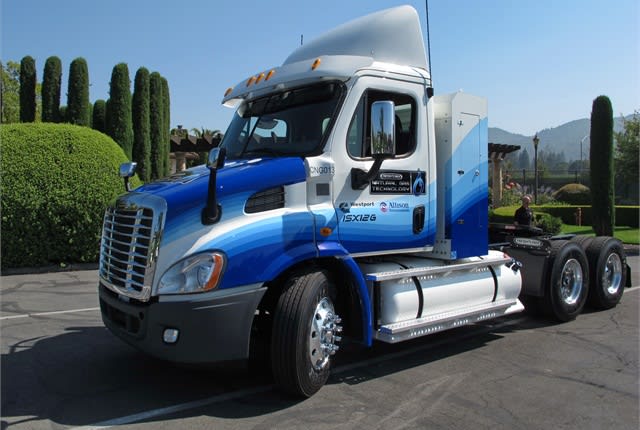
Some will recall a 350-horsepower ISX12 G-equipped Cascadia 113 day cab made a cross-country trip from Long Beach, Calif. to Washington, D.C. in April 2012. A major goal of that trip was to show the availability of compressed natural gas fueling infrastructure in a long-haul environment, but it was a good shake-down cruise for the truck as well.
In May, Freightliner began pre-series production of the 113 equipped with the 350-horsepower ISX12 G. In mid-August, the truck went into production with the new 400 horsepower/1,450 pounds-feet rating. Five of that group became customer demo trucks that Freightliner will put into the hands of curious fleets over the next year or so. Freightliner sold them to Penske and leased them back, so they are plated and registered for fleet service. I had a chance to spend the better part of a day in one of those trucks in Napa, Calif., at the end of July.
These trucks feature a new fuel storage system developed in cooperation with Saddle Creek Logistics Services of Lakeland, Fla., and fuel-tank supplier Agility Fuel Systems. The compressed natural gas storage array consists of a back-of-cab cabinet holding up to four 25-diesel-gallon-equivalent CNG tanks, and one saddle-mounted 40- or 45-DGE CNG tank. Up to two saddle tanks can be spec’d. This number of tanks increases the range of the truck considerably – albeit with a price in weight and cost. The four-tank cabinet weighs 2,600 pounds, while each 45-DGE saddle tank weighs 1,750 pounds.
The cabinet-mounted CNG tanks have been redesigned for a better fit behind the cab, and engineers are developing an aerodynamic fairing and cab-extender package to improve fuel efficiency even further. Early versions of fairing package (very similar to what you see on the Cascadia Evolution) are in tests now with Saddle Creek. They should be on the market by mid-2014.
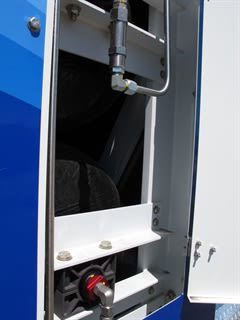
The CNG tank cabinet has a very robust steel subframe to secure and protect the tanks. It’s not airtight to prevent possible gas build up, but the doors rattle.
Powered by natural gas
The highest rating for the diesel version of the Cummins ISX12 is 425 horsepower with a maximum 1,650 pounds-feet of torque. At 400 horsepower and 1,450 pounds-feet, the natural gas version of the engine is hardly lacking. The torque-multiplying effect of the Allison 4000 HS automatic transmission more or less makes up the difference.
I had the truck for about five hours, so the first thing I did was head south to Interstate 80 and the hill leading into Vallejo to give the engine a workout. It’s not the Grapevine, but it’s a couple of miles long and close to 6% in a few places. With a gross weight of about 60,000 pounds, I was close to a nearly average load for many regional haulers where the engine will find work.
The engine brake did an admirable job keeping our speed in check coming down the hill, and even initiated a downshift to increase the retarding effect when the speed began climbing.
Climbing eastbound out of Vallejo, as the grade changed, I found the engine was looking for the highest gear possible to keep the revs down close to 1,200 rpm where the torque is. That held true even on the lesser grades later in the drive. On several occasions, the revs drifted down to the 1,000 mark, which really surprised me. And there was still some pull there.
Though it’s a small displacement engine coupled to a 6-speed automatic, and therefore has a limited number of gear options, it behaves like its bigger cousins leaning toward low-rpm cruise speeds.
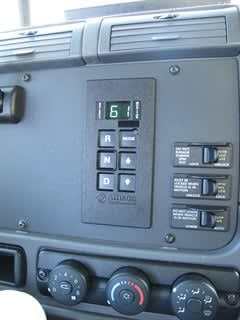
The Allison 4000 HS kept the engine revs down even in a good pull, making good use of the ISX12 G’s 1,450 pounds-feet of torque.
New territory
While the ride and comfort of the Cascadia can hardly be overstated, I’ll say that the 113-inch-BBC model is every bit as quiet, smooth and comfortable as its long-nose brother. It’s supremely quiet in the cab, thanks in large part to the NG engine. They just run quieter than diesels.
That said, fleets would be mistaken to simply throw a driver the keys and expect life to go on. Other than the fueling process, there’s nothing drivers need to do differently. But the truck does make some funny noises that they won’t be used to hearing, and the throttle response is a bit different from a diesel. The engine tends to surge when stopped at a light after few miles of running. It idles at about 800 rpm rather than 600, and drivers will notice a chuffing sound when they take their foot off the throttle pedal. This is all normal, Freightliner assures me, but a bit of orientation time will ease drivers’ concerns before they even start.
I had only two concerns with the customer demo truck I drove that day in Napa. Two long clamp bolts on the air intake piping hang down right above the oil dipstick, raising the potential for minor flesh wounds when withdrawing the dipstick, and the steel doors on the back-of-cab CNG tank cabinet rattled. Both of those issues, I would think, could be resolved with a little attention to detail at the engineering stage.
I think drivers and fleets will be pleased with the performance of the natural-gas-powered Cascadia 113. It lacks for nothing compared to the diesel version, and it’s even quieter. With the increased fuel capacity and longer trips that will result from that, it’s a truck I’d be very happy to spend a 14-hour day in.
(Follow the link here for Senior Editor Tom Berg’s experience driving the Cummins Westport ISX12 G in a KW T800.)
More Fuel Smarts

Why Diesel Price Relief Efforts May Fall Short
Diesel prices have eased from September’s record high, but doubts about additional Russian supply and limits on dyed-diesel tax relief mean trucking fleets still face expensive fuel. And prices could go higher.
Read More →
Why Small Fuel Savings Matter in Trucking
Can better fuel economy help pay for driver raises? In this podcast, GP Transco explains how small efficiency gains create room to reinvest in its people.
Read More →
How GP Transco Cuts Trucking Fuel Costs, a Tenth of a Gallon at a Time
What’s another tenth of a mile per gallon worth? GP Transco shares how equipment upgrades and driver coaching turn small gains into meaningful fuel savings.
Read More →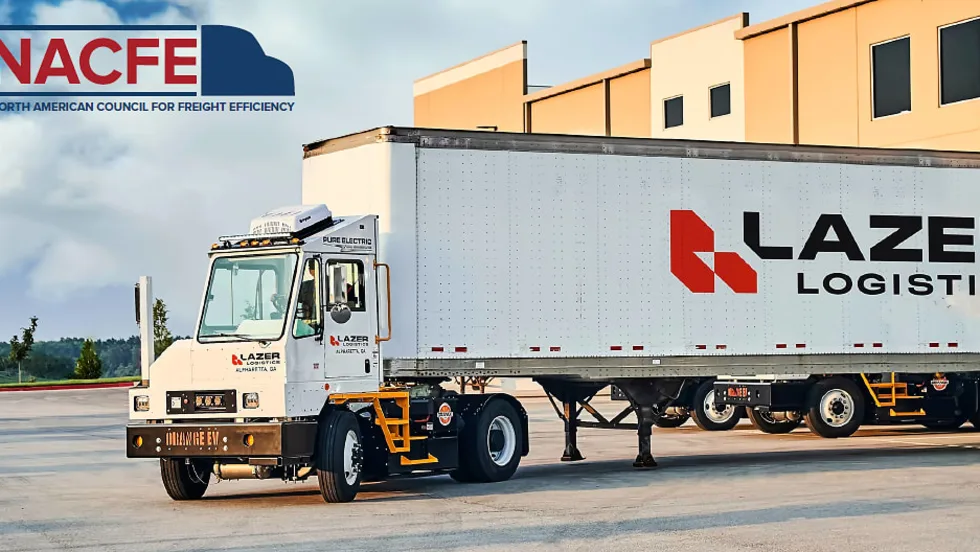
Electric Yard Tractors Move Beyond Pilots
Operating-cost savings have overtaken sustainability goals as the leading reason surveyed fleets are adopting battery-electric terminal tractors, according to new NACFE research.
Read More →
Geotab Links Fleet Card to Vehicle Data
The new card combines fuel discounts with telematics-based purchase controls. Geotab’s analysis also points to potential savings from choosing lower-priced fuel stops.
Read More →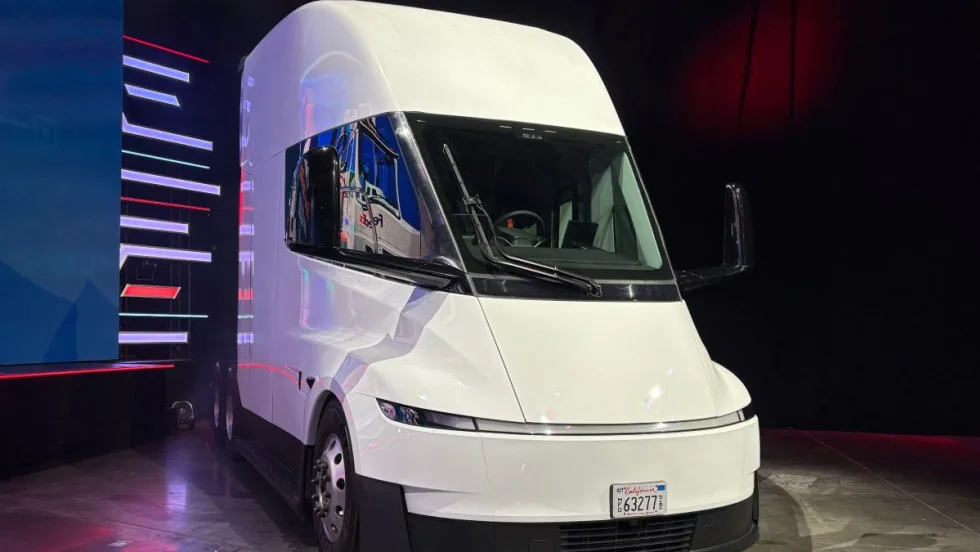
Fleet Economics Shape Electric Truck Outlook
ACT Research expects costs, charging infrastructure, and technology improvements to drive zero-emission commercial vehicle adoption as federal regulations and incentives retreat.
Read More →
Wex Adds Cardless Fuel Payments for Over-the-Road Customers
A new fuel card feature for Wex customers offers convenience and security.
Read More →
New California Law Could Shed Light on Electric Truck Prices
Why do battery-electric Class 8 trucks remain so expensive? A California bill signed by Gov. Gavin Newsom would give fleets and state agencies more visibility into what manufacturers charge.
Read More →
How Volvo Updated Its D13 for EPA 2027 [Watch]
Volvo’s updated D13 promises lower emissions without sacrificing performance or fuel economy. Take a closer look at what changed inside the engine in this HDT Spotlight video.
Read More →
Diesel Price Spike Shortens Payback for Natural Gas Trucks, Report Says
Energy Vision estimates fleets could recover the higher purchase price of an RNG-fueled Class 8 tractor in 1.3 to 2.8 years under current fuel-price scenarios.
Read More →